Aston Martin V8 Vantage (2005): Models and Specs
2005–2018 · 4.3–4.7-litre naturally aspirated V8 plus 6.0-litre V12 · Front-mid-engined, rear-wheel drive · Coupé/Roadster
Overview
The Gaydon-era V8 Vantage was the most popular car Aston Martin had built in decades. Designed to give Aston Martin bigger sales volumes and more financial sustainability under Ford ownership, it became the brand's biggest-selling model of the modern age, bringing that iconic winged badge within reach of serious enthusiast buyers rather than just ultra-wealthy collectors. The V8 Vantage had a sumptuous body draped over an all-aluminium VH platform, housing a front-mid-mounted naturally aspirated quad-cam V8 and a rear transaxle for near-perfect weight distribution. It was Aston Martin's most attainable entry point, as well as being a beautifully sorted sports car with no significant dynamic concessions despite its relatively accessible price.
Price
- Starting price
- 18 249 €
- Average price
- 62 152 €
- Price range
- 18 249 € - 435 054 €
Specifications
- Production years
- 2005–2018
- Body styles
- 2-door coupé/convertible
- Layout / Drive
- Front-mid-engined, rear-wheel drive
- Platform
- Aluminium spaceframe
- Engine family
- 4.3/4.7-litre V8; 6.0-litre V12
Aston Martin V8 Vantage (2005) in Detail
Development of the Gaydon V8 Vantage began under Ford's ownership of Aston Martin in the early 2000s, as part of a broader strategy to expand the brand beyond its ultra-low-volume Newport Pagnell roots. The brief was to produce a sports car at a lower price point than the DB9, reprising its VH platform in a shorter, lighter and more driver-focused package to be built at the newly opened Gaydon factory.
The VH (Vertical-Horizontal) platform used on the DB9 was adapted for the Vantage with a shortened wheelbase and revised suspension geometry. The powertrain adopted a transaxle configuration where the front-mid-mounted engine connected to the rear transmission via a cast aluminium torque tube and carbon fibre propshaft. This arrangement achieved a 49:51 front-to-rear weight distribution. The 4.3-litre quad-cam V8 at launch produced 380bhp at 7,000rpm and was related to the Jaguar AJ-V8 family, though it had been substantially re-engineered for Aston Martin.
In 2008, the V8 grew to 4.7 litres, raising output to 420bhp and 346lb ft of torque, and improving in-gear responses across the rev range. The 4.7-litre engine powered the majority of cars produced across the model's life, with the Vantage S (2011–2017) using a higher-tuned version of the same 4.7-litre unit to generate 430bhp in tandem with revised suspension settings.
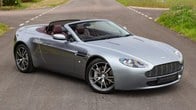
The Roadster entered production in 2007, offering the same mechanical package below a folding fabric roof. The 2009 V12 Vantage (using the 510bhp 6.0-litre V12 from the DBS) was the most extreme variant, before the Gaydon V8 Vantage was replaced by the AMG-engined Vantage in late 2018.
The V8 Vantage's quad-cam V8 grew from 4.3 to 4.7 litres across the production run, while the V12 Vantage sits above both. The naturally aspirated quad-cam V8 revved to 7,000rpm with a linear, unassisted throttle response that turbocharged contemporaries couldn’t replicate.
Variant | Engine | Power | Top Speed | 0–60 mph |
V8 4.3 Coupé (2005–2008) | 4.3-litre quad-cam V8 | 380 bhp | 174–175 mph | 4.7–4.9 sec |
V8 4.7 Coupé (2008–2018) | 4.7-litre quad-cam V8 | 420 bhp | 180 mph | 4.7 sec |
V8 Vantage S (2011–2017) | 4.7-litre quad-cam V8 | 430 bhp | 180 mph | 4.6 sec |
V12 Vantage (2009–2018) | 6.0-litre quad-cam V12 | 510 bhp | 190 mph | 4.2 sec |
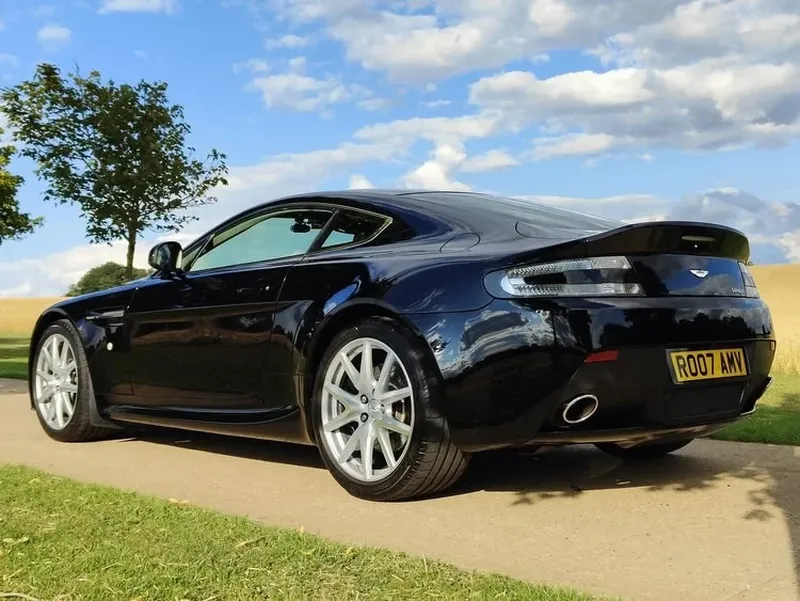
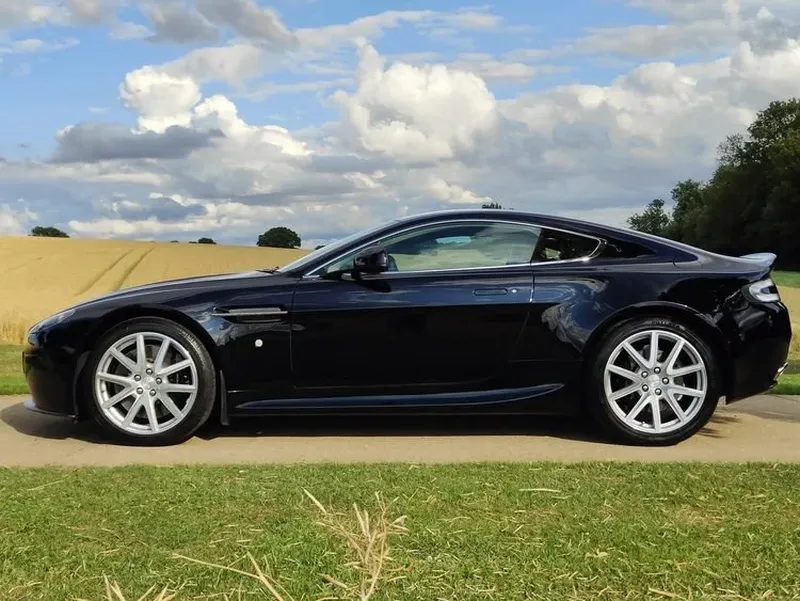
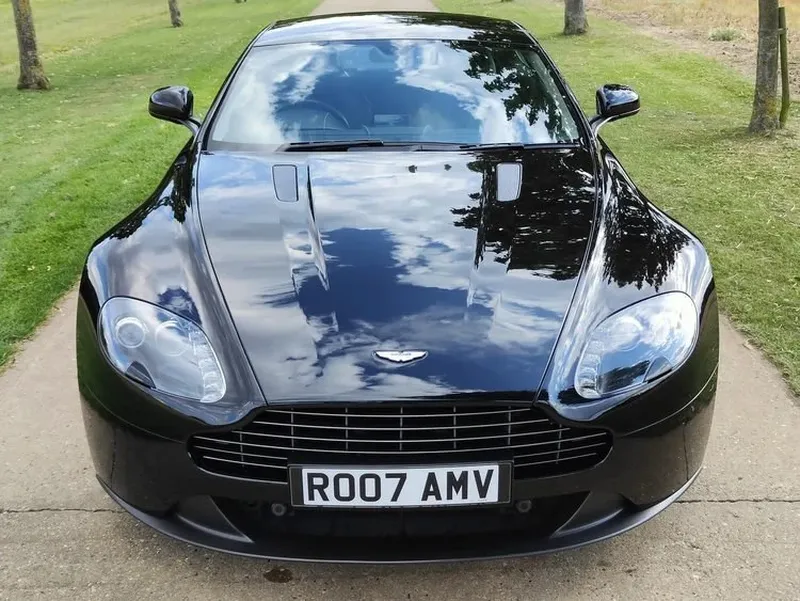
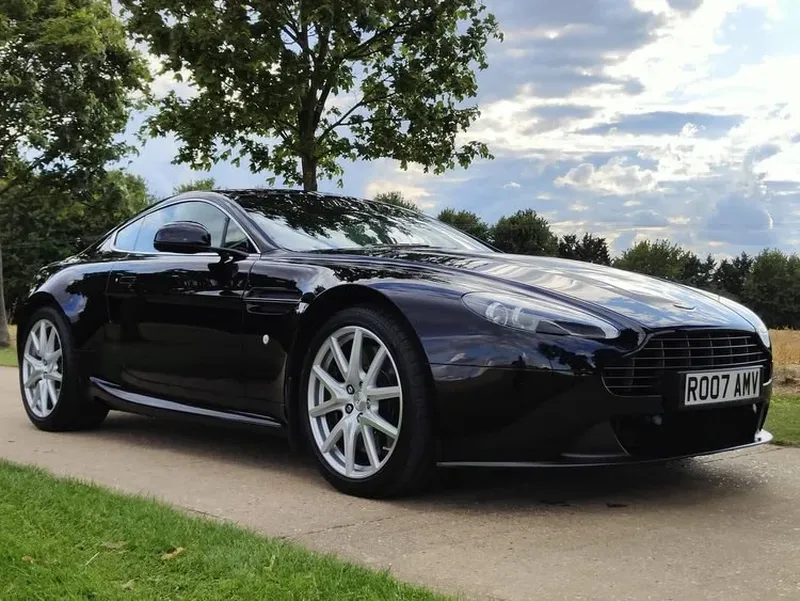
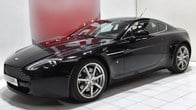
The V8 Vantage has all the classic Aston Martin visual motifs - a long bonnet, a short rear deck, a low roofline and haunches that flare out over the rear wheels. Ian Callum's design philosophy was carried through from the earlier DB9 to create a muscular body from any angle.
The cabin is intimate with two seats, a low seating position and a fascia that wraps around the occupants. The quality of materials (leather, aluminium and carbon fibre) reflects hand-finishing at the Gaydon factory, allied to build quality that stands up to close inspection.


[4.3/4.7-litre V8, Coupé and Roadster]
The core of the range, with 4.3 (2005–2008) and 4.7-litre engines (2008–2018) in coupé and Roadster bodies. These are the most common surviving cars.
[V8 Vantage S]
4.7-litre uprated to 430bhp with revised suspension, sold between 2011 and 2017. Had a sharper character than the standard V8 without the complexity of the V12.
[V12 Vantage]
6.0-litre V12, 510bhp, 2009–2018. The most extreme Vantage platform with a different engine and different ownership profile.
[GT8/GT12]
Track-focused, weight-reduced GT Limited Editions closed out the production run in extremely low production numbers.
The V8 Vantage was generously equipped with safety aids including stability and traction control. Dual front airbags were standard fitments, while side airbags were available depending on specification year. The VH aluminium spaceframe provides structural rigidity well above the class norm, and the car met all Euro NCAP standards. The transaxle layout contributed passively to safety by ensuring the drivetrain components won’t intrude into the occupant cell in a frontal impact.
Pros
The 49:51 transaxle weight distribution achieved by mounting the gearbox at the rear gives the V8 Vantage a pleasingly agile handling balance
The quad-cam V8's relationship to the Jaguar AJ-V8 family extends the parts network and specialist knowledge
As Aston Martin's highest-volume modern production car, the V8 Vantage has the broadest ownership community, the most comprehensive independent specialist support, and the most competitive servicing market of any Aston
Cons
Steel suspension subframes are documented as a specific rust risk and deterioration is structural rather than cosmetic
The Sportshift automated manual gearbox's ASM pump is a documented failure risk: if the pump fails and fluid is lost, the gearbox becomes inoperable
Battery maintenance is disproportionately consequential, and a discharged battery tends to trigger electrical faults across multiple systems
Price trends
Senaste försäljningen
49 995 £
2013 Aston Martin V8 Vantage 2nd Gen

För närvarande till salu
70
0 pågående auktioner
70 annonser


Totalt sålda
262
Högsta försäljningspris
435 054 €
Genomsnittspris
62 152 €
Lägsta pris
18 249 €
FAQs
In the hands of an informed owner with a disciplined service history, the V8 Vantage should be reliable. The quad-cam V8 and manual gearbox are noted as robust units, so the main reliability issues surround battery condition, Sportshift gearbox maintenance and subframe corrosion.
The 4.7-litre engine introduced in 2008 produces 420bhp versus the 4.3's 380bhp, with improved torque delivery and in-gear response across the rev range. The 4.7 is the more developed and more widely favoured unit.
A 4.7-litre manual coupé with a full Aston Martin service history and documented battery maintenance represents a good choice. The manual gearbox is the more robust transmission, the 4.7-litre engine is the more developed powerplant, and the coupé is both lighter and more commonly available than the Roadster.
As summarised above, the six-speed manual is the more engaging transmission, the more reliable unit and the more straightforward to maintain. The Sportshift automated manual suits buyers who prioritise convenience, but its ASM pump is a documented failure point that requires specific inspection and adds to ownership risk (and cost).