Jaguar SS100: Models and Specs
1936–1940 | 2.5–3.5-litre inline-six | Front-engine, RWD | Two-seat roadster | 314 built
Overview
It’s fascinating to speculate how Jaguar’s fortunes might have differed had World War II not put a stop to the production of its SS100 roadster. This car not only established Jaguar's sporting identity but also defined the design language that would carry the marque through subsequent decades. In the mid-Thirties, William Lyons had created Britain's most affordable 100mph car, priced at just £395 when rivals cost twice as much. Yet only 314 examples ever left the Coventry factory, making it one of the rarest and most sought-after pre-war British sports cars. The SS100 was the first true performance offering from SS Cars, combining Lyons' instinctive styling genius with engineer Harry Weslake's overhead valve cylinder head conversions. It succeeded the SS90 by delivering substantially improved performance, proving that sporting elegance needn't demand Bugatti or Alfa Romeo prices.
Price
- Starting price
- 13 776 €
- Average price
- 54 484 €
- Price range
- 13 776 € - 269 500 €
Specifications
- Production years
- 1936–1940
- Total built
- 314 (198 2.5-litre models plus 116 3.5-litre cars)
- Body style
- Two-seat roadster
- Layout
- Front-engine, rear-wheel drive
- Engine family
- Standard-based OHV inline-six
Jaguar SS100 in Detail
Origins and Development
The SS100 emerged in September 1936 as William Lyons' answer to the sporting car market, succeeding the short-lived SS90. Lyons had spent the early 1930s building coachworks for production chassis, but the SS100 represented his first complete sporting design. Standard Motor Company donated a 2.5-litre pushrod inline-six that engineer Harry Weslake transformed through a new overhead valve cylinder head to extract an extra 35 bhp.
Expansion and Refinement
In 1938, the 3.5-litre variant debuted, using an enlarged version of the Standard six. Performance improved meaningfully while the chassis evolved more subtly, with an extra inch in wheelbase length and the adoption of all-steel bodies instead of traditional ash-framed coachwork.
Competition Success
Though it was never factory-developed as a competition car, the SS100's 2,600 lb weight, strong torque and robust construction made it a natural privateer choice. Owners successfully campaigned SS100s in rallies, hill climbs and circuit racing throughout the late 1930s.
Cultural Impact
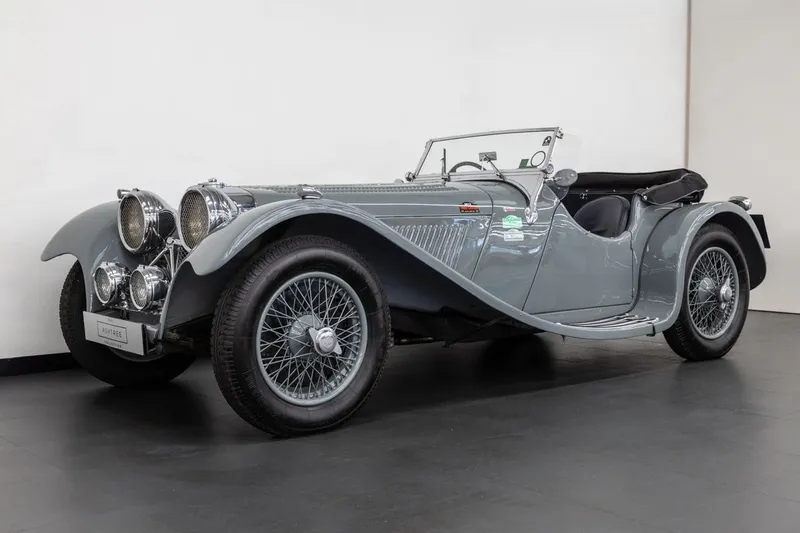
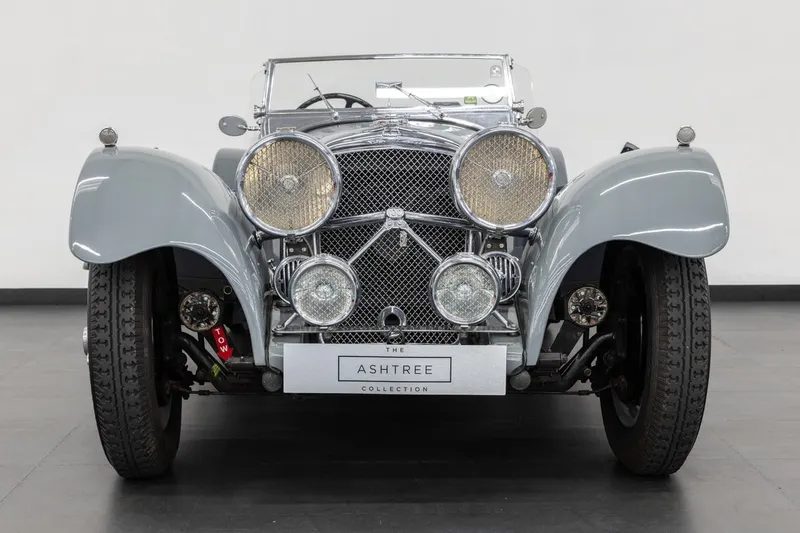
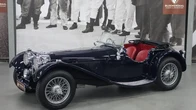
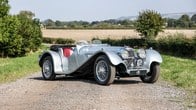
The SS100 introduced design themes that would define Jaguar styling for decades: a long, louvred bonnet; sweeping front wings and flowing lines ending with a compact tail. It also debuted the famous Jaguar 'leaper' bonnet mascot, which became synonymous with the marque.
Sadly, production ceased in 1940 as the war consumed Britain’s industrial capacity. Of 314 cars built, only 49 were exported, leaving most to domestic buyers. The SS100’s influence was obvious in the post-war XK120, which evolved its proportions and philosophy.
The SS100's performance credentials reflected the model's positioning as Britain's affordable sporting machine. The 2.5-litre variant was a respectable performer by mid-1930s standards, whereas the 3.5-litre was more of a thoroughbred sports car. Power outputs ranged from 102–105 bhp in 2.5-litre specification up to 125 bhp in 3.5-litre form, delivered through twin SU carburettors. The four-speed manual gearbox featured synchromesh on the top three ratios.
Engine | Displacement | Power | 0–60 mph | Top Speed |
2.5-litre | 2,663cc | 102–105 bhp | 13.5 sec | 95 mph |
3.5-litre | 3,485cc | 125 bhp | 10.4 sec | 101 mph |
Whilst the 2.5-litre struggled to achieve its claimed 100 mph maximum, the 3.5-litre felt comfortable hitting the ton.
SS100 2.5-Litre (1936–1940)
Original specification featuring 2,663cc inline-six producing 102–105 bhp. 198 examples were built, comprising the majority of SS100 production. An initial wheelbase of 119 inches was extended to 120 inches from 1938.
SS100 3.5-Litre (1938–1940)
This enlarged engine variant boasted 3,485cc displacement and 125 bhp. Performance improved considerably, but only 116 examples were ever produced, making it the rarer and more valuable of the two.
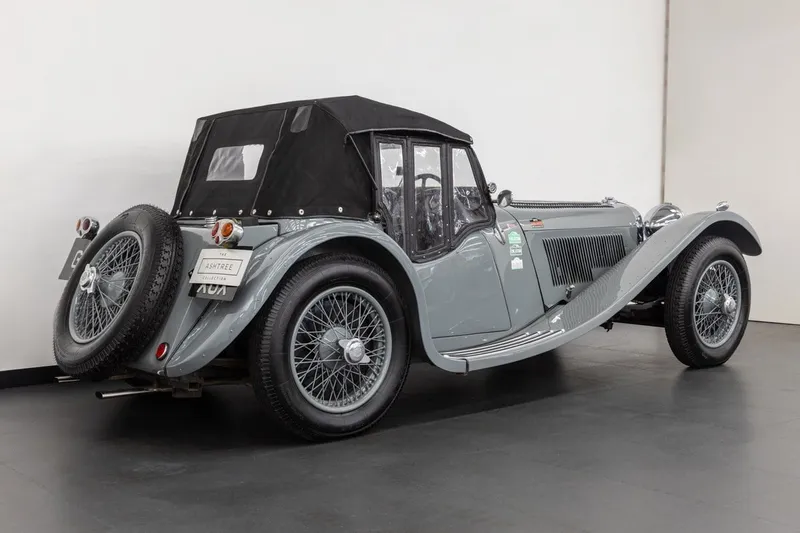
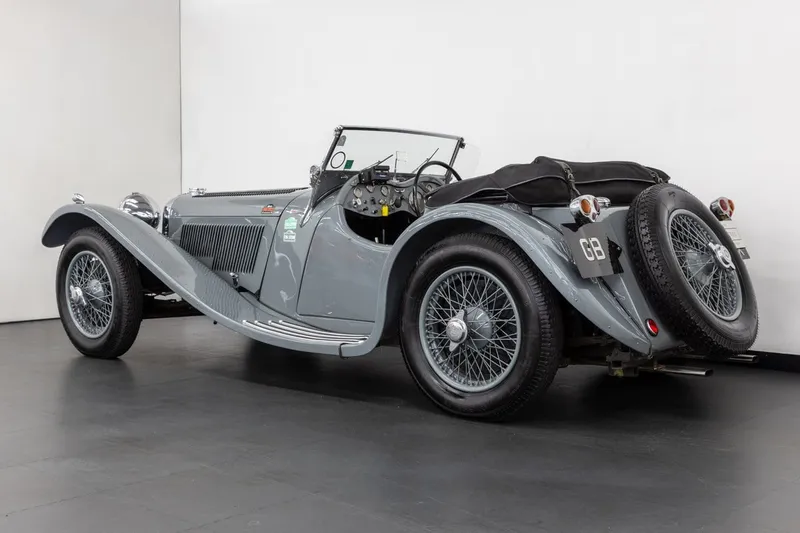
The SS100's long bonnet, short tail and flowing middle were inspired by William Lyons’ experience of motorcycle sidecar design and coachbuilt specials. The roadster body sat close to the road on wire-spoked 18-inch wheels, with restrained use of chrome detailing by period standards.
The cabin prioritised driver engagement over comfort with simple instrumentation, direct controls and minimal weather protection. In terms of the latter, a folding windscreen, minimal hood and side screens provided only token shelter from the elements.


The SS100's safety characteristics reflect mid-1930s engineering standards. Girling mechanical brakes operated on all four wheels via cables, which require regular adjustment and provide underwhelming stopping power by today’s ADAS standards. The rigid axle suspension offered limited wheel travel and resulted in unpredictable breakaway characteristics at the limit. At least the ladder-frame chassis provided reasonable structural integrity.
Pros:
Exceptional rarity and historical significance
Design purity and timeless aesthetic appeal
Strong appreciation potential and market stability
Relatively simple mechanical specifications
Cons:
Extreme scarcity makes finding genuine examples challenging
Restoration costs easily exceed purchase price
Parts availability limited; many components require fabrication
Replica population outnumbers genuine cars
SS100 for Sale
Car & Classic regularly features SS100 listings, ranging from project-specification cars requiring comprehensive restoration to concours-standard examples with impeccable provenance.
Price trends
Senaste försäljningen
59 995 £
2023 Jaguar SS100
28 sep. 2023

För närvarande till salu
27
0 pågående auktioner
27 annonser


Totalt sålda
17
Högsta försäljningspris
269 500 €
Genomsnittspris
54 484 €
Lägsta pris
13 776 €
FAQs
This is a ninety year old sports car, so don’t even consider making it a daily driver. Cable-operated brakes, rigid axle suspension and the lack of weather protection make modern urban traffic something to endure rather than enjoy. Many cars have benefitted from sympathetic mechanical upgrades that enhance usability without sacrificing too much character, so study a vehicle’s history closely before considering a purchase.
Ownership costs tend to reflect the car's rarity and pre-war engineering. Setting aside an annual maintenance budget of £3,000–£5,000 ought to cover routine servicing. Insurance ranges from £800–£2,000 per year, depending on agreed value and usage.
The passage of time means parts availability has become the greatest ownership challenge. Mechanical components from Standard-based engines can sometimes be sourced or fabricated, but body panels, trim and SS100-specific components typically require custom manufacturing. A thriving replica industry has improved the availability of certain items, though quality varies considerably. Project cars demand comprehensive restoration, typically costing £80,000–£150,000 depending on starting condition and desired finish.
Replica SS100s offer the aesthetic experience without the six-figure investment, but quality varies dramatically from competent to crude. High-quality replicas often incorporate Jaguar XJ6-based mechanicals for improved reliability and performance. However, replicas obviously lack the investment potential, historical authenticity and collector prestige of genuine SS100s.