Renault Fuego: Models and Specs
1980–1985 | 1.4–2.0-litre four-cylinder petrol; 2.1-litre turbodiesel | Front-engine, front-wheel drive | 3-door coupé hatchback
Overview
The Renault Fuego was developed as the direct successor to the Renault 15 and 17 coupés, while its body was designed in-house by the same team responsible for the Renault 14 and 18. The Fuego was an early example of Renault adopting model names rather than numbers, and it was the first mass-produced four-seater coupé to be fully designed with wind-tunnel testing. Of greater practical relevance to buyers, it also introduced the world's first remote keyless central locking system and the first-ever steering-wheel-mounted radio controls. The Fuego sat at the top of Renault's front-wheel-drive range, positioned above the 18 on whose platform it was based. It gave Renault a coupé competitor with the Ford Capri and Opel Manta, though the Fuego used front-wheel drive to deliver a more composed and less hedge-adjacent driving character. The Fuego's combination of aerodynamic efficiency, practical hatchback packaging, and a range spanning from a 64 bhp 1.4 TL to the 132 bhp 1.6 Turbo made it a broad-market coupé rather than a niche performance car, and this breadth defines both its appeal and its used-market character today. Total French production reached 265,367 units before the line closed in October 1985, with a further Argentine production run continuing through to 1992.
Price
- Starting price
- 2 899 €
- Average price
- 8 324 €
- Price range
- 2 899 € - 15 000 €
Specifications
- Production years
- 1980–1985
- Total production
- 265,367
- Body style
- 3-door coupé
- Layout
- Front-engine, front-wheel drive
- Engine family
- 1.4–2.0-litre petrol; 2.1-litre turbodiesel
Renault Fuego in Detail
The Fuego combined the Renault 18 floorpan with front suspension components borrowed from the Renault 20 and 30 to manage the coupé's higher-performance engines. The suspension used double wishbones at the front and trailing links with an A-bracket at the rear to achieve composed straight-line stability and a compliant long-travel ride, though the 62:38 front-to-rear weight distribution made the Fuego’s handling more neutral than sporty under hard cornering. Rack-and-pinion steering with power assistance was standard on higher-trim cars from the GTS upward.
The Fuego's launch range covered three core trims: the TL (1.4-litre, 64 bhp), the GTL (1.6-litre economy-tuned), and the GTS (1.6-litre, 97 bhp), with the TX and GTX two-litre variants following shortly after, producing 110 bhp from a 1,995 cc unit. The Fuego Turbo arrived in September 1983, serving as the range's performance model, and you can read all about it on a dedicated Fuego Turbo page here.
From 1983, minor aerodynamic detail changes like small spoilers and smooth hubcaps were added to the range, and electronic ignition became standard across all variants. The posthumous Argentine production run used the 2.0-litre and 1.6 Turbo engines, but most UK-market cars are French-produced left-hand-drive examples.
The Fuego was marketed as a broadly accessible coupé rather than a hardcore performance car. The 1.4 TL was the entry point for buyers seeking coupé styling on a modest budget, and the 2.0 GTX represented the practical performance ceiling for most buyers, with the Turbo a dedicated performance-focused variant.
Variant | Engine | Power | 0–60 mph | Top Speed | Gearbox |
TL | 1,397 cc OHV | 64 bhp | 16.5 sec | 93 mph | 4-speed manual |
GTL | 1,647 cc OHV (economy) | 73 bhp | 14.5 sec | 99 mph | 5-speed manual |
GTS | 1,647 cc OHV | 97 bhp | 11.8 sec | 109 mph | 5-speed manual |
TX/GTX | 1,995 cc SOHC | 110 bhp | 10.0 sec | 118 mph | 5-speed manual |
Turbodiesel | 2,068 cc turbodiesel | 88 bhp | 13.2 sec | 110 mph | 5-speed manual |
Turbo | 1,565 cc turbocharged | 132 bhp | 9.3 sec | 118 mph | 5-speed manual |
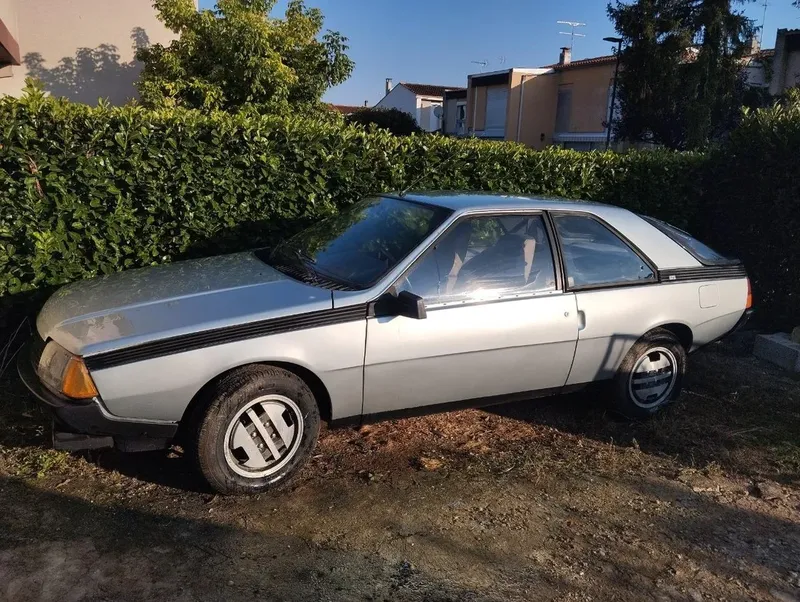
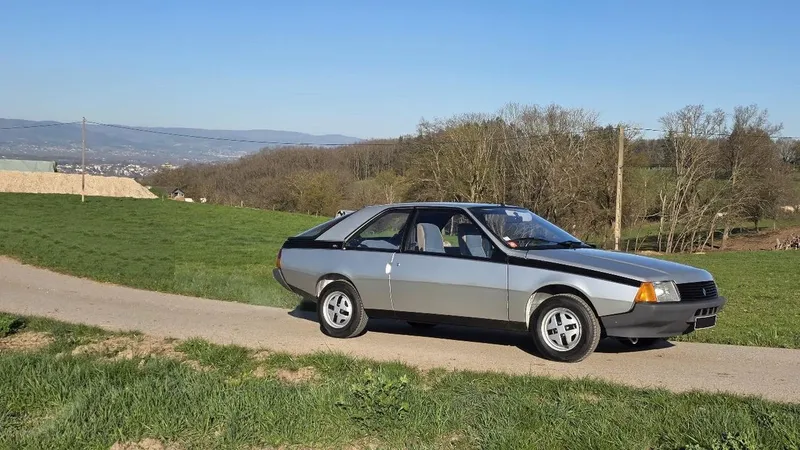
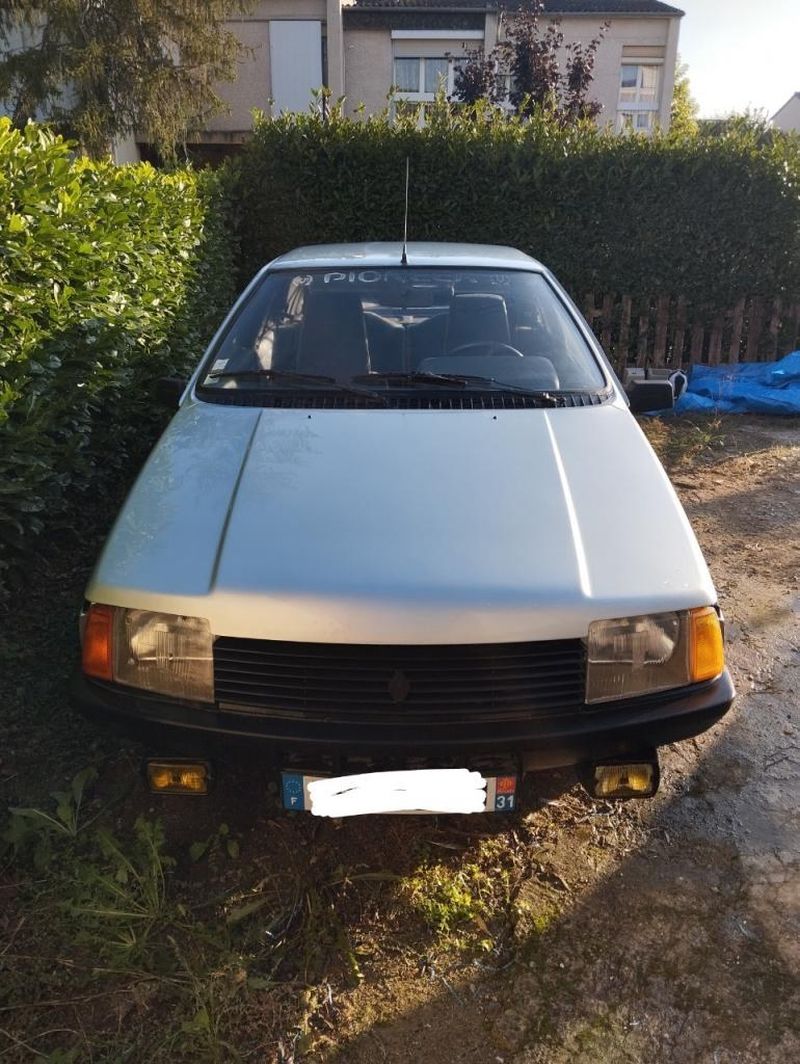
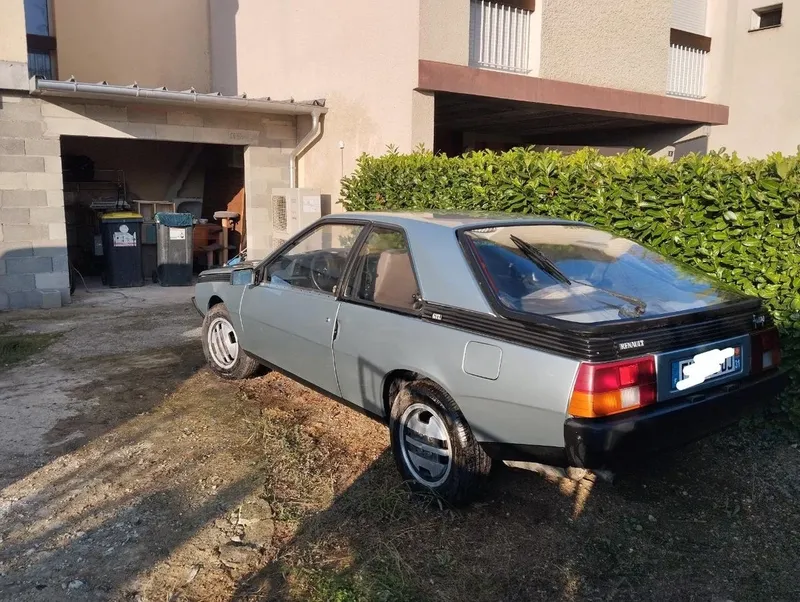
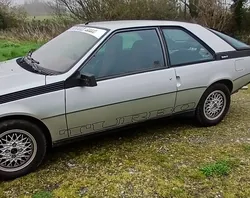
The Fuego is identifiable by its low, flush-surfaced body with a pronounced fastback roofline and a full-width glass bubble tailgate that integrates the rear window into the hatchback without a separate bootlid. The body surface’s minimal decoration reinforced the aerodynamics and gave the Fuego a cleaner appearance than the chrome-laden contemporaries it replaced.
At 1,346 mm in roofline height, the Fuego is low for a four-seater, and its cabin was designed around a driver-focused fascia with a hooded instrument cluster and ancillary controls on a raised centre console. The front seats on GTS and GTX cars used sculpted high-back velour with extended lateral bolsters that provided support without a fixed shell. The rear bench is functional for two over shorter distances, improved by a full-width glass tailgate flooding the cabin with light and improving rear-passenger visibility.

The Fuego was produced in a single generation without a formal mid-cycle redesign across its five-year French production run.
1980–1983 (TL/GTL/GTS/GTX). The launch range was powered by 1.4 to 2.0-litre engines with remote central locking as standard
1983–1985 (revised range and Turbo). Electronic ignition was standardised alongside aerodynamic detail revisions; Turbo variant was added in September 1983
1982–1992 (Argentina). The Fuego was assembled locally by CIADEA using 2.0-litre and 1.6-litre turbo engines
Four-wheel disc brakes were standard on GTX and Turbo variants, with the front discs ventilated; the TL and GTL used front discs with rear drums. The Fuego was subject to a recall in certain markets for steering wheel failures, relating to a specific structural fault rather than a generic wearing characteristic. No active or passive safety equipment was fitted other than seatbelts, though the Fuego did pioneer (pun intended) stereo controls mounted within fingertip reach of the steering wheel.
Pros
The Fuego was the first production car to have a remote keyless central locking fob and steering wheel-mounted stereo controls
The 2.0 GTX's 1,995 cc SOHC engine offers 110 bhp in a 970 kg body with a practical hatchback tailgate, blending performance and practicality
The turbodiesel Fuego's 110 mph capability made it the world's fastest diesel production car in 1982
Cons
French production cars are almost exclusively left-hand drive; RHD examples for the UK market are scarce, and most UK buyers must accept LHD
The 62:38 front-to-rear weight distribution produces nose-heavy handling that requires adjustment from drivers accustomed to more neutral geometry
Finding a well-maintained Fuego requires patience; parts for trim and electrical components are not stocked by mainstream UK classic car suppliers
Renault Fuego for Sale
The Fuego occupies a niche position in the UK classic market. It’s sufficiently rare to attract specialist interest, yet available at accessible price points for buyers prepared to source LHD examples from France or mainland Europe. Any examples currently for sale through Car & Classic will be listed here.
Price trends
Senaste försäljningen
8 995 £
1985 Renault Fuego

För närvarande till salu
6
0 pågående auktioner
6 annonser



Totalt sålda
17
Högsta försäljningspris
15 000 €
Genomsnittspris
8 324 €
Lägsta pris
2 899 €
FAQs
Most Fuego production was left-hand drive, and genuine RHD examples are rare in the current UK market. LHD Fuegos can be used legally on UK roads and registered on UK plates with a DVLA age-related plate, but overtaking visibility is reduced. Most UK Fuego owners have sourced their cars from France or Belgium where supply is broader, and condition is typically better than surviving UK-registered examples.
Mechanical parts for the Fuego's 1.6 and 2.0-litre engines are available through Renault specialist suppliers in France and European parts networks. Trim, glass and body panel sourcing is more challenging; the Fuego Club de France and marque registries in mainland Europe are the primary resource for interior and body components.
The 2.1-litre turbodiesel Fuego introduced in 1982 achieved a 110 mph top speed, making it the fastest diesel production car in the world at the time of its launch. However, despite the popularity of compatriot Peugeot and Citroën turbodiesels in the UK, this Renault model was never officially sold here.
The Fuego shares the Renault 18's floorpan and drivetrain, including the front-wheel-drive layout and the 1.6 and 2.0-litre engine family. The front suspension was uprated using components from the Renault 20 and 30. The Fuego is not merely a rebodied Renault 18, since it uses a unique body structure designed specifically for the coupé and has different suspension geometry and a different bodyshell.