Alfa Romeo Alfetta: Models, Specs and Buyer's Guide
Core Specs: 972–1984 • 1.6–2.0 L inline-4 twin-cam • up to 130 PS • 5-speed manual • RWD (rear transaxle) • ~180 km/h top speed
Alfa Romeo Alfetta Overview
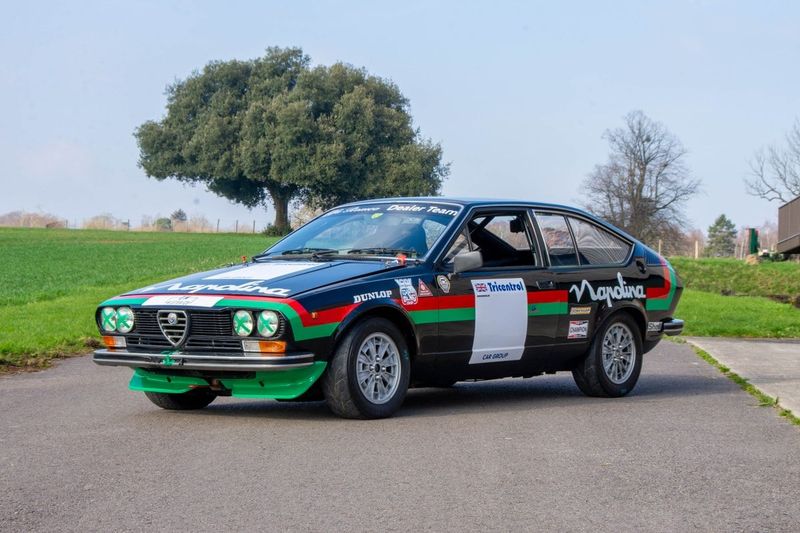
Alfa Romeo has a romantic and storied history, but it’s also a troubled one. In the early 1970s, state-owned Alfa had an ageing lineup and extremely low productivity. It needed a hero model, and in 1972, it received one, in the form of the Type 116 Alfa Romeo Alfetta. Heralding a shift towards what today would be considered modern mechanicals, the Alfetta was originally a sports saloon. In Britain, it’s best remembered for the GTV and GTV 6 coupe models, launched in 1974 and eulogised by GTV 6 owner Jeremy Clarkson, among many others. The soul of any Alfa is its engine, and the Alfetta range started life with a 1.8-litre all-alloy twin-cam unit. This was later joined by 1.6- and 2.0-litre petrol versions. From 1979 onwards, the range added a turbodiesel, making this the first Italian car to feature a turbocharged diesel engine.
C&C Expertise
If any Alfa Romeo sums up Alfa Romeo, then it’s the Alfetta. Beautiful, balanced and brilliant, it was the cleverly-engineered alternative to the humdrum Capri. But back in the ‘70s and ‘80s, buyers had best make the most of it while they could, because the Alfetta had a virtually pre-ordained ability to disintegrate, break down or otherwise break their hearts. That makes them extremely rare today. Survivors are likely to be sorted now. Whether you want the agility of the 2.0-litre twin cam or the grunt of the Busso V6, the Alfetta is a proper motoring gem.
Alfa Romeo Alfetta Price
- Starting price
- 3 950 €
- Average price
- 16 949 €
- Price range
- 3 950 € - 57 500 €
Alfa Romeo Alfetta Specifications
- Engine Power
- 122 hp (≈90 kW) @ 5,500 rpm
- Engine Type
- 1.8L inline-4 “Twin Cam”, DOHC, twin carburettors
- Transmission
- 5-speed rear transaxle manual
- Body Type
- Saloon (Berlina)
- Layout
- Front-engine, rear-wheel drive (rear transaxle, De Dion rear axle)
Alfa Romeo Alfetta in Detail
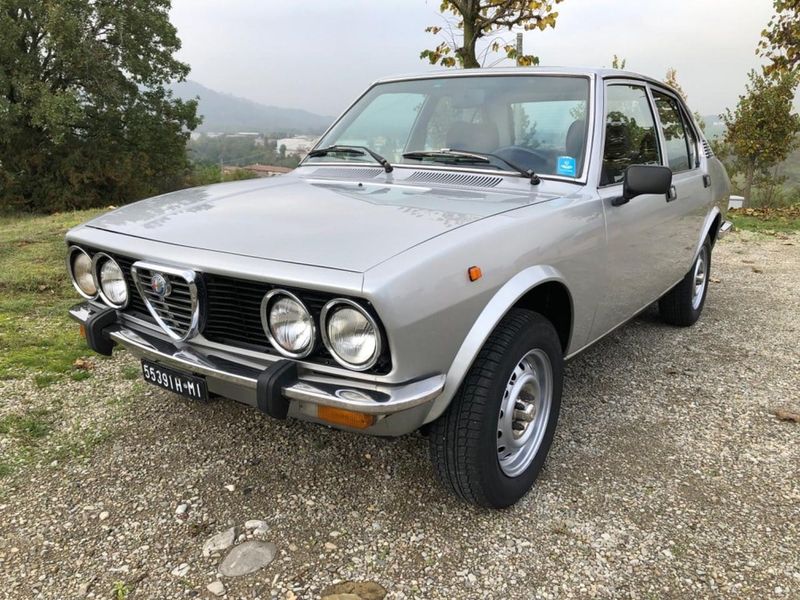
1972: Officially revealed in May 1972 near Trieste, this new saloon introduced Alfa’s mass-production transaxle drivetrain with near-50/50 weight distribution. The Alfetta name was chosen in homage to (and to build on the prestige of) the F1-winning Tipo 158/159, which was also known as the Alfetta.
1972–1974: The first series models were built with the 1.8-litre DOHC twin-cam engine.
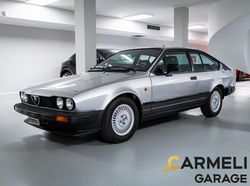
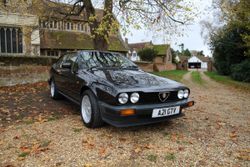
1974–1983: The Giugiaro-styled Alfetta GT/GTV line (based on the same platform) eventually morphed into the GTV6 and Turbodelta specials, though the latter was a homologation special not marketed in the UK.
1975: This year saw the introduction of a more affordable 1.6-litre entry model, while the 1.8 received detailing updates to its nose and interior.
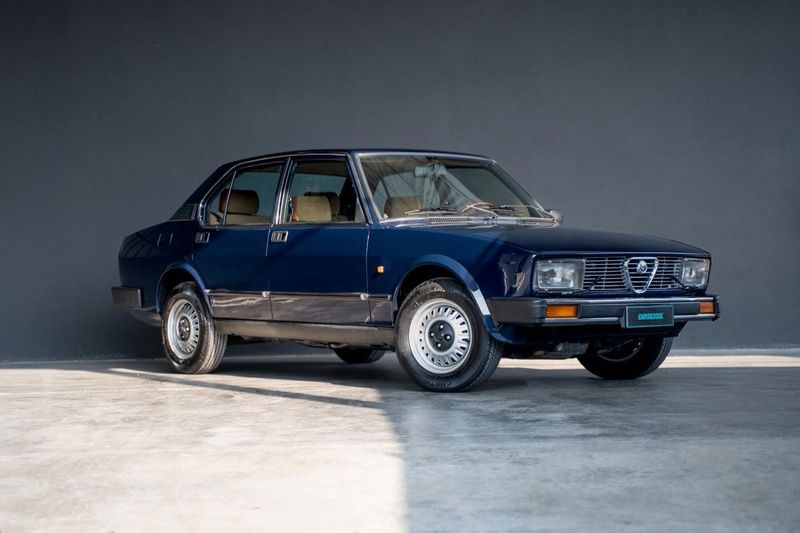
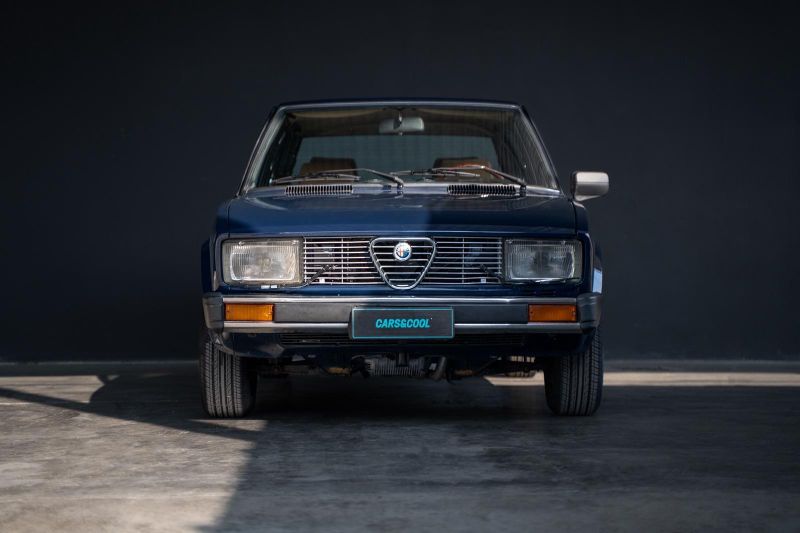
1977: Launch of the Alfetta 2.0 with a revised nose showcasing square headlamps and trim upgrades.
1979: The first Italian turbodiesel saloon reached the market with the debut of the Alfetta 2.0 VM Motori.
1983: Final facelift and QO Injection. Alfa’s third and final facelift introduced features including new bumpers/cladding, a redesigned dashboard and instruments, and Bosch electronic injection on the top model.
1984: Production ended after more than ~450k–476k saloons (sources vary). had been manufactured, with the short-lived Alfa 90 succeeding the Alfetta.
The table below includes all major engine variants with originally stated outputs.
Model (year) | Engine | Top speed |
|---|---|---|
Alfetta 1.8 (1972) | 1,779 cc DOHC inline-4 (twin carbs) | 180 km/h (112 mph) |
Alfetta 2.0 (1976) | 1,962 cc DOHC inline-4 (fuel injection, US-spec) | 105 mph (169 km/h) |
Alfetta 2.0 (1981–84) | 1,962 cc DOHC inline-4 (130 PS) | 185 km/h (115 mph) |
Alfetta 2.0 Turbo Diesel (1980) | 1,995 cc turbodiesel (VM) | 155 km/h (96 mph) |
The Alfetta’s look was a conscious break from the seductive curves of 1960s models, featuring a tapered nose and minimal front overhang, followed by a smooth waistline that flowed into strong C-pillars. Later facelifts (notably the final 1983 revisions) updated the bumpers, cladding and dashboard without losing the car’s poised and assertive stance.
The Coupé models were especially popular in the UK, and their design dated less quickly than the saloon.
Body style and stance. Four-door notchback saloon (“berlina”) designed in-house by Centro Stile Alfa Romeo. It featured a slim nose, upright glasshouse, strong C-pillars and a clean three-box profile.
Wheels and tyres. Factory cars left the line on Pirelli Cinturato 14-inch wheels.
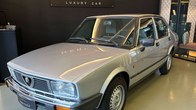
Trim cues to look for. The last cars produced (between 1983 and 1984) are the easiest to distinguish. They replaced the slimmer bumpers and round-lamp front treatments of earlier models with deeper plastic bumpers, side cladding and a distinctive full-width rear panel.


Seating and layout. Five-seater “berlina” cabin with front buckets and a conventional rear bench featured a simple and functional dashboard and instruments.
1977 update. The range-topping Alfetta 2000 arrived with a revised dashboard, steering wheel, and upholstery, while the 1978-model 2000 L added a faux wooden dashboard trim.
1981–82 equipment uplift. The “Alfetta ’82” update introduced more affordable versions of the two-litre model, featuring enhanced bodyshells and interiors. This was typified by the 1982 Quadrifoglio Oro (QO) trim, which featured a trip computer, check-control panel, and electrically adjustable beige velour seats.
1983 final facelift. As part of the run-out, every model received a redesigned dashboard and instruments, plus new door panels. Flagship models gained a full-length overhead console with three reading lamps and electric window controls.


Active Safety (Brakes, Chassis, Steering)
Power four-wheel disc brakes with dual safety circuits, Dual-circuit, servo-assisted disc brakes all round with inboard rear discs and a mechanical rear pressure regulator; rack-and-pinion steering; balanced handling from the transaxle + De Dion layout.
Rack-and-pinion steering improved precision and feedback compared to earlier Alfa Romeo mechanical setups.
Alfetta had secure high-speed manners for a family saloon of that era.
Inboard rear discs improved handling by reducing unsprung mass and concentrating heat near the transaxle.
Passive Safety and Equipment
Two-section steering column with universal joints and padded safety-grip wheel, designed to reduce intrusion and improve driver protection in frontal impacts
Adjustable head restraints on front bucket seats were standard across several trim levels
Alfa Romeo Alfetta Variants & Generations
Built from 1972 to 1984, the Alfetta saloon evolved through 1.6/1.8/2.0 petrol, as well as later turbodiesel versions. A series of facelifts and trim revisions included the 1983 Quadrifoglio Oro, which featured fuel injection. The GT/GTV/GTV6 were separate coupé body lines that shared the same 116-series transaxle platform but offered far more style and appeal.
Price trends
Vente la plus récente
11 500 €
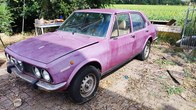
1977 Alfa Romeo Alfetta

Actuellement en vente
47
1 enchère en direct
46 annonces


Total vendu
54
Prix de vente le plus élevé
57 500 €
Prix moyen
16 949 €
Prix le plus bas
3 950 €
FAQs
The Alfetta saloon (Type 116) was built from 1972 to 1984, though the platform’s coupé models continued in production for slightly longer.
Nearly ~450k–476k saloons were manufactured over a 12-year period.
Towards the end of its production life, the Quadrifoglio Oro Injection was sold with Bosch Motronic electronic fuel injection and ignition.
Primarily in Arese in Italy, though some assembly also took place in South Africa at the confusingly named Brits factory.