BMW Isetta: Models and Specs
1955–1962 · 247cc–297cc single-cylinder OHV · Rear-engine, rear-wheel drive · Front-opening microcar coupé/cabriolet/three-wheeler
Overview
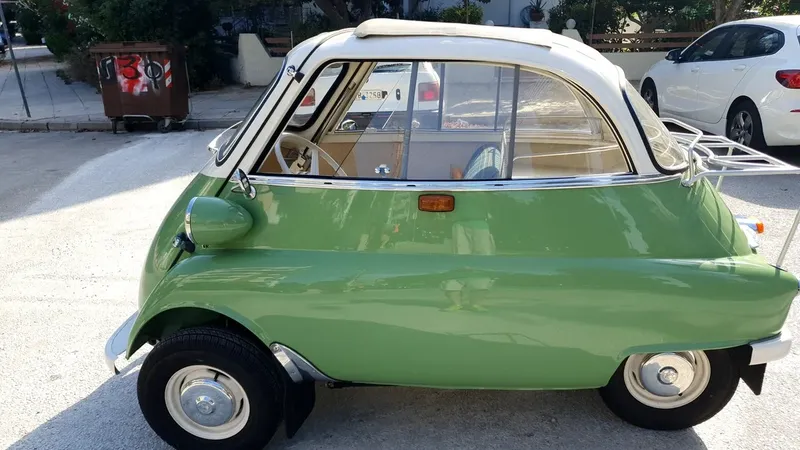
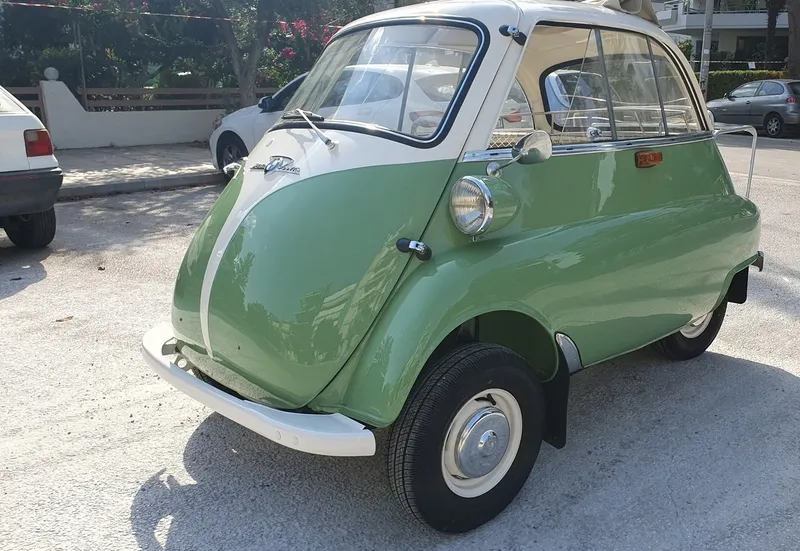
It might look incongruous compared to the company’s modern-day output, but the Isetta helped to rescue BMW from near-bankruptcy. Almost by accident, this indebted post-war marque created an automotive icon that remains one of the most immediately recognisable classic cars in existence - and surely the most distinctive and most commercially significant microcar ever built. BMW licensed the Isetta design from Italian manufacturer Iso SpA in 1954, re-engineering virtually every component before production began in Munich from 1955 onwards. BMW replaced the original two-stroke engine with an in-house motorcycle-derived four-stroke unit, improving the suspension and creating a car that was entirely BMW's own in mechanical terms despite those Latin origins. The Isetta's significance extends beyond its curious appearance and the iconic opening front door. It sold 161,728 units across its seven-year production run, representing the bulk of BMW's output during a period when the company's larger cars were selling poorly, and financial collapse was a genuine possibility. Without the Isetta's revenue stream, BMW wouldn’t have survived to produce the New Class saloons that rebuilt the marque's prestige in the 1960s.
Price
- Starting price
- Average price
- Price range
- -
Specifications
- Production years
- 1955–1962
- Total production
- 161,728
- Body styles
- Coupé; cabriolet; Dreirad
- Layout / drive
- Rear-engine, rear-wheel drive
- Engine family
- Single-cylinder four-stroke: 247cc/297cc
BMW Isetta in Detail
BMW didn’t intend to build a small car, but by 1954, its luxury car sales had collapsed while its motorcycle division was under pressure from cheaper competitors. The company needed a high-volume, low-cost product to generate cash.
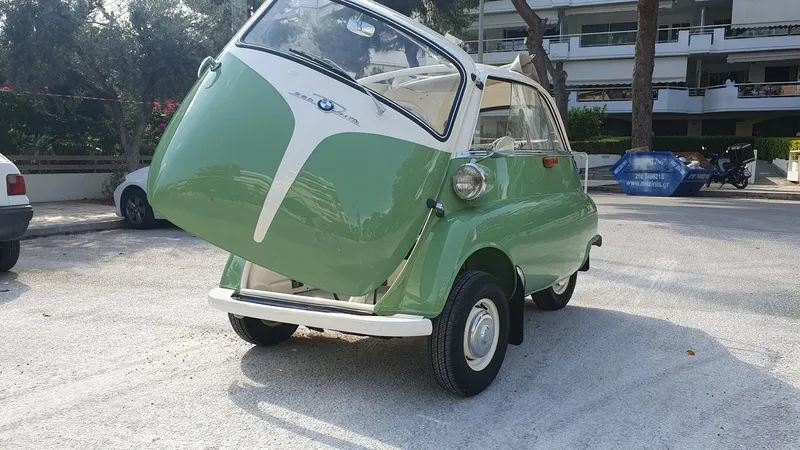
The Iso Isetta was an Italian design by Ermenegildo Preti, featuring a single front-opening door, a 236cc two-stroke engine, and a 2,285mm body. BMW's engineers reworked it comprehensively: the Iso engine was replaced with BMW's own 247cc single-cylinder OHV unit from the R25 motorcycle, the body was marginally lengthened and widened, the suspension was redesigned for German road conditions and the steering wheel was attached to the door so that it swung outward with the door to allow entry.
Variants
The Isetta 250 launched in April 1955, with the Isetta 300 following within months using a bored-out 297cc version of the same engine. The 300's additional 1 bhp and stronger torque curve made it the preferred specification, and it accounted for the majority of total production throughout the model's life.
In 1956, a cabriolet variant was added with a folding canvas sunroof panel replacing the rear bodywork. In the same year, the Dreirad three-wheel variant arrived for markets where the tricycle licence classification applied; in the UK, it could be driven on a motorcycle licence. The Dreirad replaced the standard car's twin rear wheels with a single narrow rear wheel on a shortened axle.
BMW continued developing the Isetta throughout its production run. The engine was progressively refined, the interior was modestly improved, and a sliding side window replaced the earlier swivelling unit in 1956. Production ended in 1962, by which time the BMW 700 had taken over as the company's entry-level model. The related BMW 600 (a four-seat, longer-wheelbase derivative using a flat-twin engine) ran from 1957 to 1959 as a separate model.
The Isetta weighed just 340–360 kg, which is roughly the same as four adults. This featherweight construction helped it to achieve up to 72 mpg while retailing at half the cost of a Volkswagen Beetle. The 12 bhp 250 and 13 bhp 300 could achieve a top speed of 53 mph, while the latter’s additional cubic capacity gave it marginally more mid-range torque in third and fourth gear rather than any measurable performance gain.
The coupé, cabriolet, and Dreirad all share the same engine, gearbox and final drive. The Dreirad's lighter rear end marginally improves acceleration but introduces handling characteristics that require awareness at the Isetta's performance limits.
Variant | Power | 0–60 mph | Top speed |
Isetta 250 - 247cc single-cylinder | 12 bhp | 35 sec | 53 mph |
Isetta 300 - 297cc single-cylinder | 13 bhp | 32 sec | 53 mph |
Isetta 300 Dreirad - 297cc (3-wheel) | 13 bhp | 30 sec | 53 mph |
All Isetta variants share the same engine family, chassis architecture and front-door entry concept. The differences are displacement, body style and wheel configuration:
Isetta 250 (1955–1962). The original specification with a 247cc engine producing 12 bhp. The 300 outsold it throughout their shared production life. Identifiable by the narrower engine cover and 250 badging.
Isetta 300 (1955–1962). The dominant production variant with 297cc and 13 bhp, this is the specification most buyers will encounter and the one for which parts supply is widest.
Isetta 300 Cabriolet (1956–1962). A folding canvas roof panel replaces the fixed steel rear section of the standard car, with the same mechanical specification as the 300 coupé.
Isetta 300 Dreirad (1956–1962). This three-wheel variant for motorcycle licence markets used a narrowed rear axle with a single rear wheel powered by the 297cc engine; driveable in the UK on a motorcycle licence.
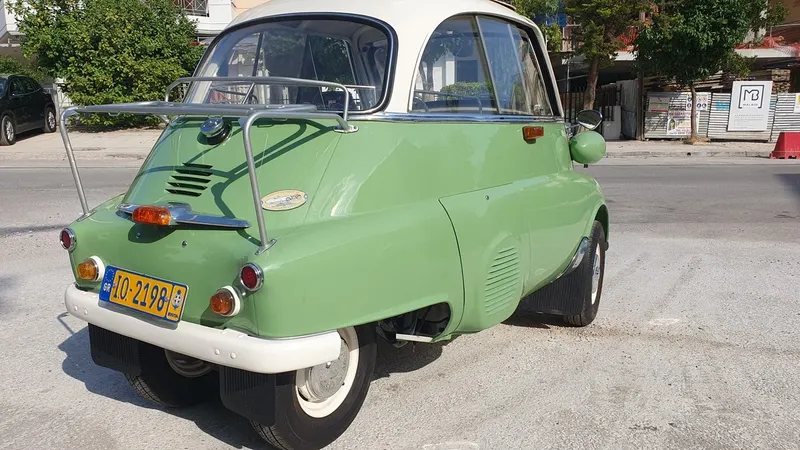
The BMW Isetta is immediately and universally identifiable. No other production car before or since has used a single front-opening door as its primary design feature, and no other car treads the same fine line between ingenuity and absurdity. The body is a rounded egg shape in plan view, with a length of 2,285–2,355mm; shorter than any contemporary motorcycle and sidecar combination, and narrow enough to park perpendicular to the kerb in many places. The entire front of the car (door, windscreen, steering wheel and instrument cluster) swings forward as a single unit on a piano hinge, and the steering column rotates with it to allow entry.
Inside, two adults sit side by side in reasonable comfort for short journeys, with an 80-litre boot space behind the seats. The dashboard is as basic as it gets, with a speedometer, fuel gauge and controls for the heater and wipers. The engine sits directly behind the occupants, its single-cylinder note audible but not intrusive.
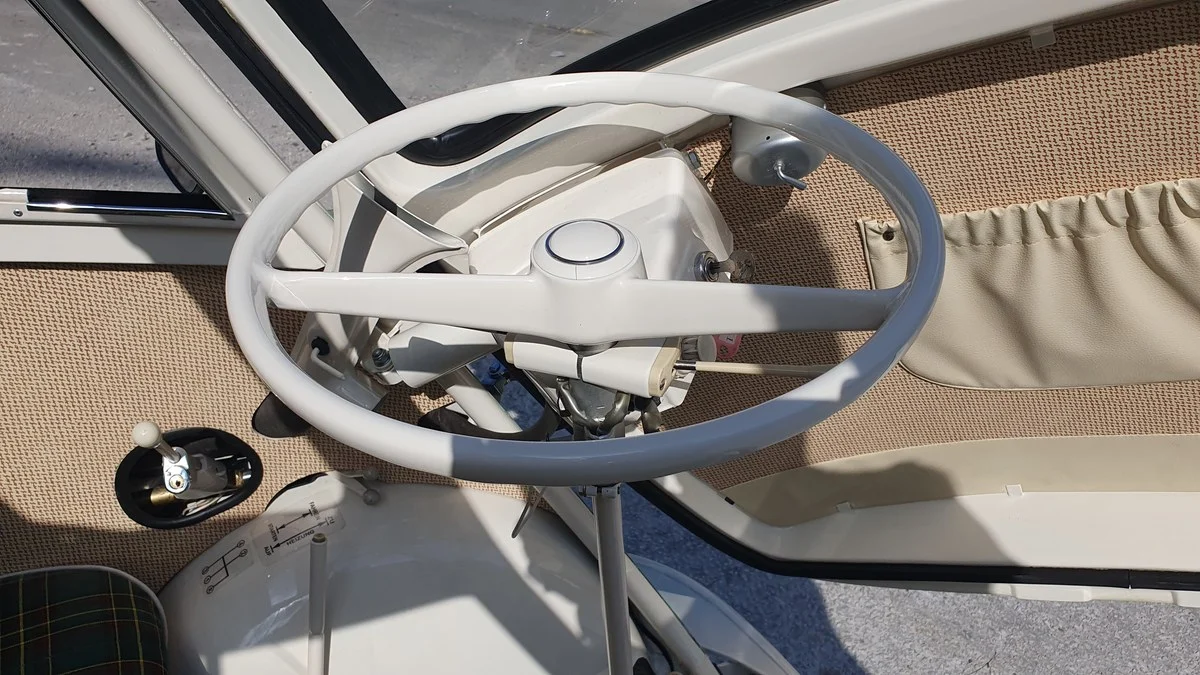

There is no safety to speak of, but you do need to be aware of the Isetta’s quirks. Drum brakes front and rear with no servo assistance are entirely adequate for the Isetta's 53 mph top speed but require firm, deliberate pedal application. The front-door entry design means that in a head-on collision, the door mechanism is the primary structure between the occupant and the obstacle, as well as being the only way out. The Dreirad's single rear wheel creates additional sensitivity to crosswinds and aggressive cornering that requires delicacy at the car's performance limits.
Chassis and Floor Pan
The Isetta's steel chassis and floor pan are prone to serious corrosion. BMW itself identified the floor pan, chassis members, battery compartment, wheel wells and body folds as primary rust locations, so check them all with a torch and a probe before any purchase. Structural chassis rust is the single most expensive repair on any Isetta, easily capable of exceeding the car's market value.
Engine
The 247cc and 297cc single-cylinder units are simple, robust and well-understood. Listen for knocking from the bottom end and confirm the oil pressure warning light extinguishes promptly on start-up. The cooling fan belt should be inspected for condition and correct tension, as a failed fan belt on a running engine causes rapid overheating.
Front Door and Steering Column
The front door's hinge mechanism and the steering column's rotary joint are the most mechanically unique items on the Isetta and require specific inspection. Any play in the hinge, stiffness in the steering column rotation or misalignment of the door seal indicates wear that requires specialist knowledge. Confirm the door latches fully and the windscreen seal is sound, as water ingress through a failed door seal tends to lead to floor pan corrosion.
Body Panels
The Isetta's pressed-steel panels are available through specialist suppliers but aren’t cheap. Pay particular attention to the lower rear bodywork around the engine compartment, the rear wheel arches on four-wheel cars and the lower door surround. Hairline cracks in the body pressing around the door hinge points are common on high-mileage cars, indicating stress in the primary structural joint.
Cabriolet Hood
On cabriolets, inspect the canvas hood material for splits, the hood frame for bent or corroded sections, and the rear body section for water damage resulting from hood seal failure.
Pros:
The most recognisable classic microcar in existence
Genuine BMW marque history; directly credited with saving the company from bankruptcy
Exceptional fuel economy (up to 72 mpg) and low running costs in normal use
Cabriolet and Dreirad offer distinct collecting propositions within the same model family
Cons:
No seatbelts, no crumple zones and that lightweight front door is the primary crash structure
Floor pan and chassis corrosion can be catastrophic, and repair costs may exceed market value
53 mph top speed makes motorway use impossible, and A-road use somewhat attritional
Specialist knowledge required for front door mechanism and engine maintenance
BMW Isetta: Models and Specs variants & generations
Car & Classic lists BMW Isettas at price points reflecting the full range. Browse current listings to find the variant and condition that match your ownership plans. For the related four-seat BMW 600, see the separate model page.
Price trends
Vente la plus récente
Non trouvé
Actuellement en vente
0
0 enchères en direct
0 annonces
Total vendu
0
Prix de vente le plus élevé
0 €
Prix moyen
0 €
Prix le plus bas
0 €
FAQs
The Isetta 300 four-wheel coupé is the most practical purchase as it’s the most readily available, the best-supported in terms of parts and the most capable mechanically. The cabriolet has a more desirable body style and commands a clear premium, while the Dreirad is the most accessible price-wise and can be driven on a motorcycle licence. However, its single rear wheel demands more driver awareness, and parts are harder to acquire.
Very low in normal use. Expect fuel economy of up to 72 mpg, minimal tyre wear given the car's light weight and a mechanically simple engine which makes day-to-day running costs among the lowest of any classic car. The cost risk is concentrated in restoration and structural work; chassis and floor pan repairs on a neglected car require specialist steel fabrication that can exceed £15,000–£20,000.
BMW's official Isetta buying checklist identifies four primary risk areas: floor pan and chassis corrosion, body fold corrosion (particularly around the door hinge area), battery compartment rust and wheel well condition.
The BMW 600 (1957–1959) is a related but distinct model. It’s a longer, wider four-seater powered by a flat-twin engine rather than the Isetta's single-cylinder unit. It shares the Isetta's front door concept but adds a conventional side door for rear-seat access. The 600 is treated as a separate model on Car & Classic, with its own buying guide and market data.