Ferrari 612 Scaglietti: Models and Specs
2004–2011 - Front mid-engine V12 - Rear-wheel drive - 540 hp - 6-speed manual or F1A paddle-shift - 0–100 km/h 4.2s - 315 km/h top speed
Overview
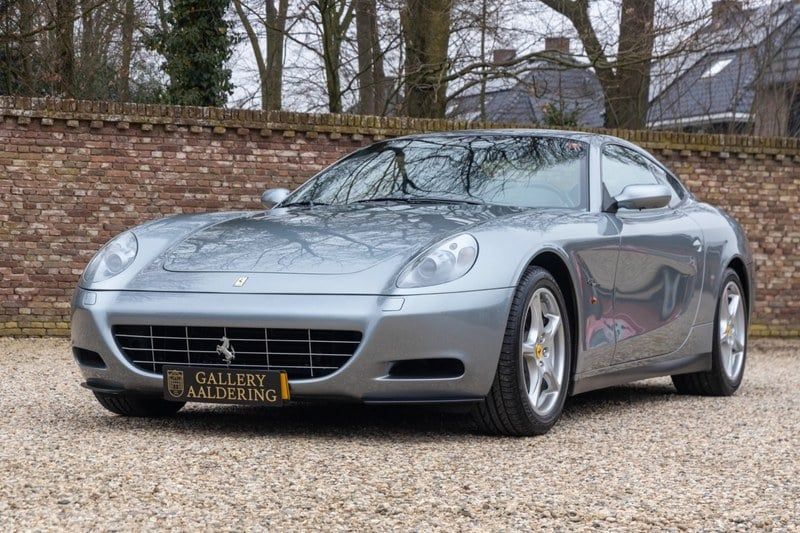
The Ferrari 612 Scaglietti is relatively unusual in being a genuine four-seater grand tourer, rather than a two-seater supercar or a 2+2 where the +2 need to be gymnasts. Despite packing a 5.7-litre V12 under its sweeping bonnet, this is a car which could transport three passengers through the Alps without needing physiotherapy afterwards. Named in honour of Sergio Scaglietti, the legendary Modenese coachbuilder who bodied some of Ferrari's most beautiful cars of the 1950s and 60s, the 612 debuted Ferrari's first all-aluminium 12-cylinder engine. That modest boast resulted in a 60 kg weight saving over the outgoing 456, while increasing structural rigidity by 60 per cent.
C&C Expertise
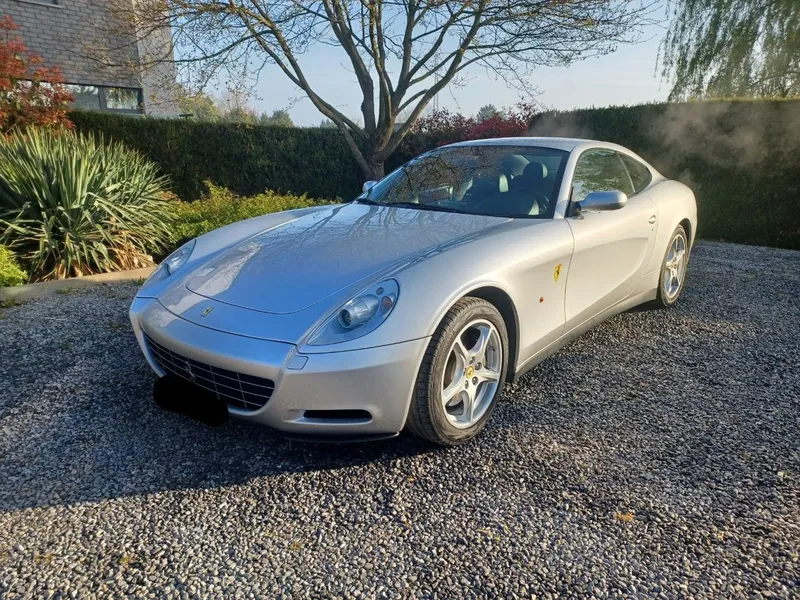
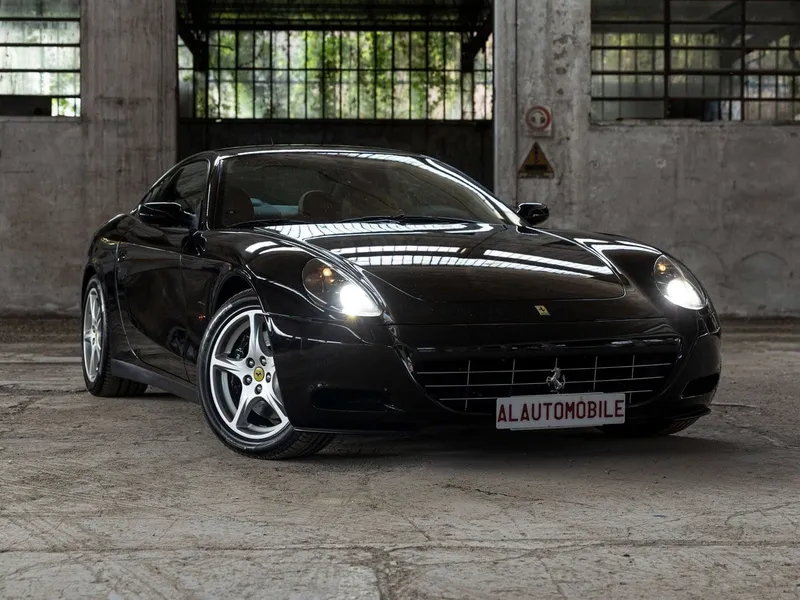
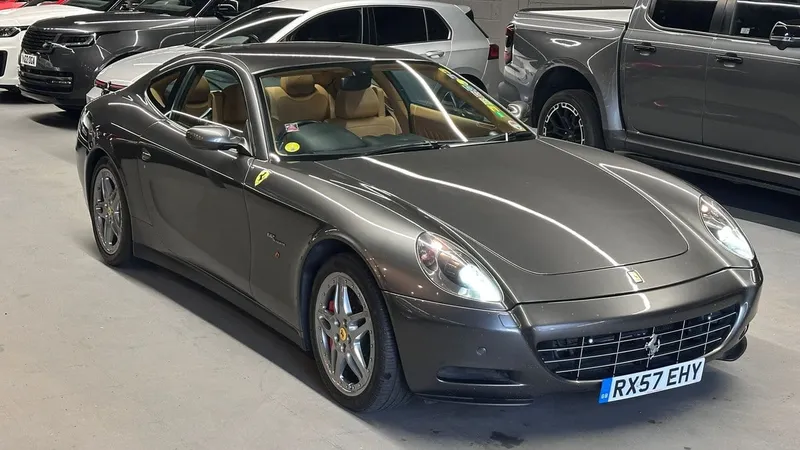
The Scaglietti arrived on the scene in 2004 to a rather unflattering response from onlookers. Proportionally, the new 2+2 was substantially larger than the 456 it succeeded, and it also lost the fan-favourite pop-up headlights. However, time has been kind to the 612, and its design has matured into a discreetly elegant grand tourer. Its 575-derived V12 delivers a not inconsequential 533 bhp. The 612 is also likely the last remotely attainable modern front-engined Ferrari to be offered with a gated 6-speed manual transmission, which is why I believe the 612 is ageing like a fine wine. While describing any twelve-cylinder Ferrari as a ‘value proposition’ may seem ambitious, it is worth remembering that the Scaglietti is the most exclusive modern four-seater from Maranello, rarer than the preceding 456 and considerably scarcer than the mass-produced FF that followed.
Price
- Starting price
- 48 389 €
- Average price
- 87 364 €
- Price range
- 48 389 € - 184 335 €
Specifications
- Manufacturer
- Ferrari
- Production Years
- 2004–2011
- Vehicle Class
- Grand Tourer
- Body Style
- 2-door berlinetta
- Layout and Drive
- Front mid-engine, longitudinal / rear-wheel drive, transaxle
Ferrari 612 Scaglietti s in Detail
The 612 Scaglietti was unveiled at the 2004 North American International Auto Show in Detroit, arriving as the successor to the 456M GT. It wasn’t the most beautiful Ferrari ever made, but it did acknowledge the 1950s 375 MM, while abolishing the cramped rear accommodation of older Ferraris by offering almost six inches of additional length over the 456 to deliver extra rear legroom.
The name was chosen to indicate the engine's rounded-up displacement (5.7 litres became 6) and the presence of a dozen cylinders. Meanwhile, the Scaglietti suffix honoured the Modenese coachbuilder whose facility produced the car's all-aluminium body and spaceframe chassis.
Buyers had a choice between a traditional 6-speed gated manual or the F1A paddle-shift transmission - a significantly refined evolution of the 360 Modena's F1 system, offering faster shift times and improved low-speed manners. The engine sat behind the front axle with the gearbox and differential mounted at the rear in a transaxle layout that achieved 46/54 weight distribution.
Production concluded in early 2011 when the four-wheel-drive FF was unveiled at the Geneva Motor Show, bringing the 612's six-year run to a close. By then, Ferrari had built 3,025 examples, of which only 199 had the manual gearbox. Needless to say, these are now highly sought after on the classic car market.
The 612 Scaglietti was built around a 5.7-litre naturally-aspirated V12 producing 540 hp and 588 Nm of torque, with handling packages and transmission choices creating demonstrably different characteristics. The engine was mid-mounted ahead of a rear-mounted gearbox, while the rear-wheel drive was bolstered by a limited-slip differential offering 25 per cent lock under acceleration and 45 per cent on lift-off.
Performance
Variant | Transmission | Power / Torque | 0–100 km/h | Top Speed |
Base 612 (2004–2011) | 6-speed manual or F1A | 540 hp / 588 Nm | 4.2s (F1A) / 4.5s (manual) | 315 km/h |
612 HGT-S and HGT-C (2006–2008) | 6-speed manual or F1A | 540 hp / 588 Nm | 4.0s (F1A) | 315 km/h |
612 Sessanta (2007) | F1A only | 540 hp / 588 Nm | 4.0s | 315 km/h |
612 HGT-2/GTE (2008–2011) | F1A only | 540 hp / 588 Nm | 4.0s | 315 km/h |
The base 612 is remarkably refined for a 540-hp V12, feeling smooth and cultured, with so much low-down torque that you rarely need to work the engine hard. The F1A gearbox in early cars can feel hesitant in traffic (particularly in auto mode), but the Sport setting sharpens its responses considerably.
HGT-equipped cars transform the driving experience, with recalibrated dampers and traction control, and on HGTC models, carbon-ceramic brakes. However, these components require regular, heavy use to perform properly. In all models, hydraulically assisted steering delivers genuine feedback, much like the traditional Ferrari gated-shifter experience in rare manual models.
Buyer Note: Engine output remained consistent across all variants, and HGT packages changed how the car delivered and managed that power rather than increasing it.
The 612 Scaglietti is a genuinely large car by Ferrari standards, yet the proportions disguise its footprint surprisingly well.
Dimension | Measurement |
Length | 4,902 mm (193.0 in) |
Width | 1,957 mm (77.0 in) |
Height | 1,344 mm (52.9 in) |
Wheelbase | 2,950 mm (116.1 in) |
Front track | 1,688 mm (66.5 in) |
Rear track | 1,641 mm (64.6 in) |
Kerb weight | 1,840 kg (4,057 lbs) |
Boot capacity | 240 litres |
The car’s width and low-profile tyres mean tight car parks, speed bumps and country lanes require concentration. The 240-litre boot is genuinely usable, with Ferrari claiming at the time it could swallow a six-piece luggage set or two golf bags.
The 612 Scaglietti's design was penned by Pininfarina, though it deliberately lacked the ostentation of late 20th century Testarossas and F40s. One signature design element was the scalloped sides, which break up those substantial flanks. The front end has slim headlights and minimal air intakes, while the rear features classic Ferrari quad circular taillights. Aesthetic detailing aside, the shape has aged remarkably well.
The panoramic electrochromic glass roof, introduced mid-production and standard on Sessanta and One-to-One cars, fundamentally changed the cabin's character. With three tint settings, it gave all four occupants a welcome sense of airiness while maintaining coupé refinement.
Ferrari was still refining aluminium construction techniques when the 612 Scagletti was being built, so don’t expect a showroom-perfect finish in terms of panel gaps and alignment, even on well-maintained examples.
What to pay attention to when viewing one:
The 612 can suffer from galvanic corrosion where aluminium meets dissimilar metals, particularly around seams. Check for bubbling paint around air vents, panel edges and anywhere seams are sealed. Similarly, condensation inside headlight units is common if cars are stored outside or not covered, and you’ll be looking at a four-figure bill for replacement units if moisture is present.
This is a Ferrari, so low ground clearance means underbody scrapes are normal, but fresh damage or cracked carbon fibre trim (on HGT cars) needs investigation. The 18/19-inch wheels (20-inch on Sessanta and later HGT cars) have low-profile tyres that are vulnerable to potholes, so check for cracks, buckles, or kerbing damage. Even low-mileage cars need fresh rubber every five years, while CCM brakes must be used regularly (and hard) to avoid deterioration.


The 612's cabin was designed to deliver the sophistication Ferrari's GT buyers expected while accommodating four adults in comfort; the rear seats are actually usable for adults, with electric front seat movement expediting access. The driver is greeted by an ergonomically-focused layout with an instrument binnacle angled toward them, steering-wheel-mounted controls within thumb reach and a sense of occasion without the claustrophobia of many mid-engined cars.
Expect full-grain leather throughout the cabin, with aluminium accents everywhere from the dash and air vents to the gearbox paddle shifters. Bose stereos were developed specifically for the 612's interior acoustics, while dual-zone climate is effective when it works.
What to check when buying:
Sticky dashboard switches and controls are well-documented Ferrari issues, and refurbishment requires chemical stripping and recoating, so budget accordingly if this issue is present. Similarly, cars stored in direct sunlight can suffer from leather pulling away from the dashboard as it shrinks, and rectification is expensive. The seat leather should be supple and free from cracking, and as this is an Italian supercar, test every switch, button and adjustment.
These were well-equipped and well-engineered cars from new, so aftermarket modifications can significantly hurt resale values.


The 612 Scaglietti comes from an era when Ferrari was beginning to integrate meaningful electronic driver aids, such as its proprietary Control for Stability and Traction system, adaptive dampers and ventilated disc brakes - though there was no ABS on very early 612s. The aluminium spaceframe provides exceptional rigidity and incorporates crumple zones for occupant protection.
A good 612 should feel tight and responsive thanks to proper maintenance. The quickest way to spot a risky one is by examining its mechanical and maintenance provenance, which should start with a complete service history by a Ferrari specialist or main dealer.
Some maintenance is non-negotiable, regardless of cost. The rubber timing belt demands replacement every four or five years (irrespective of mileage) and is a ~£4,000 job, so confirm when it was last done. The magnetorheological dampers commonly fail after 50,000 miles, F1A clutches last less than 30,000 miles and cost up to £5,000 to replace, and carbon-ceramic brake replacement often exceeds £10,000.
Less costly issues include the aforementioned galvanic corrosion and sticky switches. A well-maintained 612 with complete documentation will always be worth far more than a neglected example at a tempting price.
Price trends
Vente la plus récente
94 990 €
2005 Ferrari 612

Actuellement en vente
26
0 enchères en direct
26 annonces
Total vendu
45
Prix de vente le plus élevé
184 335 €
Prix moyen
87 364 €
Prix le plus bas
48 389 €
FAQs
It depends how you'll use it. A base 612 is the most refined and comfortable for long-distance touring, while HGT-S/HGT-C/HGT-2 cars offer more sporting focus without losing GT usability. If you'll drive hard regularly, HGTC's carbon-ceramic brakes make sense; if not, the standard discs on HGT-S are lower-maintenance. Sessanta models command collector premiums for exclusivity, and only 199 manuals were ever built.
Later cars benefited from cumulative software improvements and build quality refinements.
The engine output was fixed at 540 hp across all variants, yet the HGT-S and HGT-C packages (later combined into HGT-2) transformed the 612's character. You get a sportier exhaust, faster gearshifts, firmer dampers, stiffer anti-roll bars, and more permissive traction-control parameters. The HGTC also adds carbon-ceramic brakes.
Not automatically. A higher-mileage 612 with a complete service history and regular use is often a safer bet than a low-mileage car that's been stored for long periods. These cars prefer being driven, and long periods of storage may lead to deteriorating seals, sticky switches and gearbox issues. Maintenance quality matters far more than mileage.
Potentially, yes. The base 612 is surprisingly usable for everyday driving, as it’s comfortable and genuinely refined with practical four-seat accommodation. However, its width demands attention in tight spaces; those low-profile tyres are vulnerable to poor roads, and running costs are substantial. The F1A gearbox can feel frustrating in traffic, particularly on early cars, so bear this in mind if you’re a townie - though you’ll be more likely to have Ferrari specialist support nearby.