Porsche 911 Turbo: Models and Specs
1975–present, twin-turbocharged flat-six, rear-engined/AWD, coupé/cabriolet, 260–640 hp
Overview
The 911 Turbo has always been marketed as Porsche's everyday supercar, delivering blistering performance without the privations of its track-focused GT siblings. Debuting in 1975 with the 260 hp 930, the Turbo gradually (arguably too gradually) evolved into a sophisticated all-wheel-drive vehicle combining brutal straight-line speed with all-weather consistency. Across five decades and eight generations, the Turbo has occupied the role of flagship performance 911, positioned above Carrera variants through a combination of mechanical engineering and luxury equipment. It also promises daily usability compared to the commitment and compromises associated with GT3 and GT2 ownership.
Price
- Starting price
- 12 034 €
- Average price
- 86 951 €
- Price range
- 12 034 € - 573 355 €
Specifications
- Production Years
- 1975–present
- Body Styles
- 2-door coupé, 2-door cabriolet
- Layout/Drive
- Rear-engine, RWD (1975-1994), AWD (1995-present)
- Engine Family
- Turbocharged flat-six
- Displacement Range
- 3.0–3.8 litres
Porsche 911 Turbo in Detail
The 930 Turbo emerged in 1975 as Porsche's response to emissions regulations threatening the 911's naturally aspirated performance, demonstrating that forced induction could recover power while still meeting evolving environmental standards. Initially producing 260 hp from a 3.0-litre engine, a 1977 update added intercooling and expanded the engine’s displacement to 3.3 litres, raising output to 300 hp and establishing the Turbo as the definitive flagship 911. The rear-wheel-drive layout combined with on-off turbo lag created road manners which could best be described as unsympathetic.
The 993 generation from 1995 put an end to this lucky-dip handling by adding all-wheel-drive, transforming the Turbo from an intimidating specialist into an enjoyable everyday supercar. Water-cooling arrived with the 996 in 2000, while the 997 of 2006 pioneered Variable Turbine Geometry on a petrol engine, adjusting guide vane angles to optimise boost across the rev range and virtually eliminating lag.
Porsche's acclaimed dual-clutch PDK transmission became standard on Turbos from the 997.2 facelift of 2010, delivering faster changes than manual alternatives yet maintaining driver engagement through paddle shifters and multiple driving modes. The 991 generation (2013) introduced rear-axle steering and sophisticated active aerodynamics including adaptive rear wings, though even these have had to cede technological bragging rights to the current 992 Turbos, where the 640 hp output of Turbo S models results in 2.6-second 0-60 mph acceleration.
The Turbo's performance identity evolved from laggy and intimidating power delivery in the 930 era to seamlessly exploitable thrust in modern generations. Single-turbo KKK units on early 930 models saw boost arriving abruptly at 3,500 rpm, rendering the back end treacherous in wet conditions, whereas the 993's twin-turbo configuration delivered more linear power alongside gratefully received AWD.
Performance has gradually increased over the generations of Turbo models, as outlined below.
Generation | Years | Power | 0-60 mph | Top Speed | Key Technology |
930 Turbo | 1975-1989 | 260-330 hp | 4.9-5.4 sec | 160-170 mph | Single KKK turbo, intercooler (1977), RWD |
964 Turbo | 1990-1994 | 320-381 hp | 4.8 sec | 168 mph | 3.6-litre engine (1993 on), three-way catalysts |
993 Turbo | 1995-1998 | 408-450 hp | 4.3 sec | 180 mph | Twin turbos, AWD introduction |
996 Turbo | 2000-2005 | 420-450 hp | 4.2 sec | 190 mph | Water-cooling, VarioCam Plus, Mezger engine |
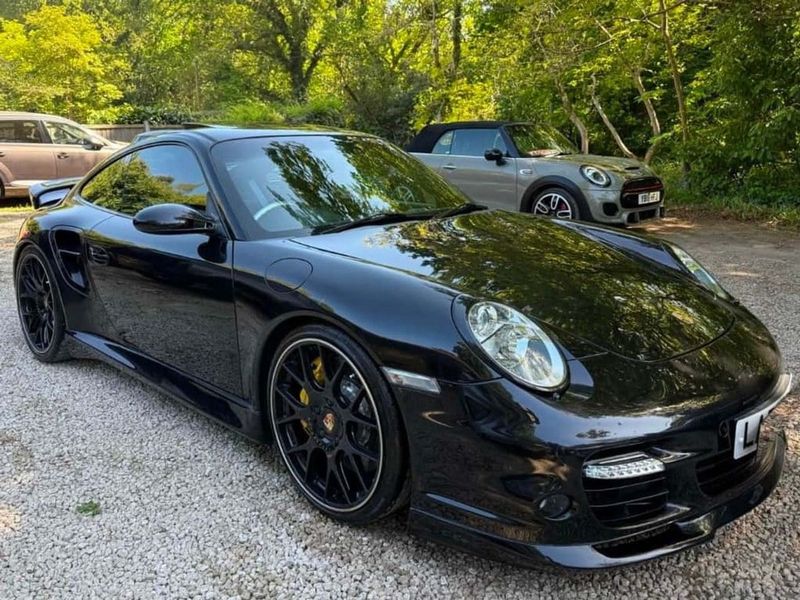
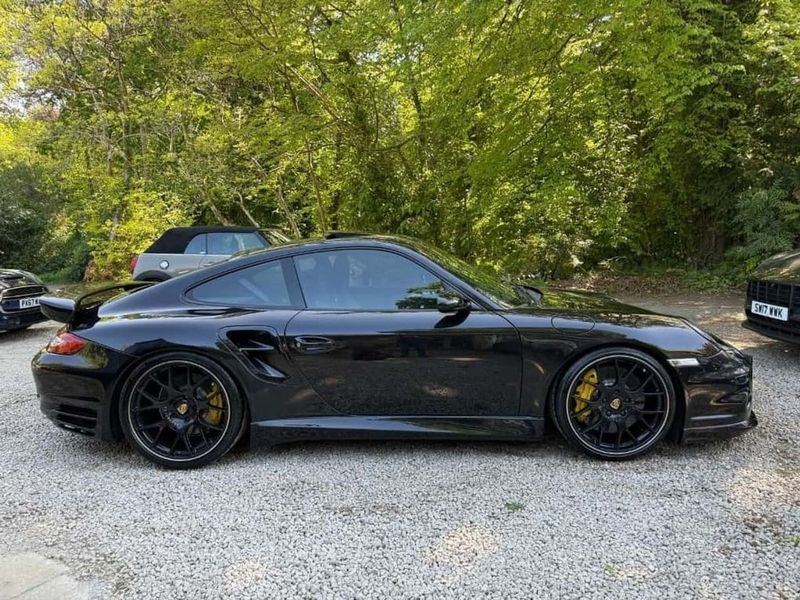
997 Turbo | 2006-2012 | 480-530 hp | 3.6 sec | 193 mph | VTG turbos, PDK (2010) |
991 Turbo | 2013-2019 | 520-580 hp | 3.0 sec | 198-205 mph | Rear-axle steering, active aero |
992 Turbo | 2020-present | 572-640 hp | 2.6 sec | 199-205 mph | Mirror-image VTG turbos, 8-speed PDK |
Turbo variants feature wider bodywork than Carrera models, creating space for forced induction, intercoolers and all-wheel-drive components. The 992 generation standardised wide-body architecture across all AWD Carrera variants, reducing the Turbo's visual distinctiveness, but typical dimensional increases versus contemporary Carrera models include 50-70mm of rear width and 20-30mm increases in the front track.
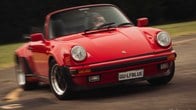
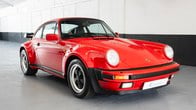
930 Turbo (1975-1989): The original widowmaker established future Turbo DNA with its wide bodywork, whale-tail spoiler and single-turbo 3.0/3.3-litre engines mated to manual transmission. RWD was legendary but challenging dynamically.
964 Turbo (1990-1994): Evolutionary update retaining 3.3-litre single-turbo and then 3.6-litre twin-turbo (1993-1994) with improved emissions and 360 hp.
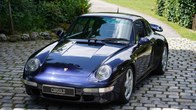
993 Turbo (1995-1998): AWD arrived in tandem with parallel twin-turbos, 408-450 hp depending on specification. The final air-cooled Turbo now commands premium collector status.
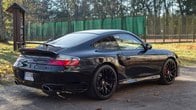
996 Turbo (2000-2005): First water-cooled Turbo featuring Mezger engine generating 420-450 hp. The Turbo S (2005) introduced ceramic brakes as standard.
997 Turbo (2006-2012): Pioneered VTG turbos for petrol engines creating 480-530 hp. The 997.2 facelift of 2010 introduced PDK dual-clutch transmission and direct injection.
991 Turbo (2013-2019): Rear-axle steering debuted alongside active aerodynamics to deploy 520 to 580 hp. The 991.2 facelift in 2016 delivered 540-580 hp and sub-3-second 0-60 times.
992 Turbo (2020-present): The current Turbo spits out 572-640 hp through an eight-speed PDK transmission.
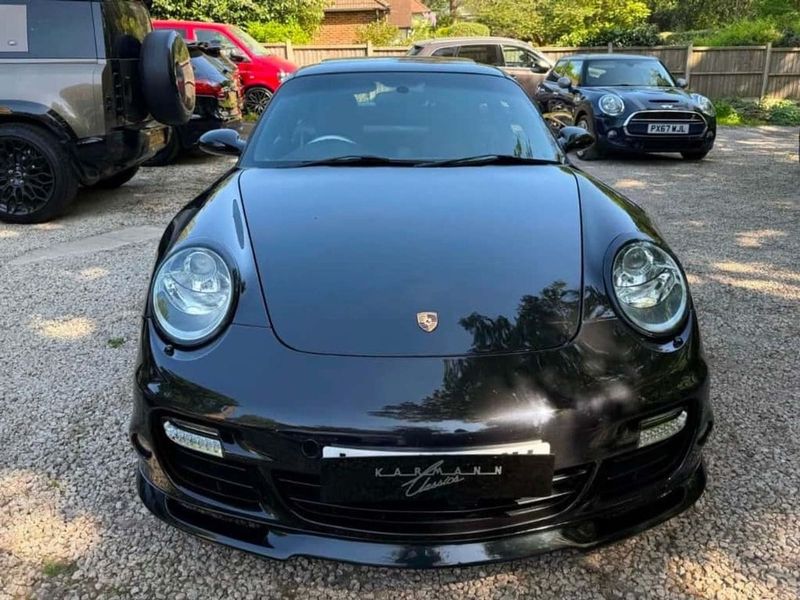
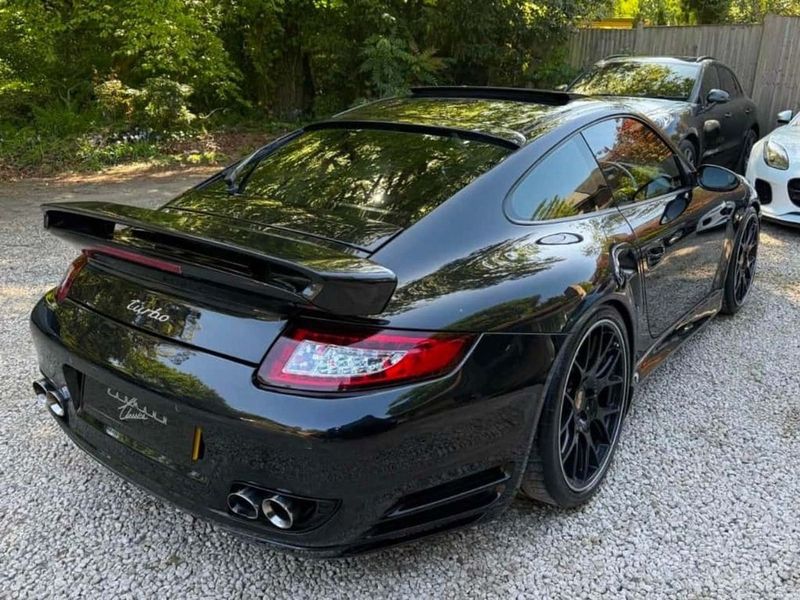
The Turbo's defining visual characteristic has always been its widened rear bodywork, initially necessitated by larger wheels and tyres before evolving into a signature feature. The 930's flared arches and prominent whale-tail rear spoiler established proportions that have endured through the decades.
Turbo-specific aerodynamic elements like larger front air intakes feed intercoolers and brakes, while those iconic rear wings (fixed on early examples, deployable from the 993 onwards) generate downforce at speed without compromising everyday usability. The 991 introduced active aerodynamics including variable-position rear wings and front splitters which adjust according to driving modes and speeds.
The 992 generation's widebody architecture went on to become standard across all AWD Carrera variants, reducing the Turbo's visual distinction. It did at least maintain differentiation through quad exhaust outlets, larger cooling vents and subtle spoiler profiles. Turbo S models dial the style up to 11 with unique wheel designs, carbon exterior packages and distinctive lighting signatures.
Turbo cabins balance performance intent with luxury accommodation, featuring higher equipment levels than Carreras thanks to standard leather and enhanced audio systems. Unlike GT3 variants which prioritise weight reduction by stripping out everything bar the front seats, the Turbo maintains enough comfort to be genuinely usable every day.
Speaking of interiors, Turbo-specific seats offer greater adjustability and cushioning than the bucket seats found in GT-focused siblings. Rear seating remains nominal across all generations, with the Turbo prioritising front occupant luxury over genuine four-seat capability.


Early Turbo generations (specifically the 930 and 964) relied on little more than larger brakes to rein in their increased performance, with standard ABS from the late 1980s onwards. The 993 introduced dual airbags and side-impact protection, whilst the 996 generation standardised multiple airbags and stability control. Post-997 Turbos feature Porsche Stability Management, torque vectoring and optional ceramic composite brakes. Indeed, the 991 and 992 generations with their comprehensive driver assistance packages are a safe everyday proposition despite delivering supercar performance.
All-wheel drive from the 993 generation onwards added further safety advantages thanks to superior traction in adverse conditions, while sophisticated electronics regulate power delivery to prevent the sideways-into-a-hedge outcomes that plagued early RWD examples.
The 911 Turbo suits buyers prioritising accessible supercar performance, all-weather capability and daily usability over the raw engagement of GT3 variants or the purity of naturally aspirated Carreras.
Key advantages:
Everyday supercar performance: 2.6–5.4 sec 0-60 mph across the generations delivers hypercar acceleration with refined delivery and manageable characteristics
All-weather capability: AWD from 1995 onwards provides confidence in wet or greasy conditions where RWD performance cars struggled
Comprehensive equipment: Higher standard specifications versus Carrera variants
Technological showcase: Each generation pioneered innovations (VTG turbos, PDK, rear-axle steering) subsequently adopted across the 911 range
Nonetheless, there are trade-offs compared to other 911 variants. Turbo ownership sacrifices the naturally aspirated engine character and manual transmission availability of Carrera GTS models while piling on 200 kg of weight versus comparable Carreras. It also forgoes the track-focused purity of the GT3 in exchange for more everyday usability.
Price trends
Vente la plus récente
13 800 £
2011 Porsche 911 Turbo 997 Coupe
Actuellement en vente
194
2 enchères en direct
192 annonces
Total vendu
369
Prix de vente le plus élevé
573 355 €
Prix moyen
86 951 €
Prix le plus bas
12 034 €
FAQs
Turbos deliver 150-200 hp more power than contemporary Carrera S models, exclusively feature all-wheel drive (from 1995 onwards), employ widebody architecture accommodating larger wheels and cooling systems, and include more standard equipment. However, Carrera S variants offer more engaging naturally aspirated character (pre-991, at least), reduced weight and lower running costs for buyers prioritising driver involvement over outright speed.
Air-cooled Turbo generations require specialist maintenance, and command premium running costs through classic car insurance and specialist servicing. They also lack modern convenience features like climate control or even stereos. The 993 Turbo of the mid-to-late Nineties offers the most usable air-cooled experience, whereas the Millennial 996 Turbo provides water-cooled reliability and improved climate control.
Modern Turbo ownership requires deep pockets. Budget £2,500–5,000 for comprehensive insurance depending on the driver’s age and location, annual servicing of between £800 and £1,500 at main dealers and £1,500 per set of tyres.
Turbo S variants deliver 50-70 hp of extra power with ceramic brakes (an £8,000 option on base Turbos), enhanced suspension tuning and unique styling elements. However, a base Turbo ought to be sufficient for most buyers unless the reduced dust and fade resistance of ceramic brakes justifies the premium.