Jaguar 420: Models and Specs
1966–1968 • Executive sports saloon • Front-engine, rear-wheel drive • 4.2-litre XK straight-six • Manual or automatic
Overview
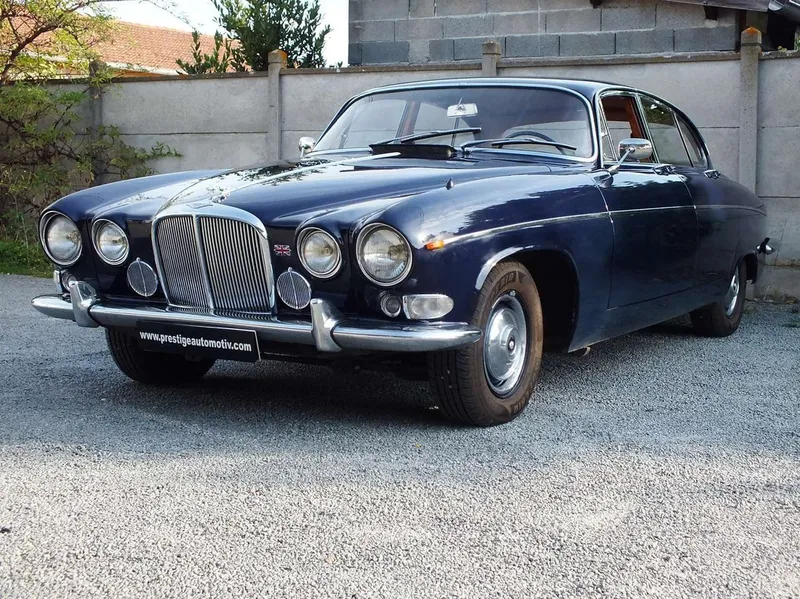
The Jaguar 420 is one of those cars that sits in the shadow of more illustrious siblings, yet makes a very strong case for itself as a usable 1960s saloon. Built for just two years from 1966, and sharing most of its parts with the better-known (original) S-Type, the 420 combines a compact Mk2-style body with the larger 4.2-litre XK engine and revised front-end styling. It’s a torquey wood-and-leather executive car with genuine long-legged cruising ability and a surprisingly sporting edge when properly maintained.
C&C Expertise
In the 1960s, perhaps exhausted after creating the Mk2 and MkX, Jaguar did a lot of fiddling. The 420 was one of the many models spun out of the Mk2 architecture. The reason you want one is simple: thanks to that grunty 4.2-litre engine and independent rear suspension, they’re essentially four-door E-Types. No wonder they made such good getaway cars. Like any 60s Jag, 420s rust, and while most parts are easily available, repairs can be expensive. On the plus side, that XK straight six is strong, although check for smoke or start up or under load indicating wear, even if the mileage is low.
Price
- Starting price
- 2.299 €
- Average price
- 25.287 €
- Price range
- 2.299 € - 57.511 €
Specifications
- Manufacturer
- Jaguar Cars Ltd
- Production Years
- 1966–1968
- Vehicle Class
- Executive sports saloon
- Body Style
- 4-door saloon
- Layout & Drive
- Front-engine, rear-wheel drive
Jaguar 420 in Detail
By the mid-1960s, Jaguar needed to modernise its compact saloon range. The Mk2 had been hugely successful, but styling and refinement expectations were moving on.
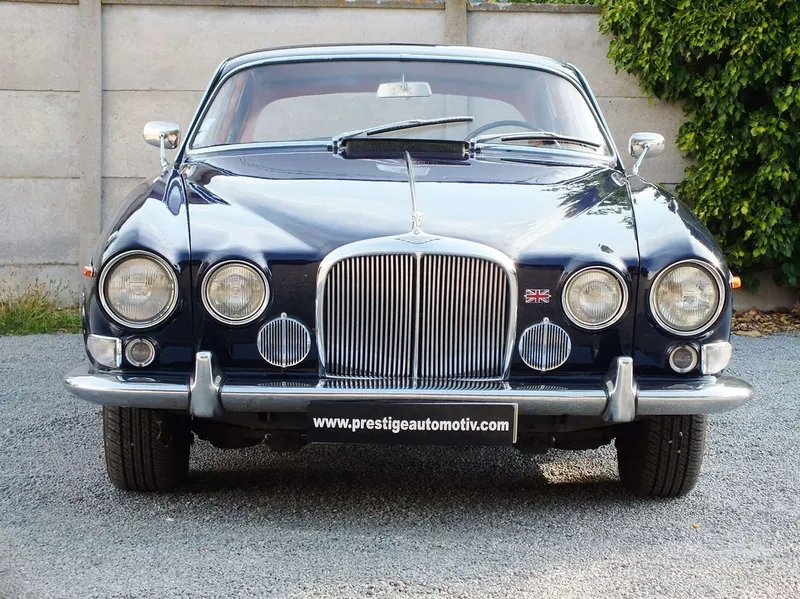
Launched in 1966, the 420 essentially married the Mk2-derived body shell to the 4.2-litre XK engine from larger Jaguars, alongside a new front-end treatment inspired by the S-Type. It featured a squared grille, a quad-headlamp arrangement, and improved interior appointments. Manual and automatic cars were sold, though automatics were more common.
Production was short-lived because the XJ6 arrived in 1968 and redefined Jaguar’s saloon range. As a result, the 420 exists as a transitional model - the final evolution of the compact live-axle Jaguars before the XJ era began.
Every Jaguar 420 uses the same 4.2-litre XK straight-six, which is smooth and genuinely quick for a mid-’60s saloon - at least when it’s healthy.
What changes this big Jag’s personality isn’t the engine, but the gearbox. A manual car feels surprisingly eager and much more involving than you might expect from something this civilised. An automatic, by contrast, leans into the car’s executive nature, with slower acceleration but a relaxed gait on longer drives.
Variant | Power | Torque | 0–60 mph | Top Speed |
420 Manual | 245 bhp | 283 lb ft | 8–9 sec | 125 mph |
420 Automatic | 245 bhp | 283 lb ft | 9–10 sec | 120+ mph |
Real-world performance today depends entirely on engine health and cooling efficiency. The XK unit is strong when maintained, but overheating, oil pressure issues, or neglected carburettor tuning will quickly blunt performance.
Buyer note: Gearbox choice affects desirability. Manuals are typically more sought after by enthusiasts, whereas a well-sorted automatic better reflects this car’s executive nature.
The Jaguar 420 is compact by modern standards, but it doesn’t feel small from behind the wheel, where you sit upright while staring down a long bonnet with a clear sense of where each corner sits. Key dimensions include:
Length: approx. 4,590 mm
Width: approx. 1,690 mm
Wheelbase: approx. 2,730 mm
Kerb weight: approx. 1,500 kg
The 420 is narrower than you expect, making it easier to place on UK roads than its 1960s origins might imply. That said, it’s still a solid, steel-bodied saloon, as you’ll be reminded when it’s time to turn the steering wheel at low speeds. The car is otherwise responsive, so if a test-driven 420 feels vague or wanders, suspension wear or tired steering components may be responsible.
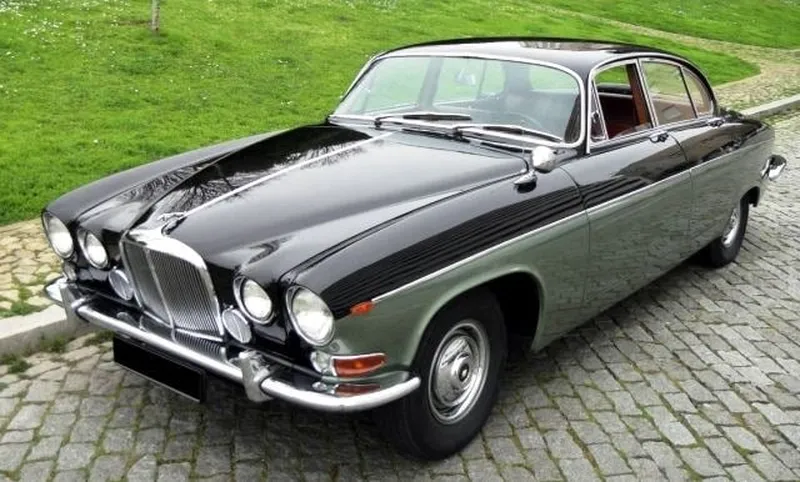
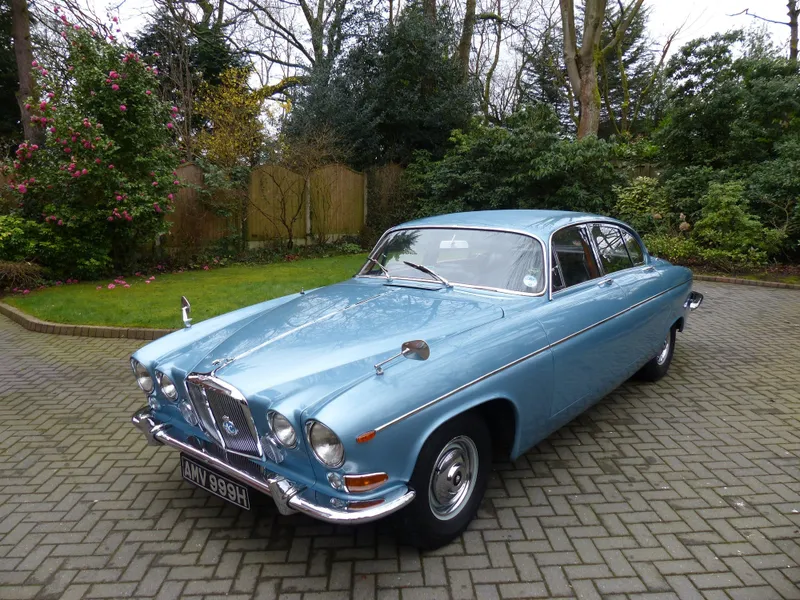
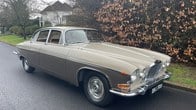
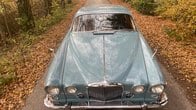
The 420 was a modest evolution of Jaguars which had gone before, not a dramatic advance like the XJ6, which replaced it. That squared grille and quad headlamps gave it a more contemporary face than the long-in-the-tooth Mk2, while the proportions remained unmistakably Jaguar with a short rear deck, long bonnet and upright glasshouse.
The mechanicals were dated even at the time, with a live rear axle and leaf springs alongside independent front suspension. The 4.2-litre XK straight-six was the car’s crowning glory - a torque-led, mid-range cruiser with just enough composure to feel engaging when pushed.
The Jaguar 420’s biggest enemy is corrosion, which it can hide below fresh paint. Pay close attention to the inner and outer sills, rear wheelarches, boot floor, front suspension mounts and subframe areas.
This was a well-assembled car originally, so panel gaps should be even and doors ought to close cleanly. A lack of alignment often signals previous rust repair or filler-heavy restoration, and such shortcuts are common because proper structural repairs are expensive.


Even after all these years, a good 420 interior should still feel warm and dignified, with polished walnut and leather complemented by excellent outward visibility. Look for cracking veneers or poorly refinished wood, alongside leather shrinkage and seam splits. Sagging headlinings are also worth watching out for, while switchgear and instruments should function consistently. Electrical systems are simple but not immune to age, and neglected cars often have brittle wiring, intermittent gauges and non-functioning switches.


Despite being a 1960s executive saloon, the 420 did at least have four-wheel disc braking, which was considered advanced for the period. However, its dated mechanicals meant little else served to improve occupant safety. Be mindful of brake pull, soft pedal feel or uneven stopping; suspension play or steering vagueness denotes wear rather than character.
Restoration costs can exceed a car’s market value. Buy the best structure you can afford, being mindful of the aforementioned rust. Also look for evidence of quality restoration, smooth shifts from the Borg-Warner automatic box (if fitted), cooling system functionality and strong oil pressure at hot idle.


Price trends
Vendita più recente
2000 £
1967 Jaguar 420

Attualmente in vendita
23
0 aste live
23 annunci


Venduto
32
Prezzo di vendita più alto
57.511 €
Prezzo medio
25.287 €
Prezzo più basso
2299 €
FAQs
Values are generally lower than Mk2 equivalents, which can make the 420 attractive from a value-for-money perspective. However, restoration costs remain significant, so buy one for enjoyment rather than investment purposes.
Enthusiasts often prefer the manual for its tactile engagement and stronger acceleration, although the automatic suits relaxed touring and is entirely appropriate for the 420’s languid character.
It is when maintained correctly, which is a big caveat. The key dangers are overheating, poor servicing and oil pressure neglect. Regular maintenance and documented rebuilds are positive signs.
The 420 offers more torque and refinement than most Mk2 versions, although it lacks some of the earlier car’s iconic status. For buyers on a (relative) budget, it can represent better value while delivering comparable Jaguar character.