Reliant Robin: Models and Specs
1973–2001 · 750cc–850cc OHV inline-four · Front-engine, rear-wheel drive · Three-wheeler saloon, estate, van
Overview
The Reliant Robin is Britain's most recognisable three-wheeler, and it’s arguably one of Britain’s most recognisable cars of any era. This fibreglass-bodied rear-wheel-drive microcar was produced by Reliant of Tamworth across nearly three decades. It replaced the long-running Reliant Regal in 1973 with a purpose-designed fibreglass body styled by Ogle Design, a lightweight steel box-section chassis and the same OHV four-cylinder engine that had defined Reliant's products since the 1950s. The Robin's significance is disproportionate to its modest mechanicals. Classified as a tricycle rather than a car under UK law, it could be driven on a motorcycle licence and attracted a much lower rate of road tax. This made it a mobility solution for thousands of buyers who couldn’t afford (or weren’t licensed to drive) a four-wheeled car. It sold over 65,000 units and has achieved a cultural afterlife (albeit not entirely affectionate) far outstripping its market share.
Price
- Starting price
- € 986
- Average price
- € 2.925
- Price range
- € 986 - € 7.541
Specifications
- Production years
- 1973–2001
- Total production
- 65,000
- Body styles
- Saloon; estate; van
- Layout / drive
- Front-engine, rear-wheel drive
- Engine family
- Reliant OHV 750cc-850cc
Reliant Robin in Detail
Origins
The Robin arrived at the 1973 Earls Court Motor Show to replace the angular Regal with a rounded, modern silhouette and an interior that compared credibly with small four-wheeled cars of the same era. Reliant added the Robin Super Saloon as a higher-trim option in 1975, and it was the Super Saloon that Princess Anne purchased while resident at the Royal Military Academy Sandhurst.
Evolution
The Mk1 Robin ran until 1981, when it was replaced by the Reliant Rialto, which Reliant intended to be the Robin's permanent successor. Customer loyalty to the Robin name proved stronger than Reliant anticipated, however, and in 1989 the company revived the Robin nameplate on a completely new Mk2 hatchback body while the Rialto continued in parallel until 1996.
The Mk2's hatchback body was more practical than the Mk1's notchback saloon, with a full tailgate and revised interior packaging. The 850cc engine continued unchanged, as did the four-speed gearbox. The Mk2 sold steadily through the 1990s, gaining the Mk3 designation in 1999 when Vauxhall Corsa headlights replaced the previous rectangular units and minor front-end trim updates were applied. This lightly modified Mk3 continued on sale until Reliant ceased production in 2001.
The initial 750cc engine, producing 32 bhp, was carried over from the late Regal. In 1975 it was replaced by the more powerful 850cc unit producing 40 bhp at 5,500 rpm, which lifted the top speed to 85 mph and the 0–60 mph time to approximately 16 seconds. From this point onwards, the Robin's performance remained unchanged until the next century when it went off production.
The Robin was never intended to be driven quickly, but its combination of low weight, high fuel economy and an engine tuned for tractability gave it a power-to-weight ratio that was more competitive than the figures suggest. Economy of up to 70 mpg is quoted for the 850cc cars, making the Robin one of the most fuel-efficient petrol-engined vehicles ever produced for sale in Britain.
Engine | Power | 0–60 mph | Top speed |
Reliant OHV 750cc (Mk1, 1973–1975) | 32 bhp | 20 sec | 75 mph |
Reliant OHV 850cc (Mk1 1975–1981, Mk2, Mk3) | 40 bhp | 16 sec | 85 mph |
Body Styles and Marks
All Robin body styles share the same engine, chassis and running gear, so the differences are practical rather than mechanical:
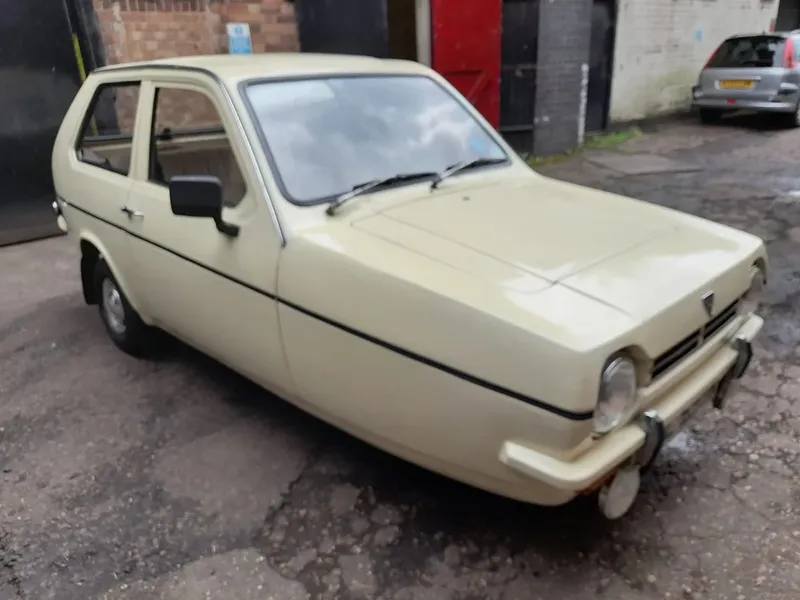
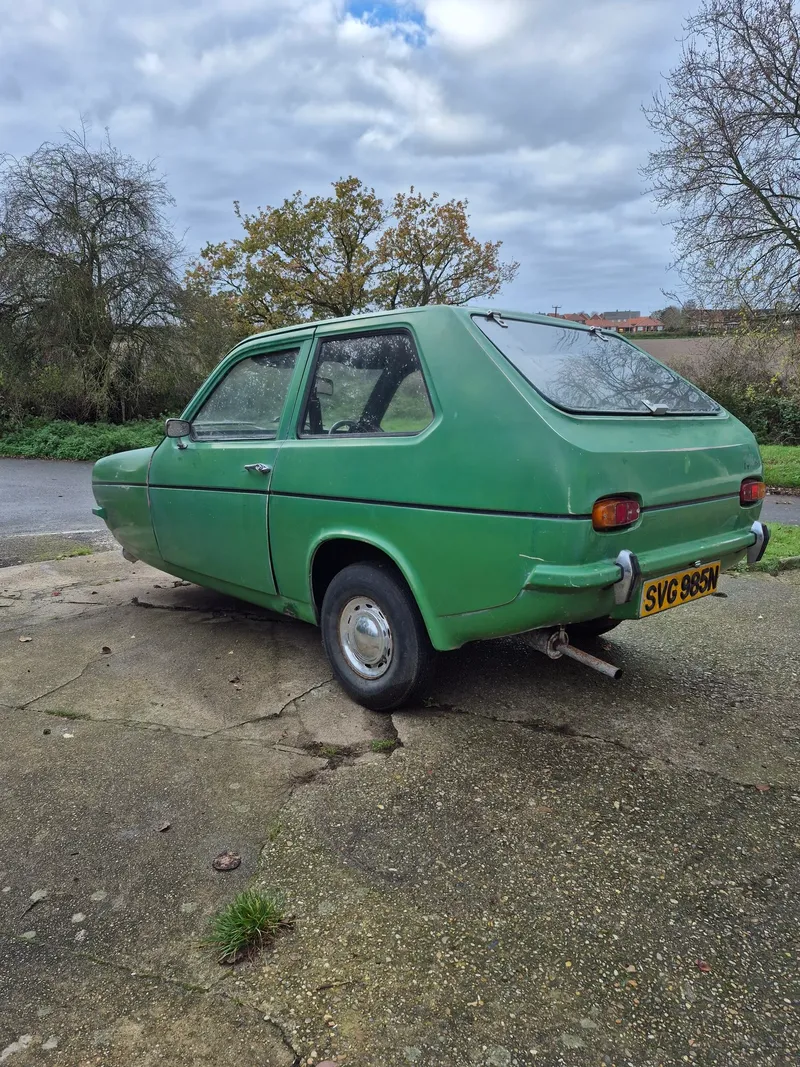
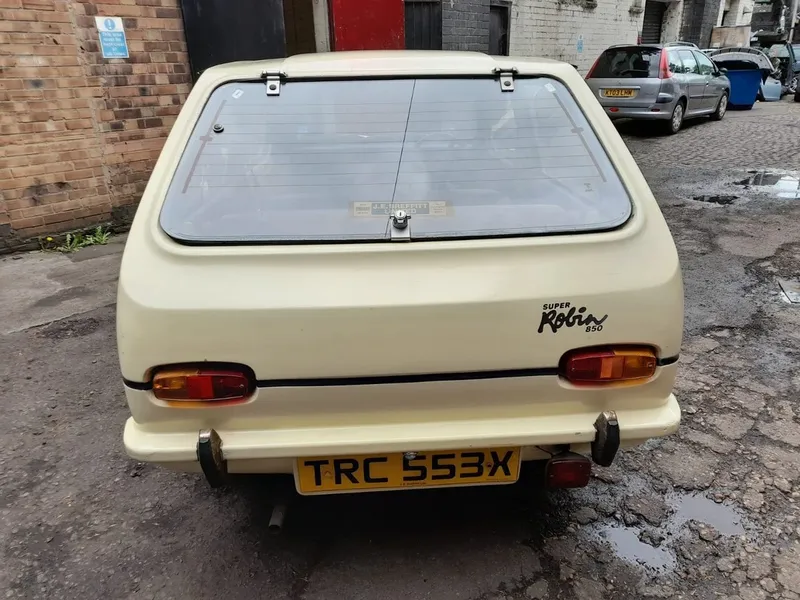
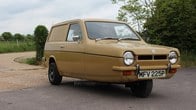
Mk1 Saloon (1973–1981). The rather startled-looking Robin originally had a notchback two-door body styled by Ogle; 750cc initially, 850cc from 1975; standard and Super trim levels.
Mk1 Estate (1973–1981). Same notchback body with a revised rear incorporating a tailgate, making it more practical than the saloon.
Mk1 Van (1973–1981). A commercial load-carrier derivative; no rear side windows; historically popular for tradespeople exploiting the tricycle road-tax advantage.
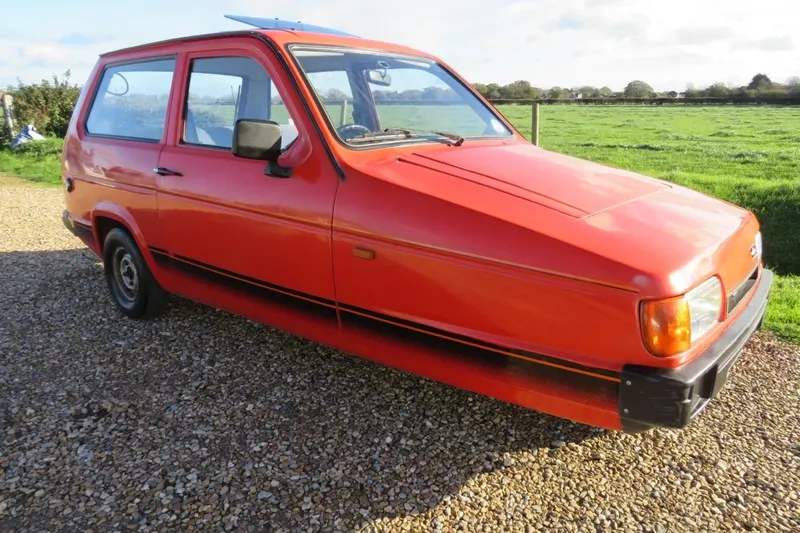
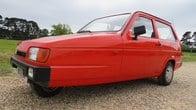
Mk2 Hatchback (1989–1999). A completely new body with a full rear hatchback opening and a more modern interior powered by the 850cc engine throughout.
Mk2 Estate and Van (1989–1999). Hatchback-based derivatives of the above with the same mechanical spec as the Mk2 saloon.
Mk3 (1999–2001). More of a Mk2.5, with the old body updated with Vauxhall Corsa headlights and minor front-end trim updates.
The Reliant Robin is immediately recognisable from any angle. Its single front wheel, fibreglass body and compact proportions make it the most visually distinctive vehicle on any British road it occupies. The Mk1's Ogle-designed body has a rounded, purposeful silhouette that aged well across its eight-year production run, and which was certainly more considered than the Regal it replaced. The Mk2 and Mk3 hatchback bodies are squarer and more utilitarian, while retaining the fundamental Robin formula of maximum usable space within a minimal footprint.
The Robin was never positioned as a luxury product, and its interior clearly reflects that. The driving position is upright with good forward visibility, the dashboard is simple and functional and the narrow rear seat provides occasional-use capacity for two adults. The cabin's lightweight and glass area make it an airy, pleasant place to be in good weather. The fibreglass body means panel gaps are wider (and surface quality more variable) than a steel-bodied contemporary, but the absence of rust is the Robin's most significant structural advantage over any steel-bodied equivalent.
Chassis and Structure
The fibreglass body can’t rust, but the steel box-section chassis can - and it does. Inspect the underside with a torch; any soft, flaking or perforated steel requires immediate attention and may indicate a structurally compromised car.
Engine
The 750cc and 850cc OHV engines are simple and well-understood. Heavy blue smoke on start-up or at idle indicates worn bores or valve guides, while the small-capacity engine is sensitive to overheating.
Body and Panels
Fibreglass panels may crack, particularly around the front wheelarch and along the lower door sill line. Hairline cracks are cosmetic and repairable, but deeper structural cracks near body mounting points are more serious.
Single Front Wheel and Steering
The single front wheel, stub axle and steering assembly are unique to the Robin and require specialist inspection. Check for any play in the stub axle bearings and confirm the steering tracks straight without pulling.
No Reliant Robin variant was equipped with any electronic safety aids. Drum brakes front and rear with no servo assistance are standard throughout, so stopping distances are lengthy, and the combination of low mass and narrow drum brakes requires a deliberate and progressive pedal application. This is not a car well suited to emergency stops.
The Robin's three-wheel layout creates a fundamentally different handling dynamic to a four-wheeled car. Understeer is to be expected in normal cornering, but the single front wheel makes the car susceptible to tipping in extreme cornering or evasive-manoeuvre conditions, while snow can catch out the centrally mounted front wheel. Do be aware that Top Gear’s infamous Robin sketch featured a car which had been modified for dramatic effect, so it wasn’t representative of the car’s normal road manners.
Pros:
The fibreglass body can’t rust, so structural risks are concentrated in the steel chassis
Extremely low running costs of up to 70 mpg with simple mechanicals and inexpensive parts make this a highly affordable vehicle
Can be driven on a motorcycle licence
Strong and active specialist network still exists
Cons:
Steel chassis corrosion can be extensive
Three-wheel dynamics require adjustment due to the tipping risk under extreme cornering
Mk1 750cc cars are less capable and should be treated as occasional-use vehicles only
The Robin had a poor reputation among non-owners throughout its lifespan, and it continues to be a figure of fun to this day
Price trends
Meest recente verkoop
£ 1.395
1992 Reliant Robin
22 mei 2020

Momenteel te koop
3
0 live veilingen
3 advertenties
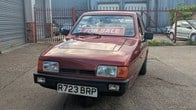
Totaal verkocht
14
Hoogste verkoopprijs
€ 7.541
Gemiddelde prijs
€ 2.925
Laagste prijs
€ 986
FAQs
You need a motorcycle licence or a full car licence. UK law classifies the Robin as a tricycle, meaning it can legally be driven by holders of a category A (motorcycle) licence as well as a full category B (car) licence. This was the Robin's primary practical appeal when new, and it remains relevant for buyers whose car licence is restricted or revoked.
They’re among the lowest of any classic car in practical use. Fuel economy of 50–70 mpg is achievable depending on driving style, the engine is inexpensive to maintain and road tax remains low if a classic isn’t already tax-exempt. Parts are well-supplied through Reliant specialist suppliers and the Reliant Owners' Club, with most mechanical items costing a fraction of equivalent components for four-wheeled classics.
The Robin handles predictably if you treat it gently. It steers accurately, rides adequately and brakes in a straight line. At normal road speeds and in normal cornering, the Robin won’t become unstable. The risks arise in sudden directional changes like the kind of evasive manoeuvre that might be required in an emergency, or in bad weather where rear-wheel drive and a single turning wheel at the front can pose challenges.