Westfield SEiW: Models, Specs and Buyer’s Guide
Core Specs: late-1990s–present • 1.6–2.0 L Ford inline-4 • 140–170 bhp • 5-speed manual • RWD • ~600 kg • 0–60 mph
Westfield SEiW Overview
It’s rare to encounter a classic car which is still on sale today, but the Westfield SE is rare in many respects. The Westfield car company was founded in the early 1980s, and after establishing its name with Lotus Seven-inspired models, its range expanded to include SE (narrow) and SEi versions, the latter offering independent rear suspension. By the early 1990s, SEiW models delivered greater cockpit and engine-bay room within the same minimalist footprint. Every SEiW has a lightweight spaceframe, double-wishbone suspension all round, front disc brakes and rack-and-pinion steering. A wide range of engines is available, including Ford Zetec and Duratec options, the Vauxhall C20XE unit, and older Crossflow/CVH powerplants. The W body offered more cockpit/engine room than narrower SE/SEi cars, while keeping their tiny footprint and wheel-at-each-corner stance. Because this is a kit or factory-built car, the exact specifications vary by car, so always judge an SEiW by its donor parts and build quality rather than the badge alone.
C&C Expertise
You don’t need a V12-engined supercar to have fun. A sub-six-hundred-kilo pocket rocket will be just as engaging, if not more so. Colin Chapman’s Lotus 7 inspired several successful offshoots, among which you may be familiar with Caterham, Donkervoort, and, of course, Westfield. The latter produced the very well-regarded SEi and SEiW (Widebody) models. Built to accept a range of excellent four-cylinder engines, including the Ford Zetec, these pared-back sports cars were seriously quick and handled brilliantly, thanks to all-round independent suspension.
Westfield SEiW Price
- Starting price
- € 7.488
- Average price
- € 14.695
- Price range
- € 7.488 - € 26.900
Westfield SEiW Specifications
- Manufacturer
- Westfield Sportscars (UK)
- Layout
- Front-engine, rear-wheel drive
- Chassis/Suspension
- Tubular spaceframe; double wishbones & coilovers
- Engines
- Ford Zetec/Duratec 1.8–2.0 L or Vauxhall C20XE
- Transmission
- 5-speed manual
Westfield SEiW in Detail
After Westfield’s 1980s revival of the Lotus-Seven recipe, the SE line evolved through chassis, body and donor eras to create the SEiW - a clumsily titled but beautifully proportioned wide-body version with independent rear suspension for road and track use. Throughout the 1990s, Westfield standardised parts around Ford donors, while a one-make race series boosted development and brand profile alike.
In the Noughties, Westfield formalised SDV (Single Donor Vehicle) ecosystems ranging from the Ford Sierra to the Mazda MX-5. Factory Sport/SpeedSport/Final Edition bundles later curated the brakes, geometry and trim, while customer cars continued to incorporate a variety of (mainly) Ford and Vauxhall engines.
Lightweight, space-framed and endlessly tuneable, the SEiW typically uses Ford or Mazda donor running gear. Front disc brakes are standard, but rear hardware varies by donor/package.
Core Technical Themes (SE/SEi/SEiW Family)
Layout: Front-engine, rear-wheel drive, two-seater roadster mounted on a tubular spaceframe chassis with double wishbones all round.
Drivetrain: 5-speed manuals (usually either Ford Type-9/MT75 or Mazda MX-5-sourced), mated to rack-and-pinion steering and front disc brakes.
Model (test year) | Engine | 0–60 mph | Top speed |
SEiW (Zetec) | 2.0 Zetec (140–170 bhp) | 4.8–5.5 s | 120–130 mph |
SEiW (Duratec) | 2.0 Duratec (170–190 bhp) | 4.2–5.0 s | 125–135 mph |
SE/SEi (Crossflow) | 1.6–1.7 X-Flow (100–125 bhp) | 6.0–7.0 s | 110–120 mph |
Compact and low, the SEiW’s wide body adds valuable shoulder and hip room while retaining the tiny footprint that makes these cars so quick and easy to place. The wheelbase is essentially constant across SE/SEi/SEiW models, although length and width may vary according to factors such as body style, donor hardware, bumpers, and screens.
Core Dimensions
Metric | Imperial | |
Wheelbase | 2,335 mm | 92.0 in |
Overall length | 3,540–3,660 mm | 139–144 in |
Overall width (SEiW) | 1,610 mm | 63.4 in |
Overall width (narrow SE/early SEi) | 1,560 mm | 61.4 in |
Kerb weight (typical build) | 560–650 kg | 1,235–1,430 lb |
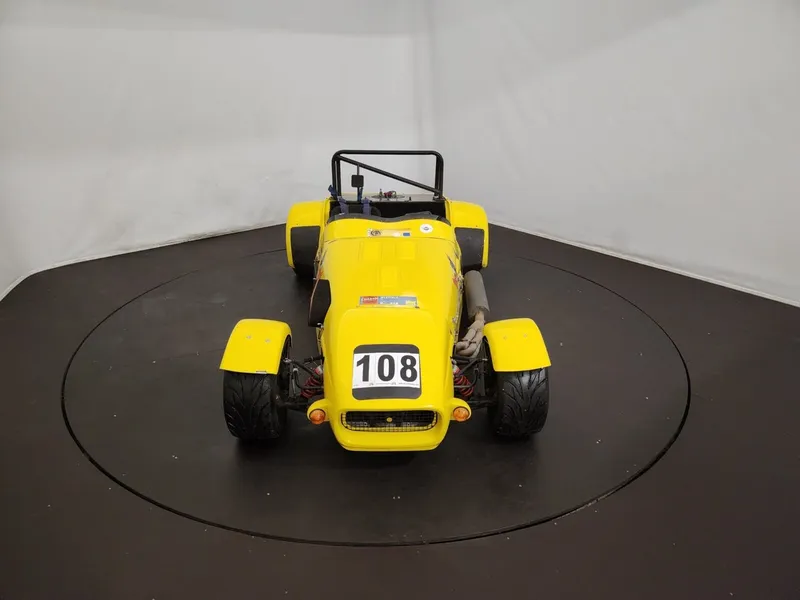
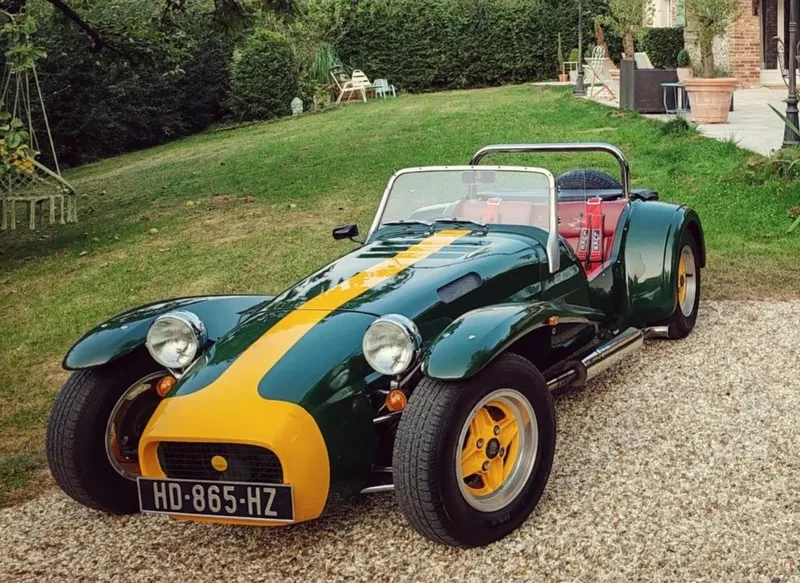
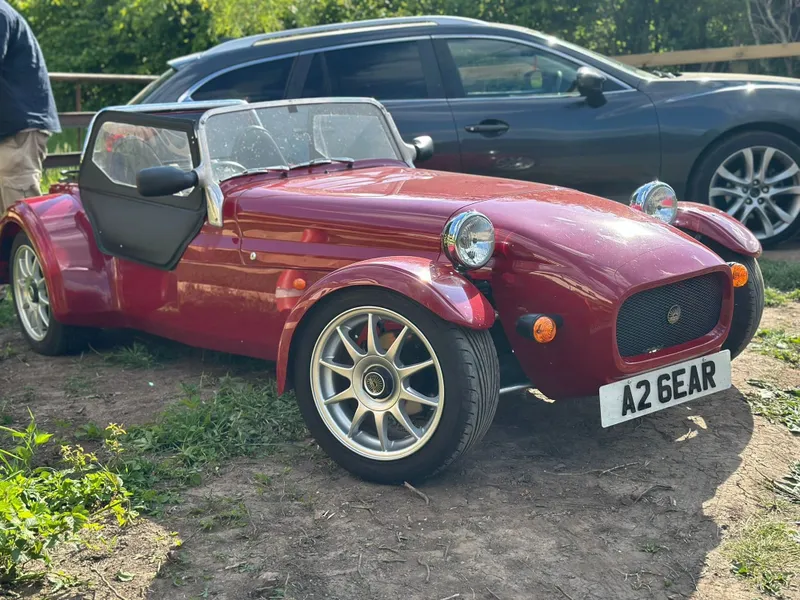
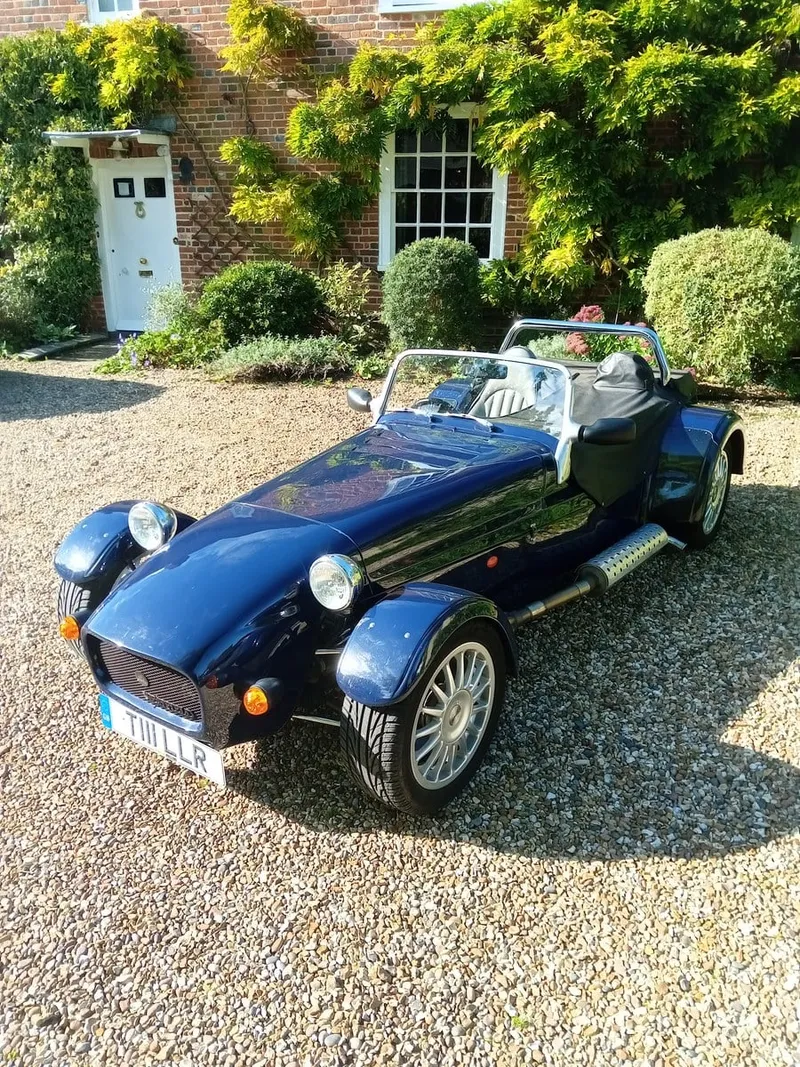
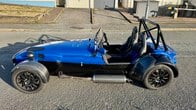
Form follows function at every stage on this car, from the open wheels and tiny overhangs to the low scuttle and airy cockpit. The W body widens the tub and engine bay, improving hip/shoulder room without losing the minimalist single-purpose vibe of this race-focused sports car.
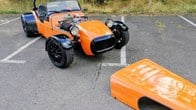
Body and frame: hand-laid GRP panels over a tubular spaceframe with exposed wishbones and visible fasteners. A low nosecone and flat bonnet precede either cycle or clamshell wings.
Glass and weather gear: the SEiW has either a full windscreen with side-screens for road comfort, or an aeroscreen for track use. If the latter, expect buffeting and wear a helmet! Hood/tonneau options vary by vehicle, but door hinges are typically simple lift-off types.


Layout and seating: every SEiW has a low-slung legs-forward driving position centred on composite buckets or trimmed seats, while 4- or 6-point harnesses are commonplace.
Dash and instruments: a flat alloy or carbon dashboard hosts Smiths/ETB gauges, while a quick-release steering wheel was optional ahead of standard toggle/rocker switchgear.
Pedals and ergonomics: pedal boxes were often adjustable for reach and bias, with heel-and-toe-friendly spacing, while taller drivers benefit from the W-body’s extra width and dropped-floor options.


The Westfield SEiW is best thought of as a driver-focused, minimalist sports car rather than a modern safety machine. As a kit or component-based build, it doesn’t come equipped with airbags, ABS, electronic aids or crumple zones - even in relatively modern iterations. What it does offer (when properly built and maintained) is a strong tubular or ladder-chassis frame and the ability to incorporate high-quality safety upgrades from Westfield itself, such as roll cages and big-brake kits.
Price trends
Meest recente verkoop
£ 13.495
2022 Westfield SEIW Roadster
1 mei 2024

Momenteel te koop
4
0 live veilingen
4 advertenties


Totaal verkocht
19
Hoogste verkoopprijs
€ 26.900
Gemiddelde prijs
€ 14.695
Laagste prijs
€ 7.488
FAQs
Ford Zetec/Duratec 2.0 engines and Vauxhall C20XE powerplants are popular, though earlier cars may use Ford Crossflow/CVH powertrains