Land Rover Range Rover: Models and Specs
1970–present, V8/inline-six petrol/diesel/hybrid, front-engined/four-wheel-drive, 5-door SUV
Overview
The Range Rover singlehandedly created the luxury SUV category, proving that genuine off-road capability and refined on-road comfort didn’t have to be mutually exclusive. Conceived by engineers Charles "Spen" King and Gordon Bashford, it transformed the Land Rover marque from a utilitarian builder of basic workhorses into a prestige marque capable of challenging traditional luxury saloons while venturing across territory that would strand lesser vehicles within seconds. Spanning five generations and more than half a century of manufacture, the Range Rover established design signatures that remain instantly recognisable today. In tandem with its refinement and go-anywhere credentials, it unsurprisingly became a preferred choice of royalty, adventurers and discerning owners worldwide.
Price
- Starting price
- $829
- Average price
- $30,480
- Price range
- $829 - $241,942
Specifications
- Production Years
- 1970–present
- Body Styles
- 5-door SUV (2-door 1970–1981)
- Layout/Drive
- Front-engine, permanent four-wheel drive
- Engine Family
- Rover/Buick V8, BMW V8, Jaguar Land Rover V6/V8/inline-six, PHEV
- Transmission Types
- 4-speed manual (early), 4/5/6/8-speed automatic
Land Rover Range Rover in Detail
The Range Rover emerged in June 1970 from a Rover Company skunkworks project led by Spen King, who wanted to create a vehicle combining Land Rover's off-road prowess with saloon car comfort. It pioneered the use of permanent four-wheel drive with a two-speed transfer box, coil spring suspension replacing traditional leaf springs and a lightweight aluminium Rover/Buick V8 engine delivering smooth power.
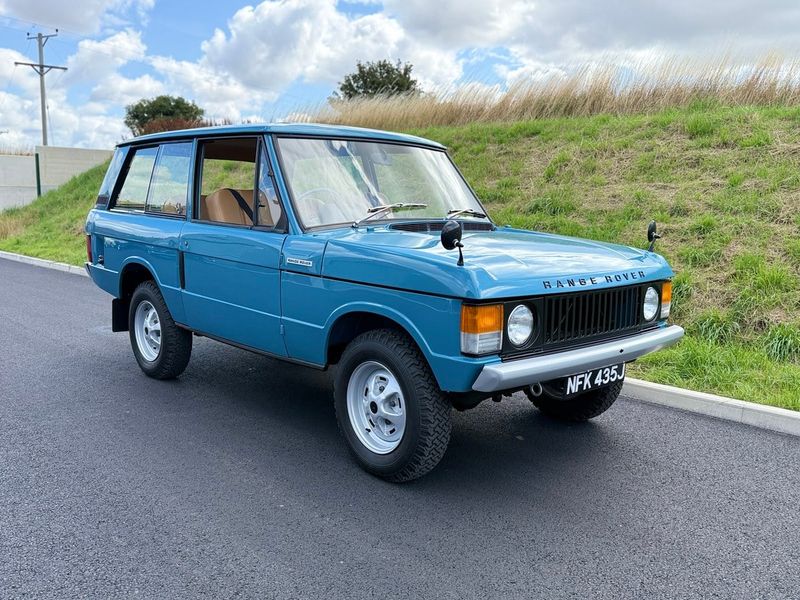
The original design by David Bache featured clean, geometric lines with a distinctive split tailgate that would go on to become a Range Rover hallmark. Initially offered only as a two-door model, the Range Rover's specification evolved throughout the 1970s, adding four-door variants from 1981 and automatic transmission options.
The first generation, later christened the "Classic," remained in production for an astonishing 26 years until 1996, before the second-generation P38A (1994–2002) introduced electronic air suspension as standard and more sophisticated electronics. BMW's influence was evident in the third-generation L322 (2001–2012), courtesy of BMW M62 V8 engines and all-round independent air suspension.
The fourth generation L405 (2012–2021) introduced a fully aluminium monocoque body saving 420kg, while it returned to harnessing Jaguar Land Rover's own engine range including supercharged V8s, diesel V6/V8 options and latterly hybrid powertrains. The current fifth-generation L460 (2021–present) additionally provides mild-hybrid and plug-in hybrid technology and seven-seat capability for the first time.
The Range Rover's performance identity almost imperceptibly evolved from capable grand tourer to genuine high-performance luxury SUV. Power outputs have also expanded from the original 135 hp 3.5-litre V8 to modern supercharged 5.0-litre V8s producing over 500 hp. Performance figures vary dramatically between generations, engine specifications, and body styles, with early Classics achieving respectable 10-second 0–60 mph times whilst modern supercharged variants deliver sub-5-second acceleration in flagrant disregard of their 2.5-tonne kerb weight.
Specification | Range |
Engine family / displacement | V8 petrol/diesel, inline-six diesel/petrol / 2.0–5.0 litres |
Power range | 135–565 hp |
0–60 mph | 4.5–10.0 sec |
Top speed | 106–155 mph |
The Range Rover has always been distinguished by its commanding, upright stance with short front and rear overhangs maximising approach and departure angles. Signature elements established with the 1970 original persist across all five generations: the clamshell bonnet opening from the centre, the seemingly floating roof created by blacked-out A, B, C, and D-pillars, and the split tailgate with side-hinged upper glass and drop-down lower section.
The true pleasure of any Range Rover lies inside, where wood veneers, leather upholstery and a commanding driving position are increasingly being augmented by modern technology and space efficiency.


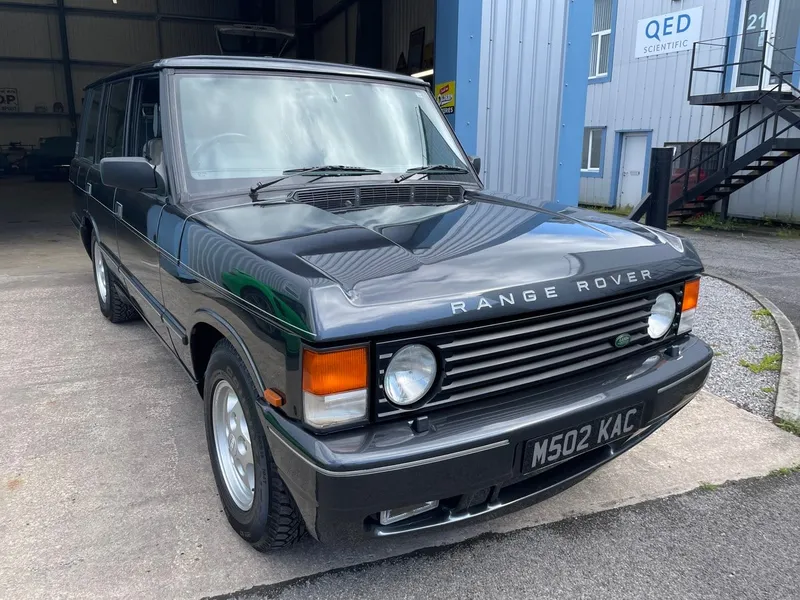
Range Rover Classic (1970–1996): The original - and to some eyes the best - Range Rover established the luxury 4×4 formula, initially as a two-door car (1970–1981), then four-door from 1981. Rover V8 power and permanent 4WD were standard, and a significant 1986 update brought fuel injection and interior refinements.
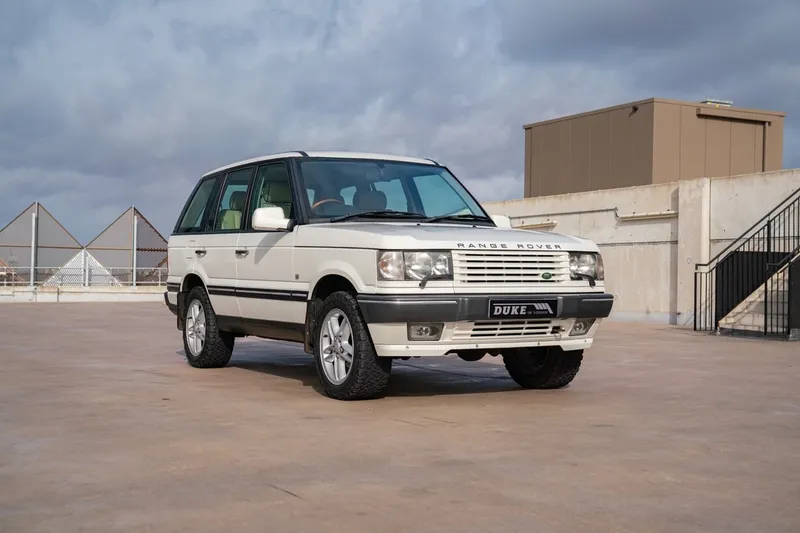
Range Rover P38A (1994–2002): The second generation Range Rover introduced electronic air suspension, more sophisticated electronics and revised styling. BMW diesel engines joined Rover V8 petrol options.
Range Rover L322 (2001–2012): Moving further away from its utilitarian origins, the third generation was notable for its BMW engineering influence - M62 V8 engines, all-round independent air suspension and contemporary luxury SUV refinement. Later models gained Jaguar Land Rover engines including supercharged V8s and diesel V6/V8 options.
Range Rover L405 (2012–2021): By the fourth generation, a fully aluminium monocoque had shed 420kg of weight, while Jaguar Land Rover’s engine range had expanded to include hybrid powertrains.
Range Rover L460 (2021–present): Today’s fifth generation Rangie has maintained its predecessor’s aluminium architecture with mild-hybrid and plug-in hybrid powertrains, a BMW 4.4-litre twin-turbo V8 in the range-topping SV, and seating for up to seven people.
Early Range Rovers (1970–2000s) pinned their safety credentials on robust separate chassis construction, disc brakes all round and the reassurance of permanent four-wheel drive. Modern active safety systems were absent until the P38A introduced ABS and airbags as standard.
The electronics era began with 2001’s L322, which introduced standard traction control, stability systems, multiple airbags and electronic brake-force distribution. Modern generations have all the accoutrements you’d expect, including autonomous emergency braking, adaptive cruise control and lane-keeping assistance.
Pros:
Unmatched combination of luxury and genuine off-road capability
Exceptional refinement and ride quality from air suspension systems
Strong brand prestige and royal/celebrity associations
Comprehensive dealer and specialist network for parts and service
Cons:
High maintenance and running costs
Complex electronics and air suspension systems require specialist knowledge
Depreciation can be steep on younger models leaving warranty
Specialist servicing essential; annual costs easily exceed £2,000–3,000 post-warranty
Price trends
Most recent sale
£92,995
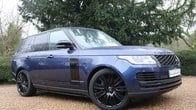
2018 Land Rover Range Rover L405 SUV
Currently for sale
348
18 live auctions
330 adverts


Total sold
1144
Highest sale price
€241,942
Average price
€30,480
Lowest price
€829
FAQs
It absolutely can. The Range Rover excels as a daily driver across all generations, blending car-like refinement, commanding visibility and all-weather capability. Modern examples (L322 onwards) provide luxury saloon comfort with SUV versatility, though Classic and P38A generations can also be versatile daily cars if they’ve been properly maintained.
Running costs reflect the Range Rover's luxury positioning and complex engineering, with industry data showing maintenance and repairs averaging approximately £19,750 over the first decade of ownership. Annual servicing, insurance and fuel costs easily exceed £5,000–7,000 for modern examples, while Classic generation ownership typically sets you back £2,000–3,000 a year depending on the car’s mileage and specification.
Parts availability remains excellent across all eras, thanks to comprehensive dealer networks and specialist suppliers. Despite being long in the tooth nowadays, the Classic benefits from strong enthusiast community support and decades of specialist knowledge, ensuring mechanical and body components remain accessible. Later generations share platforms and drivetrains with the Discovery, Range Rover Sport and various Jaguar models, though electronic modules and body panels often command wallet-busting prices.
A late Range Rover Classic with fuel injection (1986–1996) combines iconic design, proven mechanicals and reasonable running costs while avoiding the complex electronics of later generations. If you’re after modern luxury and reliability, an L322 from the post-2005 facelift era provides mature engineering, air suspension comfort and strong value retention without the often catastrophic depreciation of L405 models.
Despite those go-anywhere credentials, reliability isn’t a given on Range Rovers, and dependability varies not just between generations but also depending on individual vehicle maintenance history. Classic and early P38A generations offered simpler systems with fewer electronic points of failure, whereas L322 models and their successors should possess diligent maintenance schedules.