Renault 4CV: Models and Specs
Renault 4CV (1947–1961) - rear‑engined, rear‑wheel‑drive four‑door saloon with 760/747cc inline‑four “Billancourt” engine, 3‑speed manual gearbox and monocoque construction.
Overview
Launched a year before Citroen’s 2CV, the Renault 4CV is a petite, rear‑engined car that helped to get France back on the road after the Second World War. Compact, light and economical, it offered four‑seater transport within a tiny footprint, and went on to become the first French car to sell more than a million units. Today, a good Renault 4CV offers a charming entry point to post‑war motoring, with period looks, modest running costs, and a surprisingly usable cabin given its diminutive dimensions.
C&C Expertise
Developed in secret during the dark days of the Second World War, the Renault 4CV was conceived as a simple, affordable family car to help France recover. Much like the Citroën 2CV, the Renault 4CV has gained a cult following for its rugged charm. Buyers should note that these cars were cheaply made and not meant to last more than a few years. Survivors are now very old indeed, so bear in mind that they’re entitled to be a little worn out. Like so many classics, rust is the biggest killer, while the 4CV’s engine is prone to head gasket failure and wear due to the use of unleaded petrol. Restoration is fairly straightforward, however, so don’t be afraid of a project if you don’t mind getting your hands dirty.
Price
- Starting price
- $800
- Average price
- $8,813
- Price range
- $800 - $23,000
Specifications
- Manufacturer
- Renault
- Production Years
- 1947–1961
- Vehicle Class
- Economy Car
- Body Styles
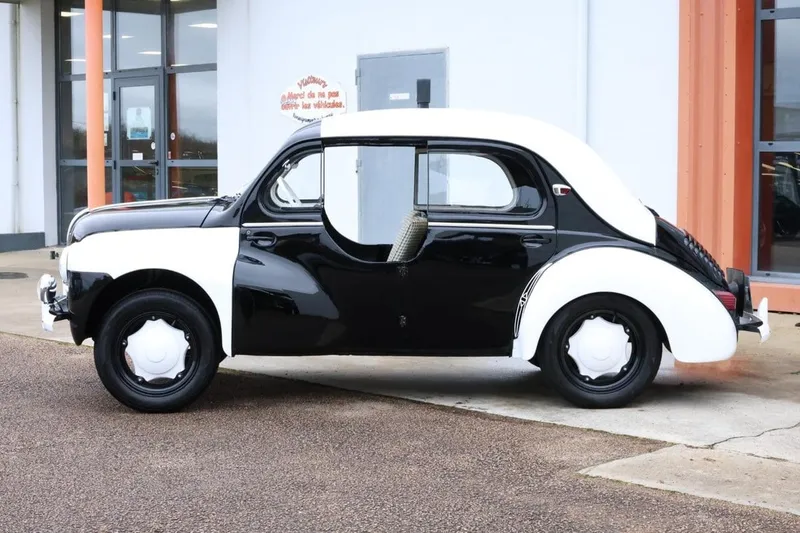
- 4‑door saloon with rear‑hinged front doors
- Layout and Drive
- Rear‑engine, rear‑wheel drive
Renault 4CV in Detail
Work on the 4CV began in secret during the German occupation of France, when Renault engineers discreetly developed a small and economical car for the anticipated post‑war years of austerity. Codenamed 106E, it used a rear‑mounted four‑cylinder engine and monocoque body, and survived postwar politics to reach production under the newly nationalised Régie Renault.
Unveiled at the 1946 Paris Motor Show, the 4CV entered full production in 1947 as Renault’s first high‑volume model. Early cars used a 760cc engine, later revised to 747cc to sit just under a key 750cc tax threshold in many markets. By the time production ended in 1961, when it was replaced by the Dauphine, Renault had built just over 1.1 million 4CVs.
The Renault 4CV evolved gradually during its life, but in terms of right-hand drive UK models, the key differences are between early 760cc cars and later 747cc versions, which offered modest power increases despite their reduced capacity. Performance is arthritic by modern standards, though a light kerb weight and flexible gearing make real‑world progress more usable than the figures below might suggest.
Variant / period | Engine (cc) | Power (hp) | 0–90 km/h (0–56 mph) | Top speed |
|---|---|---|---|---|
1947–1950, 760 | 760 | 17 | n/a | c. 90 km/h (56 mph) |
1950–mid‑1950s | 747 | 17 | n/a | c. 90–95 km/h |
4CV 747 | 747 | 21 | c. 0–90 km/h in 38 s | Just under 100 km/h (62 mph) |
All 4CVs use a rear‑mounted inline‑four engine driving the rear wheels through a three‑speed manual gearbox. The lack of a synchromesh on first gear wasn’t the car’s only drivetrain quirk, since second and top gears covered a very wide speed range, which helps the 4CV cope with 2020s traffic better than its modest power output might imply.
The Renault 4CV is extremely compact, even by classic small‑car standards, but clever packaging and a flat cabin floor make optimal use of its diminutive footprint.
Measurement | Value |
|---|---|
Length | 3.60 m |
Width | 1.43 m |
Height | 1.45 m |
Body style | 4‑door saloon with rear‑hinged front doors |
Construction | Monocoque body |
Engine position | Rear‑mounted |
Driven wheels | Rear‑wheel drive |
Typical kerb weight | Around 620 kg |
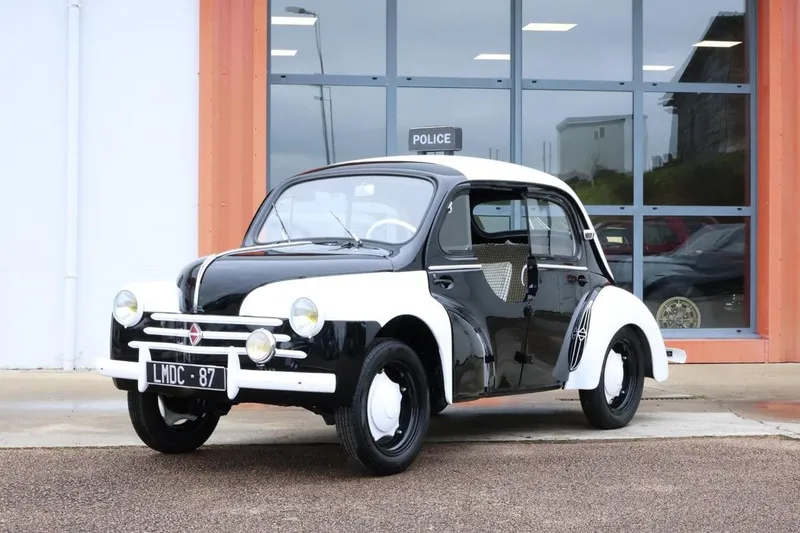
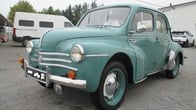
Early Renault 4CVs earned the rather unflattering “slab of butter” nickname thanks to their rounded shape and pale yellow paint, repurposed from surplus German military stocks. The overall form is a smooth two‑box silhouette with integrated wings and a distinctive rear‑engine deck, giving the car an almost toy‑like presence on the road.
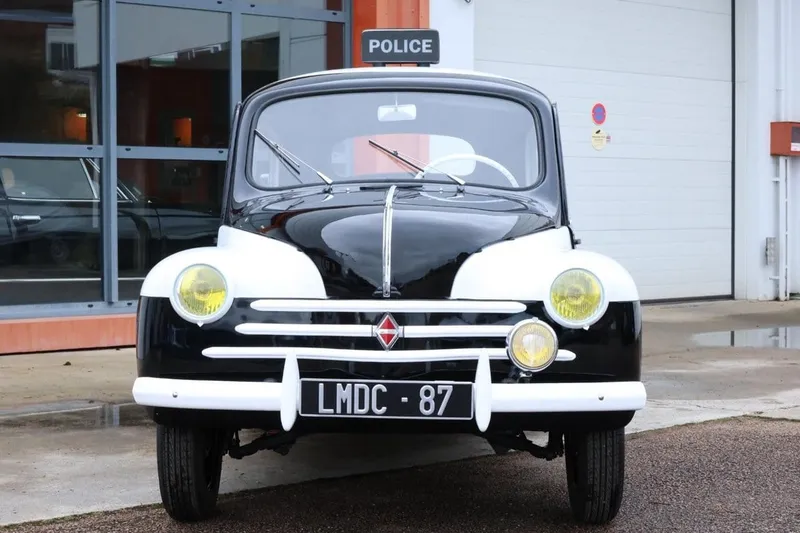
At the front, the 4CV originally carried a dummy grille with six thin horizontal chrome bars, partly to distance its appearance from contemporary German rear‑engined cars. Later production switched to a three‑bar “moustache”, while detail changes to bumpers, lights and trim distinguished different years and trim levels.
Unmodified 4CVs sit on narrow wheels with simple hubcaps and minimal brightwork, reflecting the car’s utilitarian brief. Higher‑spec models added more chrome - and extra colour choices for those who couldn’t believe it wasn’t butter.


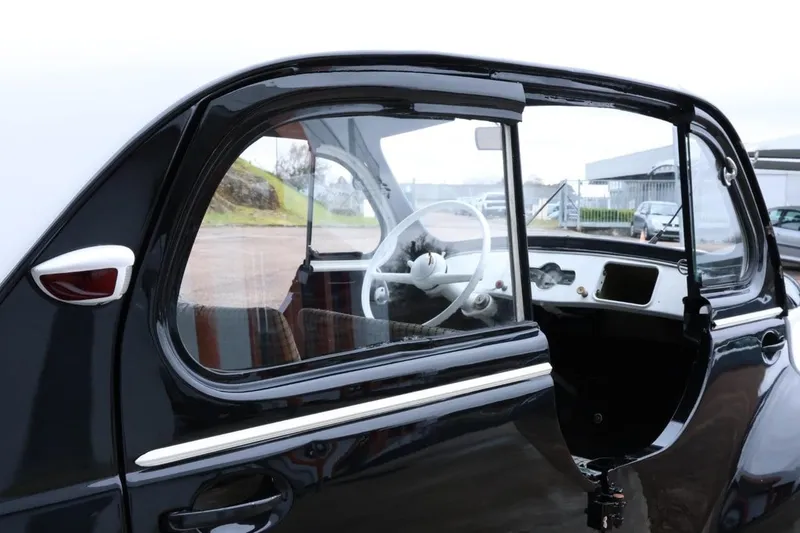
Amazingly, the Renault 4CV offers four seats and a flat cabin floor, made possible by the rear‑mounted powertrain. The driving position is upright, with a large steering wheel alarmingly close to the driver’s chest.
Trim depends heavily on year and specification. Early “Service” versions are very plain with vinyl or cloth trim, minimal sound deadening and sparse brightwork, whereas plusher models gained more attractive fabrics. Every 4CV shares a simple dashboard with a speedometer and basic warning lights. The rear‑engine layout means modest storage capacity at the back, with additional room created by the rear bench and small storage areas in the cabin.


The Renault 4CV was designed long before modern crash standards, but the monocoque body does offer more structural rigidity than many of its separate‑chassis contemporaries. The low overall weight and relatively direct steering have to be offset against narrow tyres and pendulous rear‑engine handling characteristics; these cars demand respect in poor weather.
Upgrades commonly adopted by owners include retrofitting seatbelts, improving lighting and fitting better‑quality tyres, all of which can significantly improve real‑world safety without spoiling the car’s character.
On any Renault 4CV, body condition is critical. The monocoque shell can suffer from rust along floors, sills, inner wings, suspension mounting points and around the engine bay. Check the lower edges of the doors, wheelarches, the base of the windscreen and rear window, as well as any repairs to jacking points or chassis legs.
The rear‑mounted Billancourt engine is simple but very old, so signs of poor maintenance or tired internals are significant. The cooling and fuel systems also deserve close attention; perished hoses, tired radiators and old fuel lines are common on unrestored cars, but any crusty plumbing or fuel smells is likely to require immediate attention.
Crucially, assess the quality of any restoration work. Because 4CV values have historically been modest, some cars were repaired on a budget; look for overspray, poorly aligned panels and interior trim that doesn’t match original patterns.


Price trends
Most recent sale
€8,500
1953 Renault 4CV
Sep 19, 2023

Currently for sale
57
0 live auctions
57 adverts



Total sold
146
Highest sale price
€23,000
Average price
€8,813
Lowest price
€800
FAQs
Even the more powerful later 747cc cars struggled to reach 100km/h (around 62mph), with a quoted 0–90 km/h time of about 38 seconds. Remarkably, earlier versions were even slower.
The 4CV has its engine mounted behind the rear axle, driving the rear wheels through a three‑speed manual gearbox, which helps to create a flat floor and good cabin space for its size.
Expect featherlight weight, modest performance and characterful rear‑engine handling, with very direct steering on early cars and a flexible engine that pulls well in second and third gears.
The earliest cars used a 760cc unit, while from 1950 Renault adopted a 747cc version to keep the car under a 750cc tax threshold. Power outputs were similar initially, with later 747cc engines benefiting from higher compression.
The 4CV’s direct successor was the Dauphine, launched in 1956, with the original Renault 4 (R4) later taking over its role as Renault’s main small family car.