Willys Jeep: Models, Specs and Buyer’s Guide
Core Specs: 2.2 L (134 cu in) “Go-Devil” inline-4 • 3-speed manual + 2-range transfer case • 4×4 • 80 in (2032 mm) wheelbase • 1941–1945
Willys Jeep Overview
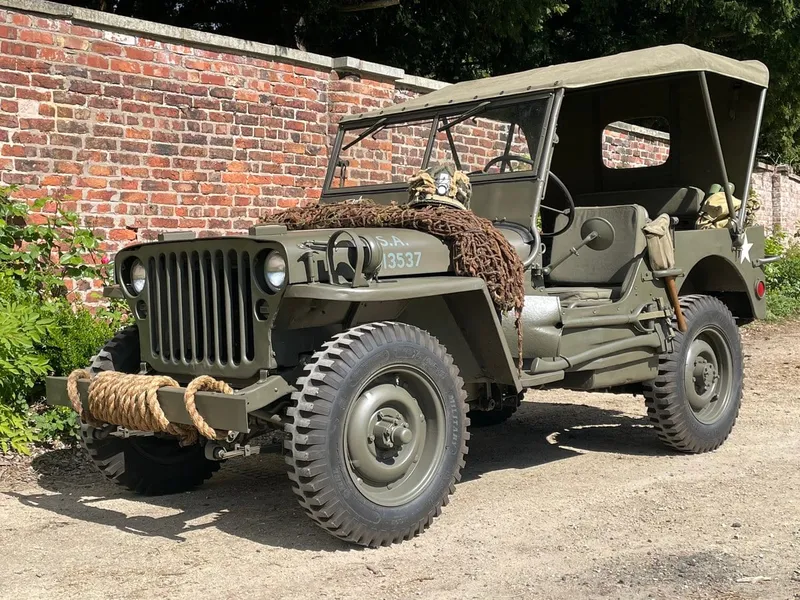
You know a product is successful when it becomes a proprietary eponym for an entire product range - Hoover, Frisbee, Jacuzzi, and so forth. To this celebrated list, we can add the Jeep - in particular, the wartime Willys Jeep, known as the MB and almost identical to the Ford GPW, which was manufactured alongside it. Created to satisfy a 1940 U.S. Army brief for a 1/4‑ton 4×4, the wartime Willys MB provided the template for the modern off-roader. Compact, light and incredibly durable, the “Jeep” paired a simple ladder frame and live axles with a tractable 2.2‑litre four‑cylinder engine, a 3‑speed gearbox and a dual‑range transfer case. Its short wheelbase, fold‑down windscreen and external stowage were guided entirely by function, but this eminently practical DNA carried straight through into peacetime as the civilian CJ models.
C&C Expertise
I was fascinated with wartime Willys Jeeps at an early age, particularly taken by the complex series of levers that controlled the transmission! Born out of necessity, the Willys Jeep went on to play a key role in the Allies winning World War II. Not only was the GP (hence ‘Jeep’) a capable little off-roader, but its success also lay in its mass production: Approximately 640,000 were made during the course of the war (combining Willys MB and Ford GPW numbers). This meant the Jeep could be deployed across multiple theatres of conflict. Post-war, it went on to spawn the Jeep brand and even inspired the original Land Rover.
Willys Jeep Price
- Starting price
- $6,380
- Average price
- $26,002
- Price range
- $6,380 - $45,000
Willys Jeep Specifications
- Manufacturer
- Willys‑Overland Motors (MB); Ford Motor Company (GPW, built under license)
- Production (wartime core)
- 1941–1945 (MB/GPW had combined manufacturing figures in the hundreds of thousands)
- Vehicle Class
- Light 1/4‑ton 4×4 utility
- Layout and Drive
- Front‑engine, part‑time four‑wheel drive
- Chassis/Body
- Ladder frame, steel body with a fold‑flat windshield
Willys Jeep in Detail
The Willys Jeep is a triumph born out of tragedy - specifically, World War II. In 1940, the U.S. Army was seeking a lightweight cross‑country vehicle. Prototypes from Bantam, Willys and Ford were amalgamated into a standardised design built predominantly by Willys (MB) and Ford (GPW).
The production Jeep combined a robust ladder frame and leaf‑sprung live axles with the willing L‑134 ‘Go Devil’ engine, alongside selectable 4×4 controlled via a two‑speed transfer case. A pressed‑steel grille, mounts for a jerry‑can, axe and shovel, blackout lighting and a fold‑flat windscreen epitomised the vehicle’s military origins. Renowned for going where trucks could not, it served as everything from an ambulance to a tow vehicle, everywhere from deserts to deep mud.
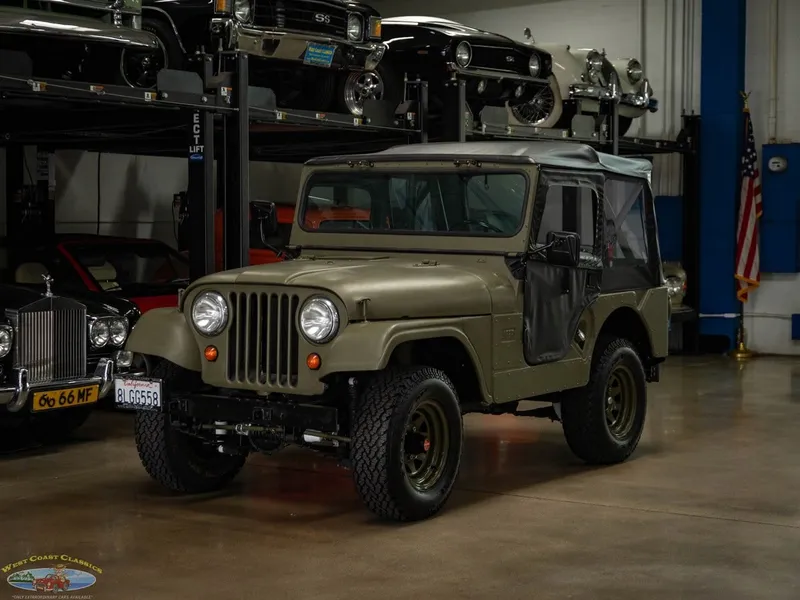
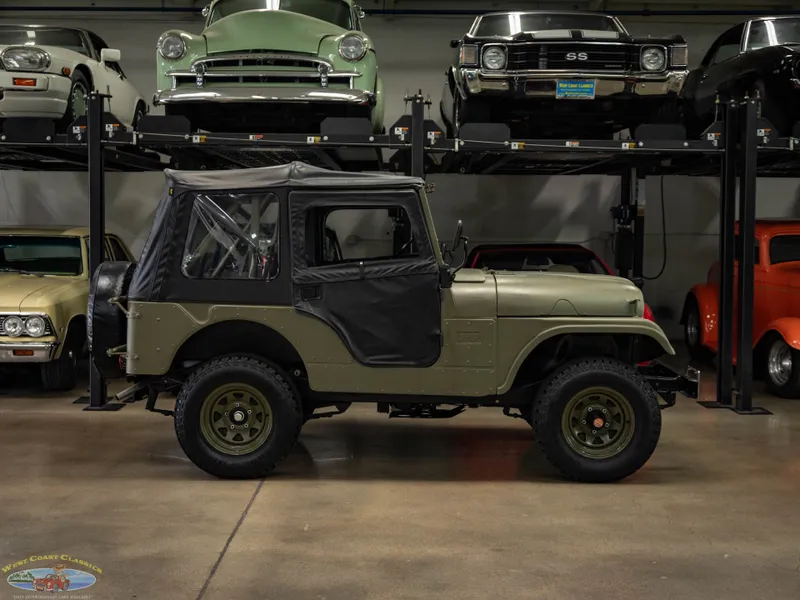
With peace secured, Willys transitioned the platform to civilian life as the CJ‑2A, retaining the drivetrain while adding a tailgate and comfort tweaks, though comfort is a relative word here. The Jeep’s wartime reputation for toughness made it an immediate hit on farms, in industry and with early off‑road enthusiasts, laying the groundwork for the CJ lineage and the wider 4×4 culture that followed.
Wartime MB/GPW models shared the same L‑134 engine, 3‑speed manual gearbox and a 2‑speed transfer case driving live axles via leaf springs. These relatively crude mechanicals were not designed with performance in mind.
Model (period) | Engine / drive | Top speed |
|---|---|---|
Willys MB / Ford GPW (1941–45) | L‑134 2.2 I4 / part‑time 4×4 | 60 mph ( 95 km/h) |
CJ‑2A (1945–49) | L‑134 2.2 I4 / part‑time 4×4 | 55–60 mph |
The Jeep’s off‑road ability stems from a combination of low-range gearing, short overhangs, excellent approach/departure angles and a very short wheelbase, as summarised below.
Metric | Imperial |
|---|---|
Wheelbase 2,032 mm | 80.0 in |
Overall length 3,355–3,370 mm | 132.0–132.7 in |
Overall width 1,570 mm | 61.8–62.0 in |
Overall height 1,735 mm (hood up) | 68.3 in |
Kerb weight 1,070–1,110 kg | 2,360–2,450 lb |
Form follows function on any military vehicle, so flat bumpers mark the tyre edges for the driver while the fold‑flat windscreen reduces height for transportation. The simple Jeep body sits on a sturdy ladder frame, featuring live axles and leaf springs chosen for their durability and ease of repair in the field.
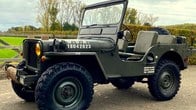
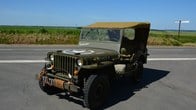
Grille and front end: Early slat-grille MBs used welded vertical bars, with the pressed-steel 9-slot grille arriving at the start of 1942. This distinguishes military vehicles from civilian ones, which got the now-iconic 7-slot nose. Ingeniously, the headlamps could swing inward to act as engine-bay work lights.
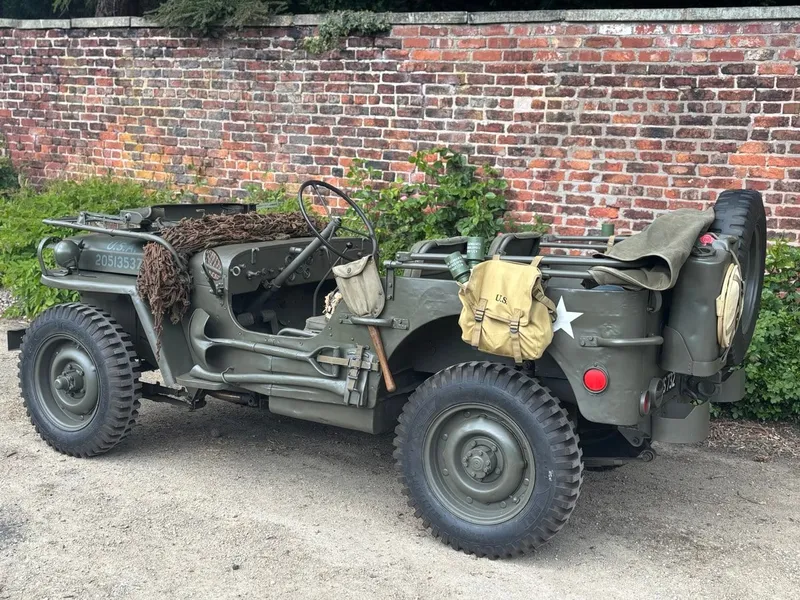
Canvas and bows: Removable canvas top with bow set and side curtains; the folded frame stows compactly against the rear panel.
Service access: Quick-release hood latches, easily removed grille/radiator guards and drainage/inspection points made maintenance practical at the roadside.


The Jeep had an austere three-seater layout with a simple steel dash containing easy-to-read instruments and rotary/lever controls for the choke, throttle, lights, and 4×4/low range options.
Seats were canvas with removable cushions, while features like rifle racks, first‑aid kit points and cargo tie‑downs were typical. By contrast, the CJ-2A added civilian comforts, such as a tailgate and improved trim, while retaining the basic, wipe-clean ethos.


This Jeep has no modern safety systems like airbags, ABS or even crash crumple zones. Braking is achieved via drum brakes, resulting in long stopping distances, and steering is unassisted; therefore, tyre tread quality is vital.
The open body means rollover protection is negligible; for fast road or event use, a discreet roll bar or ROPS is strongly recommended. Drive any Willys Jeep cautiously, especially in wet or loose terrain, since grip is limited and control margins are slim.
Price trends
Most recent sale
£29,995
1943 Willys Jeep
Sep 25, 2023

Currently for sale
21
0 live auctions
21 adverts


Total sold
45
Highest sale price
€45,000
Average price
€26,002
Lowest price
€6,380
FAQs
They’re both WWII American military Jeep vehicles sharing numerous parts. The MB nomenclature denotes a Willys‑built vehicle, whereas GPW indicates a Ford‑built vehicle adhering to the Willys design.
Right after the war with the 1945 CJ‑2A was produced, carrying over the core Jeep drivetrain but adding a few civilian features.
In the main, thanks to simple mechanicals, good global parts support and straightforward access. Condition and rust history are the biggest variables.
It’s possible, but they’re happiest at modest speeds. Brakes, steering, lighting and wet-weather gear should be in optimal condition if regular use is being anticipated.
Frame rust or repairs, mismatched parts, over‑restoration masking poor metal and missing military details if authenticity matters on a wartime vehicle.