Aston Martin DB5: Models and Specs
1963–1965 · 3,995cc inline-six · Front-engine, RWD · Coupé/Convertible
Overview
What do you think about when the words “Aston Martin DB5” appear? For many people, it’ll be the James Bond association, with the DB5’s appearance in 1964’s Goldfinger sparking the most commercially significant film-to-car association in automotive history. For others, it’ll simply be the tirelessly beautiful lines of a hand-built British GT, from a period when Aston Martin was a craftsman-led manufacturer producing fewer than 200 cars a year. Produced between 1963 and 1965 with just over 1,000 examples burbling their way off the production line, the DB5 is unlike any other model in the Aston Martin catalogue. Irrespective of its cultural resonance, the Bond connection was an overlay on a car that was already exceptional. The DB5 is an effortless high-speed GT, built to cover ground quickly and quietly with the precision of a hand-assembled machine. It wasn’t a track car, but it remains one of the most complete expressions of the grand tourer that Britain ever produced.
Price
- Starting price
- € 420.000
- Average price
- € 824.255
- Price range
- € 420.000 - € 1.100.000
Specifications
- Production Years
- 1963–1965
- Body Styles
- Coupé (898); Convertible (123)
- Layout
- Front-engine, rear-wheel drive
- Construction
- Steel chassis; aluminium body
- Engine Family
- 3,995cc DOHC inline-six
Aston Martin DB5 in Detail
The DB5's engine was the most significant change from the DB4 it replaced. An enlargement of the inline-six from 3,670cc to 3,995cc was achieved through increased bore dimensions, generating 282 bhp at 5,500 rpm in standard triple-SU carburettor form. The block, head and basic architecture were shared with the DB4 Vantage, but the larger displacement and revised carburation transformed the engine's character, adding torque at lower revs and giving the DB5 a truly GT-oriented power delivery. Available from 1964, the ZF five-speed gearbox replaced the earlier David Brown four-speed unit and improved both refinement and driving ease.
Every DB5 was built at Aston Martin's Newport Pagnell factory by hand. The aluminium body panels were formed on rollers from large flat sheets by craftsmen, with each panel shaped individually. Every car is unique; the steel platform chassis and tubular steel subframe provided a structural foundation, with the aluminium skin attached over it in the traditional coachbuilt manner.
The Vantage engine option replaced the standard triple SU carburettors with triple Weber instruments, and hotter camshafts helped to raise output to 314 bhp in early specification (325 bhp in the final form). Just 65 Vantage coupés and seven Vantage convertibles were produced. The Convertible body style arrived in 1963 alongside the coupé; 123 ragtops were built across the production run. Production ended in 1965, with the DB6 succeeding the DB5 with a more aerodynamically refined body and revised suspension.
Power varies slightly between the standard and Vantage states of tune (282 bhp versus 325 bhp) but the performance difference isn’t dramatic in absolute terms. What defines the DB5 is the inline-six's broad, accessible torque curve. It feels effortlessly quick rather than demanding, with a rare level of mechanical refinement for the era.
Standard | Vantage | |
Engine | 3,995cc DOHC I6, triple SU | 3,995cc DOHC I6, triple Weber |
Power | 282 bhp | 314–325 bhp |
Torque | 280 lb ft | 288 lb ft |
0–60 mph | 7.1 sec | 6.5 sec |
Top Speed | 145 mph | 148 mph |
Transmission | 4-speed manual / 3-speed auto | 4-speed manual |
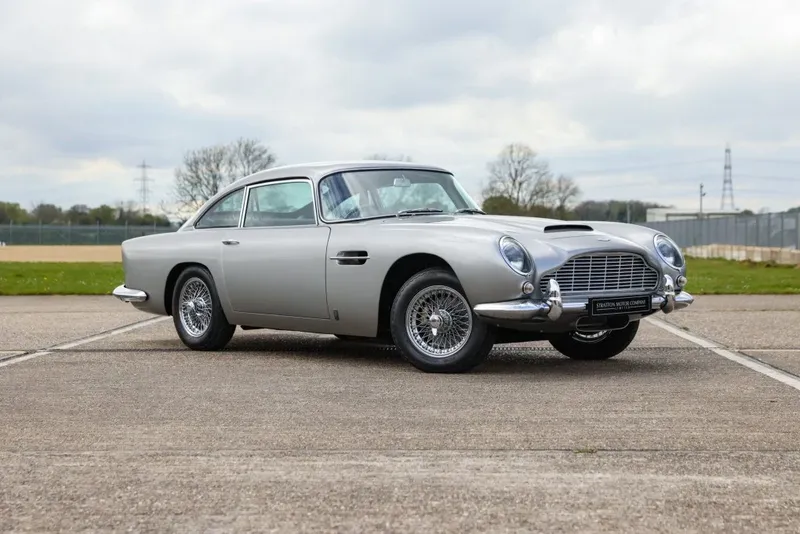
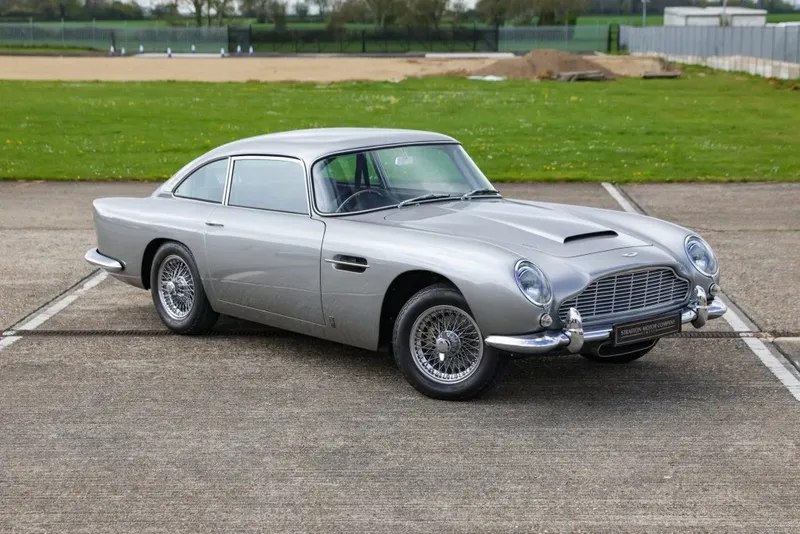
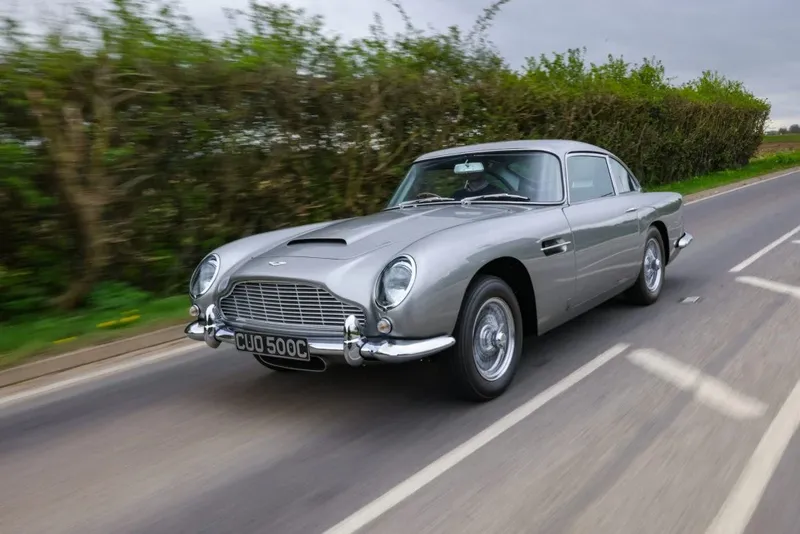
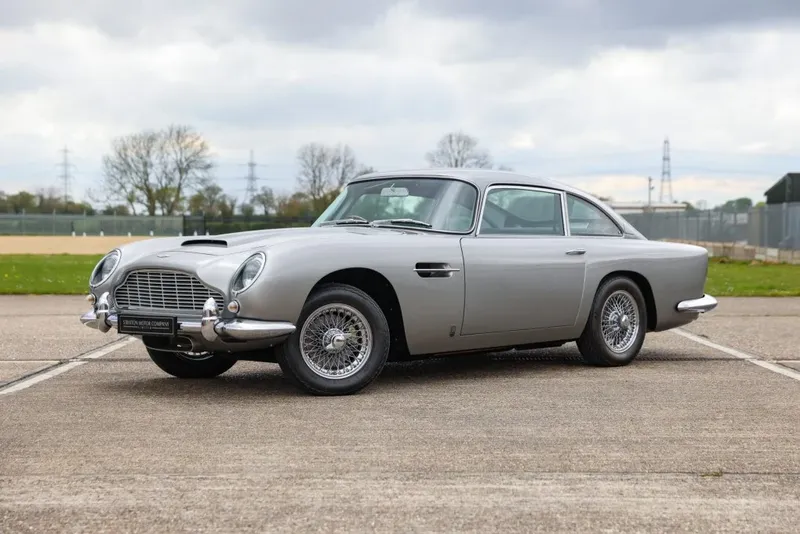
Thanks in part to its big-screen appearances, the DB5 is one of the most immediately identifiable shapes in automotive history. Carrozzeria Touring's Superleggera-influenced form translates the DB4's foundation into its most resolved expression. The front end is defined by a wide oval grille flanked by quad headlamps in chrome bezels; the roofline flows cleanly into a Kamm-cut tail that balances aesthetics with aerodynamic function. The hand-finished aluminium body's surface quality gives a depth and warmth that pressed steel couldn’t hope to replicate.
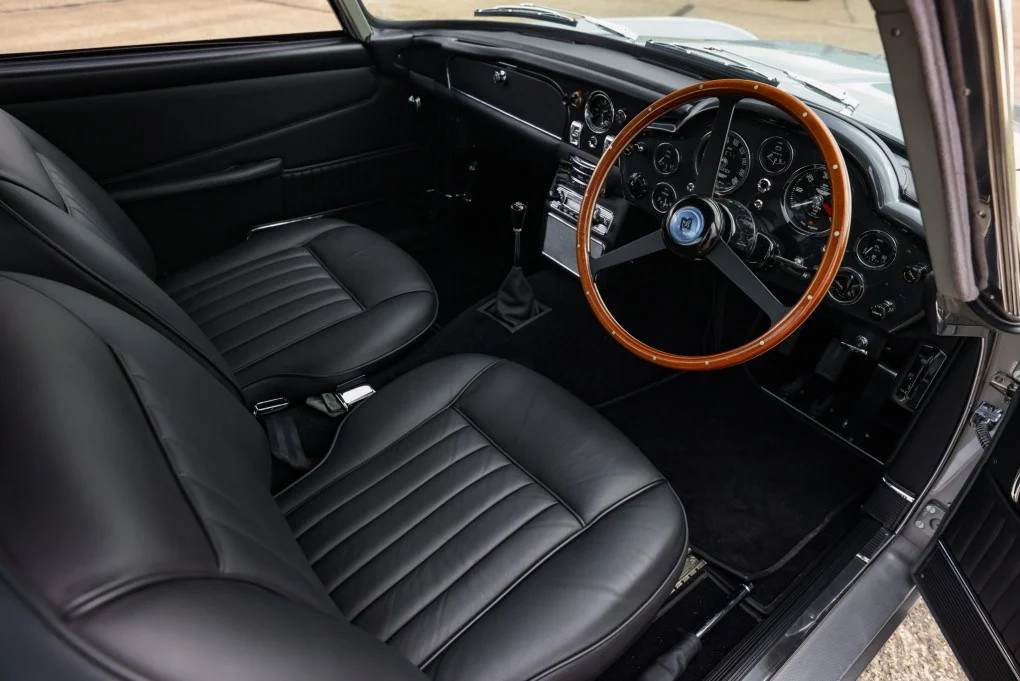
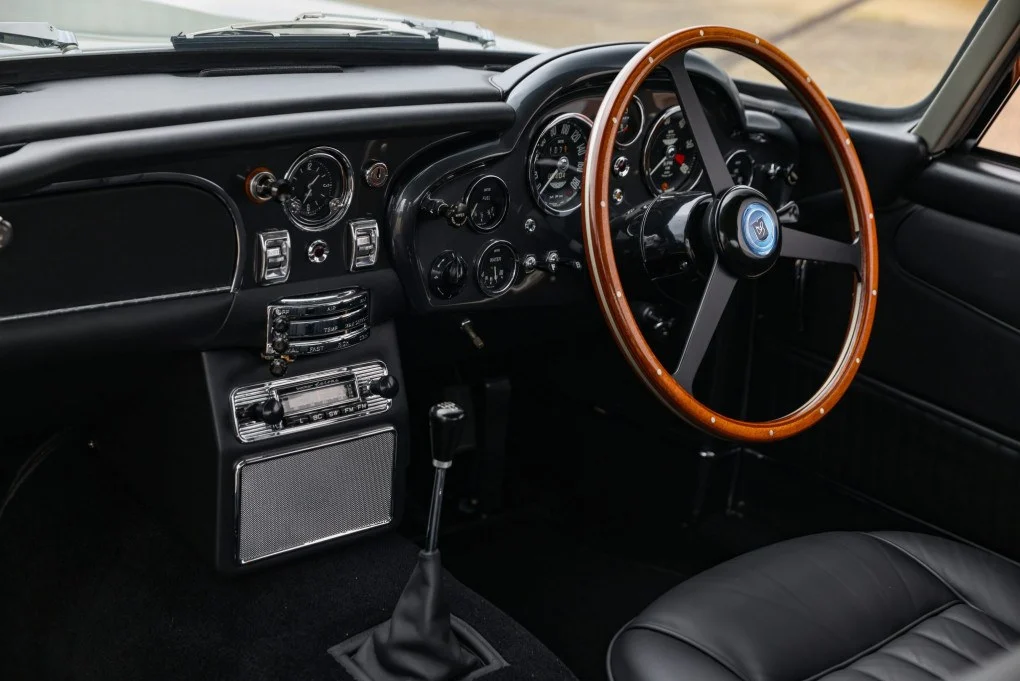
Inside, two large bucket seats face a wood-rimmed steering wheel ahead of a full complement of Smiths instruments set in a deeply recessed binnacle. Every control is where a driver expects it to be, doing precisely what it should. The wood and aluminium details of the centre console and door cappings reflect a craftsman's philosophy that prioritised material quality over surface area. The DB5's cabin isn’t spacious, but it is one of the most atmospheric environments of its era.
The DB5 is a single-model structure with no generations, but the progression within its production run can be summarised as follows:
1963 launch specification. A 282 bhp engine with triple SU carburettors mated to a David Brown 4-speed gearbox; fixed-head coupé and convertible
1964 developments. ZF 5-speed gearbox became available and the Vantage engine option was introduced with triple Webers, while electric windows became standard
1964–1965 Short Chassis Volante. Just 37 examples were built, with the first use of the Volante name
1965. Production ended, succeeded by the DB6, with a total of 1,023 road cars produced across all specifications
For better or worse, the DB5 predates occupant protection legislation in the UK. Even seatbelts weren’t standard, though some cars were delivered with owner-specified lap belts. Front disc brakes all round were standard with a servo-assisted system providing progressive and powerful stopping power appropriate to the car's performance - by the standards of the time, at least.
Pros
Hand-formed aluminium construction means every DB5 is unique, with a material quality and provenance no pressed-steel contemporary could offer
The Bond association with Goldfinger and Thunderball is the most commercially consequential film-to-car connection in automotive history
A total production run of 1,023 road cars ensures scarcity is genuine and permanent, and values reflect a finite pool of cars that can only dwindle
Cons
Galvanic corrosion between the steel chassis and aluminium body skin is invisible until panels are removed; structural remediation adds to restoration costs that typically begin at £300,000
Hand-formed body panels are not interchangeable between cars, so every repair requires bespoke fabrication by an aluminium specialist
Annual maintenance costs are a fixed ownership commitment; buyers accustomed to lower-cost classic ownership should be mindful of this
Prijsontwikkeling
Meest recente verkoop
£ 549.995
1965 Aston Martin DB5
Momenteel te koop
21
0 live veilingen
21 advertenties



Totaal verkocht
12
Hoogste verkoopprijs
€ 1.100.000
Gemiddelde prijs
€ 824.255
Laagste prijs
€ 420.000
FAQs
Aston Martin produced 1,023 DB5 road cars across all specifications between 1963 and 1965, comprising 898 fixed-head coupés, 123 convertibles and 37 Short Chassis Volantes. The DB5 is therefore one of the most sparsely produced British GT cars of the 1960s, and the surviving pool of road-going vehicles is considerably smaller than original production figures infer.
The DB5 was designed as a high-speed GT for long-distance travel, and it remains capable of covering ground quickly and comfortably on appropriate roads. Regardless of mileage, annual servicing is essential: Aston Martin's fixed price menu lists £845 for a minor service and £2,310 for a major service. The DB5 isn’t really meant to be a daily driver, since its hand-built construction and aluminium body require careful management of exposure to weather, road salt and uncontrolled parking environments.
The DB5 Vantage uses triple Weber carburettors in place of the standard car's triple SU instruments, fitted with hotter camshafts and revised inlet porting. The Vantage is identifiable externally only by specialist scrutiny; just 65 Vantage coupés were built, making it significantly rarer and commanding a considerable market premium. Both specifications share identical chassis, body and transmission options.
Aston Martin and a network of marque specialists comprehensively support the DB5, and the car's values justify the investment in bespoke parts supply. Mechanical components are available through Aston Martin's heritage parts programme and specialists. The big problem involves body panels, which require bespoke fabrication due to the car’s hand-formed construction; no two panels are exactly the same size.