Austin 7 Chummy: Models and Specs
1923-1930 · 747cc side-valve inline-four · 7.8–13 bhp · Front-engine, rear-wheel drive · Open four-seat tourer
Overview
The name may have aged badly, but the Chummy represents the Austin Seven in its original, most elemental form. It was the only body style available when production started in 1923, and it remains the most direct expression of Herbert Austin’s ambition to seat four people in a car at a price that made alternatives feel irrelevant. Choosing a Chummy over the Ruby, the Pearl Cabriolet, or the later Opal Tourer means choosing the early Seven with the crash gearbox, open body, pram hood and cycle wings. This was the closest mechanical relationship between driver and road that the Seven ever achieved. It also means committing to a car whose earliest examples are now a hundred years old, with a wood-framed body, canvas hood and rubber side screens. A Chummy buyer typically knows what they’re getting, which is not the most practical or forgiving entry into the Seven family. The Chummy is for the buyer who wants the open-air, pre-war experience in its most unfiltered form, and who is prepared to learn the driving technique and maintenance culture that go with it.
Specifications
- Engine
- 747cc side-valve inline-four
- Carburettor
- Zenith
- Gearbox
- 3-speed crash (no synchro)
- Wheelbase
- 75 inches
- Body construction
- Aluminium panels over ash frame
Austin 7 Chummy in Detail
History
AB, AD and AE: the body series explained
It’s important to distinguish the Chummy from the wider Seven family, and also to note that Austin used style initials to identify body configurations. The Chummy open tourer ran through three distinct body series, with the AB the earliest scoop scuttle car of 1923 and early 1924. The AD followed, running through the mid-to-late 1920s. Its body tub measures approximately 57–58 inches from the inside of the hood irons to the top of the dash, but its body is narrower at the rear than the AE, which was the later (and larger) Chummy body. The AE doors are longer front-to-back than the AD, and the outer panel overlaps the body differently. The AE is more commonly found on the market because it was produced in greater numbers, and replacement panels made for one car will not fit the other correctly without modification.
Body and hood construction
Every Chummy was built on a framework of ash timber, over which aluminium panels were formed and fastened. The ash provides the structural skeleton and its condition determines the structural integrity of the car, since ash rots from the inside out. A body that looks cosmetically sound may have compromised timber beneath the panels, and the only way to know is to probe the frame.
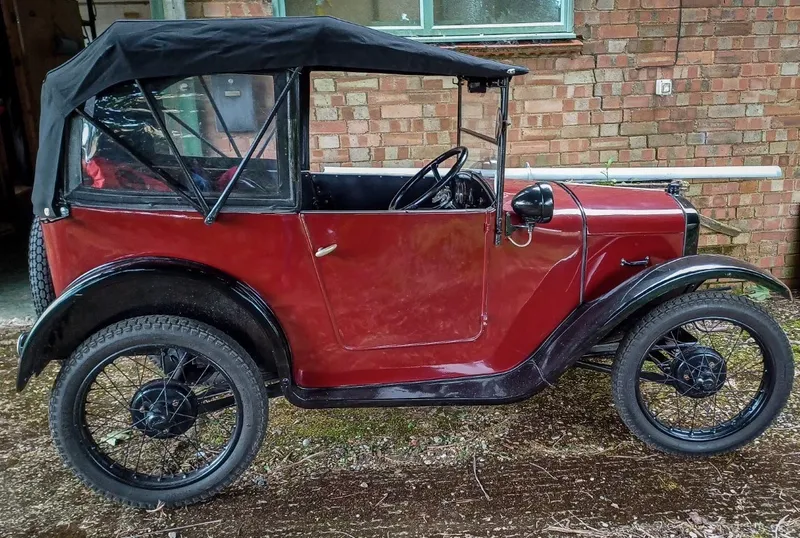
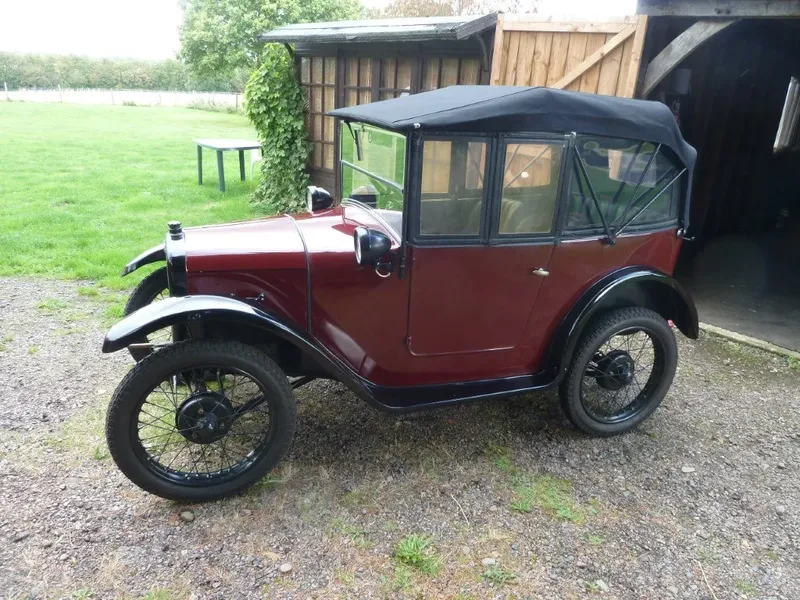
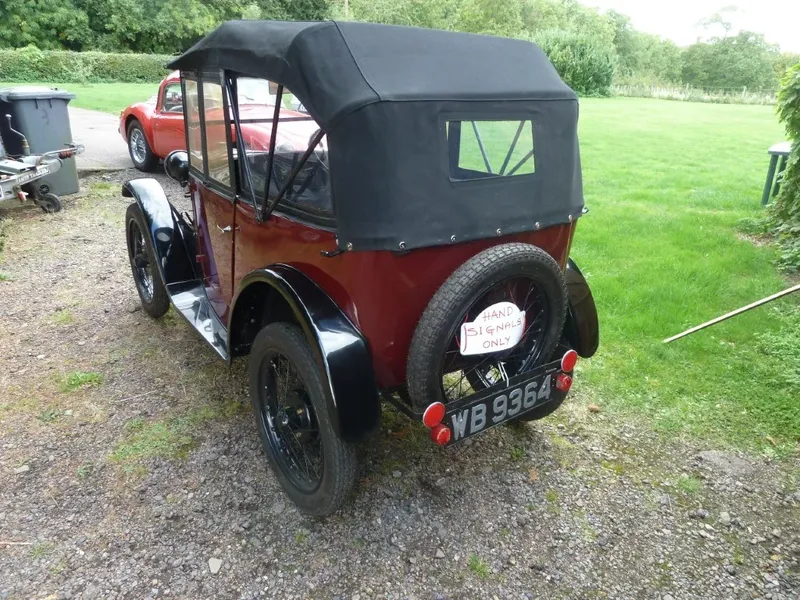
The Chummy hood is a charmingly archaic pram-fold design. The canvas panel is supported by a series of hood irons that fold progressively to collapse the roof rearward over the body tub. When erect, the hood connects to the top of the windscreen frame at the front and to a fixed rear rail at the back. Side screens attach separately, fitting into channel sections on the door tops. However, an original hood arrangement is rare on cars that have been in use for a century; many Chummies carry replacement canvas of varying quality, replacement irons of non-period profile or missing side screens.
Driving character
The Chummy places its driver closer to the mechanical and environmental reality of motoring than almost any car produced since the Second World War. There is no weather protection beyond the canvas hood and side screens, the body transmits road surface through the seat and the controls require learned technique rather than instinct. However, at 35–45 mph on a quiet road, a well-sorted Chummy is in its element. The engine is unstressed, the steering is direct (if heavy at low speeds), and the sense of mechanical involvement is absolute. It’s the antithesis of today’s sanitised and interfering EVs.
Specifications & Performance
The Chummy's performance figures reflect the early state of tune of the 747cc side-valve engine compared to later Seven configurations. The 747cc engine produced a giddy 10.5 bhp, though modifications to the crankshaft and carburetion in late 1929 boosted output to 13 bhp. Completists might wish to note that the earliest AB series cars of 1923 used the original 696cc block briefly before the 747cc unit was standardised from March 1923, producing 7.8 bhp in initial tune.
If you haven’t used a crash gearbox before, you’re quite literally in for a crash course in a Chummy. All three gear ratios are unsynchronised, requiring the driver to match engine speed by ear and foot for every gearchange in both directions. This is a technique that takes time and practice to master. The open body is even more attritional; without a roof or doors, the Chummy transfers road noise and ambient weather conditions directly to its occupants, which makes the extremely limited performance feel more urgent than the figures suggest.
Item | Figures |
Engine | 747cc side-valve four (696cc on earliest 1923 cars) |
Power (early tune, to 1929) | 10.5 bhp |
Power (from late 1929) | 13 bhp |
Gearbox | 3-speed, no synchromesh on any ratio |
Top speed (approximate) | 35–45 mph depending on load and body condition |
Braking | Four-wheel cable drums |
Exterior
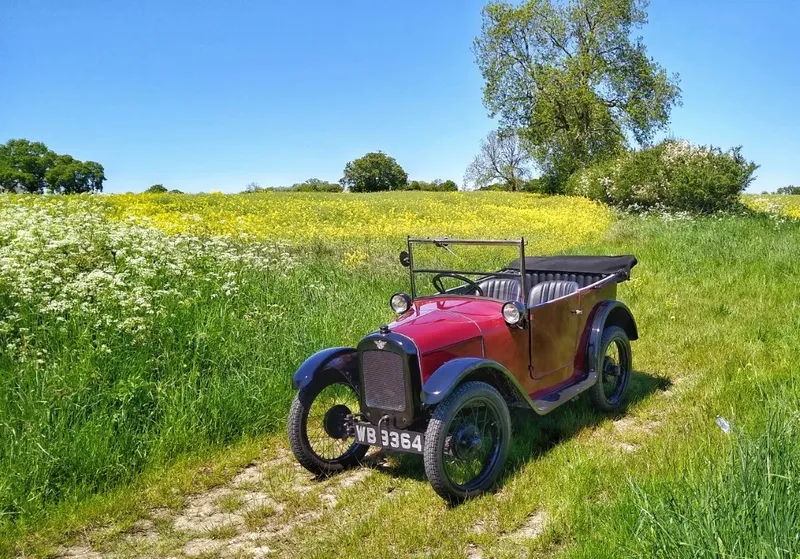
Chummy-era Sevens use cycle-type front mudguards which follow the wheel rather than being integrated into the body. Original-profile cycle wings are available from specialist suppliers, but many cars in circulation carry wings of non-original profile from previous repairs or restorations. Similarly, replacement hood irons may not match the original profile.
Period-correct colours for Chummies are typically single-colour schemes in dark tones such as black, dark blue or dark green, with contrasting hood canvas. Many restored cars carry non-original colour schemes, which matters for concours or VSCC presentation.
Interior
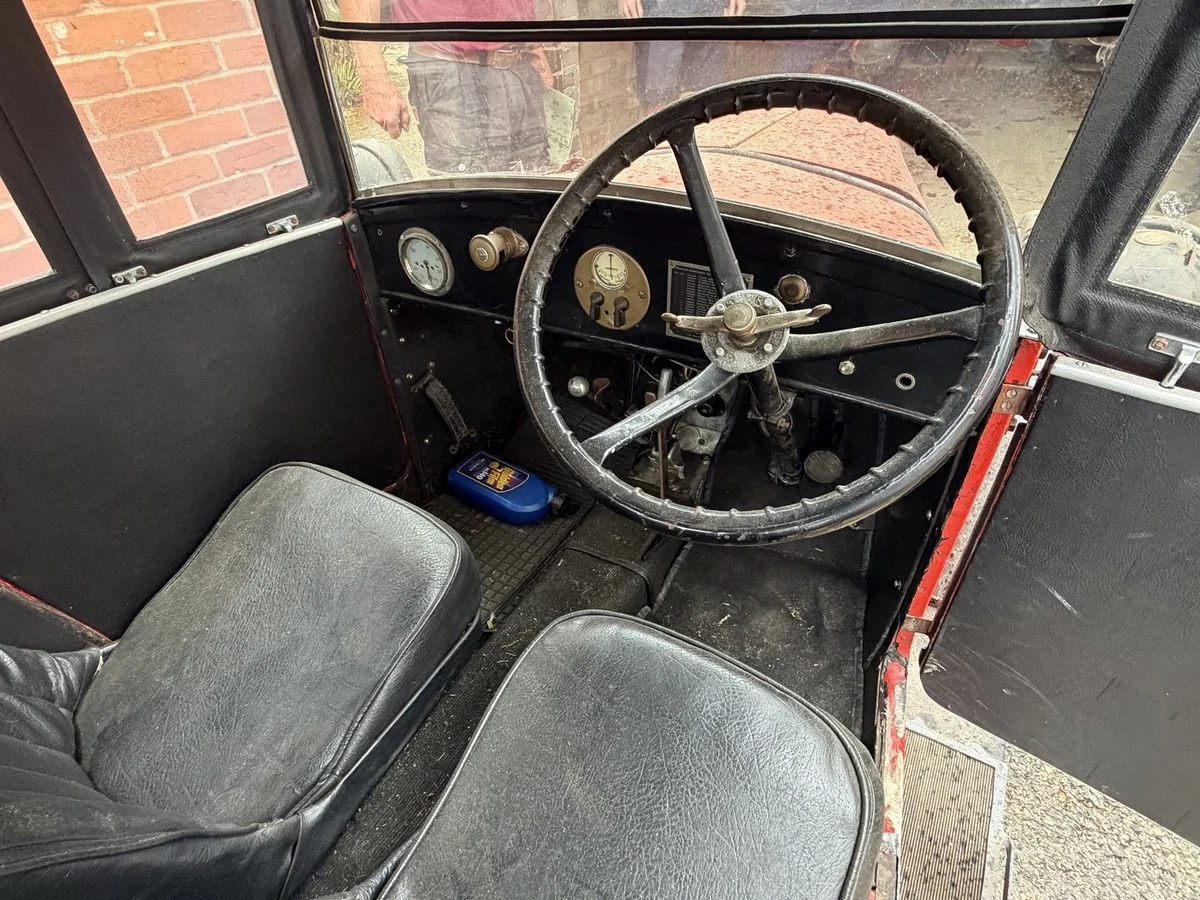
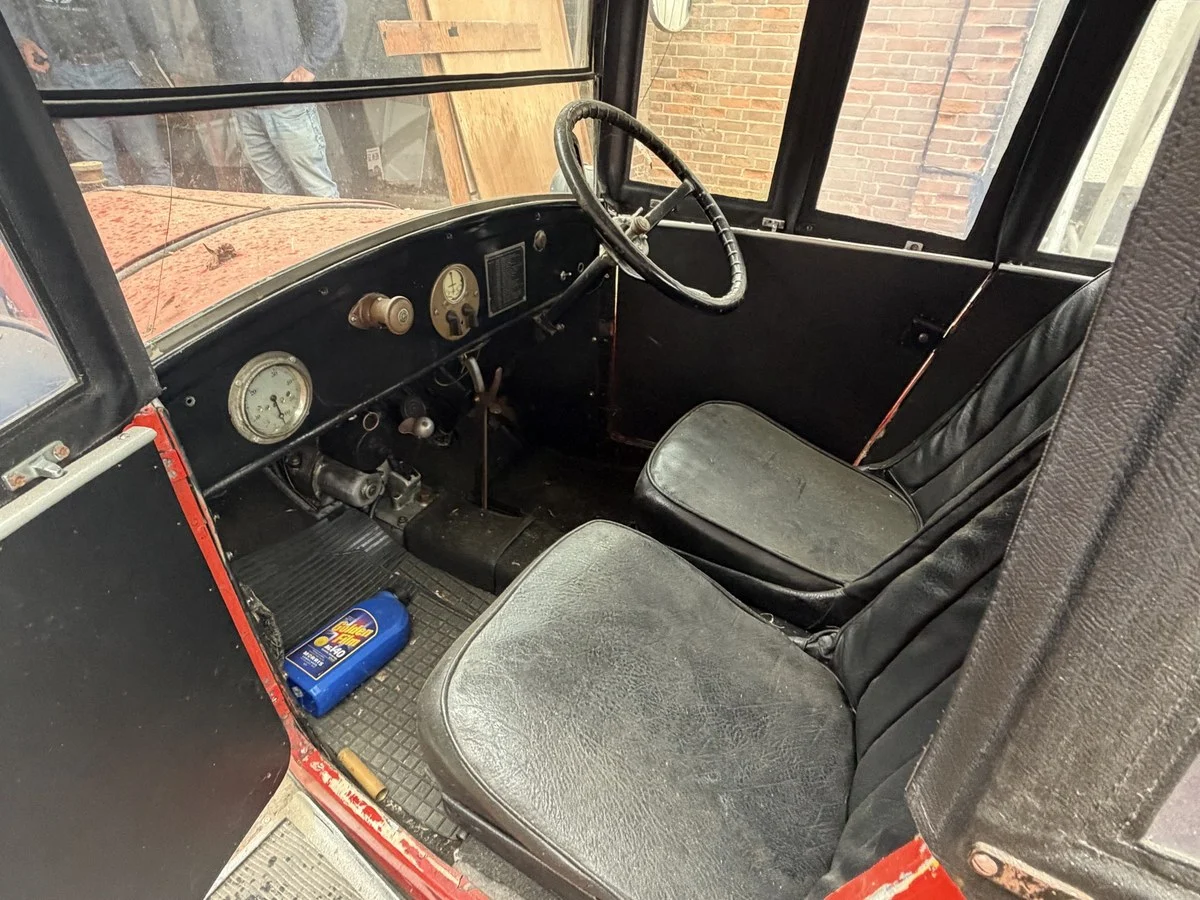
The Chummy cabin is a bench-seat-forward, two-row arrangement with (just about) room for two in the front and two in the rear. The interior width of approximately 39–41 inches at the tub gives the car its nickname, since occupants sit close together behind a simple flat panel dash carrying minimal instrumentation. Floors were typically covered in rubber matting over a metal or timber floor section, while the correct upholstery specification is a leathercloth over padded bench seats, with piping at the seams. Many cars carry replacement upholstery of varying quality.
Understanding the correct sequence for erecting and stowing the hood is central to Chummy ownership and takes a few practices to become second nature when the heavens open.
Safety
The Chummy's braking system utilises four-wheel cable-operated drums, which respond differently to hydraulic systems in that they require progressive application and can pull if the adjustment across axles is uneven. Stopping distances are lengthy, to put it mildly, while the open body offers no structural protection in a side impact or rollover beyond the ash frame of the body tub itself.
Price and Market
Scoop scuttle cars (AB series, 1923–early 1924) command a premium among serious collectors and VSCC participants as the earliest Chummies. They’re identifiable by the scooped depression in the scuttle where the headlamps were originally mounted before relocation to the radiator sides in 1928.
AD vs AE body series are broadly similar but AE cars (the later and larger ones) are more commonly available. AD cars with original bodies in good order are a rarer find and attract buyers seeking the earliest possible configuration.
Body originality matters more for the Chummy than later Seven variants because the wood-over-ash frame is effectively irreplaceable if badly rotted. A car with a sound original body in tired cosmetic condition is often a better proposition than a restored car with a rebuilt or replaced tub.
FAQs
Why did the Chummy name fade from view?
By 1925, Austin was offering enclosed saloon bodies alongside the open tourer, and by the end of the decade, the saloon had become the primary body choice among family buyers. The Chummy nickname arose from the enforced proximity of passengers in the narrow body.
Does it matter whether a Chummy is an AD or AE body?
It matters in terms of restoration accuracy and for buyers seeking the earliest possible specification, though it doesn’t significantly affect everyday usability. The AD is the earlier and narrower body whereas the AE is larger and more commonly found. AE doors are longer front-to-back, and the outer door panel overlaps the body differently to the AD's beaded edge. The Austin Seven Clubs' Association can assist with identification from the chassis number.
Is a scoop scuttle Chummy worth a significant premium?
Early AB series scoop scuttle cars command a premium among collectors and those seeking the earliest possible Seven. The scoop in the shallow depression where the headlamps were originally mounted is the primary identifier, along with the position of the headlamp brackets (on or near the scuttle rather than beside the radiator). A correctly identified, well-documented scoop scuttle car with matching numbers is a collector piece in its own right.
Can a Chummy be used in VSCC events?
The Chummy is one of the most natural fits for Vintage Sports-Car Club events, and it appears regularly at Cheshire Trial, Colmore Trial, and similar competitions. The open tourer body makes it well-suited to trials and reliability runs. The car should be in correct and sound mechanical condition for event use, and the VSCC scrutineering process will assess originality and safety equipment.
How do I gauge the hood and body tub condition on a Chummy?
The hood canvas should be checked for splits, delamination and shrinkage that prevents it from fitting snugly against the windscreen header rail and rear body rail. The hood irons should fold and extend smoothly at all pivots; seized pivots indicate long-term lack of use and may indicate a car that has been stored rather than maintained. The body tub rear should be viewed from behind: a drooping rear section indicates structural timber failure in the rear frame. Check side screens for frame integrity (the rubber or leathercloth frame tends to perish before the canvas) and for matching profile to the car's body series.