Austin A35: Models and Specs
1956–1968 · 948cc–1,098cc A-Series inline-four · Front-engine, rear-wheel drive · 2-door/4-door saloon/estate/van/pick-up
Overview
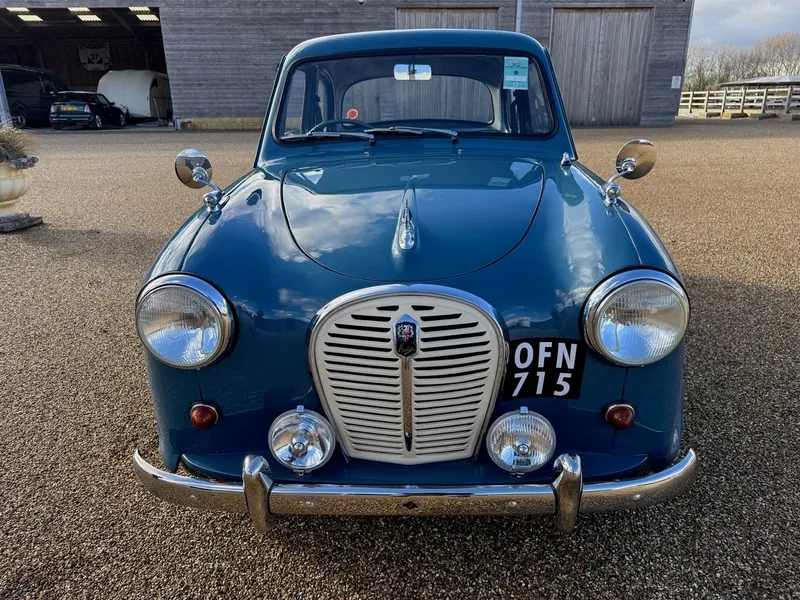
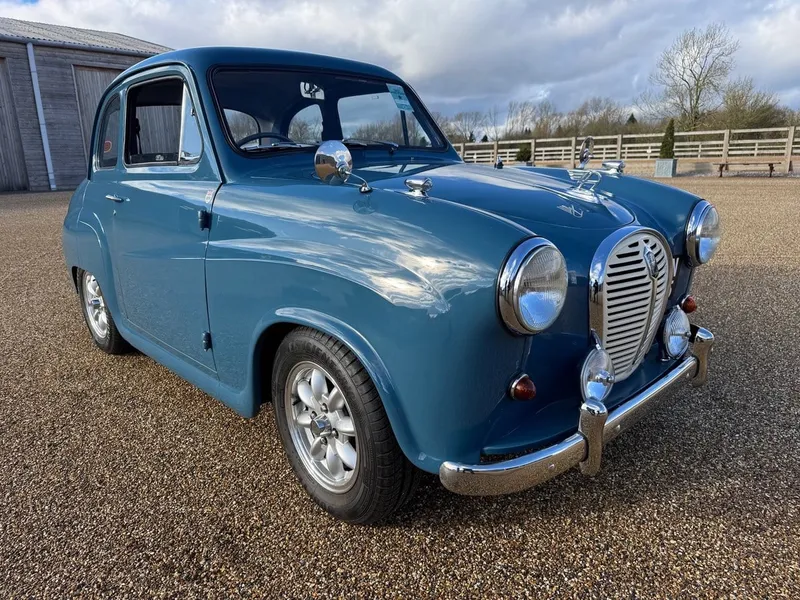
Produced by BMC from 1956 to 1968, the Austin A35 was the natural successor to the Austin A30. This compact and lightweight family car upgraded the A30's modest 803cc engine with an all-new 948cc A-Series unit, and introduced a conventional gearlever with revised gearing, making this car markedly more capable on the road. The A35 remained the entry-level model in the Austin range, below the A40 Farina and A55, but it carried a significance far beyond those modest specifications. The 948cc A-Series engine introduced in this car is the same unit that powered the original Mini and anchored BMC's small-car range for decades. The A35, therefore, occupies a sweet spot in terms of accessible classic ownership, supported by one of the best parts networks in British classic motoring and priced at an attainable level. It was also the car that introduced a generation of British drivers to the A-Series engine's combination of economy and willing performance.
Price
- Starting price
- $1,200
- Average price
- $5,114
- Price range
- $1,200 - $14,995
Specifications
- Production years
- 1956–1959 (saloon); 1956–1962 (Countryman); 1956–1968 (van)
- Total production
- 279,000 (all body styles)
- Body styles
- 2-door saloon; 4-door saloon; 2-door Countryman estate; van (AV8); pick-up (477 built)
- Layout / drive
- Front-engine, rear-wheel drive
- Engine family
- BMC A-Series OHV inline-four; 948cc (all saloon/estate/van until 1962); 1,098cc (AV8 van from 1962 onwards)
Austin A35 in Detail
History
To understand the A35's story, we have to start with its predecessor. The Austin A30 arrived in 1951 as Austin's first all-new post-war design; a unitary-body saloon powered by the 803cc A-Series engine, offering economy and modernity at a price that would bring private car ownership within reach of more people. Yet by the mid-1950s, the 803cc unit's limitations were so obvious that BMC had to replace it to keep pace with the Ford Anglia and Morris Minor.
The A35 arrived in September 1956 with the 948cc A-Series producing 34 bhp - a 36% power increase over the A30. Despite a revised rear window, this new car felt similar enough to reassure existing Austin buyers, even though it was decisively more capable than the A30.
A Countryman estate was available from launch, using the same two-door body but culminating at a split rear tailgate and a folding rear seat. This relatively practical configuration made the A35 useful to a wider range of buyers, including traders and small-business users. The latter particularly appreciated the van (AV8), which was the most commercially significant body style in production terms. Not only did it continue in production until 1968, outlasting the saloon by nine years, but later models received the 48 bhp 1,098cc A-Series engine. Despite this commercial success, only 477 examples of the pick-up were built between 1956 and 1957 before it was dropped.
The A35's engineering premise remained basic but effective throughout its lifetime, with independent front suspension by coil springs and wishbones ahead of a live rear axle on semi-elliptic leaf springs. The A-Series engine’s design prioritised robustness and ease of maintenance over outright refinement, and every A35 benefits from that focus to this day.
Specifications & Performance
The A35's 948cc A-Series engine has a willingness to rev that rewards an enthusiastic driving style, combined with a torque curve broad enough at the bottom for relaxed town use. The 0–60 mph time of half a minute is slow by any measure, but in a car weighing just 715 kg, it translates to a responsiveness at normal road speeds that makes the A35 feel livelier than those figures suggest.
The AV8 van's 1,098cc unit produces 48 bhp with wider torque, reducing the 0–60 dash by almost a third. This is the only meaningfully different performance specification across the entire A35 range.
Engine / displacement | Power | 0–60 mph | Top speed |
A-Series 948cc (saloon, Countryman, van to 1962) | 34 bhp | 30 sec | 72 mph |
A-Series 1,098cc (AV8 van, 1962–1968) | 48 bhp | 21 sec | 80 mph |
Body Styles and Trims
All A35 body styles share the same platform, engine and running gear, so the differences are practical rather than mechanical:
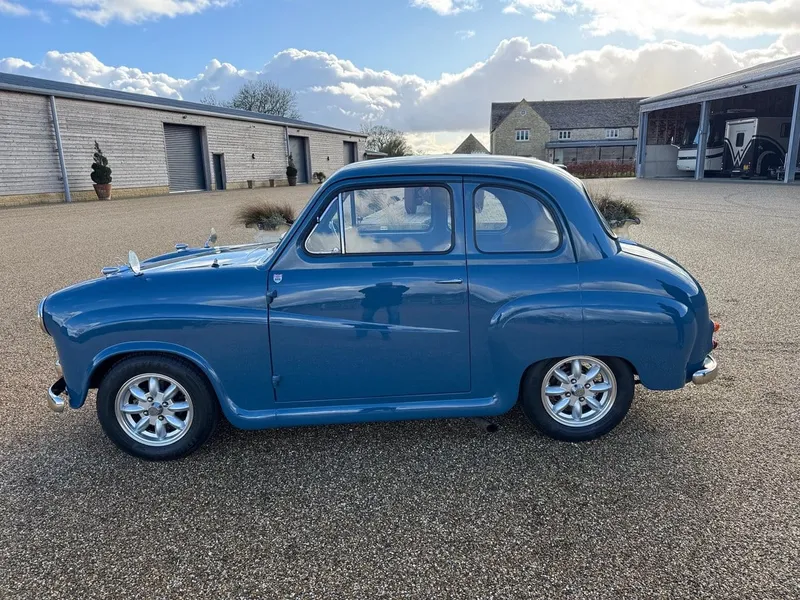
2-door saloon (1956–1959). The original and most commonly seen A35, with the most driver-focused body style. Around 112,000 were built.
4-door saloon (1956–1959). This had the same specification as the 2-door but with easier rear-seat access. It’s less common and slightly more sought-after by collectors seeking practicality.
Countryman estate (1956–1962). A 2-door with a split rear tailgate ahead of a folding rear seat, making this the most practical A35 for leisure use.
Van/AV8 (1956–1968). The longest-lived and (ultimately) the most powerful A35. Commercial-vehicle tax status historically made it affordable, and surviving examples in good condition are now highly sought-after, especially the 1,098cc-engined AV8.
Pick-up (1956–1957). Only 477 pick-ups were built, making it the rarest and most valuable body style by a significant margin.
Design and Cabin Identity
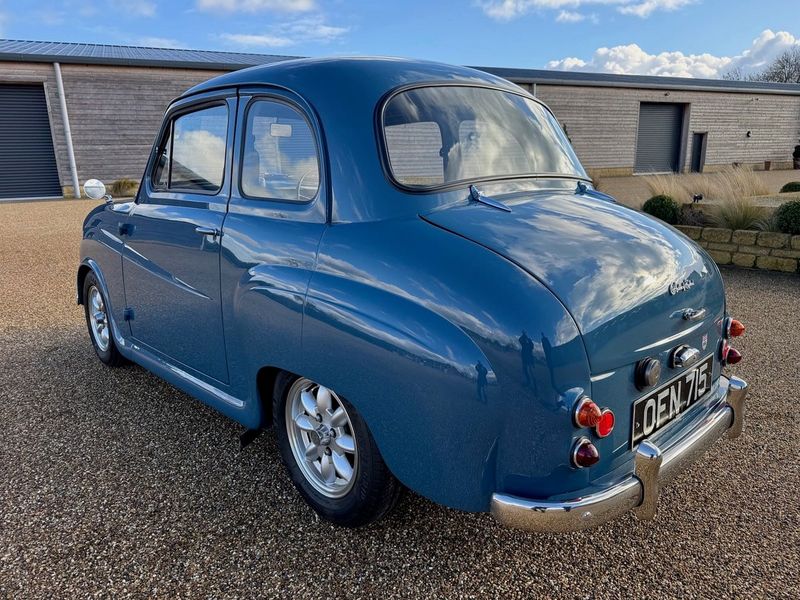
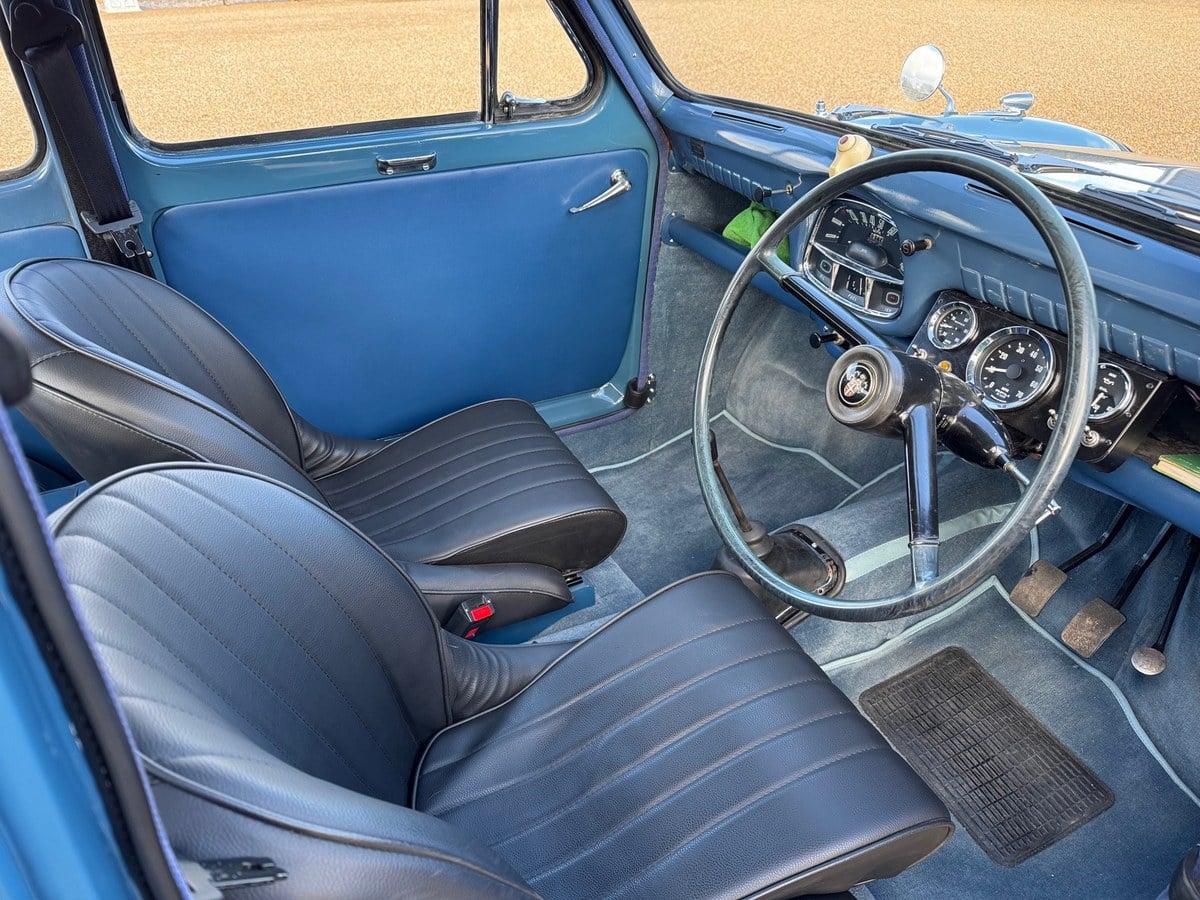
The Austin A35 distils late-1950s British small-car design into a single upright, compact and rounded body. The wraparound rear window introduced over the A30 is the A35's clearest visual identifier, giving the car a more modern appearance than its predecessor. The curved roofline, stubby front wings and simple door pressings are pure A30.
Inside, the dashboard is minimal, but the remote floor-mounted gearchange was the A35's single most significant cabin improvement over the A30, transforming an awkward column-change into a short, positive throw that rewarded fast gear changes.
What to Look For
Body and Sills
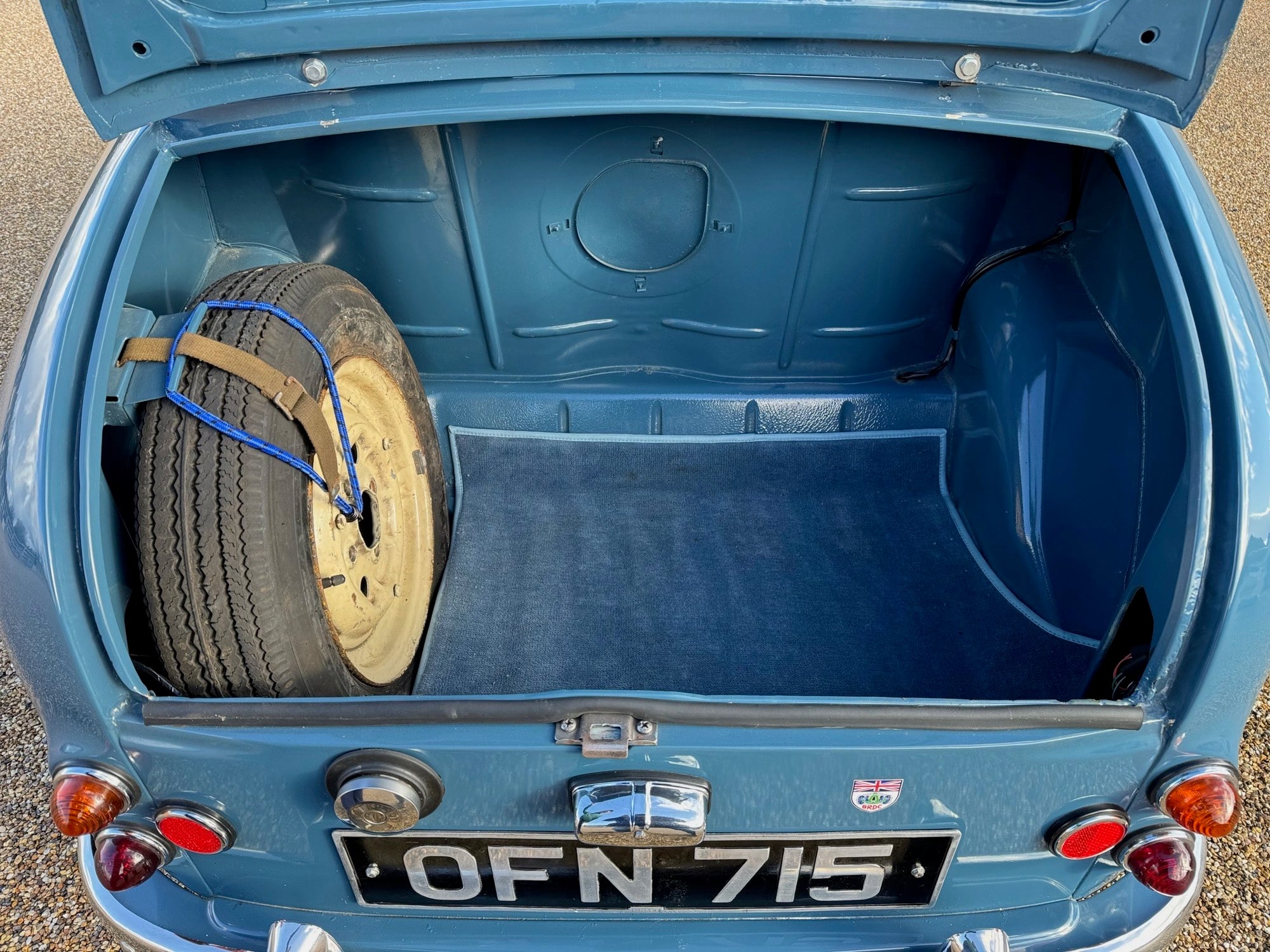
The A35's steel unibody corrodes predictably - and extensively. We could say the entire car is a rust location, but particular hotspots include the inner wings and leading edges, the front panel, floor pans, rear chassis rails, wheel arch edges and the boot floor. Probe every sill from both inside and underneath, since structural sill replacement is a significant job. A degree of historical repairs on any A35 is normal, but what matters is whether those repairs were (a) done in steel and (b) properly sealed.
Engine
The 948cc A-Series is one of the most familiar and forgiving engines in British classic motoring. Listen for bottom-end knock indicating worn big-ends, and check for excessive blow-by at the oil filler. Oil leaks from the rocker cover and front timing cover are universal on A-Series engines (and therefore acceptable), whereas heavy smoking on start-up is not.
Gearbox
The gearchange is robust, but the second-gear synchromesh wears out, so any crunch or resistance into second warrants a rebuild budget allocation. The gearbox shares its oil with the engine, so confirm it’s at the correct level and clean.
Suspension and Brakes
The front coil-spring independent setup is simple and well-understood; check for worn kingpins and trunnions, which are normal wear items on any A35. Drums all round perform adequately for the car's speed and weight, but check for seized rear cylinders and uneven wear, and confirm the handbrake still engages positively.
Interior Wear
Cloth upholstery is vulnerable to mildew on poorly stored examples. Check all door seals for condition, as refitting A35 door seals correctly is time-consuming. Confirm the headlining is secure and dry; a sagging or stained headlining usually indicates a leaking roof seal or windscreen.
Safety
The Austin A35 predates all modern safety legislation, from an age of drum brakes with no servo assistance. The A35 was engineered for roads and traffic speeds of the late 1950s, and performs best when treated accordingly.
Pros and Cons
Pros:
One of the best-supported A-Series parts ecosystems in British classic motoring
Lightweight construction (715 kg) makes the modest engine feel more responsive than its figures suggest
Van and pick-up body styles offer genuine rarity value within an accessible model family
Active A30/A35 Owners' Club with a dedicated technical and parts support network
Cons:
Zero safety provision; there are no seatbelts or disc brakes on any models
30-second 0–60 mph time is lethargic even by classic standards
Bodywork corrosion is extensive and predictable, and no A35 should be bought without a detailed underside inspection
Saloon and Countryman production ended in 1959/1962, so body panels require specialist sourcing
Price trends
Most recent sale
£12,999
1960 Austin A35

Currently for sale
14
0 live auctions
14 adverts



Total sold
32
Highest sale price
€14,995
Average price
€5,114
Lowest price
€1,200
FAQs
Saloon or Countryman - which is the better buy?
For driving, the saloon is lighter and more driver-focused. For practicality and versatility, the Countryman's folding rear seat and split tailgate offer meaningfully more utility.
Is the van worth considering as an alternative?
Increasingly so, yes. The AV8 van's 1,098cc engine makes it the most capable A35 to drive. Its commercial-vehicle construction means many survivors have been better preserved than passenger cars, and demand from collectors is strong. The van's longer production run (to 1968) also means more examples survive.
What does the A30 vs A35 buying decision look like?
The A35 is the better ownership choice for almost everyone, as the 948cc engine is more tractable and reliable than the 803cc, the gear change is significantly better, and parts supply for the 948cc A-Series is broader and cheaper. The A30 commands a collector premium, but the A35 is the more capable and practical car.
Can an A35 be used as a regular driver?
Yes, providing you’re not venturing far beyond city limits, where the lack of performance becomes alarming. The A35 suits local use at unhurried speeds, and running costs are low thanks to simple, cheap mechanical maintenance.
How readily available are parts?
The A-Series engine went on to power dozens of BMC and BL models, and the A30/A35 Owners' Club maintains a comprehensive parts and suppliers register. Mechanical and running-gear parts are inexpensive and widely stocked. Body panels for the saloon and Countryman require specialist sourcing through club suppliers, while inner structural sections require careful sourcing or fabrication.