Chevrolet Chevelle: Complete Guide & History
Core specs: 1964–1977 • Inline-6 & V8 gasoline engines (approx. 194–454 cu in across the range) • RWD
Chevrolet Chevelle Overview
Launched in an age of prosperity and optimism, the Chevrolet Chevelle was a mid-size family of vehicles produced by Chevrolet between 1964 and 1977. Spawning everything from utility vehicles to muscle cars, it was one of Chevy’s most versatile models - even if perhaps not one of its best-remembered ones. The Chevelle was built on the A-body platform supplied by parent company General Motors, and it sat midway up the Chevy hierarchy between the Nova and the Impala. Across its lengthy lifespan, the Chevelle was offered in a range of configurations, including coupes, saloons, convertibles, station wagon estates, and even a utility variant. Chevrolet also sold the El Camino, a separate utility model based on the Chevelle platform and marketed as the ‘Chevelle El Camino’ during 1964–67, sharing its styling and mechanicals. Another iconic Chevelle moment was the introduction of Super Sport (SS) versions, which embodied the muscle-car ethos by blending high-performance engines, upgraded suspension and suitably sporty styling. By the 1978 model year, Chevrolet had phased out the Chevelle name. Confusingly, it was rebranded as the Malibu, which had formerly been a Chevelle trim level. As such, pay close attention to the badging on any late-seventies Chevelle.
C&C Expertise
It’s impossible for me to think about the Chevelle without seeing Ryan Gosling or John Travolta skulking around nighttime LA in their Chevelles. The Malibu perfectly telegraphed the louche, slightly dishevelled air that Gosling brought to Drive and Travolta to Pulp Fiction. Of course, there have been many, many generations, but it’s the second generation convertible and fastback that we’re here for. Buying one now gives the keys to the sort of relaxed cool that few of its muscle car rivals can properly pull off.
Chevrolet Chevelle Price
- Starting price
- 9 403 €
- Average price
- 32 077 €
- Price range
- 9 403 € - 59 840 €
Chevrolet Chevelle Specifications
- Manufacturer
- Chevrolet (General Motors).
- Model Class
- Mid-size car (GM A-body series).
- Production
- 1964–1977 (three generations).
- Layout
- Front-engine.
- Drive
- Rear-wheel drive.
Chevrolet Chevelle in Detail
Introduced for the 1964 model year, the Chevelle returned Chevrolet to the American mid-size segment with a lineup of coupes, saloons, estates and a convertible. The Malibu name began as a premium trim within the Chevelle range before cannibalising its parent to become the name of 1980s models in the model’s next generation.
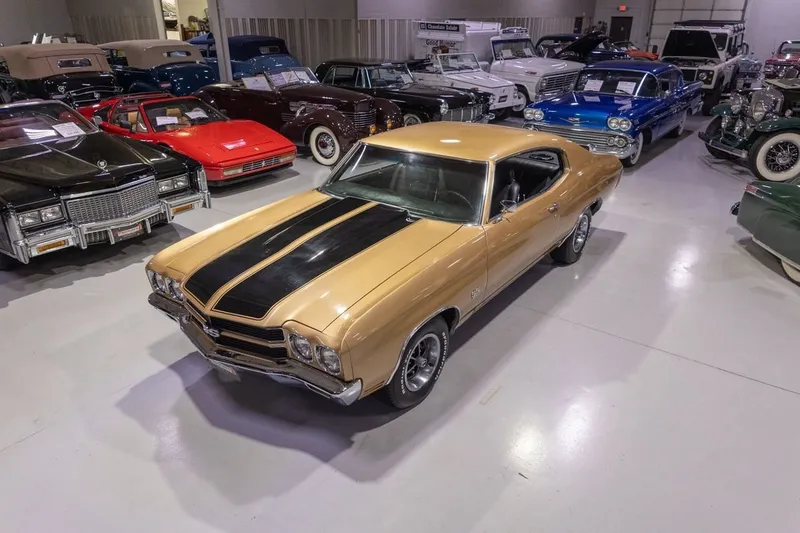
The Chevelle quickly established its performance credentials. Small-block V8s were joined by the Super Sport packages, culminating in SS 396 big-block variants. A major restyle in 1968 marked the division between shorter-wheelbase hardtops/convertibles and longer saloons/wagons, setting the stage for the 1970 peak: the SS 454, including the LS5 and the legendary LS6.
Regulation, emissions and safety changes drove the 1973 “Colonnade” redesign. The Laguna Type S-3 (1974–1976) was Chevrolet’s NASCAR-homologated Chevelle; Cale Yarborough’s 1976 championship was won in a Laguna S-3, and similar Chevelle-based bodies remained competitive through 1977.
Production of Chevelle-badged models concluded after the 1977 model year, with the lineage rebranded under the Malibu banner from 1978.
The following table includes representative factory variants with magazine-tested performance figures quoted where they’re available.
Model (test year) | Engine | 0–60 mph |
Malibu SS 327 | 5.4-litre (327 cubic inches) small-block V8 | 8.4–8.8 s |
Malibu SS 396 Z16 (1965) | 6.5-litre (396 ci) big-block V8 (375 hp, gross) | 7.8 s |
COPO 427 L72 (1969) | 7.0-litre (427 ci) big-block V8 (425 hp, gross) | 5.1 s |
SS 454 LS6 (1970, manual) | 7.4-litre (454 ci) big-block V8 (450 hp, gross) | ~6.0 s |
Laguna Type S-3 454 (1974) | 7.4-litre (454 ci) big-block V8 (net era)** | ~8.3 s |
Because it came in so many different flavours, the Chevelle’s dimensions have to be listed as a general range:
Wheelbase: ~112–116 in (2,845–2,946 mm) depending on body style/year.
Overall width: ~74.6–76.6 in (1,895–1,946 mm).
Overall height: ~52–55 in (≈1,320–1,400 mm), varying by roof/body type.
Figures vary by model year, engine/trim, and body style, with the 2-door hardtop/convertible distinct from the 4-door saloon/estate.
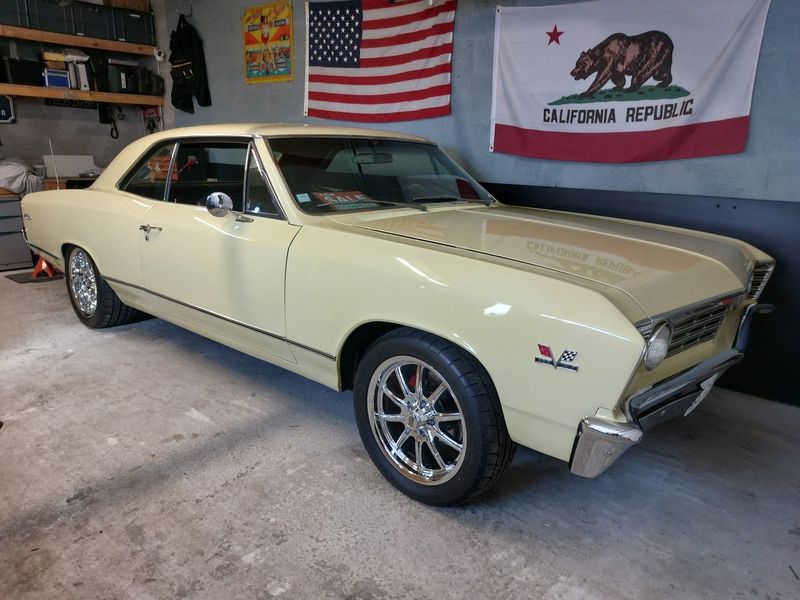
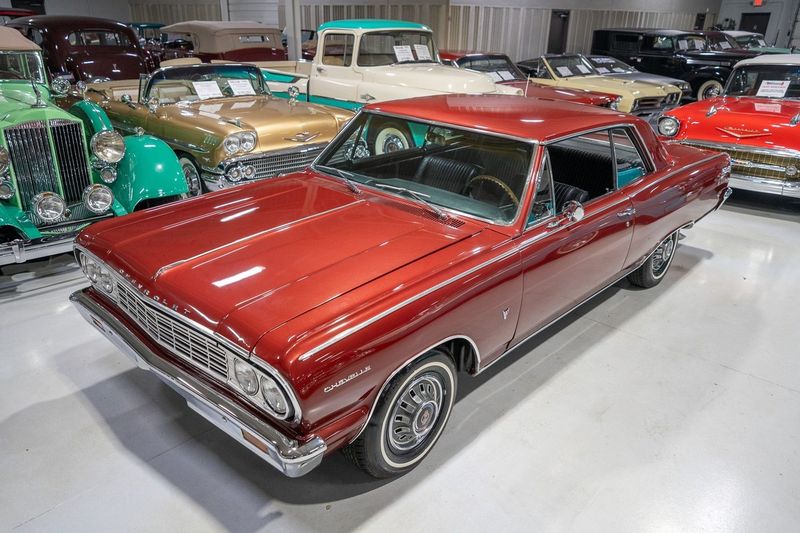
Clean, purposeful mid-size proportions defined the Chevelle throughout its run. Early cars (from 1964 to 1967) wore straight, square-shouldered lines with a long bonnet, short deck and crisp chrome detailing, while Malibu and SS versions added subtle wheel and trim upgrades.
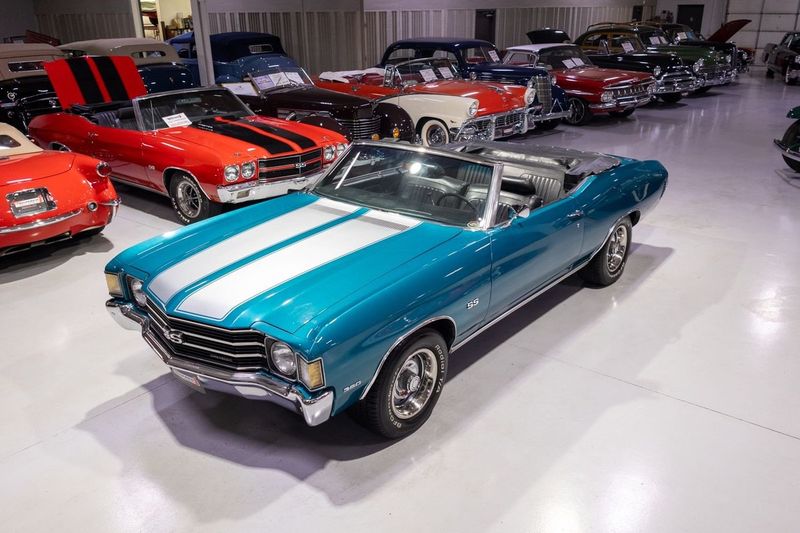
The 1968–1972 redesign introduced a more aggressive stance on a shorter coupé/convertible wheelbase. Standout design revisions included more pronounced haunches, a deeper grille and the option of bold SS graphics.
For 1973–1977, “Colonnade” styling brought fixed B-pillars, integrated sail panels and 5-mph bumpers that tightened up the surfacing while improving crash performance. The Laguna S-3 added a wind-cheating urethane nose, revised aero trim and performance-inspired details to reflect the car’s NASCAR success.
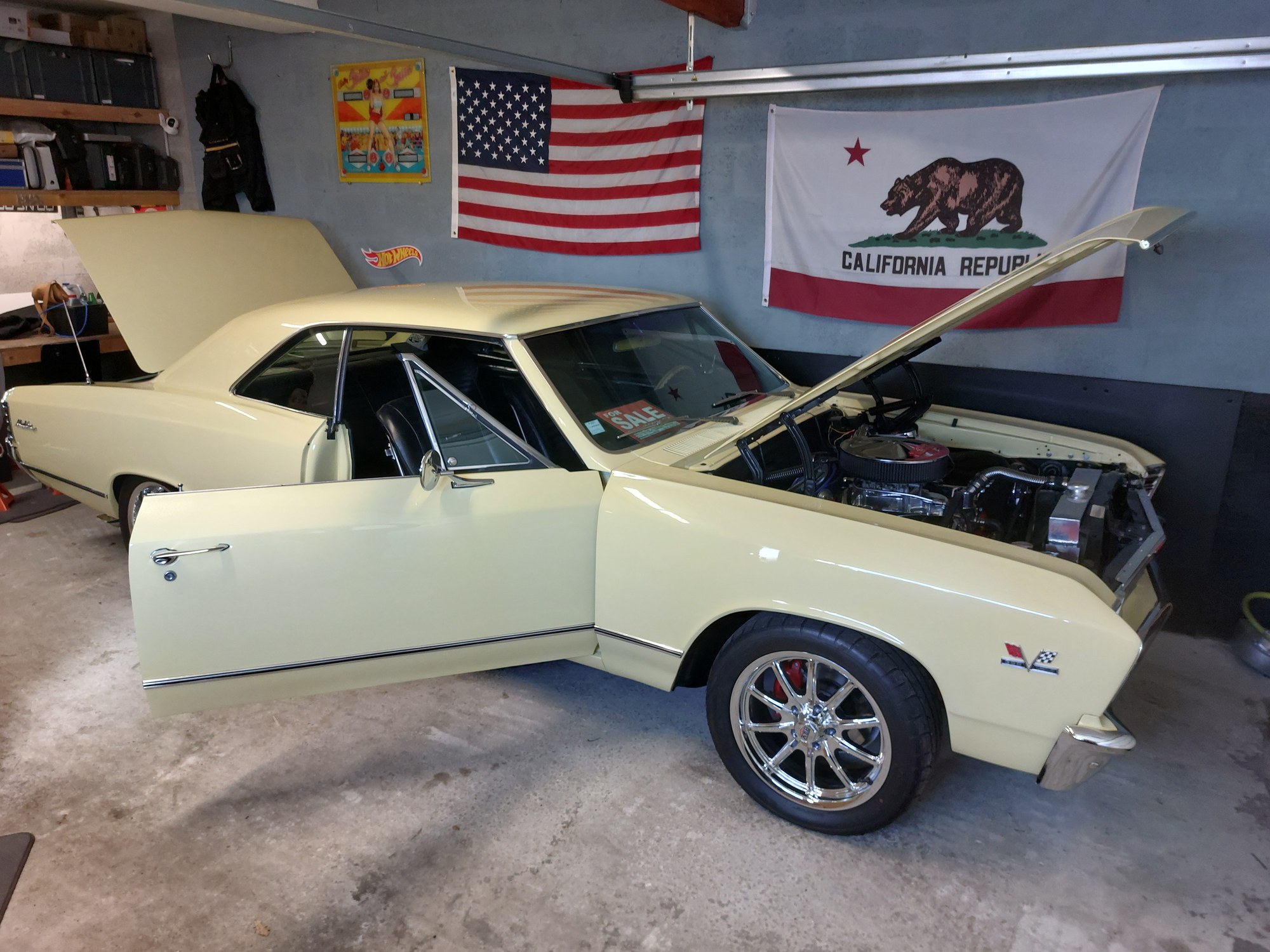
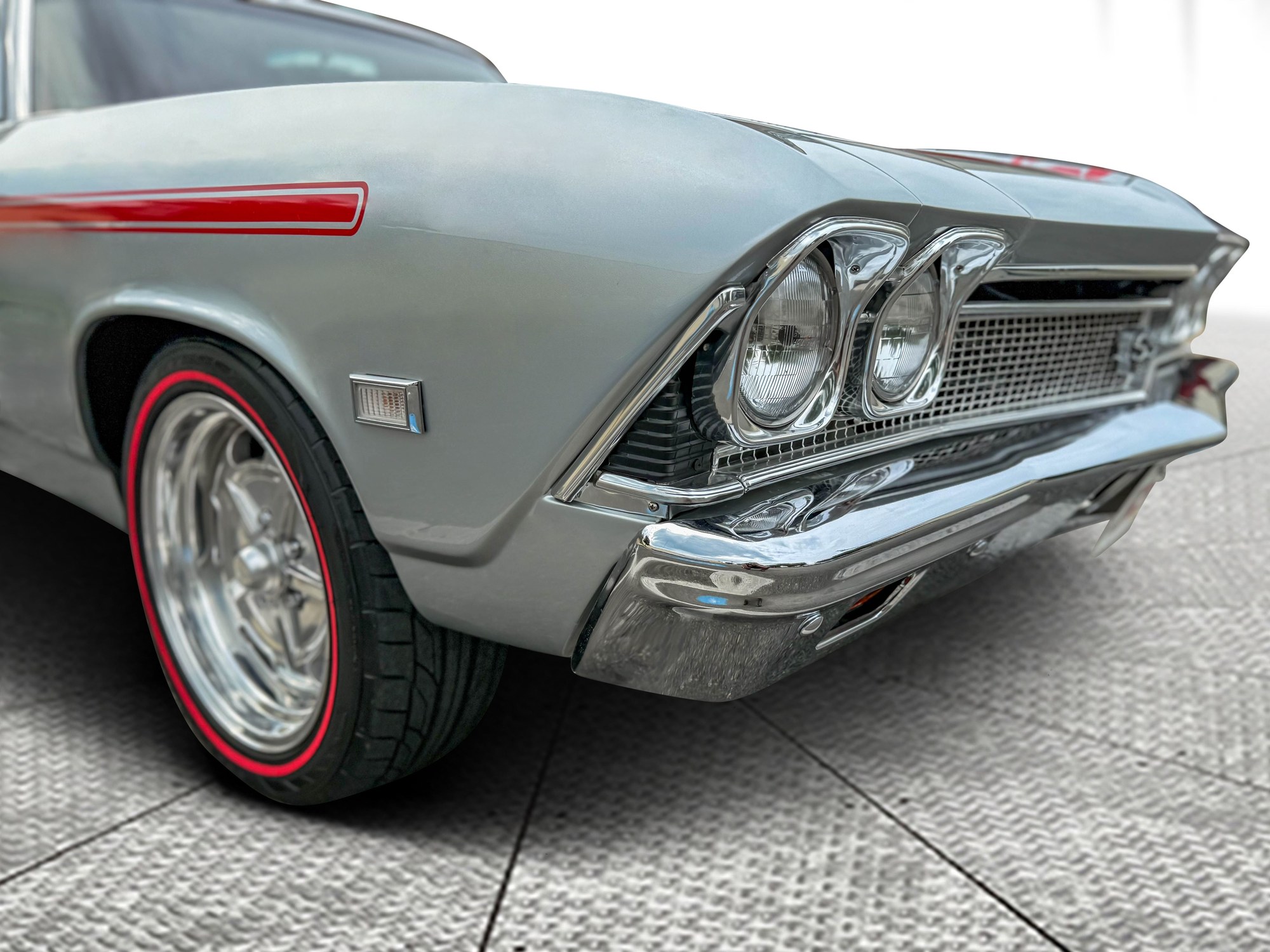
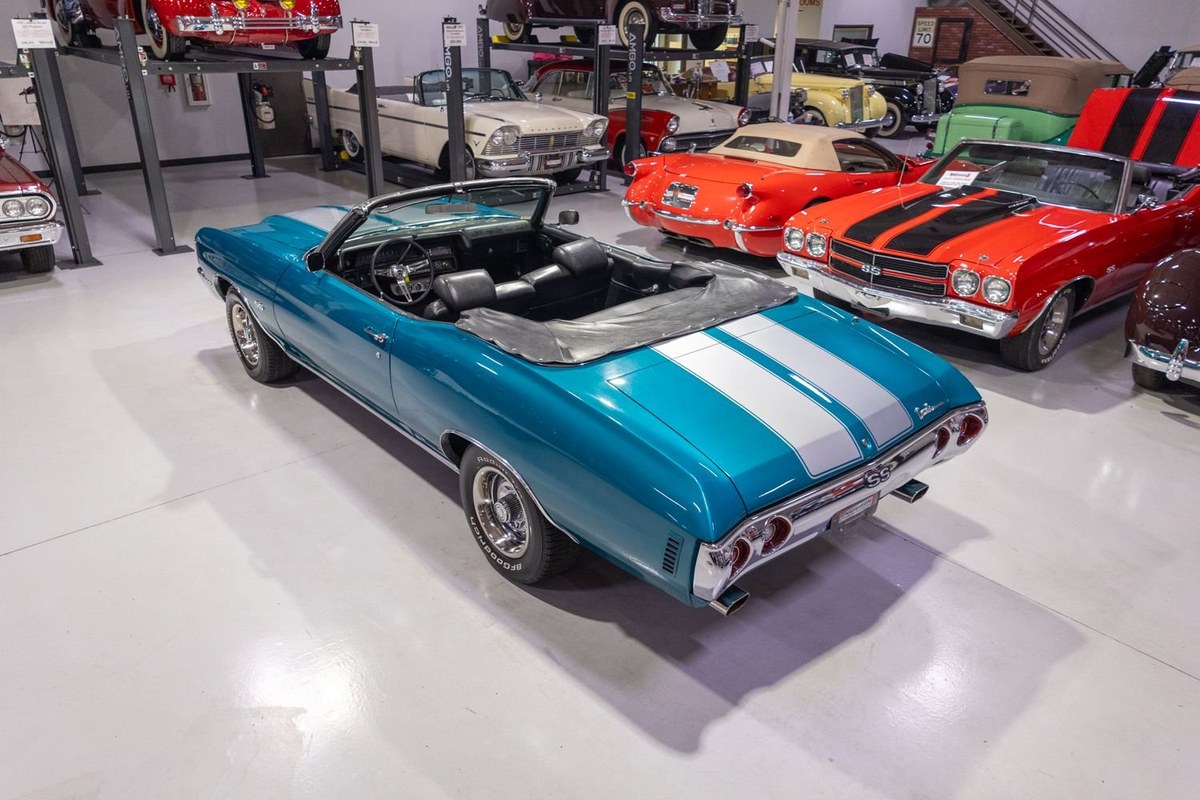
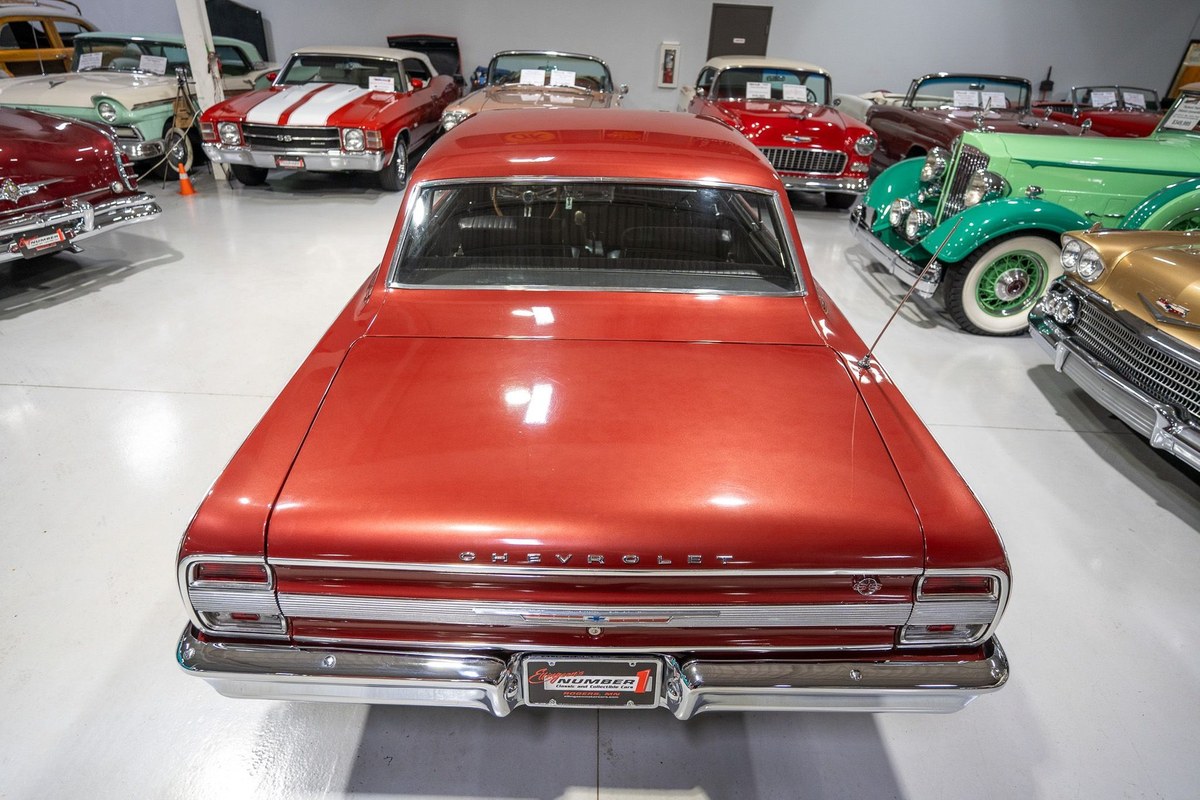
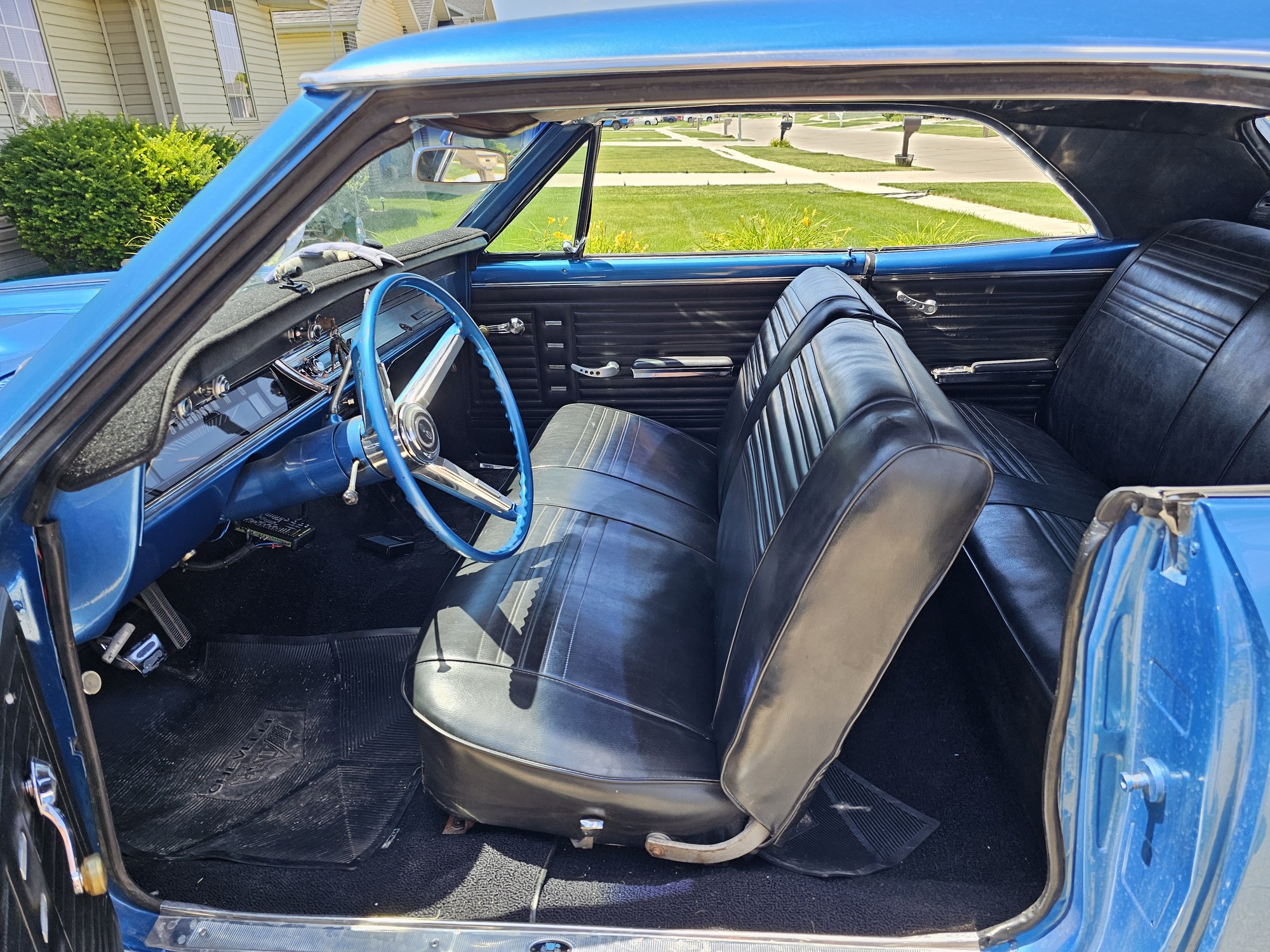
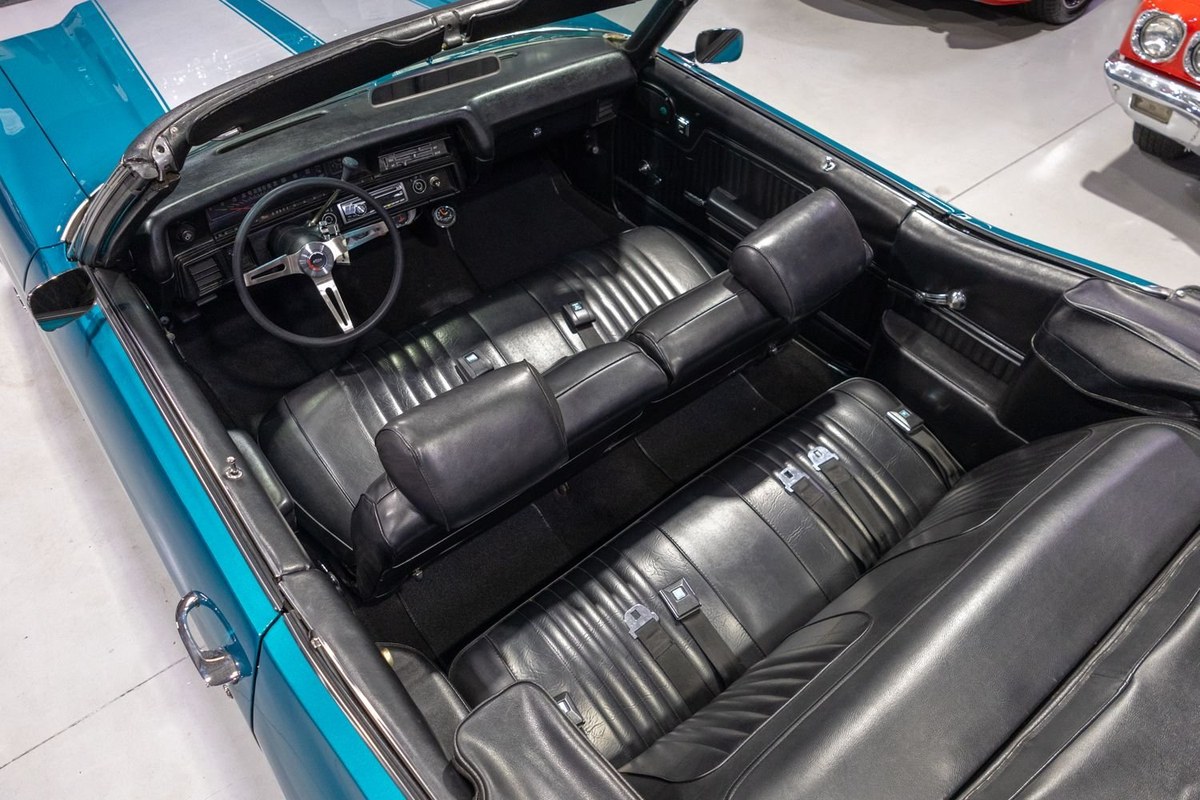
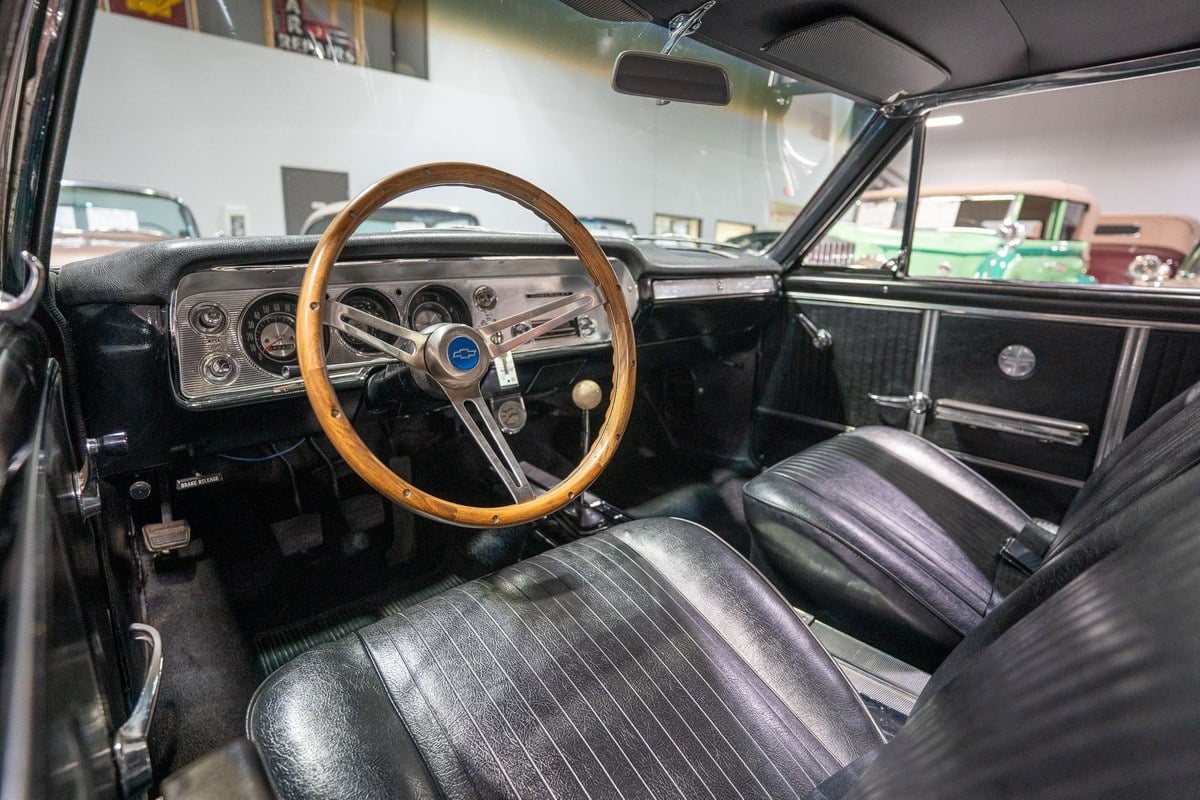
Bench-seat six-passenger layouts were standard on family-focused Malibus, while SS cars frequently paired bucket seats with a centre console and floor-mounted gearlever.
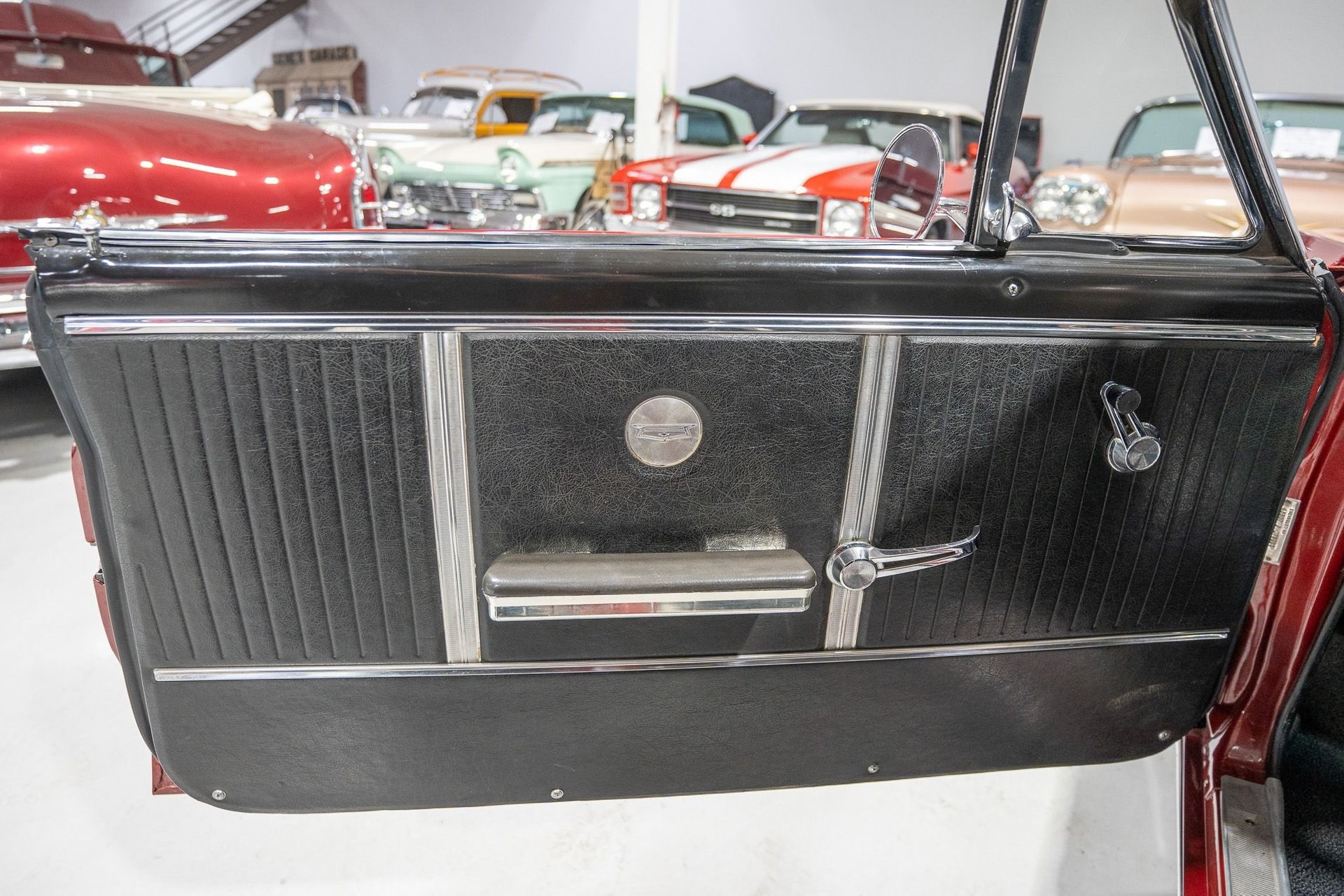
Dash designs evolved from simple horizontal clusters (1964–1967) to deeper, driver-oriented panels (1968–1972), featuring round primary gauges and auxiliary instruments on performance models. Similarly, materials ranged from durable vinyls and patterned cloths to premium trims with wood-tone accents. Third-generation Colonnade cars emphasised comfort and quietness with thicker carpeting, improved sound deadening, and more integrated switchgear.
Passive Safety:
Architecture and basics (1964–1972): Body-on-frame A-body with a perimeter frame and coil-spring suspension. Collapsible energy-absorbing steering columns were introduced in U.S. cars for the 1967 model year in response to new domestic safety standards.
Impact protection and bumpers (1973–1974): U.S. 5-mph bumper standards arrived on the front of the Chevelle in 1973 and the rear in 1974, while 1973-model Colonnades added structural door beams as part of the new FMVSS requirements.
Braking and Stability Advances:
Disc brakes: Front disc brakes became standard across all Chevelles for 1973, improving fade resistance and straight-line stability versus earlier drum setups (which remained common on 1964–1972 cars, with discs an optional extra on certain models).
Chevrolet Chevelle Variants & Generations
From the original 1964 Malibu SS to the peak-muscle 1970 SS 454, this mid-size Chevrolet offered contemporary buyers plenty of choice. Its body was shared with Chevy Malibu trims and came in 2-door coupé/hardtop or convertible, 4-door saloon, 2- and 3-row station wagon guises, as well as the related El Camino utility vehicle.
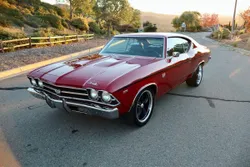
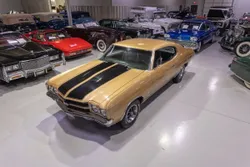
Prisutveckling
Senaste försäljningen
45 000 €
1967 Chevrolet Chevelle
19 sep. 2023

För närvarande till salu
23
0 pågående auktioner
23 annonser


Totalt sålda
13
Högsta försäljningspris
59 840 €
Genomsnittspris
32 077 €
Lägsta pris
9 403 €
FAQs
The name denotes Chevrolet’s mid-size model range, introduced in 1964. The Chevelle was marketed through 1977, after which the lineage continued under the Malibu moniker from 1978 onwards.
Two-door hardtop/coupé and convertible models, while four-door saloon and station wagon versions were also offered. Malibu was initially the premium level trim and later the Chevelle’s new name, confusingly. SS models began with the Malibu SS in 1964–65; the SS396 was a separate series in 1966–68, then the SS returned as a package on Malibu from 1969–72 (with the LS6 454 in 1970), with Laguna S-3 adopting the performance title in the 1973–1977 “Colonnade” era.
SS cars bundled big-block/small-block V8 powerplants, uprated suspension and visual cues. Peak SS arrived in 1970 with the 454 LS6 rated at 450 hp.
The SS package faded with shifts in emissions standards and insurance, and the Laguna S-3 (1974–1976) became the sporty/pseudo-performance focus, especially after it found success in NASCAR.
Representative period figures include the 1969 COPO 427, which covered the quarter-mile in less than 13 seconds, while 1970 SS 454 LS6 models offered around 450 horsepower.