Classic Peugeot 301: Models and Specs
1932–1936 · 1,465cc four-cylinder · Front-engined, rear-wheel drive · Saloon / limousine / coupé / cabriolet / roadster / commercial
Overview
In many respects, the 301 is the point at which Peugeot's modern identity begins. Launched at the 1932 Paris Motor Show in the depths of the global Depression, it was the first car to carry Peugeot's now-familiar three-digit naming convention. It also began the company’s 300-series lineage, which has become the longest-running product family in French automotive history. More than 70,000 301s were built across four years, reflecting the car's appeal during a period when most of the European motor industry was contracting sharply. Within Peugeot's prewar range, the 301 sat above the smaller 201 and below the six-cylinder 601. Today it occupies the specialist prewar French saloon niche, primarily supported by Continental enthusiast clubs and collectors. It also shows how far Peugeot had progressed from its pepper-grinder-and-bicycle origins.
Price
- Starting price
- Average price
- Price range
- -
Specifications
- Production years
- 1932–1936
- Body styles
- Saloon, limo, coupé, cabrio/roadster, van
- Layout / drive
- Front-engined, rear-wheel drive
- Engine family
- 1,465cc four-cylinder, water-cooled
- Transmission
- Three-speed manual
Classic Peugeot 301 in Detail
History
Peugeot presented the 301 to the public in July 1932. The aftermath of the 1929 economic crash had thinned the European car market, and Peugeot's response was to broaden its offerings. The 301 was conceived as the intermediate step in a rationalised range, and it bore two engineering decisions that gave it a distinction beyond its price point.
The first was the Bloctube chassis: a closed rectangular-section steel frame that replaced the open-section frames common to most cars of the era, giving the 301 a notably stiffer and stronger foundation than contemporaries. The second was independent front suspension. The 301 was among the first volume-produced cars in the world to be offered with this feature from launch, creating a car that offered good ride quality and straight-line stability by period standards. This was a meaningful selling point to buyers accustomed to the wayward steering and vibration transmitted through live-axle front ends.
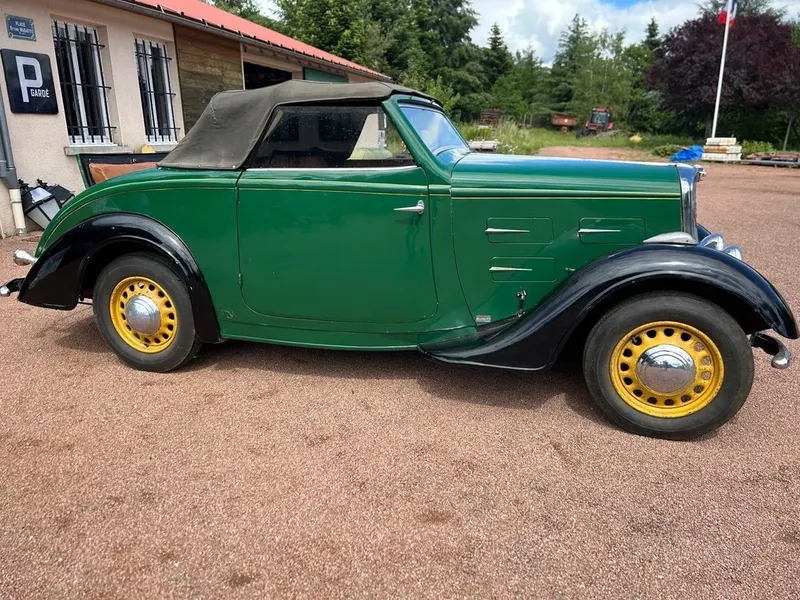
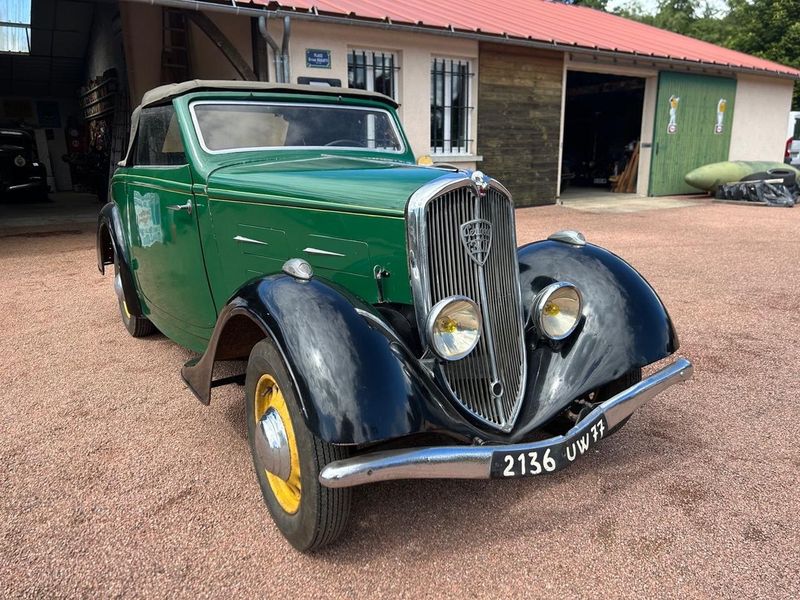
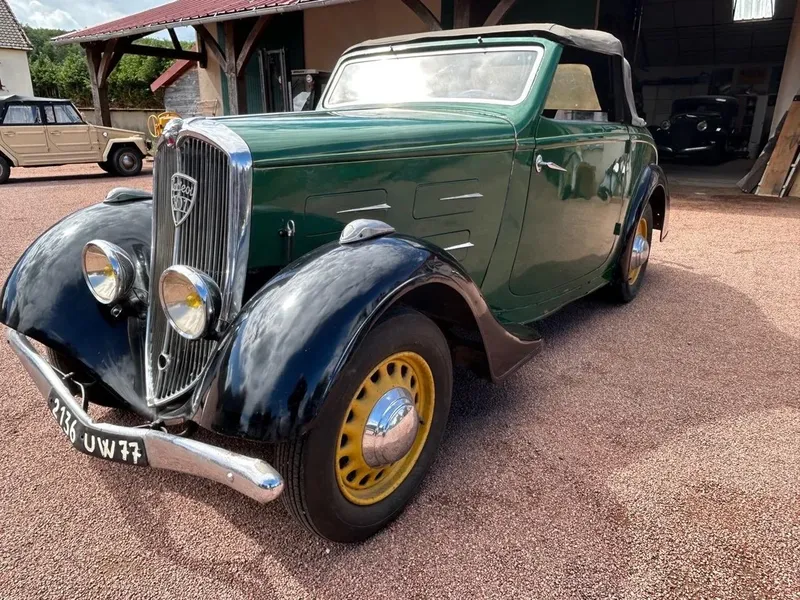
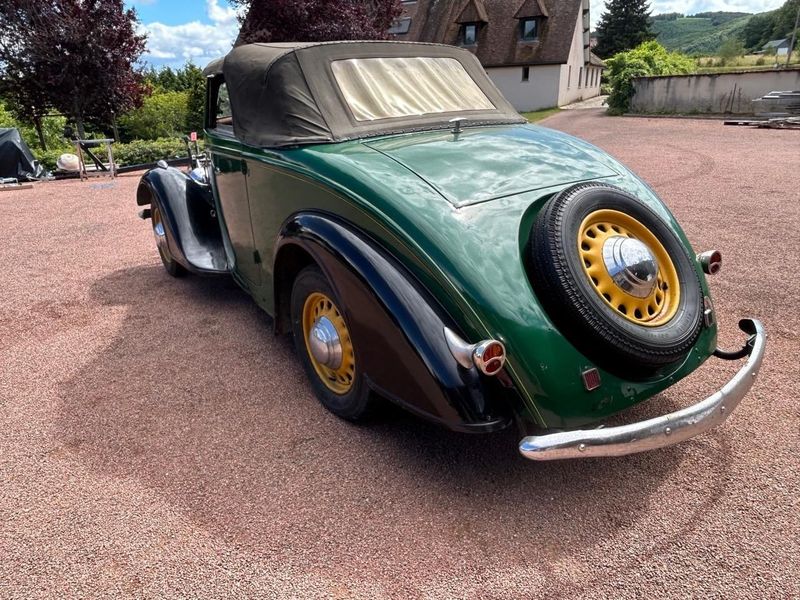
The original 301C of 1932–33 was shod in an upright, boxy saloon body with a separate external boot, whereas the 1933 301CR was marketed with the word "aérodynamique" and reflected a move towards softer lines. By 1934, the 301D had a longer, sloping tail that anticipated the fully aerodynamic direction of the 302 and 402 that would follow. The 301D ran from September 1934 until the end of production in September 1936 and accounts for around 30,000 of the total 70,500 built.
Throughout all this, the mechanical specification remained constant. The 1,465cc side-valve four-cylinder engine drove the rear wheels through a three-speed gearbox mounted in unit with the engine. From 1934, the upper two ratios gained synchromesh, making the car appreciably easier to drive. Wheelbase options covered most practical requirements: the standard 2,720mm platform accommodated saloons, coupés, cabriolets and roadsters, while the longer 2,940mm version served limousines and the taxicab trade.
The 301 was replaced by the 302 in 1936, a car that moved the 300-series styling fully into aerodynamic territory. The planned 303 was never built as the Second World War intervened, and the 300-series did not resume until the 304 of 1969.
Specifications & Performance
This was a Depression-era family car built for durability, carrying capacity and economy rather than speed. The 1,465cc side-valve four-cylinder remained unchanged throughout the car's life, and maximum speed varied by body type, as the significant differences in mass and aerodynamic profile between a light coupé and a tall commercial van made the same engine feel very different.
Item | Figures |
Engine | 1,465cc four-cylinder, water-cooled |
Power output | 34–35 bhp |
Top speed (passenger cars) | 50–62 mph |
Top speed (301T van) | 43 mph |
Transmission | Three-speed manual |
Wheelbase (standard) | 107.1 in |
Wheelbase (long) | 115.7 in |
Total production | 70,500 units |
Design and Cabin Identity
The 301 is best understood as a car caught between two eras. The earliest 301C cars are unmistakably late-1920s in their upright stance with separate wings and headlamps, a distinct external boot and six windows on each side. By the time the 301D appeared in 1934, the same mechanical foundations supported a body with a long, sloping tail, softened transitions and a posture that was beginning to gesture towards the aerodynamic direction that would define the 302 and 402.
Inside, all 301s share the same utilitarian clarity of a pre-war French cabin. There’s a large, thin-rimmed wheel with column-mounted controls for lighting, a simple instrument cluster and bench seating that prioritised accommodation over anything else. The longer-wheelbase cars add a third row of occasional seats in a folding configuration.
Safety
The 301 was built in a world without formal crash safety standards, and the structural considerations in its design were concerned with rigidity for ride quality purposes rather than occupant protection. Cable-operated drum brakes were fitted at all four corners and an electric starter was standard, though a manual cranking provision was retained as a concession to the reliability of those early electrical systems. A great deal depends on the tyre and brake condition of individual vehicles in terms of modern-day road safety.
Pros and Cons
Pros
Independent front suspension from new made the 301 measurably better to drive than most of its contemporaries.
Produced in significant numbers during a period of industrial crisis, meaning examples survive in better relative numbers than many Depression-era French cars.
The 301D (1934–1936) offers the most accessible driving experience, with synchromesh on the upper two ratios.
Cons
Club support and parts sourcing are almost entirely French. A UK buyer who can’t navigate overseas clubs and specialist suppliers will find ownership difficult.
Early cars (301C and 301CR) require prewar driving techniques, with accurate double-declutching a skill that takes time to develop.
The majority of open cars that survive are saloon-based restorations or misidentified commercial-body cars. A documented cabriolet or roadster commands a significant premium and warrants independent expert authentication.
Price trends
Most recent sale
Not found
Currently for sale
0
0 live auctions
0 adverts
Total sold
0
Highest sale price
£0
Average price
£0
Lowest price
£0
FAQs
The 301 badge also appears on a 2012 saloon, but is there any shared DNA?
None whatsoever. The 2012 Peugeot 301 is an entirely separate vehicle built on a derivative of the 208 platform for emerging markets where saloons are often preferred to hatchbacks. It shares nothing with the 1932 car, since the name was reapplied after a gap of 76 years.
Is the Peugeot 302 a better buy?
The 302 moved the 300-series into the aerodynamic era that Peugeot was developing with the 402. It sported integrated headlamps behind the grille, a fully streamlined body and a larger 1,758cc engine producing around 43 bhp. It’s a more modern-looking and slightly quicker car than the 301D it replaced, offering greater rarity and more period prestige.
How many 301s survive today, and what condition are they typically in?
Survival rates for any 1930s car are low nine decades later, and the 301 is no exception. However, 70,500 units is a substantial production run for the period, and a meaningful number of cars have been preserved in France. Cars that reach the market today are typically either long-restored examples which have been in enthusiast hands for decades, or barn-find survivors requiring varying degrees of work. Originality is at a premium.
Is the 301's independent front suspension noticeable to drive?
Peugeot's marketing at the 1932 Paris Motor Show emphasised that the independent front wheels moved parallel to each other on their own axes, eliminating the tendency of beam-axle cars to transmit road shock through the steering column. By the standards of the competition at the time, the difference in straight-line stability and steering feel was pronounced. A driver moving between a conventional beam-axle contemporary and a 301 on period roads would have noticed the improvement immediately. Even today, on modern road surfaces, the car still steers with noticeably less vibration than beam-axle rivals of the same era.