Ferrari 328: Models and Specs
1985–1989 | 3.2-litre V8 | Transverse mid-engine, rear-wheel drive | Berlinetta (GTB)/Targa (GTS)
Overview
In an era when European supercars were becoming ever more outrageous, the Ferrari 328 was a welcome counterpoint. It was the final expression of a lineage stretching back to the mid-engined, two-seat V8 Dino GT, which was first conceived to bring Maranello's character to a broader audience without the intimidation of a Testarossa or the complexity of a V12. The 328 proved to be the final development of the normally aspirated transverse V8 two-seat series, with its name referencing both the engine's 3.2-litre displacement and its eight cylinders. It replaced the 308 after eight years of production, refining rather than reinventing its predecessor’s philosophy by softening the wedge-shaped silhouette and raising standards of finish and usability. The result was a car that felt modern enough for the mid-1980s while retaining everything that had made the 308 series so enduring, without feeling as terrifying under heavy throttle as a Testarossa or F40. Today, the 328 is increasingly rare in the classic Ferrari market since it’s not a fragile collectible or a stripped-out racing derivative. It’s a proper road car, designed to be driven and enjoyed every day, with a reputation for mechanical accessibility most of its stablemates couldn’t hope to match.
Price
- Starting price
- 60 191 zł
- Average price
- 91 573 zł
- Price range
- 60 191 zł - 146 178 zł
Specifications
- Production years
- 1985–1989
- Body styles
- Berlinetta (GTB), Targa (GTS)
- Layout
- Transverse mid-engine, rear-wheel drive
- Engine family
- 3.2-litre Tipo F105CB V8
- Transmission
- 5-speed manual
Ferrari 328 in Detail
The 328 was launched alongside the updated Mondial 3.2 at the Frankfurt Motor Show in 1985. Pininfarina gave the 328 a coherent family identity without sacrificing its distinctive character. Much of the car was carried over from its predecessors; the 308 GTB/GTS’s tubular steel chassis was retained, while the engine was an evolution of the unit fitted to the 308 with four valves per cylinder and a Marelli electronic ignition system. Combined with the increase in displacement, the result was a meaningful step forward in power and mid-range torque without compromising the high-revving character the engine was known for.
Suspension was fully independent via unequal-length wishbones, coil springs and Koni dampers. The track was widened (by 25mm at the front and 5mm at the rear) and a quicker steering rack was fitted for improved responsiveness. Ventilated disc brakes were used all round, with each axle running on its own circuit.
The 328 sold at an even faster rate than its predecessors. Produced across four years from autumn 1985 to autumn 1989, almost 7,500 examples were built, compared with 12,000 308s across a ten-year run. Total production reached 1,344 GTBs and 6,068 GTSs, with GTS production outnumbering the GTB almost five to one. Following Enzo Ferrari's death in August 1988, many of the last cars were purchased as a tribute or with speculation in mind; decades later, it’s still not unheard of to find an unregistered 1989 example. The 328 was succeeded by the 348 in autumn 1989.
The 328's performance figures were consistent across its production run. There were no significant power or gearing changes between model years, and the engine family remained unchanged. European-specification cars produced 270bhp, while US-market cars with catalytic converters produced 260bhp at 7,000rpm. Both variants used the same five-speed manual gearbox.
Engine | 3.2-litre V8 |
Power output | 260–270bhp |
0–62mph | 5.8 seconds |
Top speed | 163mph |
Kerb weight | 1,263kg (GTB) / 1,273kg (GTS) |
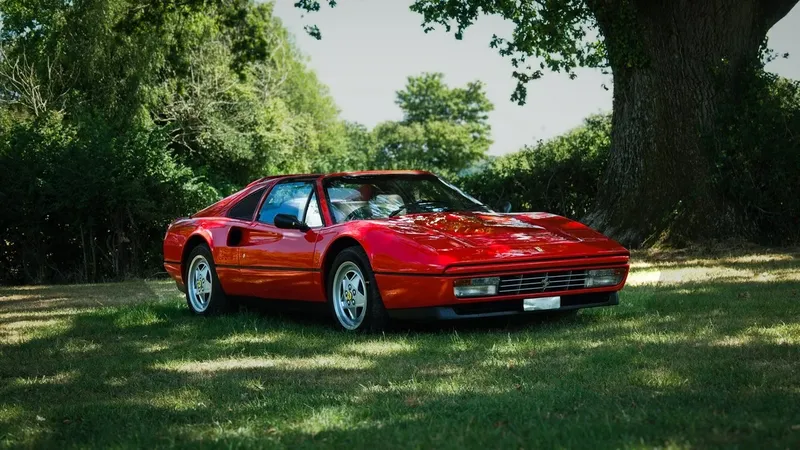
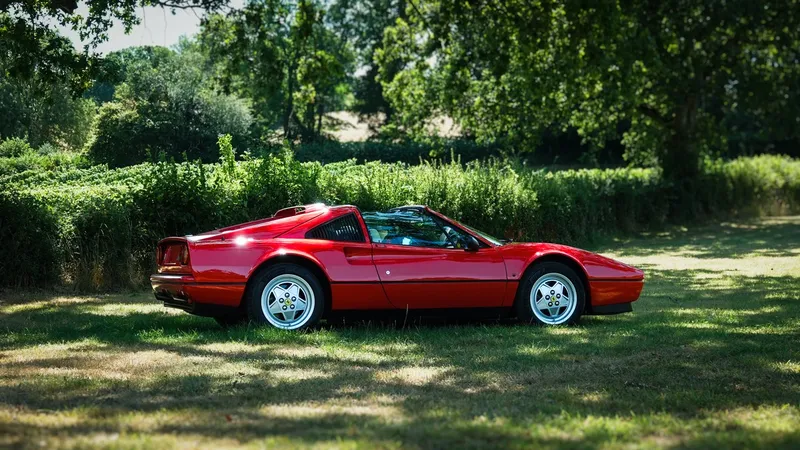
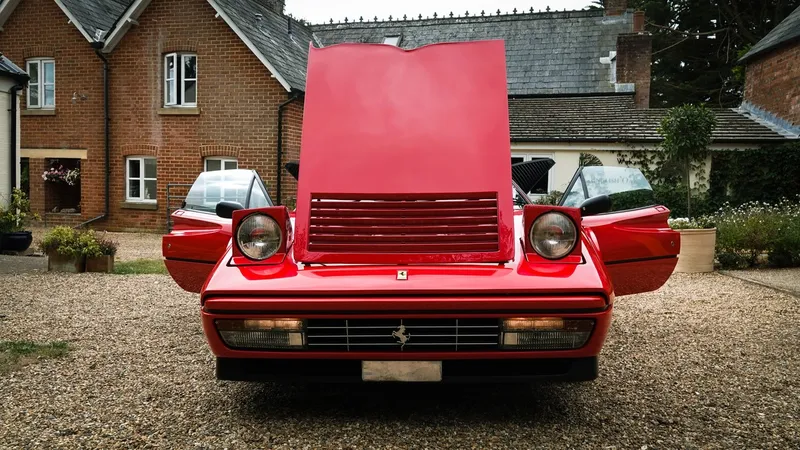
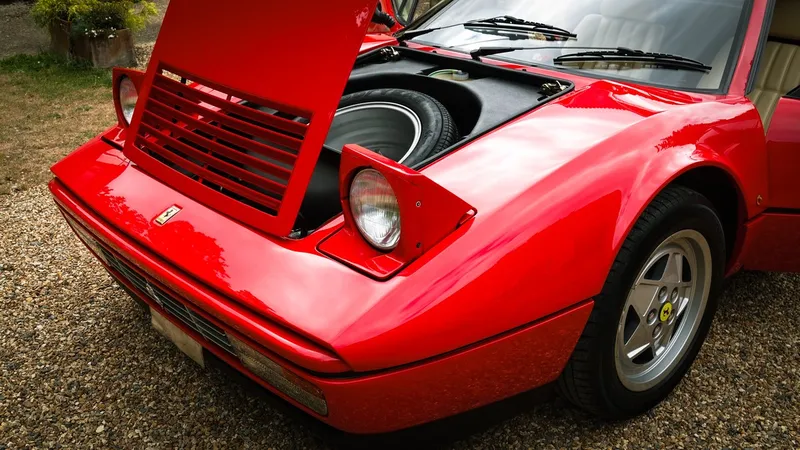
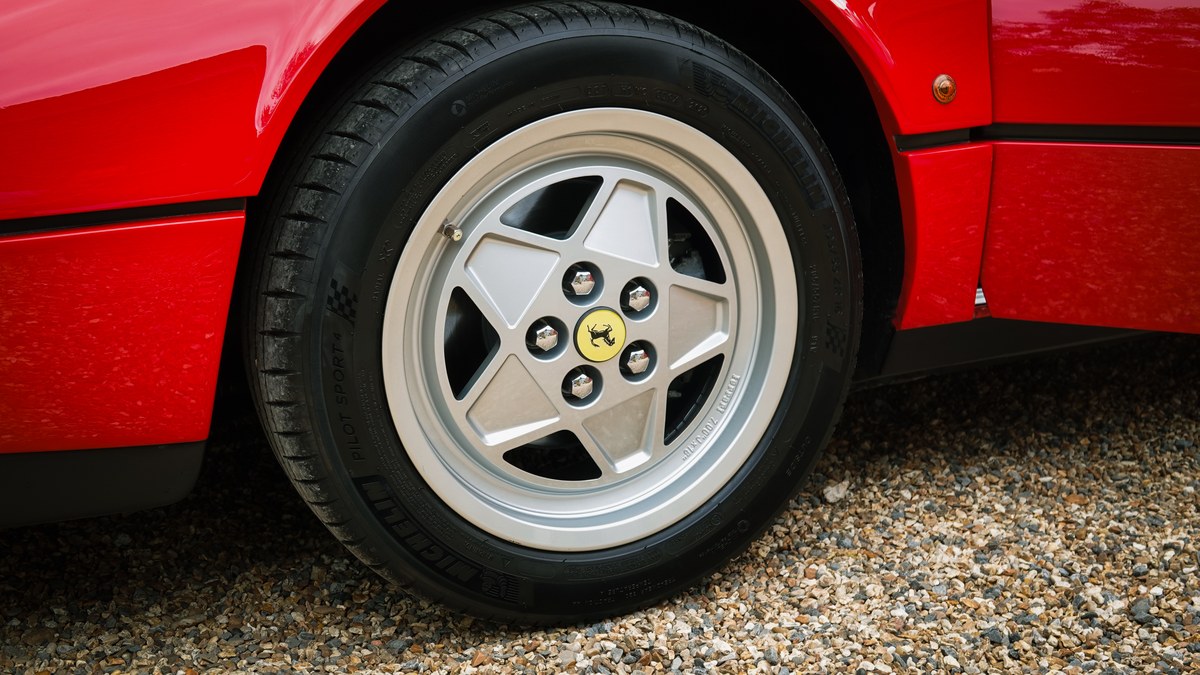
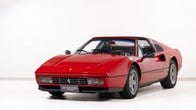
The 328’s low bonnet, raked screen and muscular rear haunches over a compact two-seat cabin trace their lineage back to the Dino GT of the late 1960s. The 328 added touches of refinement with body-coloured bumpers replacing the black rubber of the 308, a more rounded nose treatment and a better integrated rear valance.
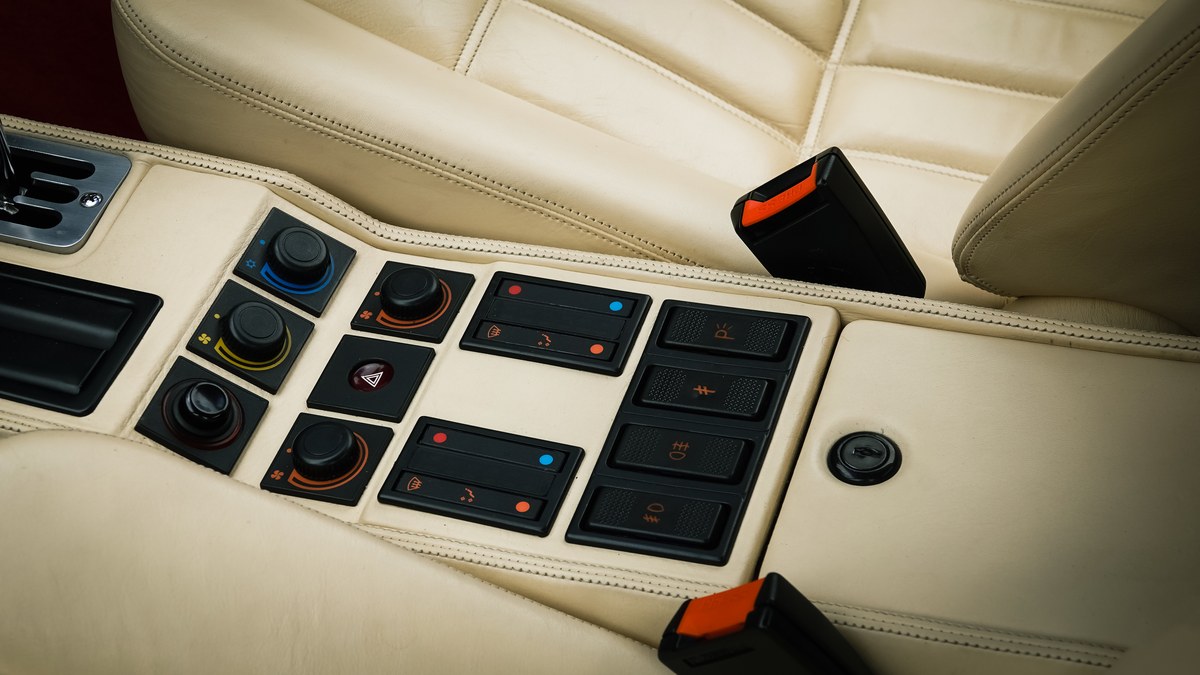
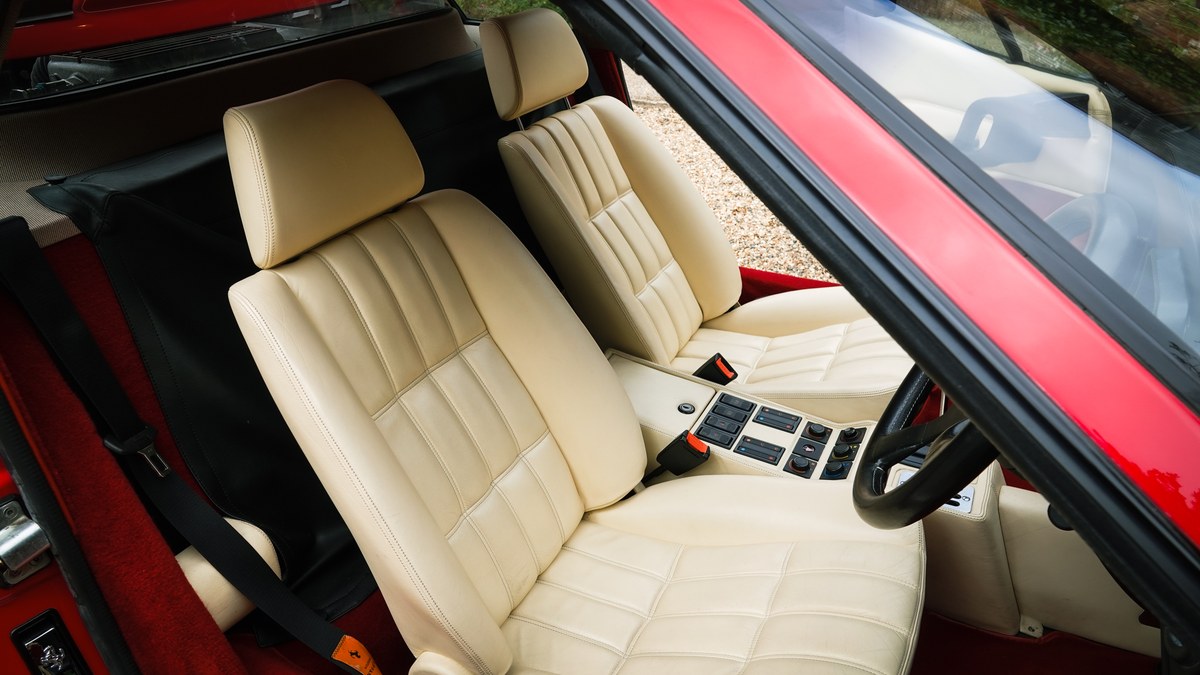
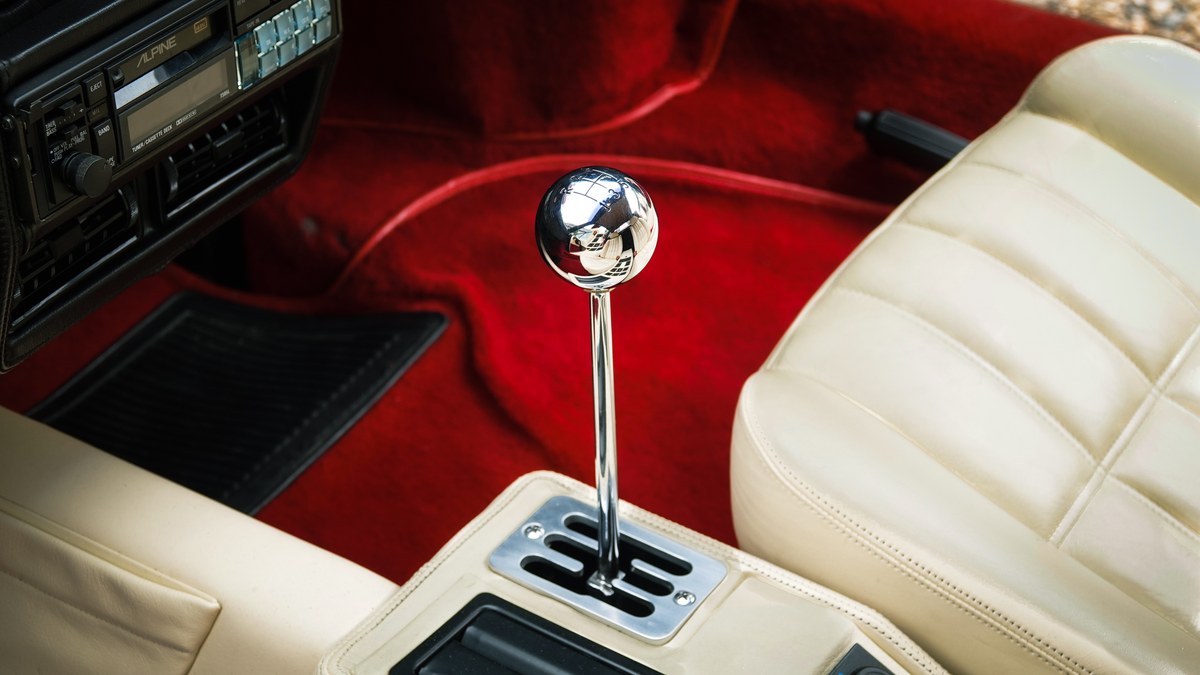
Inside, the cabin was tight but purposeful. Deep bucket seats, a leather-trimmed dashboard and a gated aluminium gear selector gave it an unmistakably Italian character. Visibility was limited by the low roofline, and the cabin became very warm in summer, but these were traits rather than criticisms. The GTS addressed ventilation with its removable targa panel, which could be stored in a dedicated compartment behind the seats.
The 328 is a pre-electronics-era sports car and should be treated as such. Cars from mid-1988 onwards received ABS, along with revised suspension geometry. A transitional specification existed with the updated suspension but without ABS, and these cars are particularly sought after by knowledgeable buyers.
Passive safety is limited by the era, so seatbelts are standard but airbags are not. The tubular steel chassis provides reasonable crash structure for its era but shouldn’t be compared to a modern safety cell.
328 GTB. The fixed-roof berlinetta had a stiffer structure, greater structural rigidity and rarity on its side, with only 1,344 built. It commands a premium on the market as a result.
328 GTS. Targa-top spider with a removable roof panel, which accounts for the great majority of cars on the market today. More than 6,000 examples were sold during the four-year production run.
Pros
Engine maintenance can be carried out without removing the unit from the car, keeping labour costs lower than many Ferrari contemporaries.
The final Enzo-era Ferrari in the entry-level range, and 1989 examples carry a provenance that underpins long-term collectability.
European-specification cars avoid the 160kg weight gain and output reduction applied to US-market examples.
Cons
The GTB's rarity makes finding a good example harder than sourcing a GTS.
The Marelli ignition system requires specialist diagnosis, since mechanics unfamiliar with the system can misread faults.
Neglected GTS targa seals will lead to water ingress around the roof panel, with consequences for carpets, electrics and structural corrosion if left unaddressed.
Ferrari 328 for Sale
Trendy cenowe
Ostatnia sprzedaż
58 900 £
1989 Ferrari 328 GTS
13 wrz 2020

Obecnie na sprzedaż
37
0 aktywnych aukcji
37 ogłoszeń


Łącznie sprzedanych
81
Najwyższa cena sprzedaży
146 178 €
Średnia cena
91 573 €
Najniższa cena
60 191 €
FAQs
The 328 was far more than just a cosmetic update, but it shared its architecture with the 308. The chassis, body structure and overall layout were carried over from the 308 GTS, with the 328 receiving a redesigned nose and tail treatment, a larger 3.2-litre engine and updated interior detailing. The engine's displacement increase, revised compression ratio, more aggressive camshaft profiles and the addition of the Marelli electronic ignition system produced more torque, better throttle response and improved reliability. Buyers coming from a 308 will find it familiar, but buyers coming to Ferrari for the first time will find it more complete.
A cabriolet prototype was built during the 328's development, but Ferrari's marketing team concluded it would compete with the Mondial Cabriolet. The car was therefore offered only in GTB and GTS form, as it had been throughout the 308 era.
Cars from mid-1988 onwards benefitted from ABS and revised suspension geometry, while a small number of cars received the suspension upgrade without ABS. Earlier cars have the original underpinnings and are preferred by some drivers for their purer feel. However, neither era is objectively superior, so the buyer’s choice rests on whether they prioritise originality or safety technology.
The market typically prices the GTB above the GTS on account of its rarity, since only 1,344 GTBs were produced against 6,068 GTSs. For a buyer whose priority is usability, the GTS is the more practical choice with better ventilation, no structural compromise and a far wider selection on the market. For a buyer focused on long-term collectability or simply preferring the aesthetic of the closed car, the GTB's scarcity has historically justified its premium.
The 348 was a fundamental rethink rather than an evolution. It moved to a longitudinally mounted engine, a new platform and a very different visual language. Many 328 enthusiasts regard the 348 as a more challenging ownership proposition, since it’s more complex to maintain and had an early reputation for unreliability that the 328 never needed to overcome. The 328 is widely seen as the cleaner, more resolved car, and its values have reflected that view over the past decade.