Fiat 127: Models and Specs
1971–1987 | 0.9–1.3-litre inline-four | Front-engine, FWD | 2-door/3-door hatchback, estate | European Car of the Year 1972
Overview
It’s no exaggeration to say that the Fiat 127 defined the modern supermini segment as we know it, creating a blueprint every subsequent B-segment car would follow. Launched in April 1971 to replace the rear-engined Fiat 850, it transferred the larger 128’s transverse engine and front-wheel-drive layout into an affordable and space-efficient package that redefined what small cars could achieve. Over a 16-year production run across two continents, the 127 proved that front-wheel drive and transverse engines were the future for affordable motoring. This was Fiat at its most innovative, blending efficiency and practicality with peppy engines and great handling.
Price
- Starting price
- € 607
- Average price
- € 5.657
- Price range
- € 607 - € 24.736
Specifications
- Production years
- 1971–1983 (Italy), 1983–1987 (Brazil)
- Body styles
- 2-door saloon, 3-door hatchback, 3-door estate (Panorama)
- Layout
- Front-engine, front-wheel drive
- Drive
- Transverse engine, FWD
- Engine family
- OHV/OHC inline-four
Fiat 127 in Detail
Origins and Innovation
The Fiat 127 emerged from late-1960s development as a refinement of the front-wheel-drive philosophy introduced with the larger 128 in 1969. Chief engineer Dante Giacosa had pioneered transverse engine layouts with the Autobianchi Primula in 1964 before refining the concept with the 128, and the 127 capitalised on this knowhow to squeeze maximum space and efficiency into its tiny dimensions.
At just 3.6 metres long, the 127 dedicated 80 per cent of its floor space to passengers and luggage, which was a proportion unmatched by contemporaries. The transverse engine and gearbox occupied minimal space, liberating cabin volume that rear-engined rivals like the Fiat 850 and VW Beetle simply couldn't match. Front disc brakes, independent suspension on all four wheels and rack-and-pinion steering also ensured handling dynamics that embarrassed larger cars.
European Success and Evolution
The Turin Motor Show launch in April 1971 was quickly followed by European Car of the Year recognition in 1972, with the 127 becoming one of Europe's best-selling cars. Its success forced manufacturers to rethink supermini design, with front-wheel drive and transverse engines becoming the default layout. Performance variants followed; the 1.0 Sport delivered 70 bhp from 1978 onwards, while the 1981 1.3 Sport upped the ante considerably with 75 bhp.
Global Production and Legacy
Italian production ceased in 1983 when the Fiat Uno arrived, but the 127 continued in production in Brazil until 1987. Total production exceeded three million units across all variants and markets.
The Fiat 127 established a template that rivals subsequently followed. The Volkswagen Polo, Ford Fiesta and Renault 5 were all developed as direct responses to the 127's success. Against these later front-drive rivals, the 127 provides more characterful Italian design, though German and French alternatives typically offer better parts availability and stronger rust resistance.
The Fiat 127's performance centred on efficiency and usability rather than outright speed. Engine development saw the original overhead-valve 903cc unit give way to overhead-cam 1.0-litre and 1.3-litre variants, with Sport specifications offering meaningfully enhanced performance for keen drivers with 75 bhp in a car that weighed around 700kg. Even the 903cc engine was a willing revver, delivering lively performance that made the 127 feel quicker than the table below might suggest.
Engine | Displacement | Power | 0–60 mph | Top Speed |
OHV four-cylinder | 903cc | 40–45 bhp | 18 sec | 84 mph |
OHC four-cylinder | 1,049cc | 50 bhp | 16 sec | 90 mph |
OHC Sport | 1,049cc | 70 bhp | 13 sec | 98 mph |
OHC Sport | 1,301cc | 75 bhp | 12 sec | 102 mph |
Diesel | 1,301cc | 45 bhp | 20 sec | 81 mph |
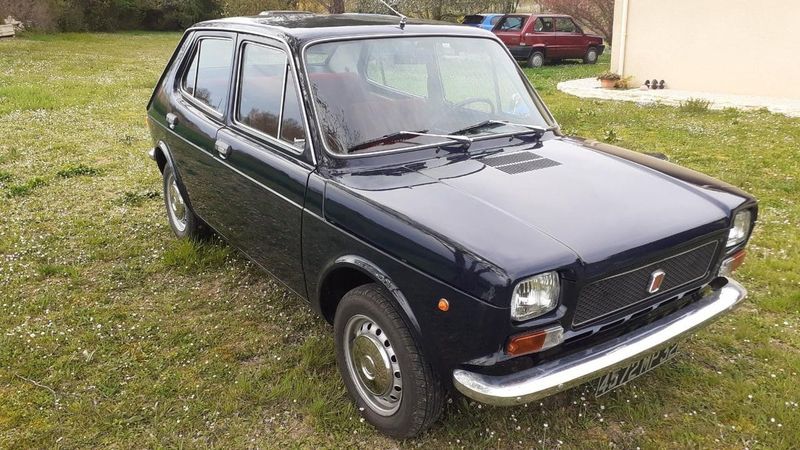
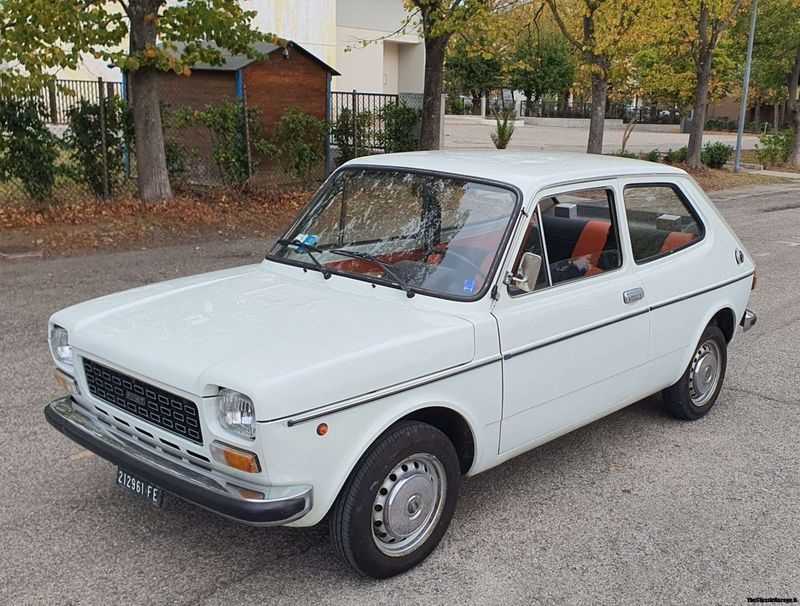
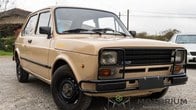
Aldo Mantovani's design for the 127 made a lot out of a little. Those three-box proportions with the abbreviated bonnet and tail maximised cabin space within a minimal overall length. Rectangular headlamps were a first for Fiat, and like the silhouette, remained recognisable across the production run. Fiat resisted the temptation to facelift too much, keeping the car’s shape and proportions intact.
With little in the way of equipment, the interior emphasised space and practicality with simple instrumentation and generous glazing creating an airy environment that belied the car's compact footprint. Four adults really could fit in, while boot space exceeded that on many larger cars thanks to clever packaging.


Series 1 (1971–1977)
The original 127 featured a 903cc OHV engine and was a two-door saloon before the three-door hatchback debuted in 1972. The latter defined the supermini segment and established the dominance of front-wheel drive.
Series 2 (1977–1983)
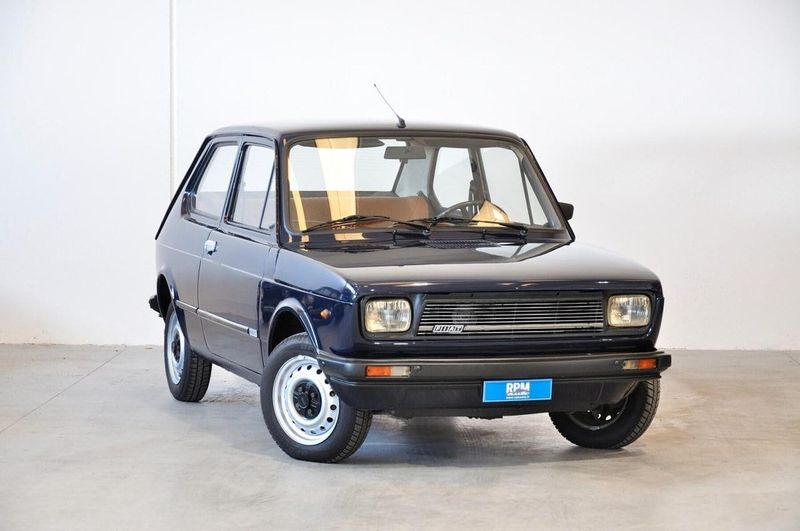
Revised styling with larger bumpers and updated trim wrapped around a 1.0-litre OHC engine with improved refinement. Sport variants offered even more performance.
The Fiat 127 was fitted with front disc brakes that provided adequate stopping power, though the rear drums required regular adjustment. The monocoque structure offered reasonable crash protection by period standards and independent suspension on all four wheels contributed to stable handling, while rack-and-pinion steering delivered predictable responses. Understandably given its age, no other safety equipment was fitted.
Pros:
European Car of the Year winner with genuine historical significance
Exceptional space efficiency and packaging for overall dimensions
Light, nimble handling ideal for urban environments
Simple mechanical specification aids DIY maintenance
Cons:
Severe rust vulnerability in floors, sills, and inner wings
Limited parts availability requires specialist suppliers
Noisy at motorway speeds with limited refinement
Restoration costs easily exceed purchase price for neglected examples
Price trends
Meest recente verkoop
€ 3.000
1977 Fiat 127

Momenteel te koop
10
0 live veilingen
10 advertenties


Totaal verkocht
22
Hoogste verkoopprijs
€ 24.736
Gemiddelde prijs
€ 5.657
Laagste prijs
€ 607
FAQs
The 127 is a good daily driver for short urban journeys, where its compact dimensions, light steering and efficient packaging excel. However, noise levels and the understandable lack of safety features make motorway journeys challenging. Mechanical simplicity aids reliability, though rust remains the primary concern affecting structural integrity.
As you might expect from such a simple car, running costs are modest by classic standards. Fuel consumption averages 35–40 mpg in real-world conditions, classic insurance policies cost a few hundred pounds, and a similar budget should cover typical servicing requirements. However, bodywork restoration costs quickly spiral, and full restorations can easily exceed initial purchase prices.
Parts availability varies significantly by component type and regional market. Southern European suppliers maintain better stocks than UK sources, but mechanical components including engine parts, brake systems and suspension items remain available through Fiat specialists. Body panels prove more challenging: some panels are reproduced, whilst others require sourcing from donor cars or fabrication. Trim and interior components demand careful searching, with original items commanding premiums.
For accessible entry into classic Italian car ownership, the second-series 127 with 1.0-litre OHC engine balances usability, parts availability and driving enjoyment. These later examples offer improved refinement over early 903cc cars whilst avoiding the premium commanded by Sport variants. The latter deliver enhanced performance but generally command premium prices, and often endure more aggressive driving.