Ford Anglia: Models and Specs
1939–1967 · 933cc–1198cc side-valve and OHV · Front-engine, rear-wheel-drive · 2-door saloon/3-door estate/panel van
Overview
As the Fiesta of its day, the Ford Anglia was Ford UK's entry-level small car for nearly three decades, quite literally transporting the brand from wartime austerity through to the consumer boom of the 1960s. Built principally at Ford's Dagenham plant, it represented the bottom rung of the Blue Oval ladder, designed to put working-class British families on the road as cost-effectively as possible. Over the decades, the Anglia’s character evolved more dramatically than almost any other model in Ford's British history. The upright pre-war utility of the E04A gave way to the American-influenced modernity of the 105E. What remained across all generations was the basic recipe of a front-engined, rear-driven two-door saloon which prioritised economy and accessibility above all else. In total, 1,594,486 Anglias were manufactured, making this one of the definitive British family cars of the mid-20th century. It was replaced by the Escort in 1968, long before the Fiesta took on the mantle of the most affordable Ford.
Price
- Starting price
- $3,000
- Average price
- $8,659
- Price range
- $3,000 - $57,950
Specifications
- Production Years
- 1939–1967
- Body Styles
- 2-door saloon/estate/panel van
- Layout / Drive
- Front-engine, rear-wheel-drive
- Engine Family
- Side-valve I4; OHV Kent I4
- Transmission Types
- 3/4-speed manual
Ford Anglia in Detail
The Anglia entered production in October 1939 as a facelift of the Ford 7Y, carrying a 933cc side-valve four-cylinder engine, transverse leaf springs at both ends and mechanical brakes. It was simple, affordable and deliberately unambitious (despite the promise implied by the Deluxe trim level), with most early cars finished in the infamous Ford black.
Post-war production resumed with the facelifted E494A in 1949, which briefly became Britain's lowest-priced four-wheel car. The 100E followed in 1953 with a new ponton-style body and an enlarged 1172cc side-valve engine, though the three-speed gearbox, vacuum wipers and side-valve motor remained pre-war in conception. Production of the 100E continued under the Ford Popular nameplate after 1953.
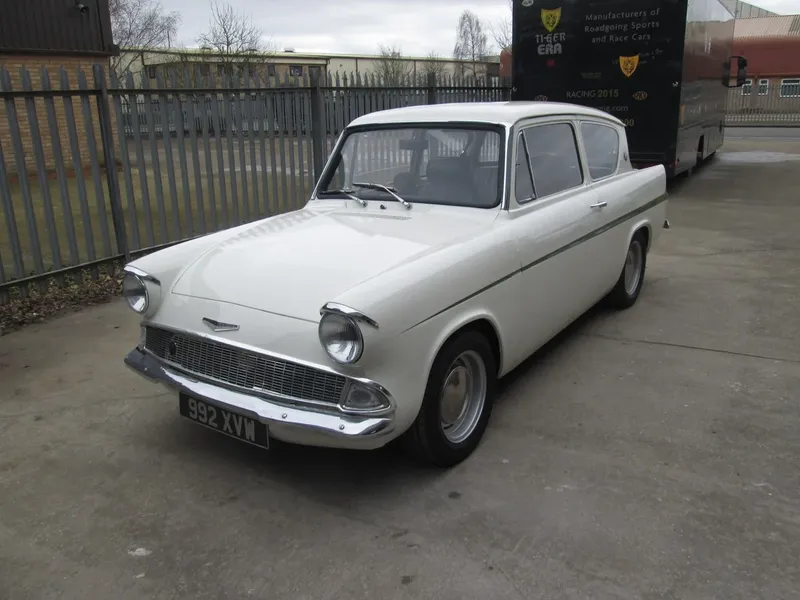
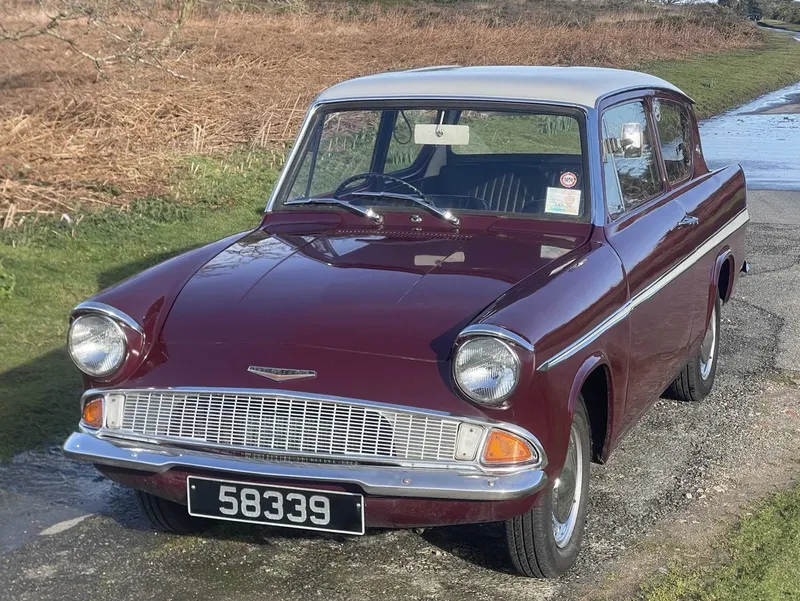
The Anglia’s defining moment came in 1959 with the arrival of the 105E. Styled by Elwood Engel with a dramatically reverse-raked rear window, the 105E represented a clean break from every Anglia that preceded it. Beneath the new bodywork sat an equally new 997cc overhead-valve engine - the first of the celebrated Kent family that would go on to power generations of production Fords and underpin Formula Ford racing. A four-speed gearbox accompanied it, along with a MacPherson strut front end that Ford would soon adopt across its wider range.
The 105E set a new production record at Dagenham in its first full year, with 191,752 units produced in 1960 alone. From 1962, the 123E Anglia Super added a 1198cc Kent variant alongside the standard 105E, replacing the last of the Prefect line. Production ended in November 1967, by which time Ford had built 1,083,960 units of the 105E/123E series alone, not including van variants.
Performance is a relative term when it comes to the Ford Anglia. The side-valve generations (E04A through to 100E) were engineered for economy and reliability, not pace. A 1954 road test by Motor magazine recorded a top speed of 70.2 mph and a 0–60 mph time of 29.4 seconds for the 100E. The 105E’s Kent OHV unit offered higher revving capability and better throttle response, though the standard 997cc car remained yawningly slow. The 123E Super's 1198cc unit extended the range's performance further, as the table below indicates.
Specification | Range |
Engine Family | Side-valve I4: 933cc–1172cc; Kent OHV I4: 997cc–1198cc |
Power Range | 26 bhp (933cc side-valve) to 50 bhp (1198cc Kent) |
0–60 mph Range | 26.9 sec (105E) to 30 sec (100E) |
Top Speed | 70 mph (100E) to 82 mph (123E Super) |
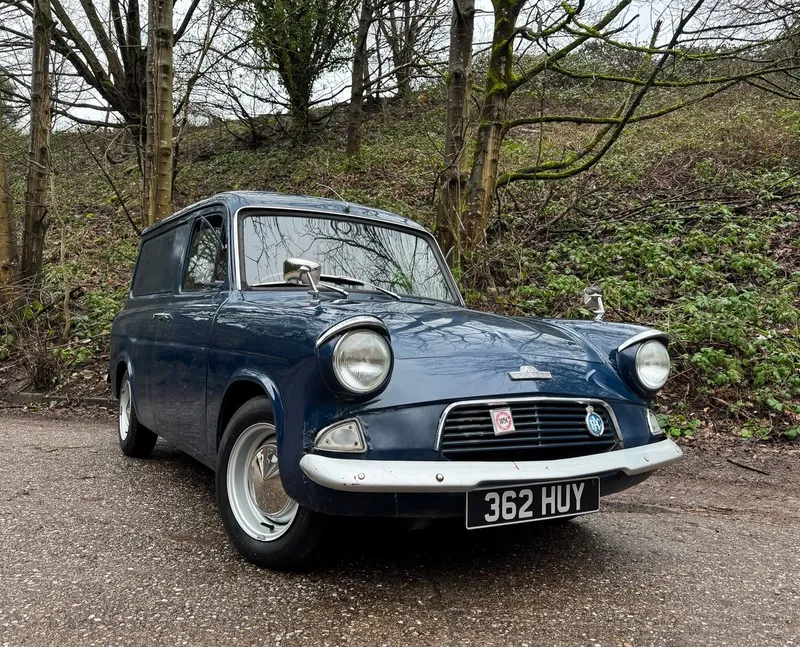
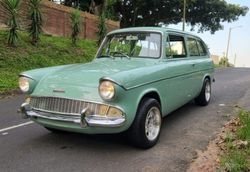
The Ford Anglia's visual identity is defined by its transformation from pre-105E cars to everything that followed. Early Anglias wore the upright, narrow-bodied silhouette that earned them the "sit up and beg" moniker, with separate headlights, a prominent upright radiator grille and a cabin set high above a simple chassis. The 105E’s reverse-raked rear window was unique among British production cars of the period, with this American-influenced profile capping a lower and wider two-door body with flush headlights and cleaner flanks.
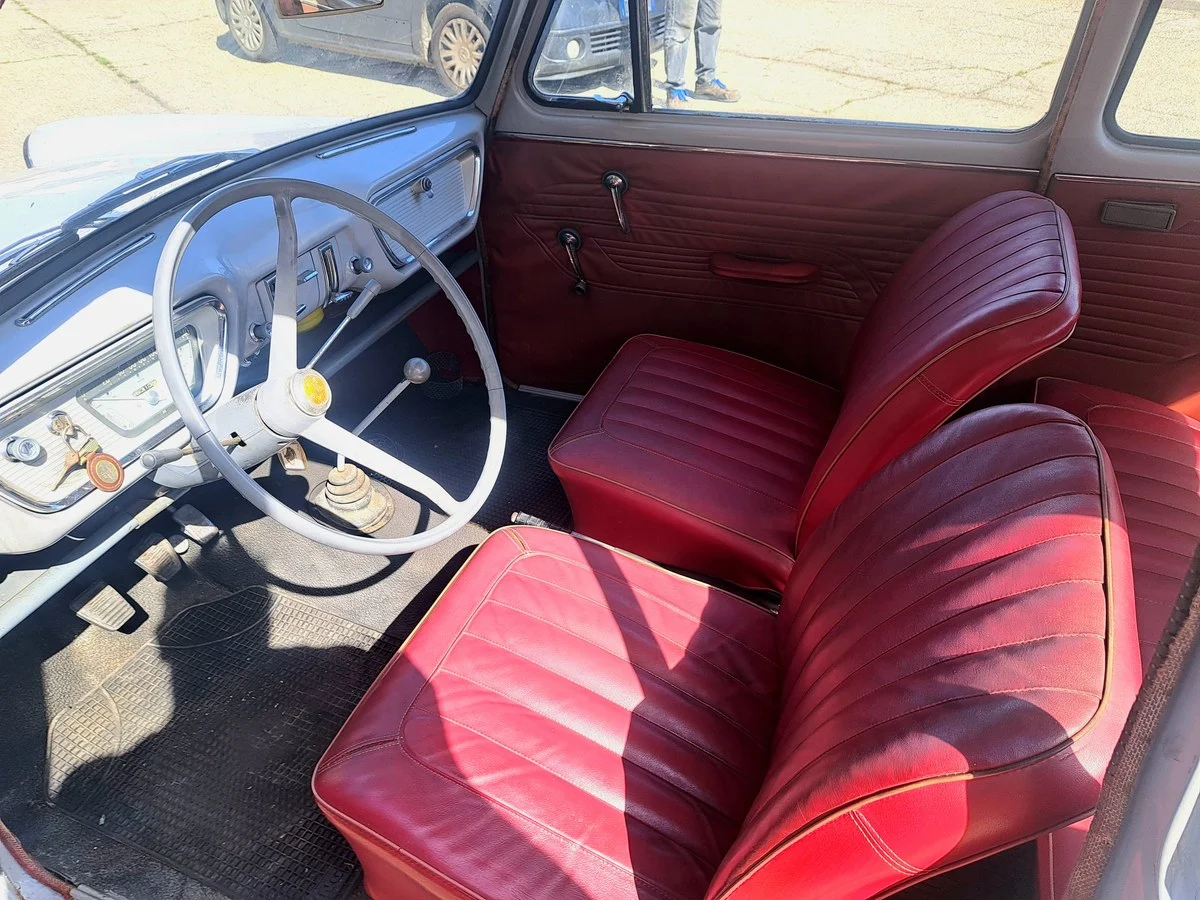
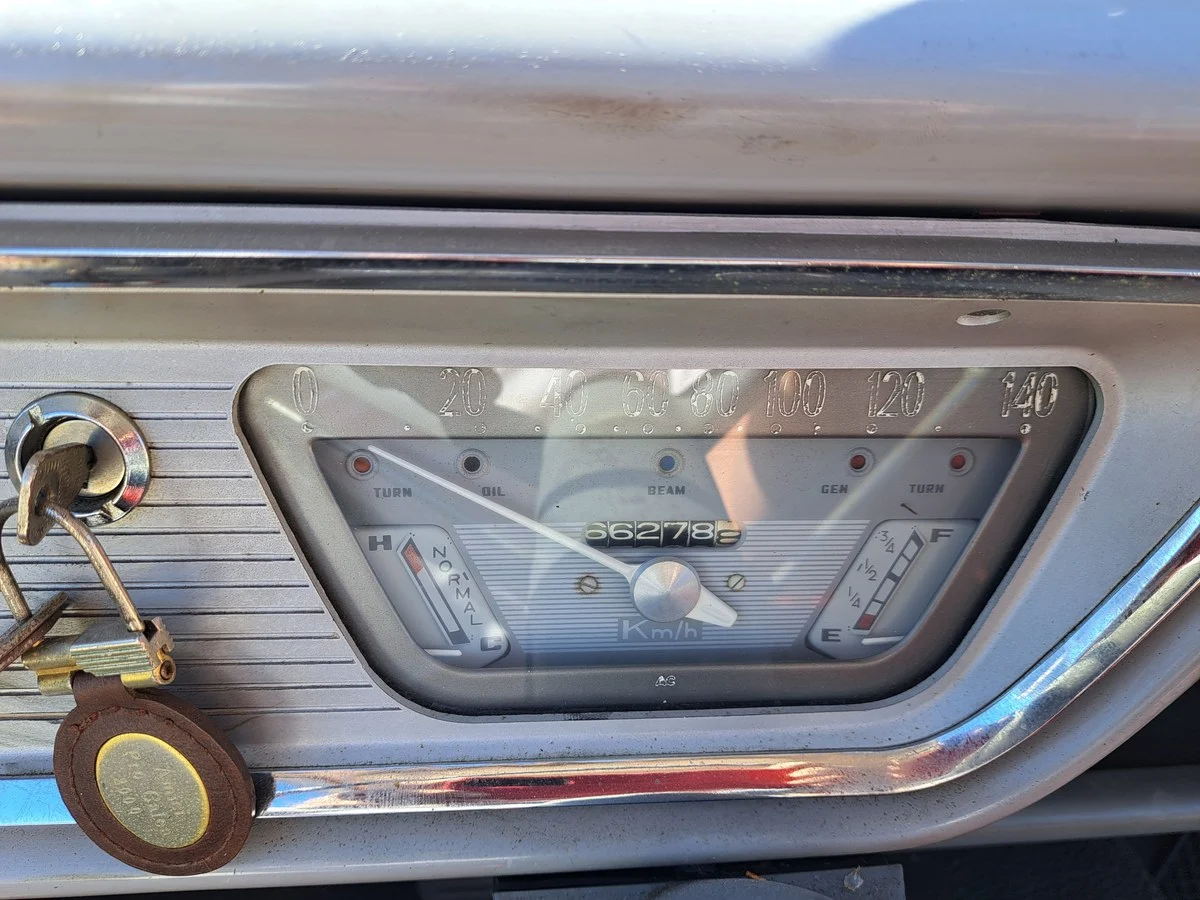
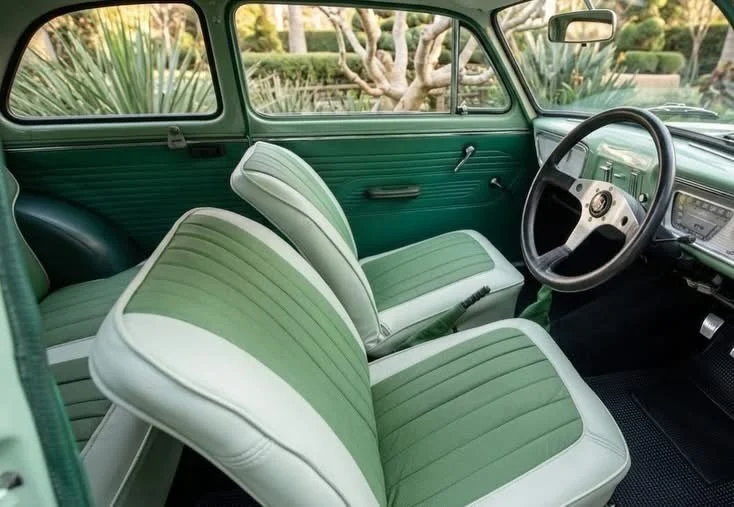
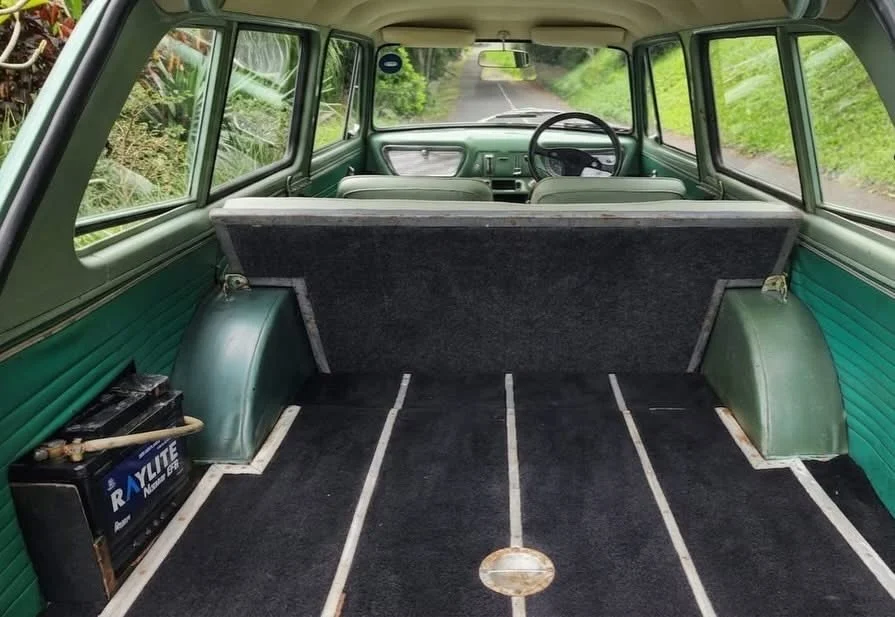
Inside, all Anglia generations followed the philosophy of functional simplicity familiar across subsequent Ford models like the Escort and Fiesta. Cabins were narrow and upright in pre-105E cars, though the 105E opened up the interior with a wider body and a proper full-width fascia. Trim levels ran from a very plain Standard specification to Deluxe, which added such niceties as a glove box lid, twin sun visors and exterior chromework. There were no luxury pretensions at all.
Generation | Years | Overview |
E04A | 1939-1948 | 933cc side-valve I4; transverse leaf springs; mechanical brakes; wartime and immediate post-war production. 55,807 built. |
E494A | 1949-1953 | Facelifted body for Britain's lowest-priced four-wheel car; 933cc side-valve retained; electric wipers. 108,878 built. |
100E | 1953-1959 | New ponton-style body; 1172cc side-valve with 3-speed gearbox; hydraulic brakes. Marketed after 1953 as Ford Popular. |
105E | 1959–1967 | Radical new body by Elwood Engel; reverse-rake rear window; 997cc OHV Kent engine; 4-speed gearbox; MacPherson strut front end. Over 1 million built. |
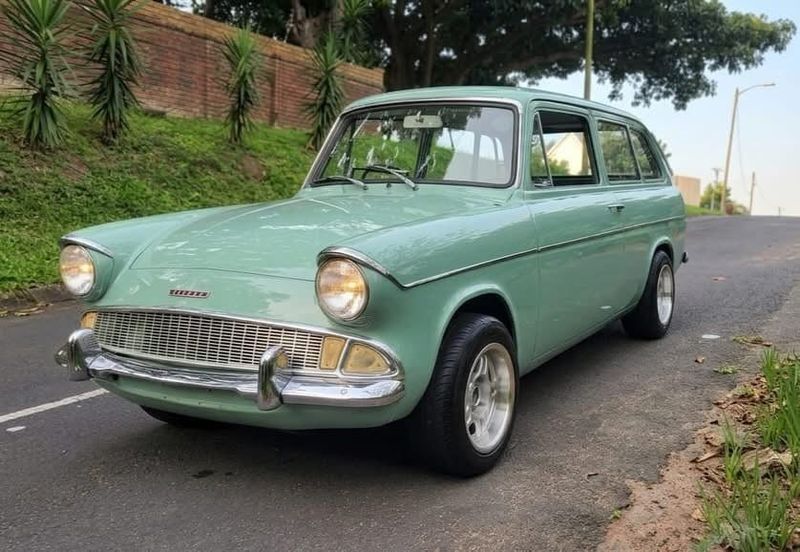
123E Anglia Super | 1962–1967 | 1198cc Kent engine; available alongside 105E; saloon and estate variants. 79,223 built. |
Early Anglias used mechanical drum brakes (E04A) before the 100E introduced hydraulic drums, which continued through the 105E and 123E. Most surviving examples will have had lap belts retrofitted by previous owners, but the Anglia is best suited to secondary roads and gentle use rather than modern high-speed traffic. In urban areas, its lack of acceleration can feel almost hazardous.
Pros:
The Kent engine's race-proven tuning potential makes the 105E/123E genuinely enjoyable to develop, with deep parts and expertise available from motorsport communities
With more than 1.5 million cars produced across all generations, the Ford Anglia 105E Owners Club and specialist suppliers are able to provide robust support despite the car's age
We have to acknowledge it - cultural recognition from the Harry Potter film franchise has maintained buyer awareness and kept the model visible, supporting values and community sustainability
Cons:
The Kent engine's tuning popularity means finding an unmodified 105E is increasingly difficult
The MacPherson strut front suspension setup requires period-specialist attention, since incorrect geometry adversely affects handling and tyre wear
Harry Potter-inspired demand has pushed the best 105E examples to unjustifiable price levels
Ford Anglia for Sale
The Ford Anglia is one of the most accessible entry points into post-war British classic car ownership, backed by a well-organised owner community and reliable parts supply. Values have risen meaningfully since the early 2000s, with the 105E now a mainstream classic. If any models are currently on sale, you’ll find them in the carousel below.
Price trends
Most recent sale
£7,250
1964 Ford Anglia Coupe
Currently for sale
21
0 live auctions
21 adverts


Total sold
68
Highest sale price
€57,950
Average price
€8,659
Lowest price
€3,000
FAQs
The Kent engine is robust and inexpensive to service, and fuel consumption runs to approximately 35–41 mpg in regular use. Insurance as a classic vehicle is typically modest, and the owner club infrastructure keeps service knowledge accessible. The principal costs are bodywork restoration; watch out for rust in sills, floors and inner wings is the car's main structural concern.
Parts availability for the 105E and 123E is good, supported by the Ford Anglia 105E Owners Club and specialist suppliers. The Kent engine's continued use in motorsport means mechanical components remain in active production. Body panels for the 105E are harder to source in good condition. Parts for earlier side-valve generations are scarcer and increasingly depend on old-stock and specialist suppliers.
The 105E saloon offers the strongest combination of parts availability, club support, valuation transparency and usable performance. A solid Standard or Deluxe saloon with documented history and an unmodified 997cc Kent engine represents the clearest starting point. The 123E Anglia Super provides a modest step up in terms of performance.
A 1960 Ford Anglia 105E appeared as the Weasley family's enchanted turquoise car in Harry Potter and the Chamber of Secrets (2002), making the 105E one of the most identifiable British classic cars of the post-war era. It’s also materially influenced buyer demand and values, particularly among buyers in their 20s and 30s.
Both share the same body and mechanical architecture. The 105E uses the 997cc Kent OHV engine producing 39 bhp, whereas the 123E Anglia Super of 1962 uses the enlarged 1198cc Kent unit to produce 48–50 bhp for a modest but welcome improvement in performance and flexibility. Both were produced simultaneously from 1962 to 1967, with the 123E available in Deluxe saloon and estate forms.