Ford Capri Mk1 (1969–1974): Models and Specs
1969–1974 · 1.3-litre–3.0-litre Kent/Essex V4/Essex V6/Cologne V6 · Front-engine, RWD · Fastback coupé with separate boot
Overview
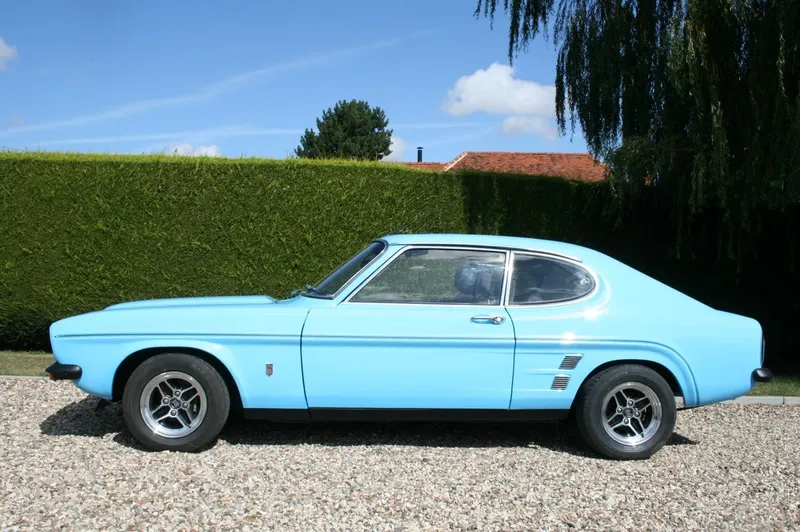
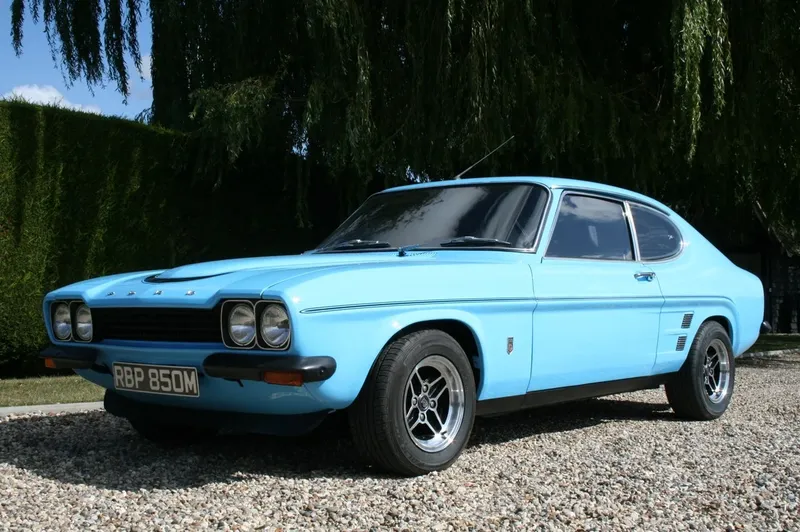
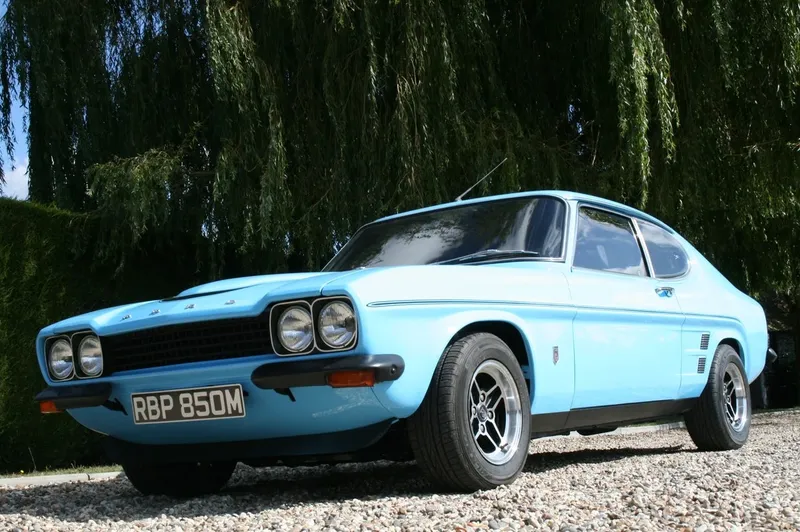
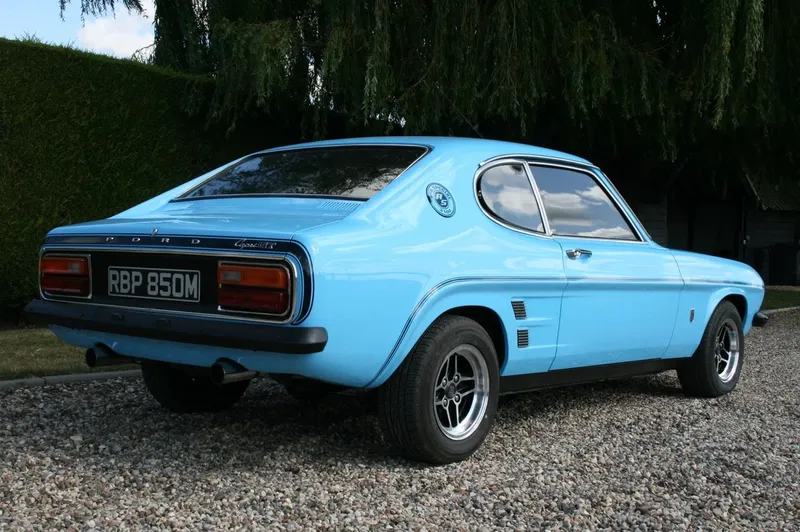
The Mk1 is the original Ford Capri, which introduced the formula that would endure for the next 17 years. It arrived without a predecessor, and where the 1974 Mk2 traded the Mk1's separate fastback boot for a practical hatchback, the Mk1's silhouette is the purest expression of the Capri's original brief: maximum visual drama at minimum cost. Reflecting its Anglo-German design origins, the Mk1 was built simultaneously at Halewood in Merseyside and Cologne in Germany, with both plants producing right and left-hand drive variants. UK production ended in December 1973 with the transition to the Mk2, by which point production had surpassed one million units. The Mk1 era also produced the only Ford-factory motorsport homologation variants (the RS2600 and RS3100), giving this generation a status no subsequent Capri generation shares.
Specifications
- Production Years
- 1969–1974 (UK); 1969–1973 (Germany)
- Body Style
- 2-door fastback coupé
- Layout
- Front-engine, rear-wheel drive
- Engines
- 1,298cc/1,599cc/1,996cc/2,994cc
- Transmission
- 4-speed manual; 3-speed automatic
Ford Capri Mk1 in Detail
History
Design work for what would become the Capri Mk1 began in Ford's studios in 1965, running concurrently between the UK and German divisions under the codename Project Colt. The D-shaped rear quarter windows (the feature most immediately identified with the Capri) were introduced after early prototypes drew complaints from test audiences about rear passenger claustrophobia.
Production began at Halewood and Cologne in November 1968, ahead of the official public debut in January 1969. Ford's launch pricing positioned the 1300L at £890, targeting buyers who might otherwise consider a Triumph Spitfire or an Austin-Healey Sprite rather than a GT coupé. At the same time, the £1,257 3000GT competed with the Triumph GT6 for buyers whose priority was performance rather than economy.
The first major changes arrived in September 1970: improved lighting, larger headlamps and power-assisted brakes across the range. The 3000GT received its engine upgrade in October 1971, which had a measurable impact on both acceleration and high-speed refinement.
The September 1972 facelift was the Mk1's most visually significant change, bringing larger front and rear lamps, a revised fascia with a new two-spoke steering wheel and a rear anti-roll bar replacing the original linked rear axle arrangement. The 1.3-litre Kent was succeeded by the Pinto OHC, which required a bonnet bulge to fit in the engine bay. The 3000GXL was introduced at the same point with an uprated gearbox and quad headlamps, representing the Mk1's final range-topping specification before production concluded in December 1973.
Specifications & Performance
Variant | Engine | Power | 0–60 mph | Top Speed | Transmission |
1300 | Kent 1.3-litre | 52–57 bhp | 16.0 sec | 87 mph | 4-speed manual |
1600 GT | Kent/Pinto 1.6-litre | 84–88 bhp | 12.0 sec | 100 mph | 4-speed manual |
2000 GT | Essex V4 2.0-litre | 90 bhp | 10.9 sec | 107 mph | 4-speed manual |
3000 GT | Essex V6 3.0-litre | 128 bhp/138 bhp | 8.9 sec | 120 mph | 4-speed manual |
3000 GXL | Essex V6 3.0-litre | 138 bhp | 8.6 sec | 122 mph | 4-speed manual / auto |
The Mk1 had no direct predecessor within the Ford Capri range. Against contemporaries like the Triumph GT6 and MGB GT, the 3.0-litre V6 variants were emphatically faster and offered their performance at a lower purchase price. The October 1971 engine modifications to the 3000GT (which included reshaped inlet ports, larger valves, larger carburettor jets and tubular exhaust manifolds) represented a meaningful mid-generation performance uplift without a model name change.
Dimensions
Length | 4,262 mm |
Width | 1,645 mm |
Height | 1,275 mm |
Wheelbase | 2,559 mm |
Kerb Weight Range | 930–1,103 kg |
Variants and Trims
Standard trim levels (road cars):
1300/1600-litre: entry specification; Kent engine; basic interior
1600/2000/3000GT: performance trim with twin-choke Weber carburettors; sportier interior; front discs standard
3000E: executive specification; vinyl roof, cloth-insert seats, opening rear windows
3000GXL: post-facelift range-topper; quad headlamps, uprated gearbox and a revised interior
Factory Custom Packs (available across most trim levels):
X Pack: reclining front seats, bucket rear seats, reversing lights
L Pack: overriders, chrome exhaust trim, dummy air scoops
R Pack: Rostyle wheels, matt black bonnet, spotlamps, leather steering wheel (GT only)
Homologation variants:
RS2600: 2.6-litre Cologne V6 with mechanical fuel injection
RS3100: 3.1-litre overbored Essex V6; Group 2 homologation
Exterior
The Mk1 Capri is the only generation to use a conventionally separate boot rather than the hatchback tailgate introduced on the Mk2. This gives the Mk1 a cleaner, more pronounced rear haunch than its successors, at the cost of significantly less luggage practicality. The D-shaped rear quarter windows are at their most prominent on pre-facelift cars, while the September 1972 facelift introduced larger lamp clusters front and rear, a revised grille and quad headlamps on the 3000GXL. A bonnet bulge was added to all cars from June 1972, ahead of the Pinto OHC engine introduction.


Interior
The Mk1's cabin was a driver-oriented cockpit with a centre-stack fascia and a large central tachometer on GT specifications. Standard trim was entirely in black across the production run and only approximately 10 per cent of surviving Mk1s are recorded as having left the factory with alternative interior colour specifications.
The September 1972 facelift revised the dashboard layout and introduced a new two-spoke steering wheel. The 3000E specification introduced cloth-insert seats and opening rear windows.


Safety
Front disc brakes were standard across most of the range from launch, with rear drums throughout, and power-assisted braking was introduced as standard equipment in September 1970. Otherwise, the Capri was free from nanny statism with no safety equipment at all.
What to Look For
Body and Structure
Front wings rot at the headlamp surrounds and rear quarters. Sills and rear arches are common rot points while scuttle bubbling is a reliable indicator of serious A-post corrosion from the inside out. Lift the car at both ends and open/close the doors to check for excess body flex which might indicate structural sill or floor compromises.
Engine
On Kent engines, listen for rattling timing chains, tapping valve gear and heavy breathing from the crankcase. Pinto OHC units (post-1972 facelift cars) are prone to camshaft wear from oil starvation, while essential cambelt changes are due every 30,000 miles. With the Essex V4, check for overheating history, since a neglected cooling system risks head gasket failure and nylon timing gear damage. Finally, the Essex V6 was the most robust engine in the range when maintained properly, but check for oil leaks from the rocker covers and listen for bottom-end rumble on cold starts.
Cooling
Check for corrosion and clogging throughout the cooling system, since water pump leaks are a common finding on higher-mileage cars. Milky oil on the dipstick or cap indicates coolant contamination.
Gearbox
The Type 3 single-rail four-speed is reasonably durable, but rumbling indicates terminal bearing wear. The English rear axle fitted to four-cylinder cars is less robust than the Atlas unit used on V6 models; a whine is common but it will typically continue to function.
Suspension
Front strut tops are a known wear point, so check for corrosion where the suspension mounts to the body. Unresponsive steering indicates worn bushes; a wallowy ride indicates worn dampers. Post-facelift cars are more softly sprung than pre-facelift versions, but be cautious of cars with over-modified and stiffened rear suspension.
Interior
Door cards can warp, while rear carpets frequently suffer water damage from perished door seals. Facelift-era front and rear light clusters are unique to the model and harder to source than pre-facelift items. On pre-facelift cars, check the headlight switch for evidence of heat damage because the absence of a relay is a known cause of switch failure.
FAQs
Is a Ford Capri Mk1 or Mk2 a better buy?
The Mk1's separate fastback boot is the more overtly sporting silhouette but offers less practicality than the Mk2's hatchback. The Mk1 also carries the only Ford-factory motorsport homologation variants (RS2600 and RS3100) and the original pre-facelift styling that many enthusiasts consider the purest expression of the Capri's brief. For buyers who prioritise driving character and provenance over everyday usability, the Mk1 is the stronger choice, but for those who want a Capri they can use as a daily classic, the Mk2's hatchback body makes more practical sense.
What’s the best engine in the Ford Capri Mk1?
The 3.0-litre Essex V6 in 3000GT or 3000GXL specification is the most desirable engine in the Mk1 range, offering a 0–60 mph time of under 9 seconds and the V6 exhaust note that showcases the Capri's sporting identity. For buyers seeking a more affordable and easier-to-maintain entry point, the 2.0-litre Essex V4 GT represents a strong compromise of performance and running costs. The 1.3-litre Kent is best suited to buyers building a low-cost project, since it’s the least rewarding to drive and doesn’t exploit the Capri’s rear-drive chassis.
Are Ford Capri Mk1 parts still available?
Mechanical parts for all Kent, Pinto, Essex V4 and V6 engines are broadly available through Ford classic specialists and the Ford Capri Owners Club supplier network. Facelift-specific interior and lighting components are harder to source than pre-facelift items.