Ford RS200: Models and Specs
1984–1986, turbocharged Cosworth BDT four-cylinder, mid-engined four-wheel drive, two-door coupé.
Overview
Has there ever been a more extreme showroom Ford than the RS200? This is one of the Blue Oval’s most outlandish road cars, created as a purpose-built homologation special before Group B rallying became too dangerous. The RS200 sits apart from Ford’s familiar RS or Cosworth-badged Escorts and Sierras because its layout and construction were dictated almost entirely by rally regulations rather than showroom practicality. Its core character is defined by a mid-mounted turbocharged Cosworth engine, four-wheel drive, compact proportions and a lightweight composite body. Where many fast Fords evolved from family-car platforms, the RS200 was a clean-sheet attempt to fight Audi, Peugeot, Lancia and MG in the most extreme era of world rallying. The RS200’s World Rally Championship career was short, yet its engineering concept, rarity and Group B association have made it one of the defining homologation cars of the 1980s.
Price
- Starting price
- Average price
- Price range
- -
Specifications
- Production years
- 1984–1986
- Body styles
- Two-door coupé
- Layout/drive
- Mid-engined, four-wheel drive
- Engine family
- Turbocharged inline-four
- Transmission
- Five-speed manual
Ford RS200 in Detail
History
The RS200 was born from Ford’s need to respond to the rapidly escalating Group B rally situation. Ford had initially pursued the Escort RS1700T project, but that rear-wheel-drive programme was abandoned when it became clear that a more radical four-wheel-drive car would be needed. Ford swiftly moved on from the cancelled RS1700T towards a clean-sheet two-seat, all-wheel-drive coupé that had little in common with normal production Fords.
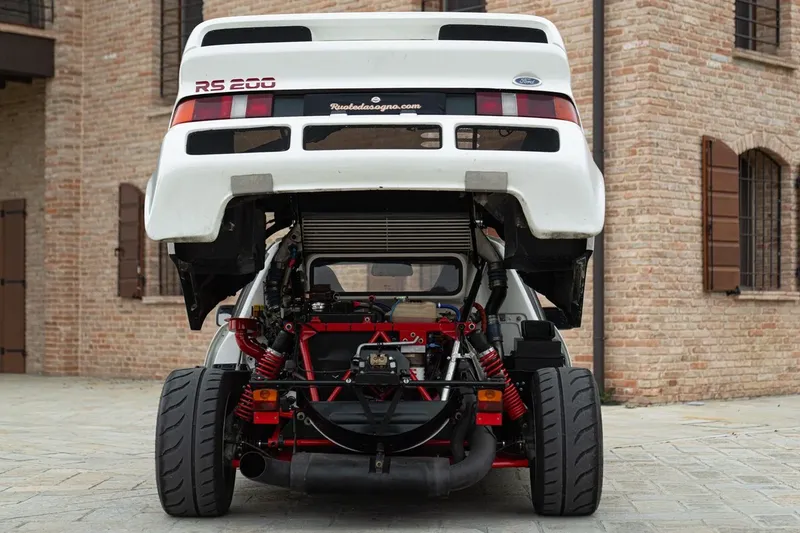
The RS200’s engineering used a mid-mounted Cosworth BDT turbocharged four-cylinder engine, a front-mounted gearbox to help weight distribution and a complex driveline that sent power forward and then back to the rear axle. It incorporated three viscous-coupling limited-slip differentials, with switchable torque split settings including normal four-wheel drive, a 50:50 split and a rear-drive-only mode. This was not a car for the casual tinkerer to play with in their garage.
The body was designed by Ghia and built from composite/carbonglass, while assembly was handled by Reliant, rather remarkably. The road version used a 1.8-litre engine producing 250 hp, while 1986 competition versions reached more than 420 hp.
Although the RS200 was conceived for Group B, its timing was awful. Its World Rally Championship debut came in January 1986, but Group B was banned only months later. The later 2.1-litre Evolution specification was homologated in December 1986, too late for its intended WRC role, though the RS200 continued to appear in rallycross where Group B machinery remained eligible.
Specifications & Performance
The Ford RS200’s performance identity comes from its compact Group B layout rather than from a long engine or trim hierarchy. Road cars used the 1.8-litre Cosworth BDT turbocharged four-cylinder, while later Evolution machinery used an enlarged 2.1-litre BDT-E derivative.
Item | Details |
Engine family | Cosworth BDT / BDT-E turbocharged inline-four, 1.8–2.1 litres |
Power range | 246–420 hp, depending on road or competition specification |
0–100 mph | 17 sec for road-spec RS200 |
Top speed | 140–150 mph |
Design and Cabin Identity
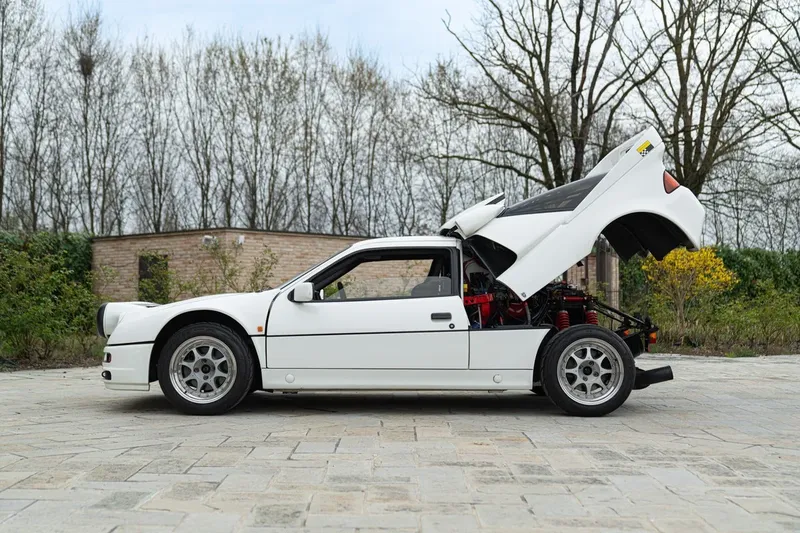
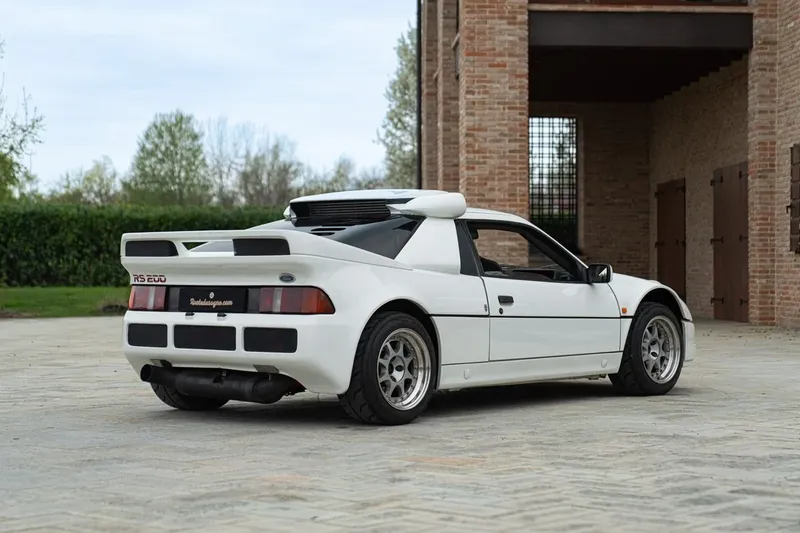
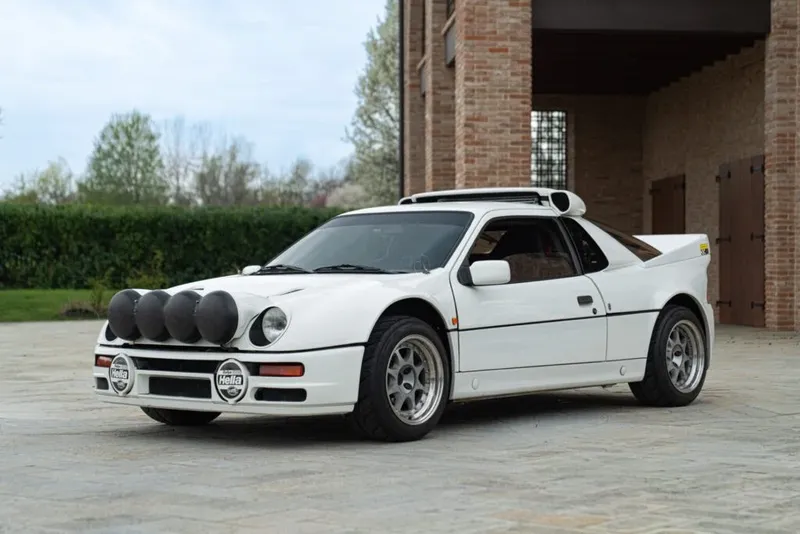
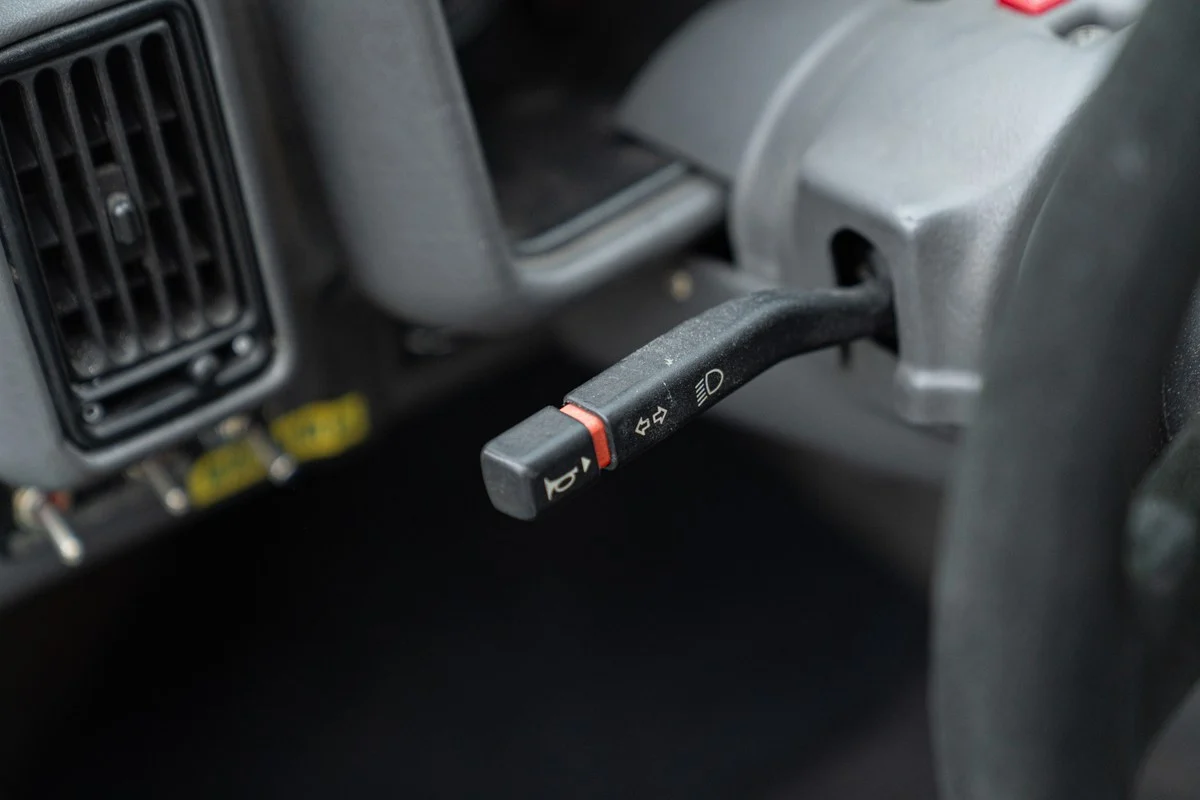
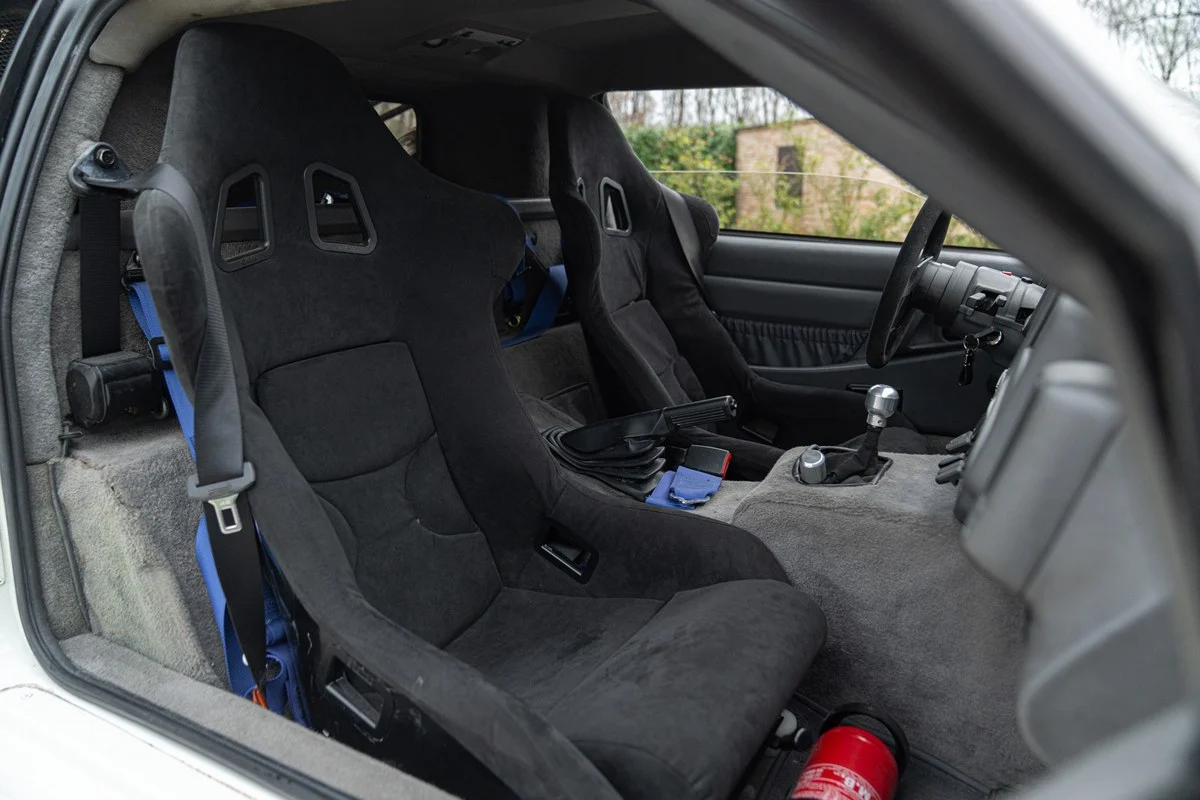
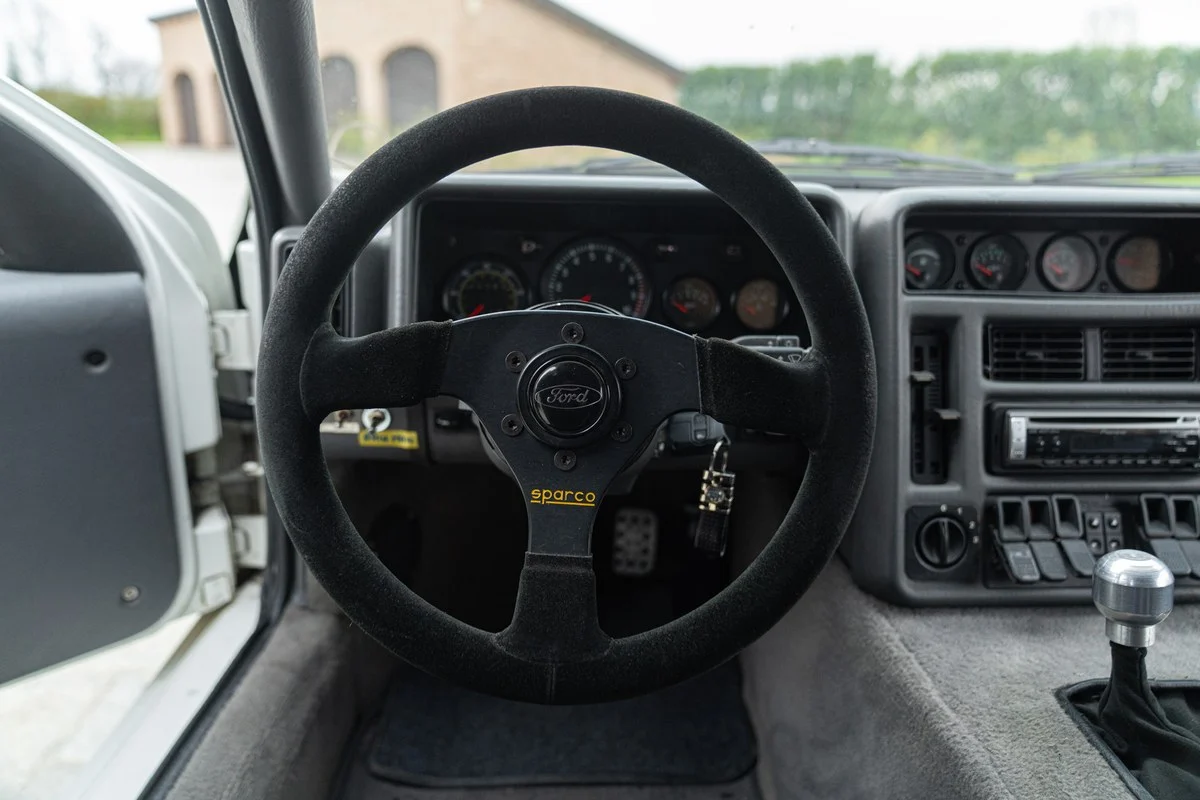
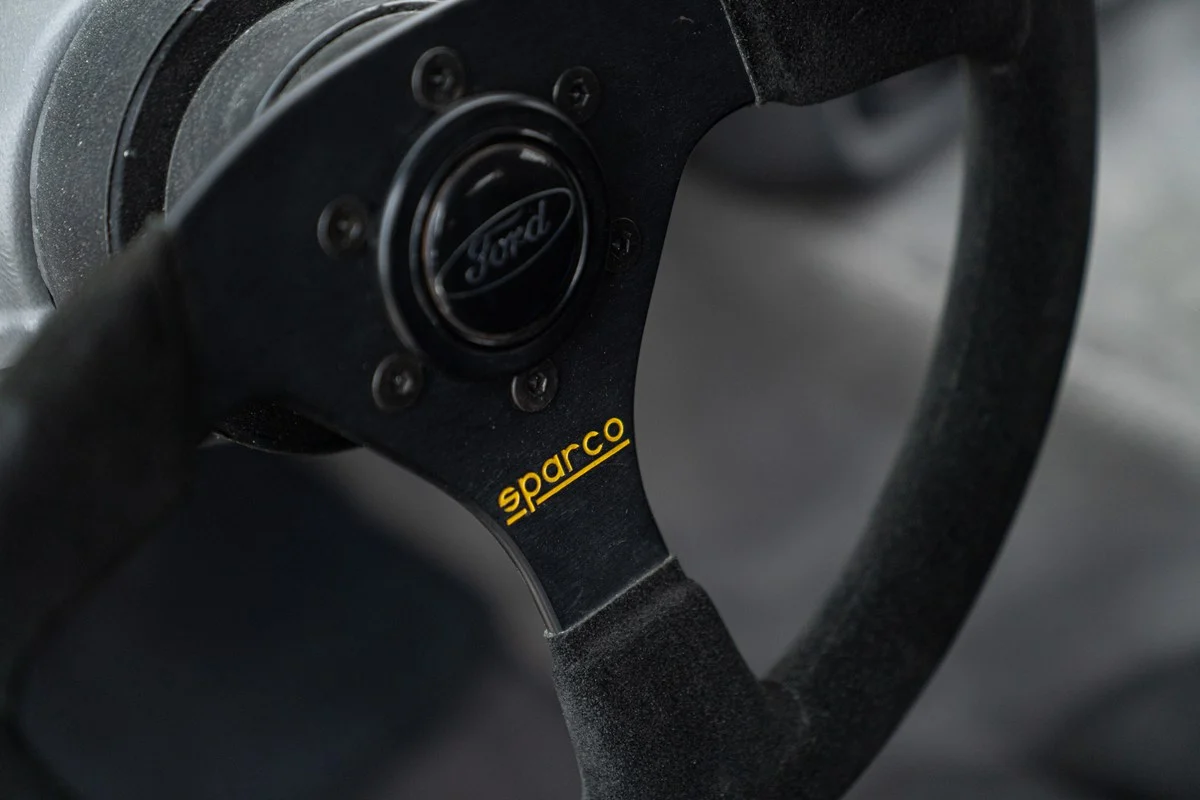
Sitting in a Ford RS200 feels like you’re wedged inside a rally prototype, with just enough road-car detail to qualify for homologation. Its short and wide coupé body, deep glasshouse, central roof intake and compact overhangs create a very different stance from Ford’s front-engined RS models. Every major proportion points back to the engine position, cooling needs and four-wheel-drive rally brief; occupants are a low priority. This is evident in the two-seat, competition-led interior. Some trim and switchgear connections to period Ford models have endured, but the dominant impression is of a specialist motorsport car adapted for road use.
Safety
The Ford RS200 might have been ludicrously powerful, and its four-wheel-drive system and competition-led chassis concept were advanced for the time, but it remains a car from an era before modern electronic safety nets. There are no airbags or driver intervention systems here - even popping to the shops for milk requires diligence and attentiveness.
Pros and Cons
Pros
Purpose-built Group B engineering gives the RS200 a status few Ford road cars can match.
Mid-engined Cosworth layout makes this one of the most technically distinctive RS models.
Tiny production numbers support collectability and long-term historical importance.
Cons
The complex driveline is central to the car’s character but also part of its ownership challenge.
With Group B rallying abandoned months after the RS200’s debut, much of its reputation rests on unrealised potential.
Turbo lag and handling challenges can make this a frightening proposition in the wet, or in the hands of less competent drivers.
Price trends
Most recent sale
Not found
Currently for sale
0
0 live auctions
0 adverts
Total sold
0
Highest sale price
€0
Average price
€0
Lowest price
€0
FAQs
Why did Ford build the RS200?
The RS200 was designed and produced to compete in Group B rallying after the earlier Escort RS1700T project was abandoned. Group B rules encouraged radical homologation cars, and Ford needed a purpose-built four-wheel-drive machine to compete with considerable contenders like the Audi Quattro, Peugeot 205 T16 and Lancia 037.
Is the Ford RS200 based on an Escort?
The RS200 was conceived after the Escort RS1700T project was cancelled, but it was far from an Escort derivative. It was a two-seat, mid-engined, four-wheel-drive coupé with a composite body and bespoke motorsport architecture.
How many Ford RS200s were made?
The RS200 was created to satisfy Group B’s 200-car homologation requirement, but surviving and completed-car numbers are more complicated. Only 148 cars are believed to have been fully assembled, with some prototypes and early losses, while 156 were sold as complete vehicles.
Why is the Ford RS200 so collectible?
The RS200 combines Ford RS heritage, Group B rally history, low production numbers and unusual engineering. Unlike many fast Fords, it was not a tuned version of a mainstream model; this was a bespoke homologation car with a mid-mounted Cosworth engine and four-wheel drive. Sadly, some RS200s have been mistreated, or routinely thrashed in rallycross, so well-preserved originals are rare.
What are the differences between the Ford RS200 and RS200 Evolution?
The RS200 Evolution was a later development with an enlarged 2.1-litre engine. It was validated in December 1986, but it arrived too late for the Group B World Rally Championship after the category was banned due to safety concerns.