Mercedes-Benz 190 (W201): Models and Specs
1982–1993 · 1.8–2.6-litre petrol inline-four/six; 2.0–2.5-litre diesel · Front-engine, rear-wheel drive · Four-door saloon · 1,879,629 built
Overview
Affectionately known as the Baby Benz, the 190 was Mercedes-Benz's first compact executive car, and consequently became one of the most significant models the company has ever built. Launched at the Paris Motor Show in 1982, it extended the Mercedes product range into a segment the brand had never previously competed in, sitting below the mid-range W123 and condensing Mercedes-Benz engineering into a smaller, more affordable saloon for the first time. The W201 introduced the patented five-link independent rear suspension which would define automotive suspension engineering for decades, alongside a passive safety structure that set new benchmarks in the compact class. Bruno Sacco's "diamond cut" exterior gave the 190 a design vocabulary that felt unmistakably Mercedes without trying to resemble a scaled-down S-Class. The W201 also spawned one of the defining performance saloons of the 1980s in the Cosworth-developed 2.3-16, with a motorsport legacy running from the 1984 Nürburgring Race of Champions through to the DTM championship of 1992. Today, the 190 range is wide enough for it to serve as everything from an accessible modern classic to a serious collector vehicle. Speaking of appealing to collectors, although they share a number, the Mercedes-Benz 190 SL (W121) from 1955 to 1963 is a completely different car to the W201, at a very different price point.
Price
- Starting price
- £836
- Average price
- £6,604
- Price range
- £836 - £125,383
Specifications
- Production years
- 1982 – 1993
- Total produced
- 1,879,629
- Body style
- Four-door saloon
- Layout
- Front-engine, rear-wheel drive
- Platform
- W201
Mercedes-Benz 190 (W201) in Detail
History
Development of the W201 began way back in 1974 in response to shifting market conditions following the 1970s fuel crisis, with production approval granted in March 1979. The finished car debuted at the Paris Motor Show in October 1982, arriving initially with a choice of two petrol engines: the carburettor 190 producing 89 bhp and the fuel-injected 190E generating 120 bhp. Both used the M102 four-cylinder unit carried over from the W123.
The W201 chassis was purpose-built with no carryover components from elsewhere in the Mercedes range. Its most celebrated engineering feature was the patented five-link independent rear suspension, where each rear wheel is controlled by five independent links operating at different angles and heights. For complicated reasons involving the simultaneous balancing of lateral and longitudinal forces, this significantly enhanced roadholding and handling.
The engine range expanded progressively. The lethargic but indestructible 190D diesel arrived in 1983, a year before the 2.3-16 Cosworth engine which had been developed for rallying before the Audi Quattro's dominance in Group B redirected the programme toward DTM touring car homologation. The 190E 2.6, adding the first inline-six to the compact class, arrived in 1985. Facelifts in 1988 and 1991 updated the car's exterior and interior without altering the fundamental platform, and production ceased in 1993 when the W202 C-Class debuted.
Specifications & Performance
The W201 range spans an unusually wide performance band for a single-body saloon, which is why the words “diesel” and “Cosworth” appear in the same sentence above. The standard petrol and diesel variants were engineered for refinement, economy and longevity rather than outright speed, with high-geared, long-legged engines built to cover huge distances quietly. The Cosworth-developed 2.3-16 and 2.5-16 were developed for DTM homologation, with a Getrag dog-leg five-speed gearbox and limited-slip differential contributing to performance figures that put them in competition with the BMW E30 M3.
Model | Engine | Power | 0–62mph |
|---|---|---|---|
190 (carb) | 2.0-litre M102 I4 | 89 bhp | 12.5 s |
190E 1.8 | 1.8-litre M102 I4 | 107 bhp | 12.0 s |
190E 2.0 | 2.0-litre M102 I4 | 120 bhp | 10.5 s |
190E 2.3 | 2.3-litre M102 I4 | 134 bhp | 9.5 s |
190E 2.6 | 2.6-litre M103 I6 | 163 bhp | 8.3 s |
190D 2.0 | 2.0-litre OM601 I4 | 71 bhp | 17.5 s |
190D 2.5 | 2.5-litre OM602 I5 | 89 bhp | 13.5 s |
190D 2.5 Turbo | 2.5-litre OM602 I5 Turbo | 124 bhp | 10.5 s |
190E 2.3-16 | 2.3-litre M102 16V Cosworth | 182 bhp | 7.5 s |
190E 2.5-16 | 2.5-litre M102 16V Cosworth | 192 bhp | 7.1 s |
190E 2.5-16 Evo II | 2.5-litre M102 16V Cosworth | 231 bhp | 6.9 s |
Design and cabin identity
The W201's body is angular, built around a strong horizontal line running the full length of the car, integrated flush door handles and a deliberate absence of chrome ornamentation. The forward-slanted profile, short rear deck and upright greenhouse were departures from tradition, creating a saloon that resembled a Mercedes-Benz while establishing a new visual vocabulary for the compact segment.
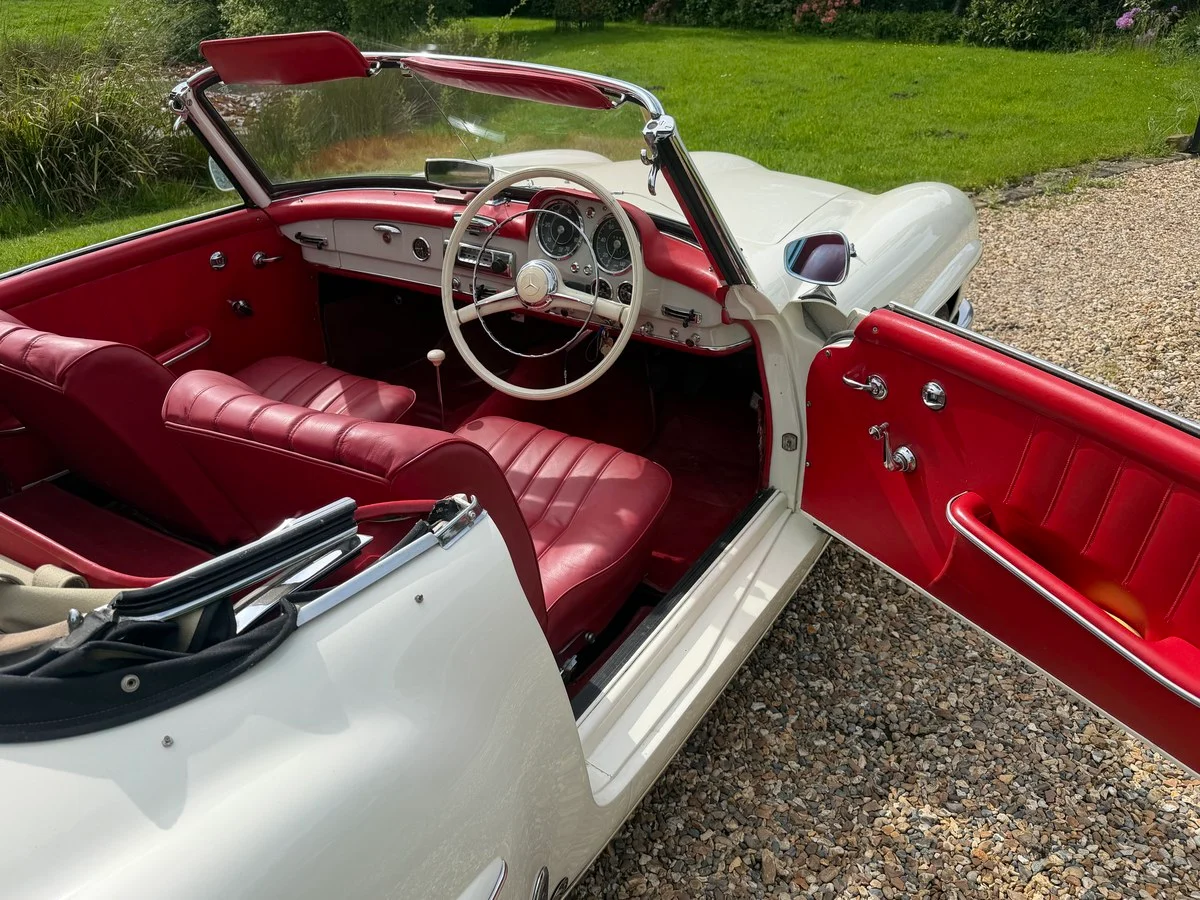
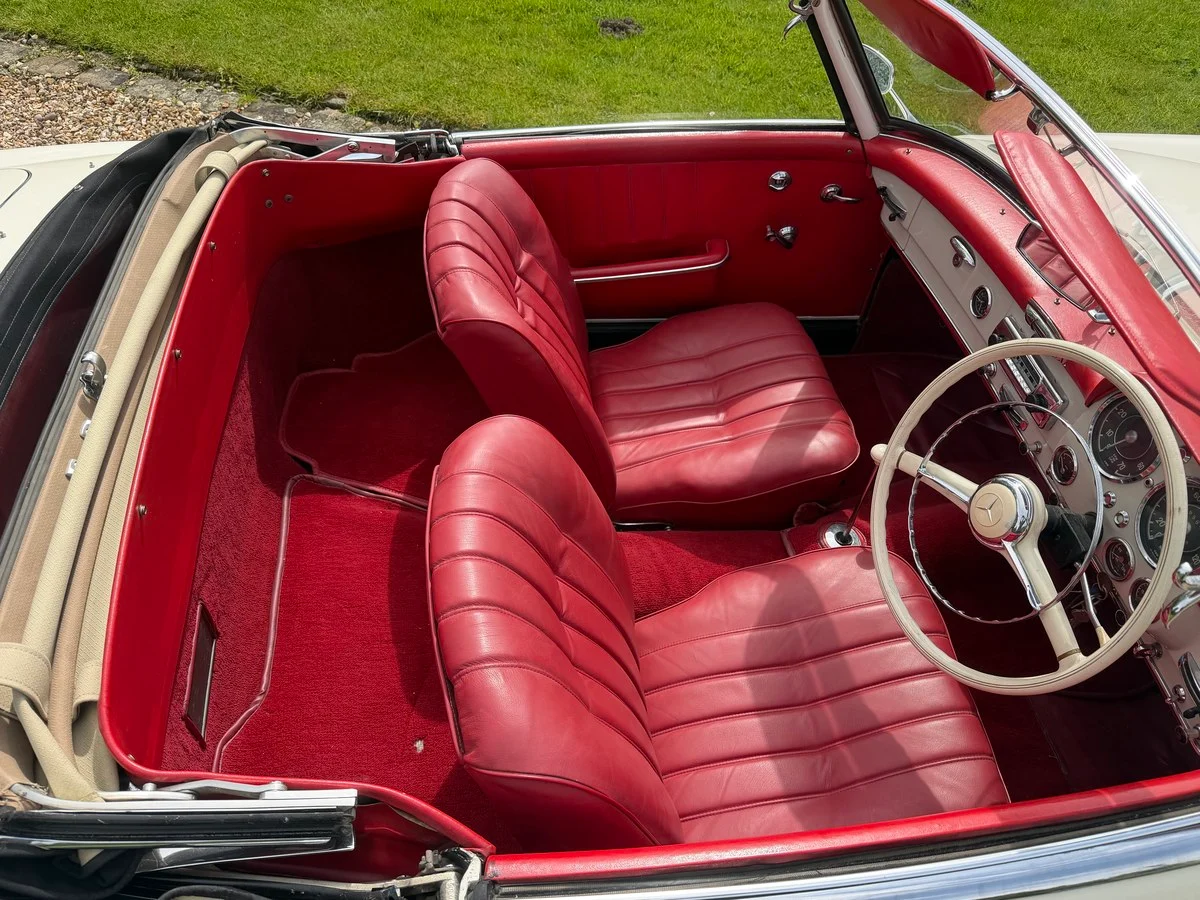
Inside, the cabin followed the same philosophy: clear, functional and built to a standard noticeably above the compact class average. The instrument binnacle is angled toward the driver, the switchgear is precise and consistent, and the quality of materials exceeds the standard competitors typically served up. Asymmetric door mirrors were among the practical innovations carried through from the design's aerodynamic development. The 1988 facelift introduced the Sacco-plank body cladding that became a visual signature of the later cars.
Safety
The W201 was advanced for its era in passive safety terms. Mercedes engineered a front-end structure with controlled deformability in offset frontal impacts, and a roof with outboard longitudinal members for exceptional cabin rigidity. In the real world, these concepts meant a car could withstand a concrete barrier offset crash at 56 km/h without serious passenger injury or cabin deformation. ABS brakes, airbags and seatbelt pretensioners were available as options, with their availability expanding during the production run.
Variant Guide
The W201 range can be split into three distinct sections:
190E petrol: The mainstream range: 1.8, 2.0, 2.3, and 2.6 engines. The 2.6 six-cylinder is a very refined single-cam petrol.
190D diesel: 2.0, 2.2, 2.5, and 2.5 Turbo. Known for their extreme longevity but a different ownership profile entirely from the petrol cars.
2.3/2.5-16 Cosworth: Homologation performance cars. DTM-connected, Getrag dog-leg gearbox, limited-slip differential.
Model Timeline
1982: W201 debuted at the Paris Motor Show with 190 (carb) and 190E (injection) petrol variants. Production began at Sindelfingen.
1983: 190D diesel joined the range. Bremen plant began production alongside Sindelfingen.
1984: 190E 2.3-16 Cosworth introduced for DTM homologation.
1985: 190E 2.6 became the first six-cylinder in the compact class. 190D 2.5 (five-cylinder diesel) also added.
1988: First facelift: revised bumpers, Sacco-plank body cladding, updated interior. 190E 2.5-16 replaced the 2.3-16.
1989–90: Evolution I (502 units) and Evolution II (500 units) homologation specials produced in LHD only. Klaus Ludwig won the 1992 DTM championship in an Evo II-derived car.
1991: Second facelift: minor trim and equipment updates.The 190E 1.8 replaced the carburettor 190.
Aug 1993: Production ended, replaced by the W202 C-Class, which inherited the five-link rear suspension architecture.
Pros and Cons
Pros
Five-link rear suspension gives handling that outclasses most 1980s compact rivals and remains impressive today.
The single body, eleven-year run meant one platform serves a range from economy diesel to Cosworth performance, so mechanical knowledge is transferable across variants.
Passive safety engineering was a class benchmark in 1982 and remains above average for an Eighties car without modern active systems.
Cons
The Cosworth and Evo cars are LHD-only, so UK buyers wanting right-hand drive must stop at the standard 2.3-16 road car, which is a more prosaic proposition.
Wide price spread from the same body creates market confusion, with tired diesels and six-figure Evo IIs listed under the same nameplate.
Standard single-cam petrols offer modest performance relative to period BMW 3 Series equivalents, and some diesels were yawningly slow.
Price trends
Most recent sale
£10,000
1991 Mercedes 190 190 D 2.5 W201 Saloon
Mar 11, 2021
Currently for sale
16
0 live auctions
16 adverts
Total sold
57
Highest sale price
£125,383
Average price
£6,604
Lowest price
£836
FAQs
Is the Mercedes 190 the same car as the C-Class?
The 190 (W201) is the direct predecessor to the C-Class (W202), which launched in 1993. They are separate generations of what Mercedes designates the compact class. The W202 carried forward the five-link rear suspension architecture from the 190, but these are different cars with different parts, different aesthetics and different collector interest.
What are the differences between the 190, 190E, and 190D?
The badge system is straightforward once you decode it. The 190 (with no suffix) was the carburettor petrol, replaced by the 190E 1.8 in 1991. The E denotes petrol with fuel injection, while 190D denotes a diesel. Within 190E and 190D ranges, the number following indicates engine displacement, so a 190E 2.0 is a 2.0-litre injected petrol, a 190D 2.5 is a 2.5-litre diesel, and so forth. The 2.3-16 and 2.5-16 suffixes on the Cosworth variants indicate the Cosworth-developed 16-valve head.
How do pre- and post-facelift 190s differ, and does their age affect value?
The 1988 facelift introduced revised front and rear bumpers and the Sacco-plank contrasting lower body panels which became characteristic of the later cars. The 1991 facelift was a minor trim update by comparison. Pre-facelift cars (1982–88) have cleaner flanks and are preferred by some buyers, though post-facelift cars benefit from the running improvements made during the production cycle. Specification, service history and body condition significantly outweigh facelift status in terms of value.
Can a Mercedes 190 be used as a daily driver today?
Well-maintained W201 engines are capable of exceeding 200,000 miles, with some having travelled substantially further. The 190E is mechanically less complex than later Mercedes models and tolerates being left unused for extended periods. The main consideration for daily use is that most W201s were delivered with an automatic gearbox, and parts for the manual are now hard to source. The diesel variants are noted for their longevity, while the Cosworth cars carry a cost-to-maintain premium that makes casual daily use an expensive proposition.