MG Maestro: Models and Specs
1983–1991 · 1.6–2.0 litre inline-four · Front-engine, front-wheel drive · Five-door hatchback
Overview
The MG Maestro arrived in March 1983 as British Leyland’s attempt to reassert the MG name as a credible performance marque. Moving away from the company’s roadster and sports car heritage, it attempted to reposition the humble Austin Maestro as a hot hatchback at a time when the Golf GTI and Ford Escort XR3 were sweeping all before them. The MG Maestro set out to be fast, technically adventurous and unmistakably its own thing. It was the first MG in the marque's history to carry a hatchback body, the first to be built around a front-wheel-drive transverse layout, and the first production car in the world to offer a synthesised voice dashboard. The latter was a poorly received gimmick (albeit decades ahead of its time), but MG’s engineering intent was sincere. Within Austin Rover's range, the MG Maestro occupied the performance flagship position in the LM10 family. It attracted buyers who wanted hot hatch performance in a practical five-door body without the Golf GTi's price premium. The 1600 matched the Escort XR3 on outright pace, while the 2.0 EFi surpassed both competitors. Yet despite commercial success, with almost 48,000 examples built, the MG Maestro remains one of the most underrated performance cars of the hot hatch era.
Price
- Starting price
- 1 883 €
- Average price
- 7 099 €
- Price range
- 1 883 € - 16 250 €
Specifications
- Production years
- 1983–1991
- Body styles
- Five-door hatchback
- Layout / drive
- Front-engine, front-wheel drive
- Engine family
- OHC 1598cc/1994cc; turbocharged and intercooled 1994cc
- Transmission types
- Five-speed manual
MG Maestro in Detail
The MG Maestro was launched in March 1983 alongside the LM10 range which had originally been designated ADO99 as an Allegro replacement, before being merged with the LM11 Montego programme. The development team made a late decision to fit twin Weber DCNVH carburettors to the MG's 1598cc R-Series engine rather than the single unit used in lower Austin variants. This single revision raised output to 103bhp and gave the 1600 a sonorous intake note that set it apart from the more prosaic Austin Maestro range.
At launch, the MG Maestro 1600 featured what Austin Rover called the Electronic Instrument Pack: a fully digital instrument cluster incorporating LED warning lights, a digital speedo and a voice synthesis system voiced by actress Nicolette McKenzie. The 32-word vocabulary was recorded in fifteen languages for export markets, and the system warned drivers of issues including unfastened seatbelts, failed bulbs and low fluid levels. At a time when seatbelts were considered interesting, this attracted lots of media coverage and became the most-discussed technical talking point of that year's British motor show.
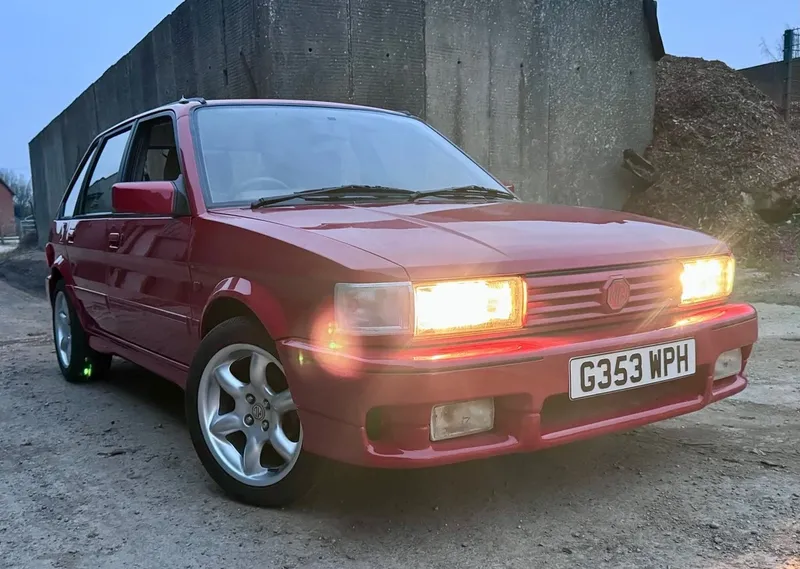
In October 1984, the 1600 was discontinued and replaced by the MG Maestro 2.0 EFi. The new car used the 1994cc O-Series engine with Lucas electronic multi-point fuel injection producing 115bhp, with a higher torque output, improved mid-range delivery and a higher top speed of 115mph. A cosmetic facelift in October 1988 introduced colour-coded bumpers/mirrors/trim, along with new alloy wheel designs. Finally, the MG Maestro Turbo was introduced in February 1989 as a high-performance variant, with its credentials enhanced by being built at Aston Martin Tickford's Bedworth facility. MG Maestro production ended in July 1991 when the classy Rover 200 made its debut.
The MG Maestro's performance identity was redefined by the transition from the twin-Weber R-Series to the fuel-injected O-Series. The 1600 and 2.0i share the same body, five-speed gearbox and suspension architecture, but the performance difference between them was significant.
Metric | Figure |
Engine family / displacement range | BL R-Series OHC 1598cc; Austin Rover O-Series OHC 1994cc |
Power range | 103 bhp (1600, twin Weber) to 115 bhp (2.0 EFi, Lucas injection) |
0–60 mph range | 8.5 sec (2.0 EFi) to 9.6 sec (1600) |
Top speed range | 112 mph (1600) to 115 mph (2.0 EFi) |
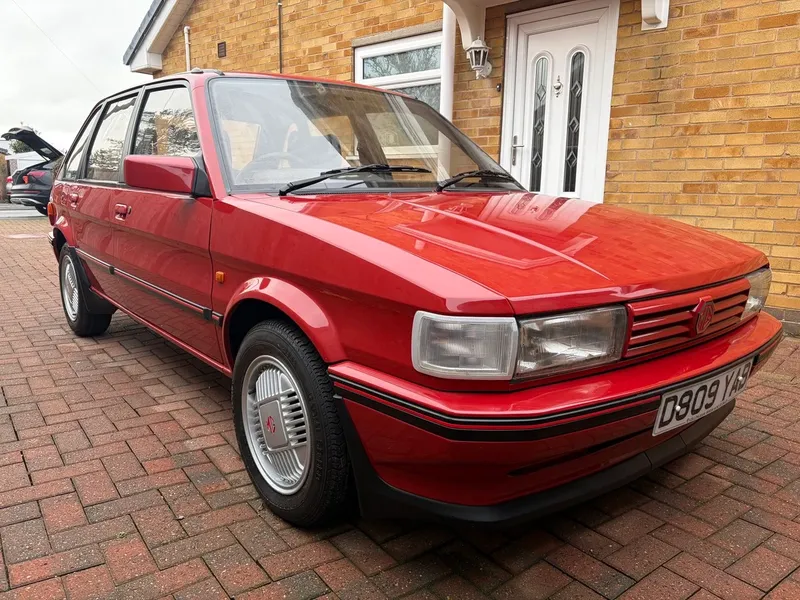
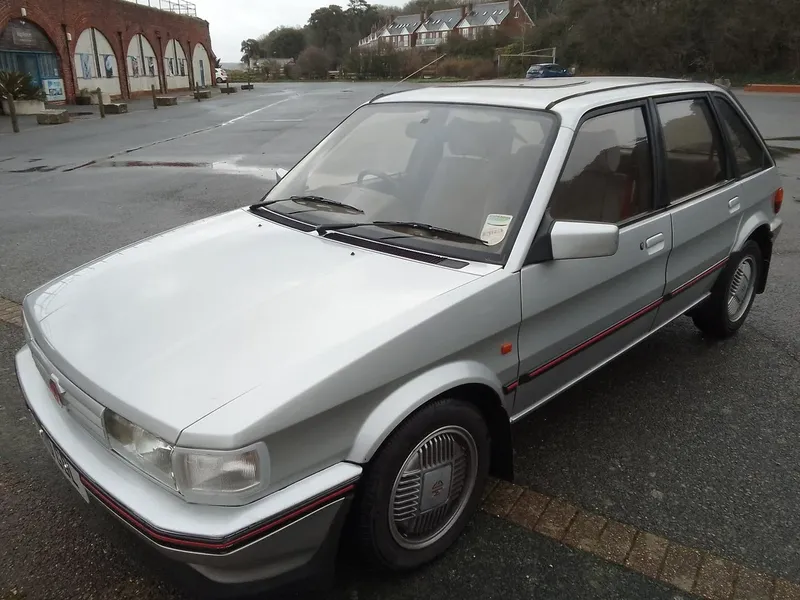
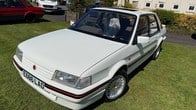
The MG Maestro is lower (and feels wider) than the standard Austin Maestro despite sharing the same dimensions. A deep front air dam, pronounced wheel arch extensions and MG badging give the car a visual identity which its Austin-branded siblings lack.
Inside, the MG Maestro’s cabin was the most technologically ambitious of its era in the British mainstream market. The fully digital instrument cluster occupied a dashboard that felt futuristic in 1983 and remains a period artefact of interest today. The seats are deeply bolstered and MG-branded, the steering wheel dished and close to the driver. The Maestro was designed to prioritise interior space so the rear accommodation is generous for a car of this size, while the hatchback loadbay is wide and practical.
The MG Maestro’s architecture, body structure and FWD layout were unchanged from 1983 to 1991. The main variations occurred in terms of performance:
MG Maestro 1.6/2.0i. The standard MG Maestro was powered by 1600 R-Series (1983–84) and 2.0i EFi O-Series (1984–91) engines
MG Maestro Turbo. A turbocharged and intercooled O-Series engine produced 150bhp with 505 examples designed and built at Aston Martin Tickford's Bedworth facility
The MG Maestro might have been fast in later iterations, but it wasn’t hugely safety conscious. Disc front and drum rear brakes were standard, with no electronic assistance systems at any point. However, the car was at least forward-thinking in passive safety for its era, since a laminated windscreen was standard from launch, and the voice synthesis dashboard included seatbelt reminder alerts. No ABS systems or airbags were available on any MG variants during production.
Pros
MG took the aesthetically challenged Maestro and gave it genuine performance credentials and some welcome style
The first production car in the world with a standard-fit synthesised voice dashboard
47,914 examples built across all MG versions, with a broad and well-supported parts network through MG and Austin Rover specialists
The MG Maestro is one of the most affordable 1980s hot hatch classics available
Cons
The Maestro never truly convinced the market in the way its GTi, GTE and XR3 rivals did
Twin Weber carburettors on the 1600 require tuning every 5,000–8,000 miles and are prone to fuel vaporisation
Rear wheel arch, sill and suspension turret rust is endemic and severe across the LM10 platform, with repair panels increasingly difficult to source
Survival rates are poor relative to production volume, so finding an unmodified, structurally sound MG Maestro requires patience
Tendances des prix
Vente la plus récente
8 500 £
1989 MG Maestro Hatchback

Actuellement en vente
1
0 enchères en direct
1 annonce

Total vendu
11
Prix de vente le plus élevé
16 250 €
Prix moyen
7 099 €
Prix le plus bas
1 883 €
FAQs
Yes, but only if you recognise the bodywork challenges it can pose. The O-Series 2.0i EFi is a strong and well-supported engine, the five-speed gearbox is robust and the car delivers genuine hot hatch performance at resale prices that undervalue it relative to rivals of the same era. The non-negotiable is a thorough pre-purchase body inspection, since rust in the rear wheel arches, sills and suspension turrets is the primary reason MG Maestros are scrapped.
The 1600 (March 1983–October 1984) used the 1598cc R-Series with twin Weber carburettors at 103bhp. The 2.0 EFi (October 1984–July 1991) replaced it with the 1994cc O-Series with Lucas multi-point fuel injection, generating 115bhp. The 2.0i is faster, smoother, more fuel-efficient and significantly easier to maintain, making it a far more practical ownership choice.
Mechanical parts are reasonably well supported through Austin Rover specialists and the Maestro & Montego Owners Club network. The O-Series engine was shared across a wide family of Austin Rover vehicles, broadening the supply pool. Body panels are in critically short supply, and the Owners Club recommends verifying panel availability before committing to a restoration project.
For everyday usability and stress-free ownership, a 2.0i EFi in post-1988 facelift specification offers the best combination of performance, fuel injection reliability and exterior presentation. The 1600 is historically interesting but more demanding to maintain.
At launch, the MG Maestro 1600's 0–60 of 9.6 seconds placed it on a par with the Ford Escort XR3 and MG Metro Turbo. The 2.0 EFi's 8.5 second 0–60 and 115 mph top speed improved on both. Where the MG Maestro consistently outperformed its rivals was in practicality, since its five-door body and generous interior space gave it a day-to-day usability that the three-door Golf GTi and XR3 couldn’t match.