
MG MGC: Models, Specs and Buyer's Guide
Corespecs: 1967–1969 • 2.9L (2912 cc) BMC C-Series inline-six • 145 bhp • 4-speed manual (overdrive optional) • RWD • ~120 mph (193 km/h) top speed
MG MGC Overview
The MGB stands as one of the most popular and iconic British cars of the 20th century, but its more powerful sibling never achieved the same level of public awareness. Announced in late 1967 and built until 1969, the MGC was MG’s six-cylinder grand tourer, offered in Roadster and GT versions just like the MGB. Engineered around BMC’s 2,912 cc inline-six, the C gained a torsion-bar front suspension with telescopic dampers, uprated Girling brakes, 15-inch wheels and a signature bonnet bulge. A stronger all-synchromesh 4-speed gearbox with optional Laycock overdrive completed the mechanical package. Conceived as the successor to the Austin-Healey 3000, the MGC was visually close to the MGB, but tuned for high-speed touring rather than sharp-edged responses. Total production stood at 8,999 (split almost exactly 50/50 between Roadsters and GTs). Period critics compared the MGC unfavourably with the lighter MGB, but retrospective road tests highlighted its refined high-speed touring character, which was the role it was always intended to play once it had effectively taken the baton off the big Healey.
C&C Expertise
The MGC’s reappraisal has been long overdue. For too long, it was overshadowed by the car it replaced, the Austin Healey 3000, and the car that replaced it, the MGB V8. These rare cars with their C-Series straight six engines make Don Hayter’s sleek roadster and Pininfarina’s coupe into proper long-legged GTs. Much of the appeal also comes from how they retain the neat '60s details that distinguish them from the later V8. With just 4,500 of both body styles built, the trouble is finding a good one. If you’re lucky enough to do that, you get a really good all-round classic with decent power.
MG MGC Price
- Starting price
- € 6.000
- Average price
- € 20.109
- Price range
- € 6.000 - € 41.990
MG MGC Specifications
- Engine Power
- 145 bhp (108 kW) @ 5,250 rpm
- Engine Type
- 2.9 L (2912 cc) BMC C-Series inline-six OHV
- Transmission
- 4-speed manual (overdrive optional); 3-speed auto optional
- Body Type
- Roadster / GT Coupé
- Layout
- Front-engine, rear-wheel drive
MG MGC in Detail
1966–1967: Conceived as the successor to the Austin-Healey 3000, the MGC adapted the MGB’s iconic shell to accommodate BMC’s 2,912cc C-Series engine. This necessitated a torsion-bar front end, a revised crossmember, and larger brakes and wheels.
Oct 1967: The Roadster and GT were unveiled at the London Motor Show at Earls Court.
1967–1969: A works “MGC GTS” programme saw BMC Competitions build lightweight GTs that competed in the 1967 Targa Florio, the Sebring 12 Hours and the 84-hour Marathon de la Route in 1968.
September 1969: Production ceased after 8,999 cars, including 4,542 Roadsters and 4,457 GTs.
From its 1967 launch to the final 1969 cars, the MGC mated the 2.9-litre C-Series six with a 4-speed manual or 3-speed automatic transmission. Below, we’ve listed representative period-tested figures.
Model (test year) | Engine | 0–60 mph | ¼-mile (ET @ mph) | Top speed |
|---|---|---|---|---|
MGC Roadster (1967) | 2912cc C-Series OHV inline-6, twin SU HS6 | 10.0 s | 17.7 s @ 79 mph | 120 mph |
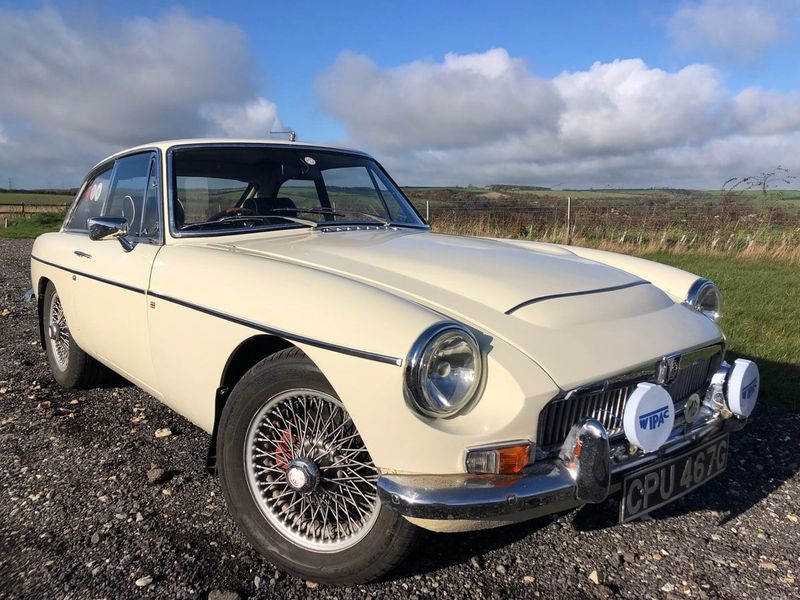
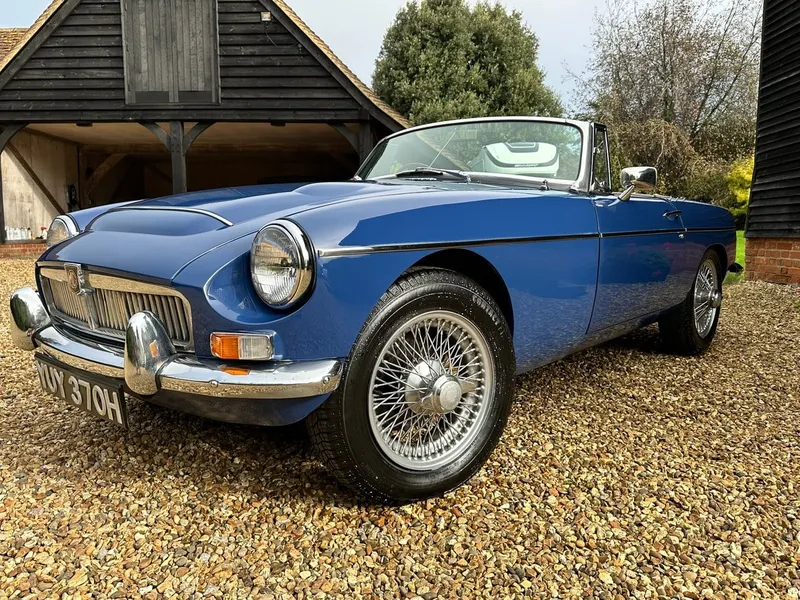
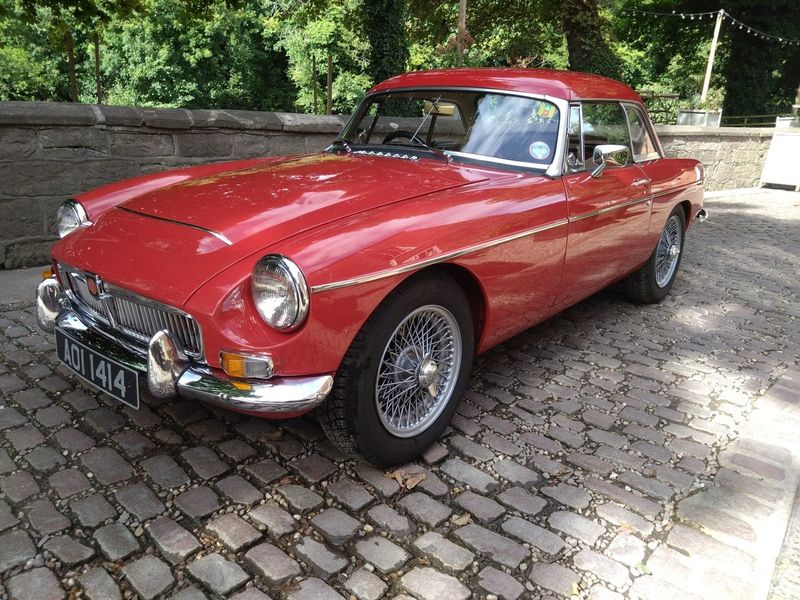
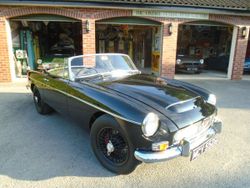
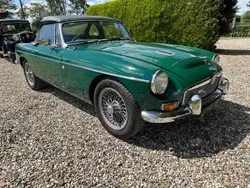
Outwardly close to the MGB, the MGC’s styling hides its grand-touring specifications behind a few clear identifiers, including a taller bonnet with a central bulge and intake to accommodate the straight-six powerplant. Bigger 15-inch wheels filled the arches effectively, and a subtly purposeful nose housed the torsion-bar front end ahead of bigger brakes.
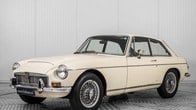
The Roadster maintained the classic low-sill open-top profile, while the GT wore Pininfarina’s clean fastback roof, telegraphing the MGC’s longer-legged brief.
The quickest way to distinguish the MGC from the less powerful B is by its heavily bulged bonnet, required to accommodate the straight-six beneath it. The bonnet was made out of aluminium on many cars, while some late ‘69 MGCs may have a steel bonnet.
Larger 15-inch wheels (compared to 14-inch versions on the MGB) were standard, with pressed-steel rims and optional wire wheels.
Under-skin giveaways that affected the MGC’s look included torsion-bar front suspension, altered ride height and a revised front crossmember - all ensuring the MGC sat and rode differently from an MGB.


Internally, the facia and cabin layout mirrored the MGB’s, with leather seats ahead of rubber floor mats. Instrumentation included an MGC-specific 140mph speedometer.
While the Roadster was a soft-top, the fixed-roof GT added an optional rear seat that folded flat to create a carpeted luggage platform under the large tailgate, increasing touring storage compared to the Roadster’s boot.


Active Safety (Brakes and Handling)
Girling braking system: 11-in front discs and 9-in rear drums, vacuum-servo assisted on all cars with dual-circuit plumbing on U.S. models.
The heavier six-cylinder nose and torsion-bar front suspension make correct tyre pressures critical for balance, with 34 psi front / 30 psi rear recommended on 165-15 radials
Passive Safety
To ensure good brake health, confirm the servo operation, the condition of all hoses/lines, rotor thickness and rear-drum hardware. Note that U.S. models often retained dual-circuit servos, whereas British cars typically had a single servo.
The parking brake was a conventional cable-actuated system. Ensure equalisation and rear-shoe adjustment for reliable holds on steep gradients.
MG MGC Variants & Generations
Like the visually similar B, the MGC was offered in two body styles: an open-top Roadster and a fixed-head GT, each powered by the 2912cc C-Series inline-six engine with either a 4-speed manual or a 3-speed automatic transmission.
Prijsontwikkeling
Meest recente verkoop
€ 28.950
1968 MG MGC GT Coupe

Momenteel te koop
42
1 live veiling
41 advertenties



Totaal verkocht
99
Hoogste verkoopprijs
€ 41.990
Gemiddelde prijs
€ 20.109
Laagste prijs
€ 6.000
FAQs
It was manufactured for just two years in both Roadster and GT guises, from October 1967 to September 1969. A total of 8,999 cars were manufactured, including 4,542 Roadsters and 4,457 GTs. A significant share of both went to North America.
The MGC was re-engineered for its six-cylinder engine, courtesy of a torsion-bar front suspension, uprated Girling brakes, and 15-inch wheels, though it still closely resembled an MGB at a glance.
Early press cars were dispatched with incorrect front tyre pressures, exaggerating understeer. However, this was quickly addressed, and later assessments emphasised the car’s strength as a refined high-speed GT rather than a nimble B-road blaster like the MGB.
BMC positioned the MGC as the spiritual successor to the big Healey in the grand-touring role.
It was a lightweight Works competition version of the MGC GT, created to compete in events such as the 1967 Targa Florio, the 1968 Sebring 12 Hours, and the 84-hour Marathon de la Route. Only a handful were ever built.