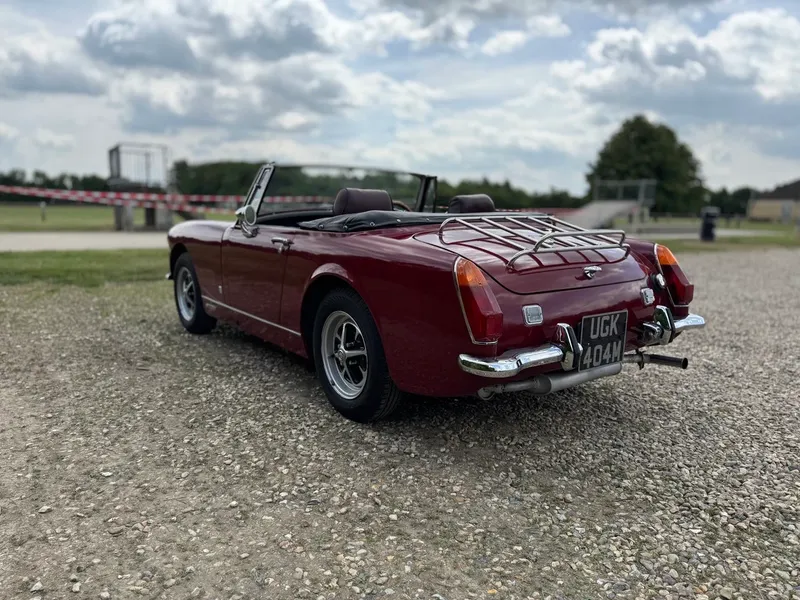
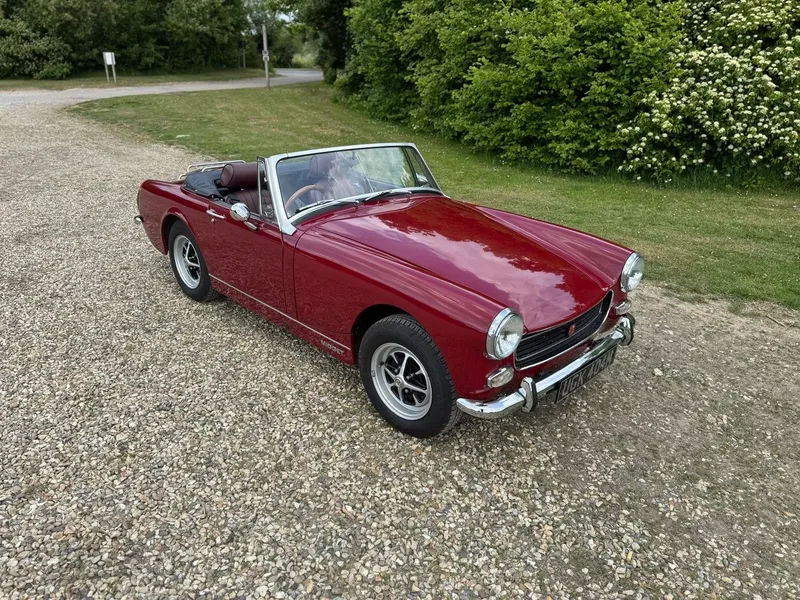
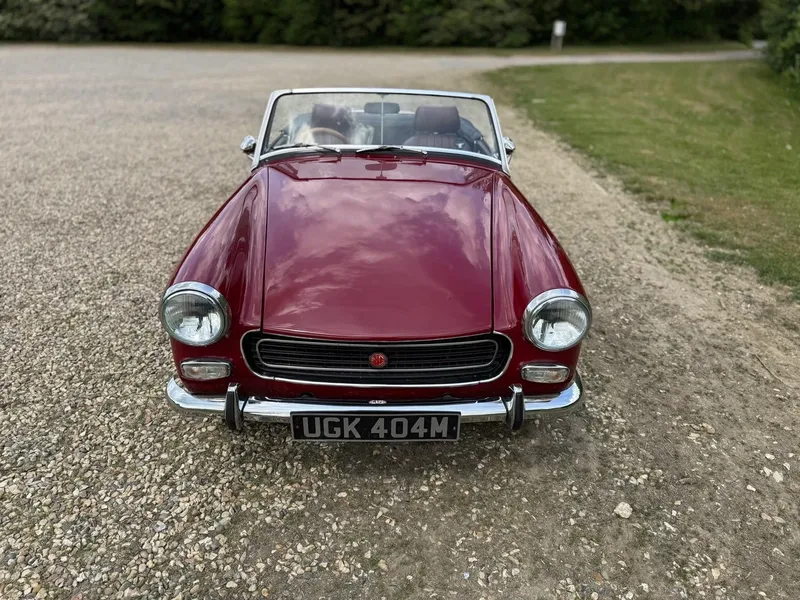
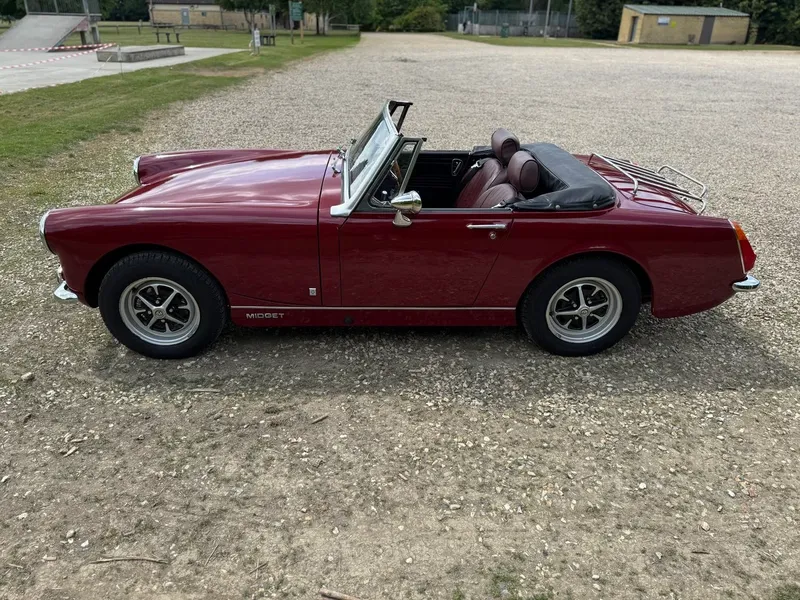
MG Midget: Models and Specs
1961–1979, 948cc–1493cc four-cylinder petrol engines, front-engined rear-wheel drive, two-seat roadster.
Overview
As its name suggests, the MG Midget was MG’s most compact and accessible sports car of the 1960s and 1970s. It sat below larger (though hardly large) models like the MGA and MGB as the brand’s smallest open two-seater. It revived the historic “Midget” name for a new post-war generation of buyers, this time applied to a lightweight roadster which was closely related to the Austin-Healey Sprite. The Midget’s appeal stemmed from its simplicity, combining modest power, low weight, rear-wheel drive and a very direct connection between driver and road. In its day, and even in the modern era, the MG Midget remains one of the simplest entry points into classic MG ownership. It’s small, characterful, mechanically simple and supported by a long-established specialist ecosystem - one of MG’s most recognisable classics.
Price
- Starting price
- € 750
- Average price
- € 6.880
- Price range
- € 750 - € 30.000
Specifications
- Production years
- 1961–1979
- Body styles
- Roadster/convertible
- Layout / drive
- Front engine, rear-wheel drive
- Engine family
- BMC A-Series/1493cc four-cylinder
- Transmission
- Four-speed manual
MG Midget in Detail
History
The MG Midget arrived in 1961 as MG’s version of the Austin-Healey Sprite. Initially, it was little more than a re-badged Sprite, with the two models often grouped under the “Spridget” nickname. The first MG Midget used the BMC A-Series engine and a simple open two-seat body, giving MG a smaller and cheaper sports car to complement its larger models.
Across its production life, the Midget’s engine capacity increased from 948cc to 1098cc and onto 1275cc, before the 1500 model adopted the Triumph-derived 1493cc engine. The same broad theme remained throughout in terms of rear-wheel drive, simple mechanicals and a lightweight roadster body.
The Sprite’s later years were shaped by changing safety and emissions requirements, particularly in the troublesome US market. The 1500 introduced the most significant changes of the period, including the Triumph engine, revised gearbox package and rubber bumpers - the latter ‘thanks’ to American legislative changes. Despite controversy among purists, the 1500 gave the Midget more torque and provided a strong-selling final chapter before MGs became mildly sportier Austin Rover hatchbacks and saloons.
Specifications & Performance
The MG Midget’s performance evolved modestly rather than dramatically, and remained modest rather than dramatic. Early cars relied on small-capacity BMC A-Series engines, while later versions gained more displacement and eventually the Triumph-derived 1493cc unit which gave the chassis its best opportunity to shine.
Item | Model-wide range |
Engine family / displacement range | BMC A-Series 948cc, 1098cc, 1275cc; Triumph-derived 1493cc four-cylinder |
Power range | 46–66bhp |
Top speed | 85mph–101mph |
Design and Cabin Identity
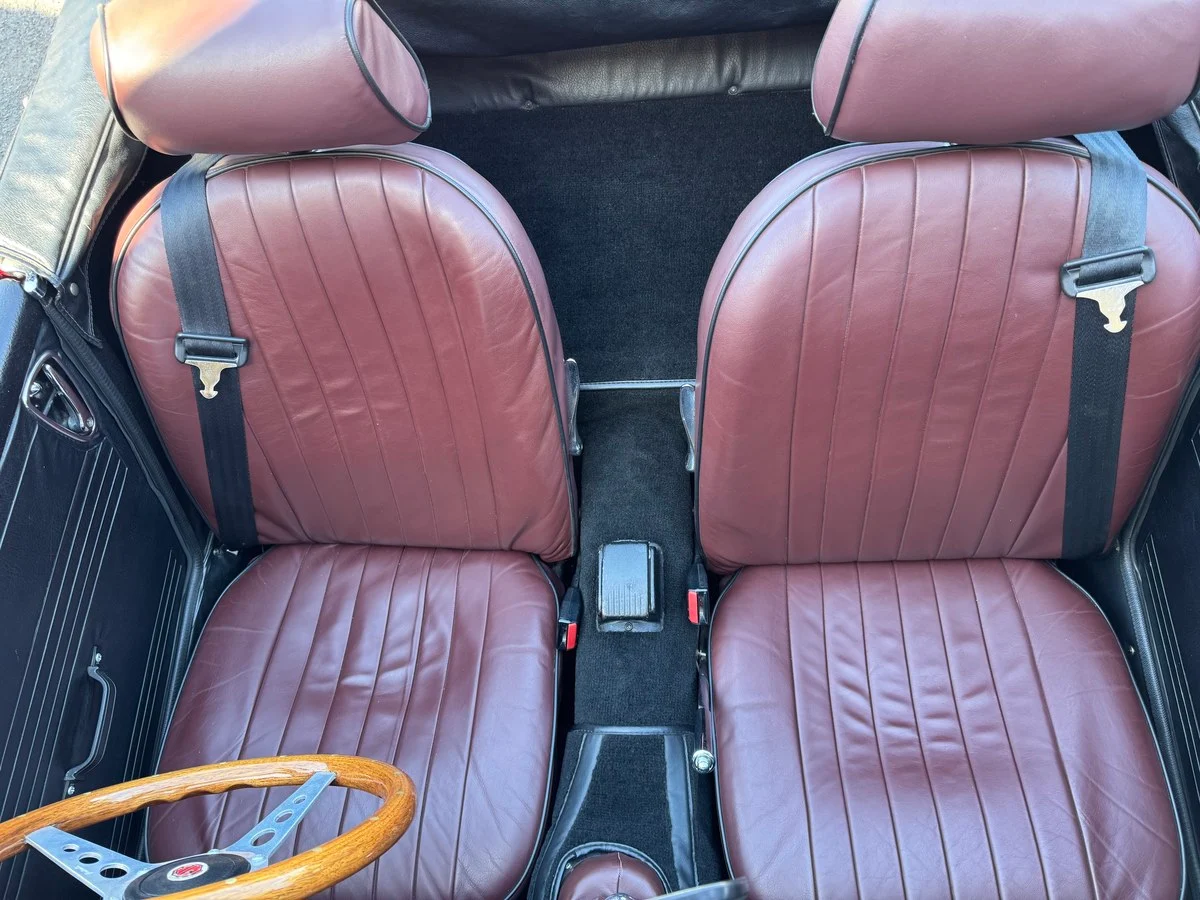
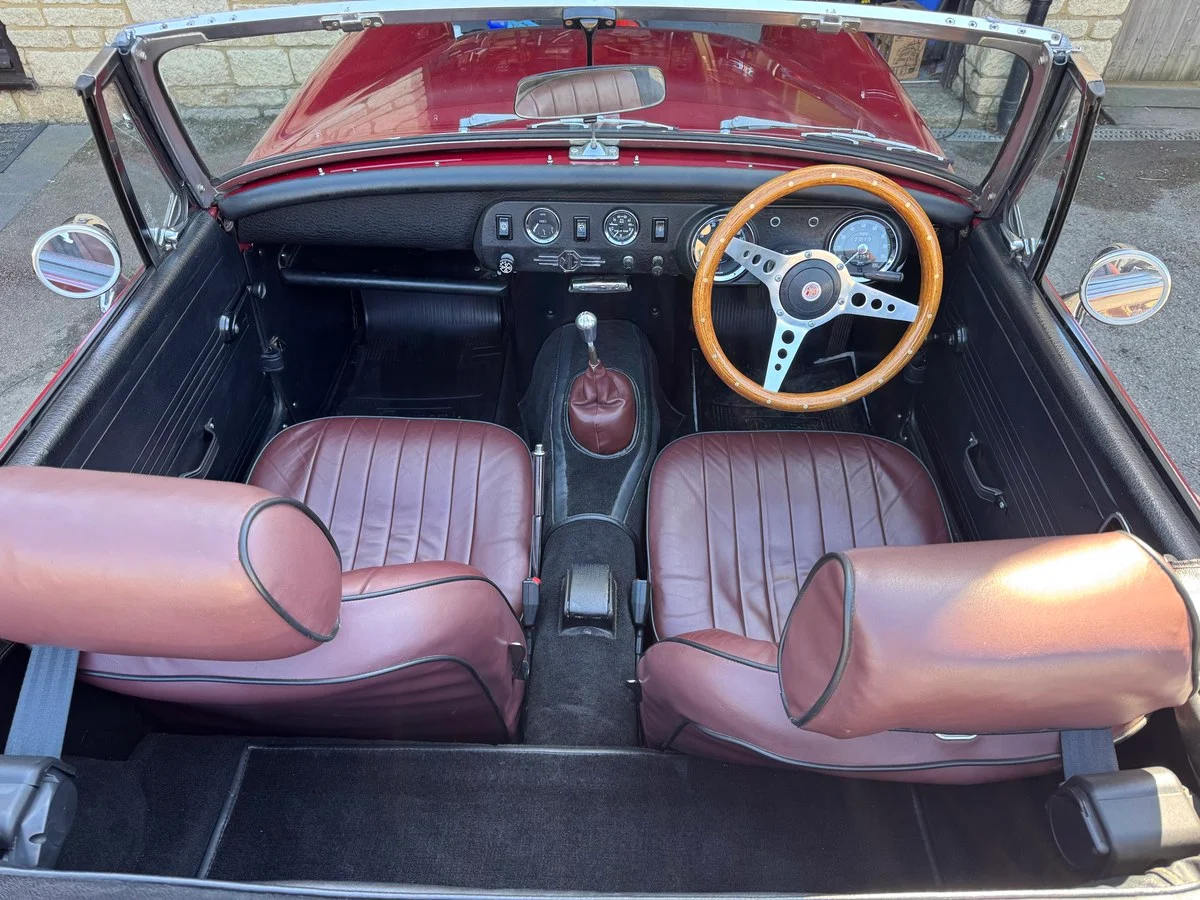
The MG Midget compressed the traditional British sports-car formula into a very small footprint. Its long-bonnet/short-tail proportions, low scuttle, upright windscreen and open two-seat layout give it the aura of an MG in miniature. Across almost two full decades of production, it remained a compact roadster with rounded wings, a short cabin and minimal overhangs.
The cabin follows the same less-is-more philosophy. It’s low, narrow and functional, with the driver sitting close to both the controls and the car’s extremities. The Midget was designed as an affordable, mechanical sports car whose simplicity was part of the charm, which makes them something of an acquired taste in the ADAS era. Even as later versions became (slightly) more substantial, the Midget’s essential identity remained unaltered.
Safety
The MG Midget’s safety philosophy was based on compact size, simple construction, predictable controls and period braking/suspension. Later cars were influenced by changing safety regulations, especially in the US market, where rubber bumpers and increased ride height became part of the final 1500-era package. Given the relative size of most modern vehicles, the Midget isn’t a car you’d want to experience a crash in.
Generation Timeline
MG Midget Mk I: Introduced in 1961 with modest 948cc A-Series power, Sprite-based engineering and removable side screens.
MG Midget Mk II: The Mk II heralded - pun intended - greater roadster usability thanks to body and cabin improvements, while keeping the same diminutive identity.
MG Midget Mk III: The long-running 1275cc-era Midget gained more mature performance and broader appeal.
MG Midget 1500: The final major evolution, and arguably the best if you can live with those rubber bumpers, incorporating the Triumph-derived 1493cc engine and revised gearing.
Pros and Cons
Pros
Sprite-derived “Spridget” engineering gives the MG Midget a simple, proven classic sports-car base.
Strong specialist and parts support makes ownership more approachable than many small classics.
A strong first-classic profile suits buyers looking for an affordable MG.
Cons
The 1500’s Triumph engine changed the car’s character and remains more divisive than the earlier A-Series cars.
Rust in the body structure is the biggest model-wide ownership concern.
The rubber bumpers are unattractive, which is why some owners have replaced them with chrome - or simply removed them and gone without.
MG Midget for Sale
The MG Midget is a compact roadster with broad appeal, from first-time classic buyers to long-time MG enthusiasts. Browse MG Midget cars for sale to compare early A-Series cars, later 1275cc examples and final 1500 models.
Prijsontwikkeling
Meest recente verkoop
£ 2.650
1977 MG Midget 1500

Momenteel te koop
79
3 live veilingen
76 advertenties



Totaal verkocht
235
Hoogste verkoopprijs
€ 30.000
Gemiddelde prijs
€ 6.880
Laagste prijs
€ 750
FAQs
What are the differences between the MG Midget and the Austin-Healey Sprite?
In truth, there are very few differences, as this was an early example of badge engineering across what would become the British Leyland behemoth. Other than grilles, hubcaps and - obviously - badges, these cars were mechanically identical and aesthetically very similar. Connoisseurs have picked up on minor trim differences, but few casual buyers would be able to spot them.
Can an MG Midget be used regularly?
An MG Midget can be used regularly if the owner’s expectations are realistic. After all, this is a small rag-top post-war sports car rather than a refined modern daily driver. The model’s simplicity helps, but its compact cabin, limited weather protection and older safety standards make it better suited to weekend use than commuting or the school run.
Are MG Midget running costs affordable?
The MG Midget’s simple four-cylinder engines, manual gearbox, rear-wheel-drive layout and strong parts supply help keep routine ownership costs manageable compared with many classics. As mentioned above, the mechanical crossover with the Austin-Healey Sprite helps to ensure parts are readily available.
Which MG Midget is the best first buy?
For a first MG Midget, many buyers seek out a sound, usable car with good history rather than chasing a specific version. The 1275cc cars are among the most usable A-Series models, while the 1500 is the quickest and often retains the strongest value.