Nissan Maxima: Models and Specs
1980–2023 model years, inline-six or V6 executive saloon, front-engined, rear-wheel drive early on and front-wheel drive thereafter.
Overview
Although it was never a big seller in the UK, the Nissan Maxima was a long-standing executive saloon nameplate which showcased Japanese progress in terms of rivalling European marques. It began life as a Datsun/Nissan six-cylinder saloon with rear-wheel drive, then became a front-wheel-drive V6, before evolving into Nissan’s North American flagship saloon. The 1990s and early-2000s were the European heyday for the Maxima QX, which was respected (if not loved) for its smooth V6 engine, generous equipment and understated styling. Bear in mind that the same nameplate extends from rear-wheel-drive Datsuns through the QX era to the North American A36, though the QX is the model you’re most likely to see advertised here on Car & Classic.
Specifications
- Production years
- 1980–2023
- Main production eras
- Datsun/J30/A32-A36 series
- Body styles
- Four-door saloon
- Layout / drive
- Front-engine, RWD/FWD (mid-80s on)
- Engine family
- Inline-six petrol/diesel; V6 petrol
Nissan Maxima in Detail
The first Maxima name appeared on the Datsun 810, using a six-cylinder layout and rear-wheel drive before the model moved into the front-wheel-drive V6 era. These Datsun-era cars are more niche than the later Maxima QX, and they also explain why the Maxima name doesn’t have a consistent engineering identity.
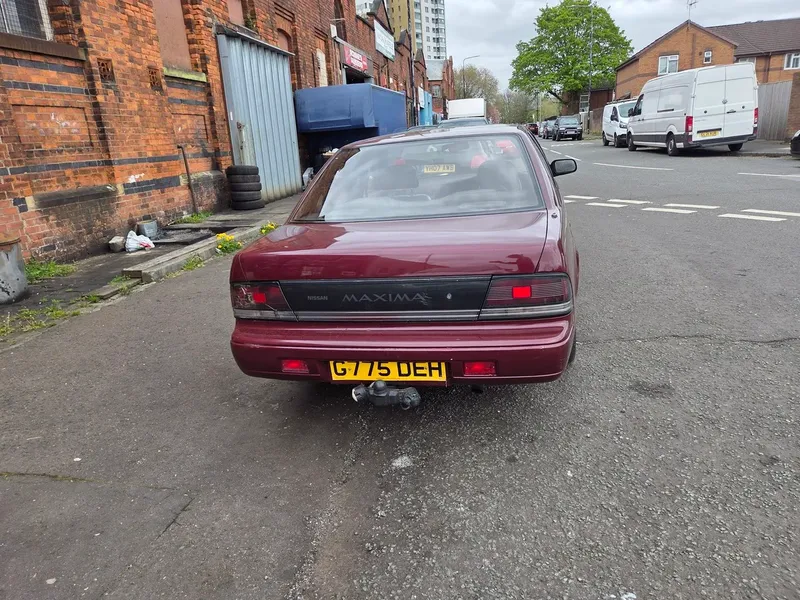
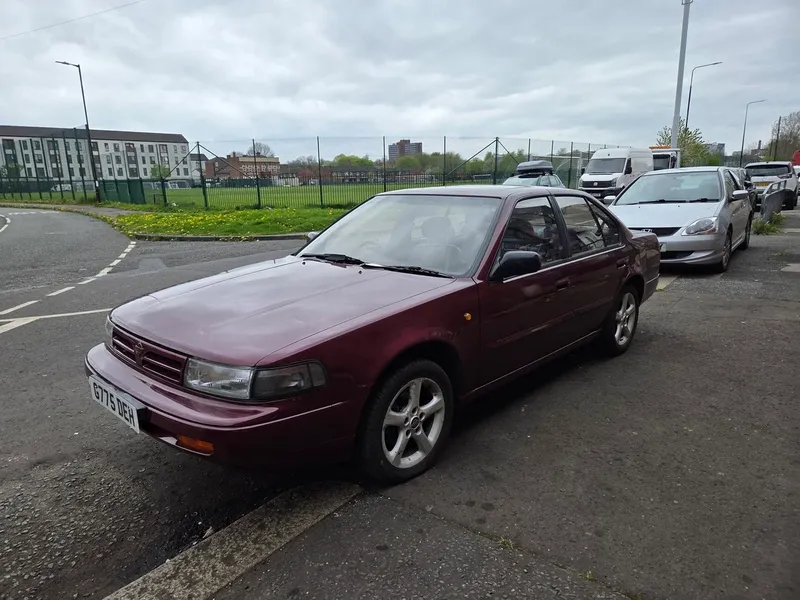
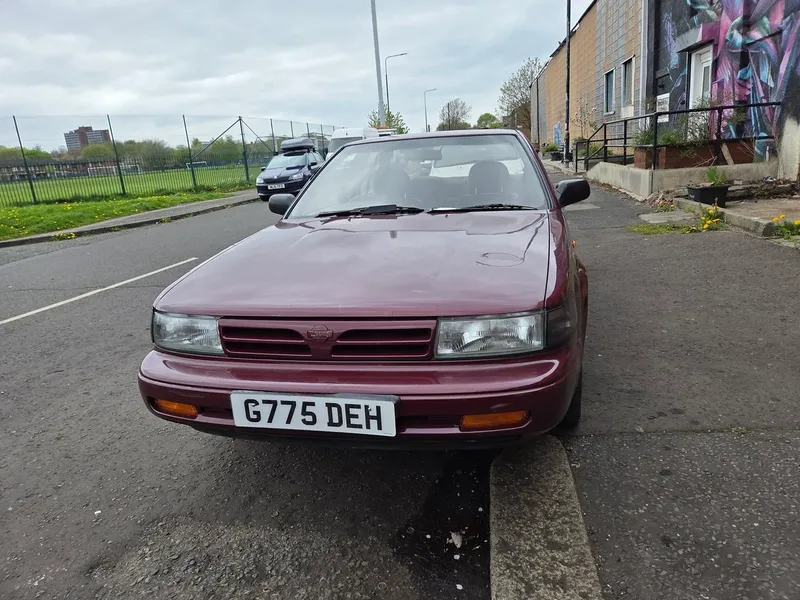
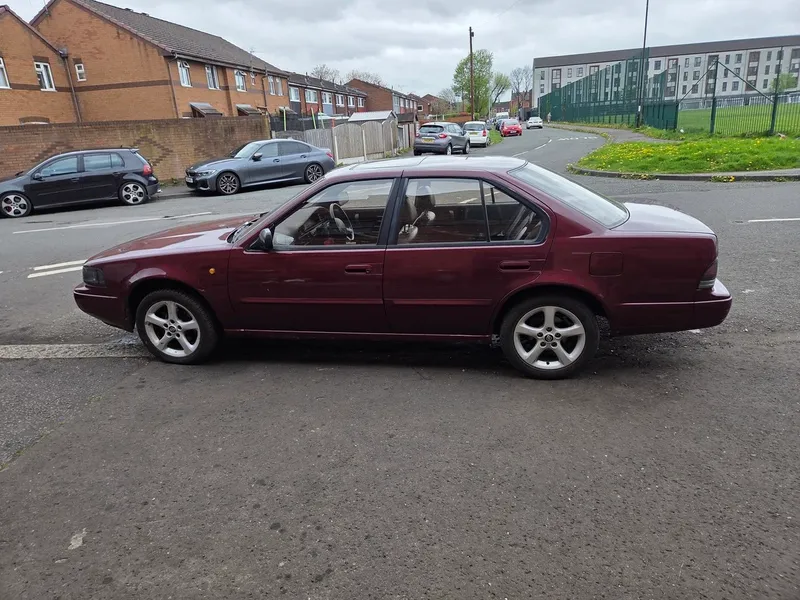
For UK buyers, the Maxima QX represents the most relevant chapter of the story. The A32 and A33 Maxima QX models were sold in Europe as understated V6 executive saloons, offering comfort, reliability, space and equipment. The Maxima was never a BMW 5 Series rival in image, and nor was it intended to be a firm-riding sports saloon. Its appeal lies in quiet and dependable Japanese executive-car value.
In North America, the Maxima developed a much stronger identity. The 2016 model was the eighth generation of the Maxima, more powerful and more overtly styled than its predecessors. The final A36 Maxima used a 3.5-litre VQ-series V6 rated at 300 horsepower.
Given its 43-year lifespan, the Nissan Maxima’s performance story has evolved significantly by generation, market and layout. Early rear-wheel-drive cars are part of the late-Datsun six-cylinder saloon era, while later European Maxima QX models are smoother V6 executive cars. The later North American Maxima moved further towards Nissan’s self-declared “4-Door Sports Car” model positioning.
Model | Engine | Power | 0–60 mph |
Early Datsun/Nissan Maxima | Inline-six petrol/diesel | 120 bhp | 9.8 sec |
J30 | 3.0-litre VG-series V6 petrol | 190hp in higher-output SE form | 8.3 sec |
A32/A33 | 2.0/3.0-litre V6 petrol | 140–200hp depending on engine and era | 7.8–8.5 sec |
A34/A35 | VQ-series V6 petrol | 265hp for 2004 A34 Maxima | 6.1 sec |
A36 | 3.5-litre VQ V6 petrol | 300hp | 6.1 sec |
The Nissan Maxima was always considered a cut above Nissan’s ordinary family saloons. Early cars had a traditional Japanese aesthetic, while the Maxima QX was understated, smooth and deliberately conservative. Later North American Maximas became more sharply styled and assertive.
Inside, the Maxima has traditionally leaned toward comfort, equipment and refinement. European Maxima QX models appeal because they feel spacious and well-equipped without attracting much attention, whereas later North American cars pushed the cabin in a more expressive, flagship direction.
Earlier Maximas inevitably belong to an era before safety was much of an issue, but later cars gradually added airbags, ABS and improved structural safety. North American Maximas embraced new technologies like ABS, brake force distribution and latterly driver assistance.
Maxima type | Years | Best suited to buyers who want… |
Early Datsun/Nissan Maxima | 1981–1984 model years | A rare early Japanese executive saloon or estate with rear-wheel-drive appeal |
J30 Nissan Maxima | 1989–1994 | A more enthusiast-relevant early front-wheel-drive V6 |
A32 Maxima QX | 1995–2000 | The most relevant European-market Maxima for UK buyers wanting V6 and comfort |
A33 Maxima QX | 2000–2003/2004 | A later European QX with smoother styling and quiet executive appeal |
A34/A35 Maxima | 2004–2014 | A more North American-focused VQ V6 saloon, but less common in the UK |
A36 Maxima | 2016–2023 | The final-generation North American Maxima brought stronger styling and 300hp V6 power |
Pros
European Maxima QX models offer discreet V6 executive-car appeal for buyers who want something different from German rivals.
Later North American Maximas give the nameplate a stronger performance-saloon identity.
Whichever model you buy, comfort and impressive (for its time) equipment are guaranteed.
Cons
The Maxima name has been applied to a suite of very different cars, so buyers need to identify their preferred era from the table above before making any comparisons.
Early Datsuns and later North American models are rare compared to the Maxima QX.
Despite the promise of Japanese reliability, running costs can be considerable.
FAQs
Most UK buyers should start with the A32 and A33 Nissan Maxima QX because these are the most popular and available European-market cars. They offer smooth V6 engines, generous equipment and understated executive-car comfort. Early rear-wheel-drive Maximas are rarer and more specialist, while later A34/A35/A36 generations are focused on North American tastes.
Technically, the answer could be either, depending on the era. Datsun-era Maximas used rear-wheel drive, but later Maximas were early adopters of front-wheel drive. That split matters because it changes the car’s character completely: early cars are niche choices, while the QX and later V6 Maximas are more secure and winter-friendly.
The Maxima QX is the most logical modern-classic Maxima because it was sold in Europe and fits the overlooked V6 executive-saloon niche. Parts and servicing will be easier and there will be more community support and advice on offer.
Nissan used the “4-Door Sports Car” identity to position the Maxima as more dynamic than a normal family saloon, especially in North America. The phrase was applied to the third-generation Maxima and later used strongly for the 2016 eighth-generation car.