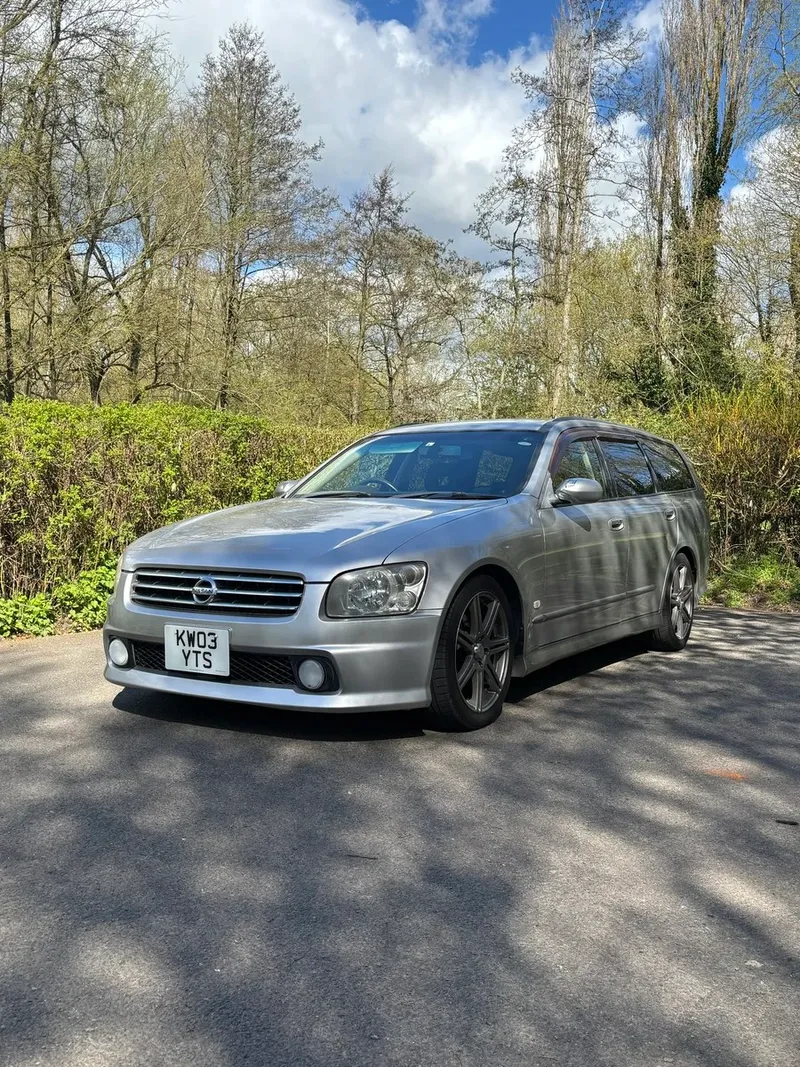
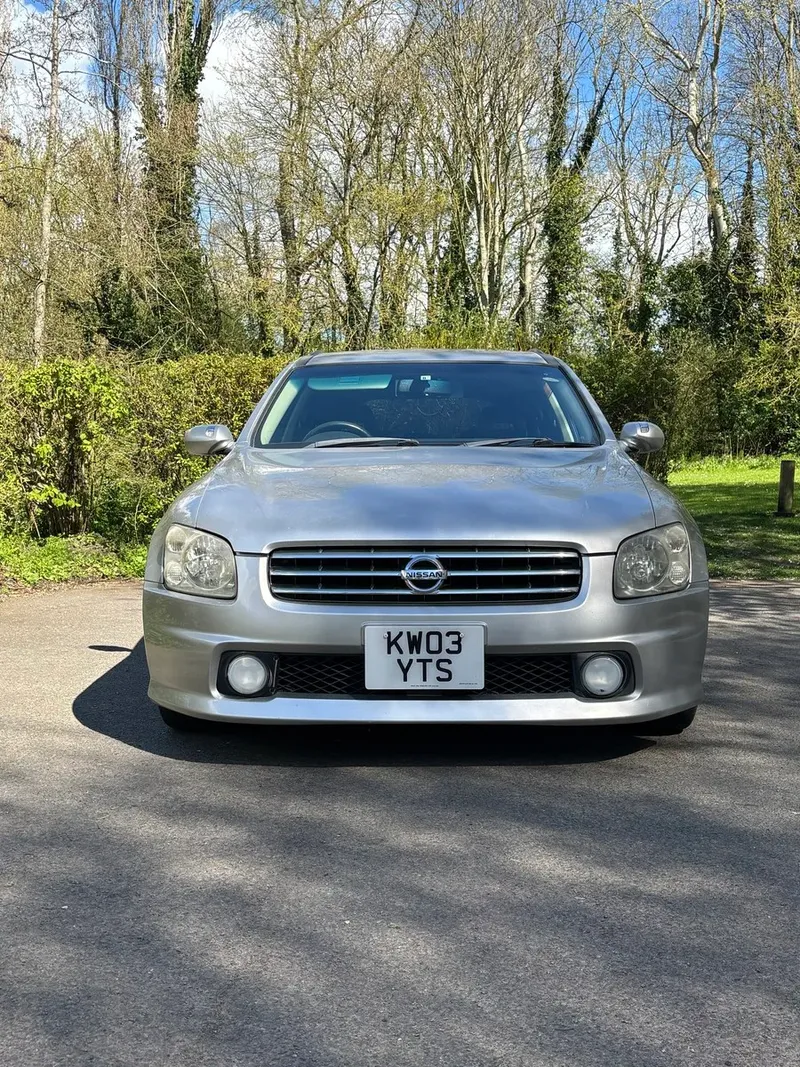
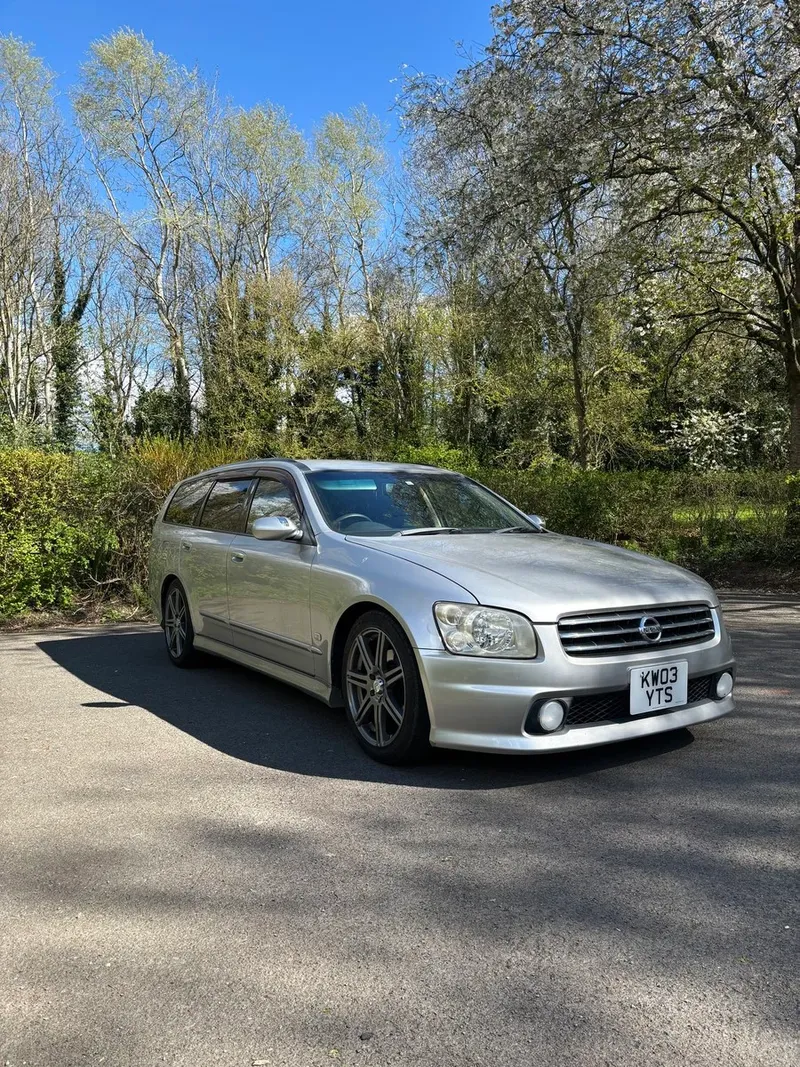
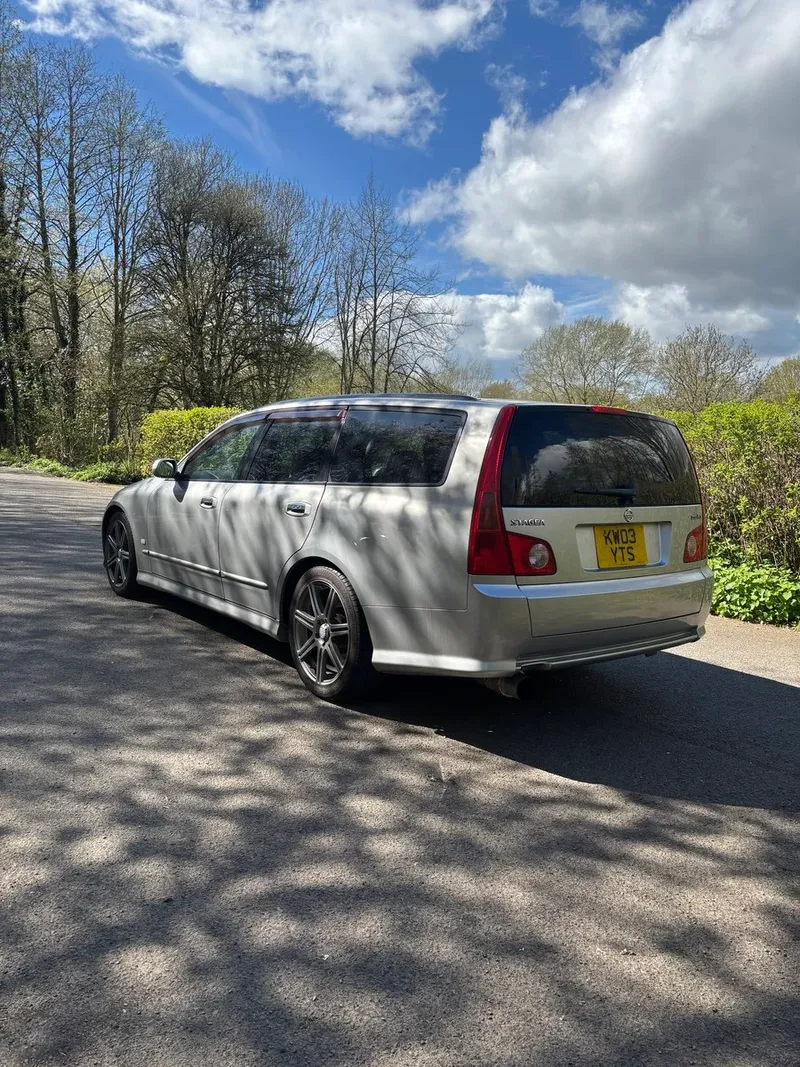
Nissan Stagea: Models and Specs
1996–2007, RB inline-six and VQ V6 Japanese-market performance estate, front-engined, rear- or four-wheel drive, five-door estate.
Overview
If you haven’t heard of the Nissan Stagea, you’re not alone. This was a Japanese-market estate car offering Skyline-adjacent performance, estate-car practicality and JDM rarity in a single package. The most important buyer distinction is between the WC34 and M35 Stagea models. The former is the one enthusiasts usually mean when they describe the Stagea as a “Skyline estate”, especially in turbocharged RB25DET or Autech 260RS form - we analyse these models in more detail below. The M35 was a later, more rounded luxury performance estate based around Nissan’s FM platform. The Stagea’s appeal is strongest if you want something more practical than a Skyline GT-R or GT-T, but with a connection to Nissan’s 1990s and early-2000s performance culture.
Specifications
- Production years
- 1996–2007
- Body styles
- Five-door estate
- Layout / drive
- Front-engine, rear/four-wheel drive
- Engine family
- Inline-six/V6 engines
- Transmission
- Automatic and manual
Nissan Stagea in Detail
History
The WC34 Stagea is the version most buyers associate with the “Skyline estate” concept. It was produced in the late 1990s and used RB-series inline-six engines, with rear-wheel-drive and four-wheel-drive versions available. Turbocharged RB25DET versions offer the core performance-estate appeal, while the Autech 260RS was the halo model. It was a rare manual RB26-powered performance version that gave the Stagea its strongest GT-R connection. This is the car to focus on if collectability, GT-R mechanical links and manual transmission are top priorities.
The M35 Stagea is a different proposition, having evolved away from the RB-engine WC34 formula into Nissan’s VQ-era platform strategy. It’s less about 1990s Skyline nostalgia and more about a newer, more refined Japanese-market estate. Turbocharged VQ25DET versions retain plenty of performance appeal, while later 3.5-litre VQ35DE versions generate a different kind of V6 character.
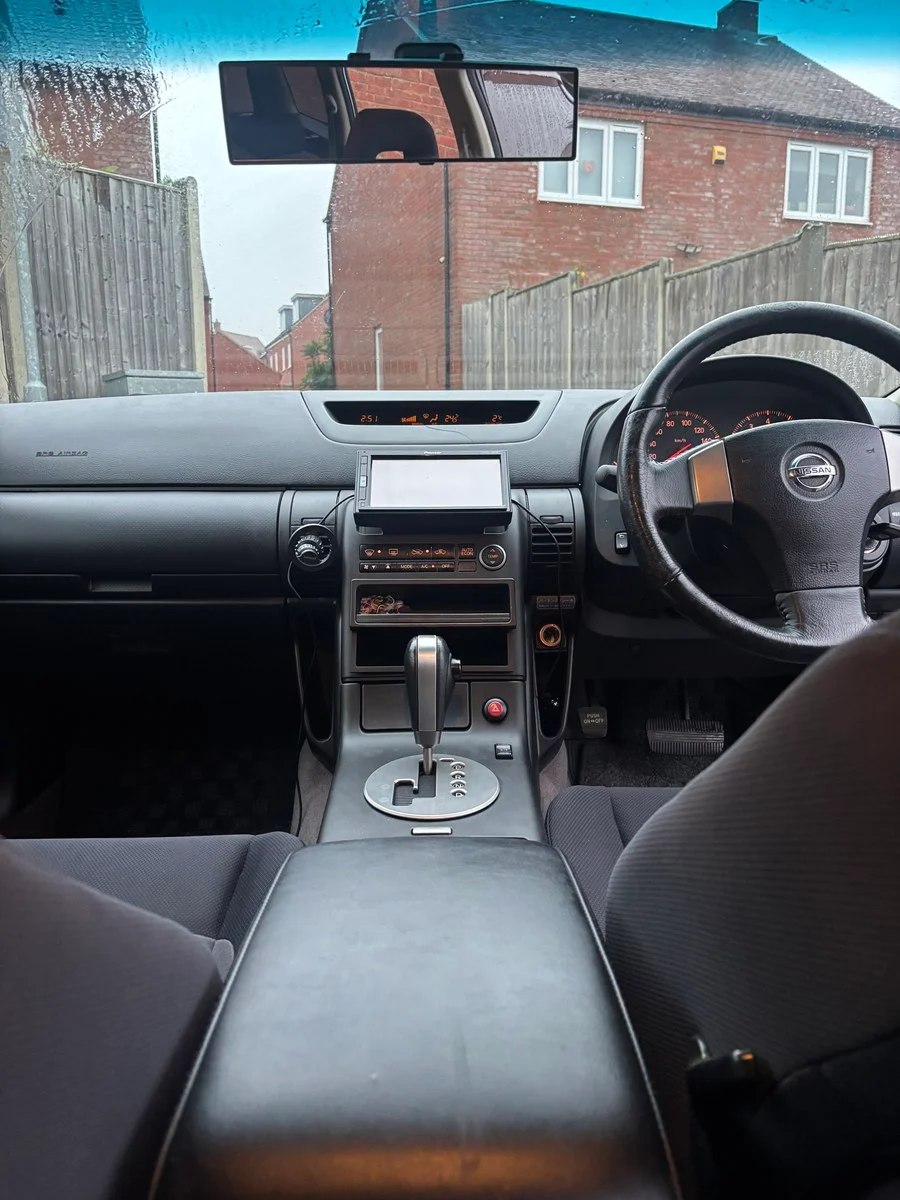
Most UK-market Stageas are Japanese imports, so import history, registration, rust prevention and parts supply all matter. So too does the quality of any modifications; a stock or lightly modified car with clear paperwork will usually be easier to understand than a heavily altered example with unclear provenance. Also beware of instrumentation/infotainment displays displaying in Japanese, since switching them into English may not be easy.
Specifications & Performance
WC34 cars are defined by their RB inline-six engines and the ensuing Skyline-adjacent performance. M35 cars migrated into VQ V6 power and a more modern FM-platform feel. From a buyer’s perspective, remember that the Stagea nameplate was applied to naturally aspirated and turbocharged engines, rear- and four-wheel drive, automatic and selected manual gearboxes, and special Autech versions. Two Stageas may be very different machines.
Model | Engine | Power |
WC34 naturally aspirated | RB20/RB25 inline-six petrol | 128–197 bhp |
WC34 turbo | RB25DET inline-six turbo | 276 bhp |
Stagea Autech 260RS | RB26DETT 2.6-litre twin-turbo inline-six | 276 bhp |
M35 naturally aspirated | VQ25DD / VQ30DD / VQ35DE V6 petrol | 212–268 bhp |
M35 turbo | VQ25DET 2.5-litre turbo V6 | 276bhp |
Design and Cabin Identity
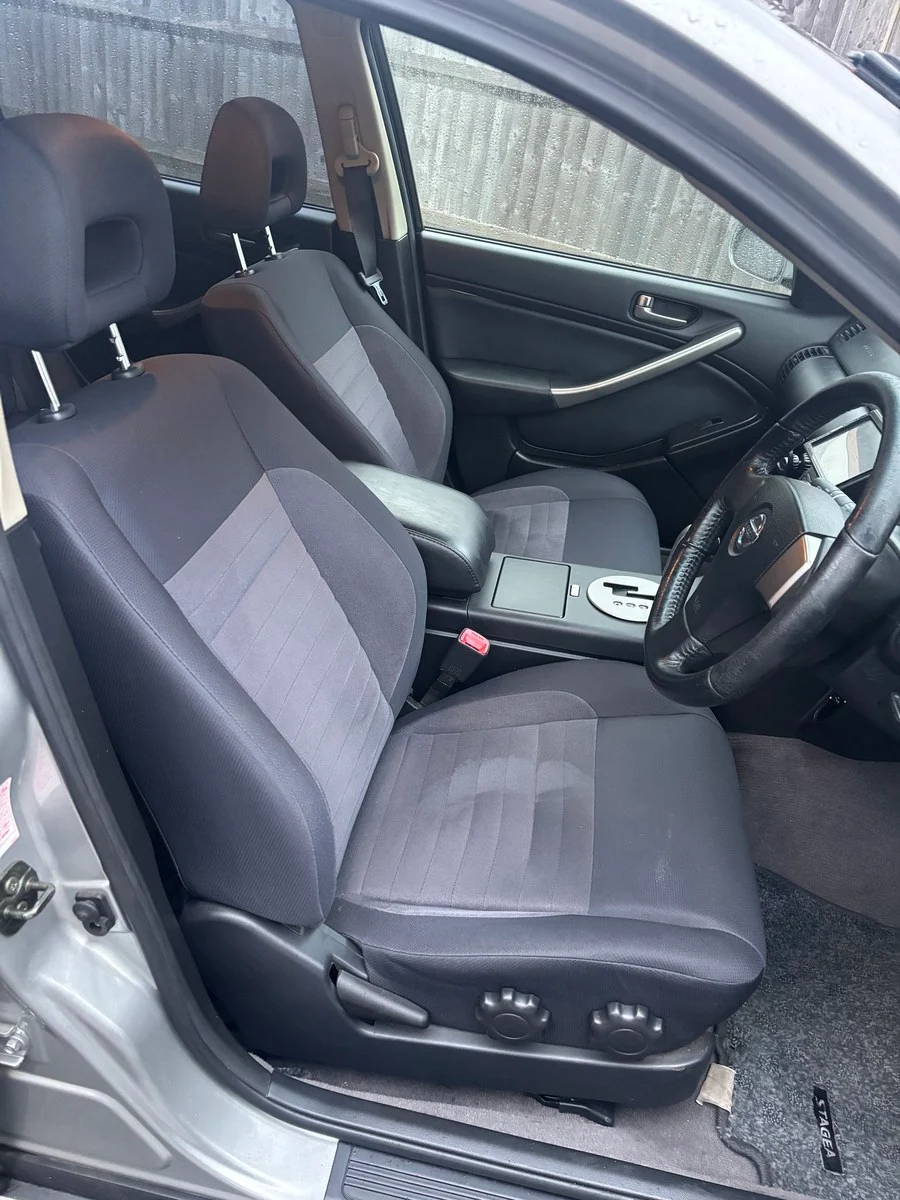
The Nissan Stagea takes Skyline-esque performance and drapes a practical estate body over it. The WC34 has the boxier, more upright 1990s look, feeling like a useful family car hiding Skyline-related mechanical interest. This contrast is central to why buyers like it.
The M35 has a smoother, more modern shape and feels less like a 1990s performance-wagon throwback. Its identity is more grand-touring than merely Skyline-based nostalgia. Across both eras, the cabin philosophy was practical and equipment-led.
Safety
The WC34 Stagea received the highest AAA rating for both driver and front passenger seats in Japan’s JNCAP frontal collision tests, but that doesn’t make this the safety equal of a modern family estate. And while the M35 benefited from a newer safety and platform era, it’s still a 2000s Japanese-market import. Safety equipment and driver-assistance expectations should be checked against the individual car’s specification rather than taken for granted.
Which Nissan Stagea Are You Looking At?
Model type | Years | Best suited to buyers who want… |
WC34 naturally aspirated | 1996–2001 | The Stagea shape and practicality with simpler, less performance-focused RB power |
WC34 RB25DET turbo | 1996–2001 | The core enthusiast choice thanks to a turbo RB straight-six with estate usability |
WC34 25t RS Four S | 1998–2001 | A rarer manual turbo Stagea |
Autech 260RS | 1997–2001 | The most collectible Stagea, with RB26DETT, manual gearbox and GT-R-linked appeal |
M35 naturally aspirated | 2001–2007 | A later, more refined VQ-powered estate |
M35 turbo | 2001–2004 | A stronger-performance M35 choice with VQ25DET turbo power and four-wheel-drive appeal |
M35 Autech Axis 350S | 2003–2004 | A rare manual VQ35DE M35 for buyers who want something unusual but less RB-focused |
Pros and Cons
Pros
WC34 turbo models offer Skyline-adjacent performance appeal with estate practicality.
The Autech 260RS gives the Stagea a rare GT-R-linked halo model with strong collector interest.
M35 models offer a newer, more refined route into Stagea ownership.
Cons
Most Stageas are imported cars, with paperwork and specialist support central to any buying decision.
The 260RS is a very different buying proposition from a normal Stagea, so values and expectations should be kept distinct.
The M35 is further away from the classic RB/Skyline image, which dilutes its appeal somewhat.
FAQs
Is the Nissan Stagea really a Skyline estate?
That’s not an entirely accurate description, but the WC34 has enough Skyline-related engineering and engine overlap to have earned that reputation among enthusiasts. The Autech 260RS has the strongest Skyline connection thanks to the combination of an RB26DETT engine, five-speed manual gearbox and 4WD.
Which Nissan Stagea is best for buyers who want performance?
As mentioned above, the Autech 260RS is the ultimate performance and collector choice, but it will usually be the most expensive and specialist Stagea to own. A WC34 RB25DET turbo is a more realistic enthusiast route for many buyers, especially if they want strong performance without 260RS rarity and values.
Is the Autech 260RS worth paying more for?
The Autech 260RS is worth paying a premium for if you specifically want the rare RB26DETT, manual-gearbox, GT-R-linked Stagea. Prioritise originality, correct Autech details, documentation and condition because those factors will affect any Autech model’s long-term desirability and realistic price.
Is a Nissan Stagea practical enough to use regularly?
While this is a five-door estate with good load carrying capabilities, UK buyers should remember that it’s a Japanese-market import. Space and usability are part of the appeal, but parts sourcing, insurance, rust protection, modifications and specialist servicing may make ownership more complex than a UK-market estate.
Should I choose an automatic or manual?
Most Stageas are automatics, so buyers will have more choice (and usually lower prices) if they’re willing to accept their gearchanges are done for them. Manual cars are much more enthusiast-led, especially the snappily titled WC34 25t RS Four S, Autech 260RS and the rare M35 Autech Axis 350S. Choose a manual if driver engagement and collectability are paramount, but consider an automatic if you want broader availability and a more relaxed estate-car experience.