Peugeot 504: Models, Specs and Buyer’s Guide
Core Specs: 1968–1990s (global production) • inline-4 petrol & diesel (plus V6 on coupé/cabrio) • RWD.
Peugeot 504 Overview
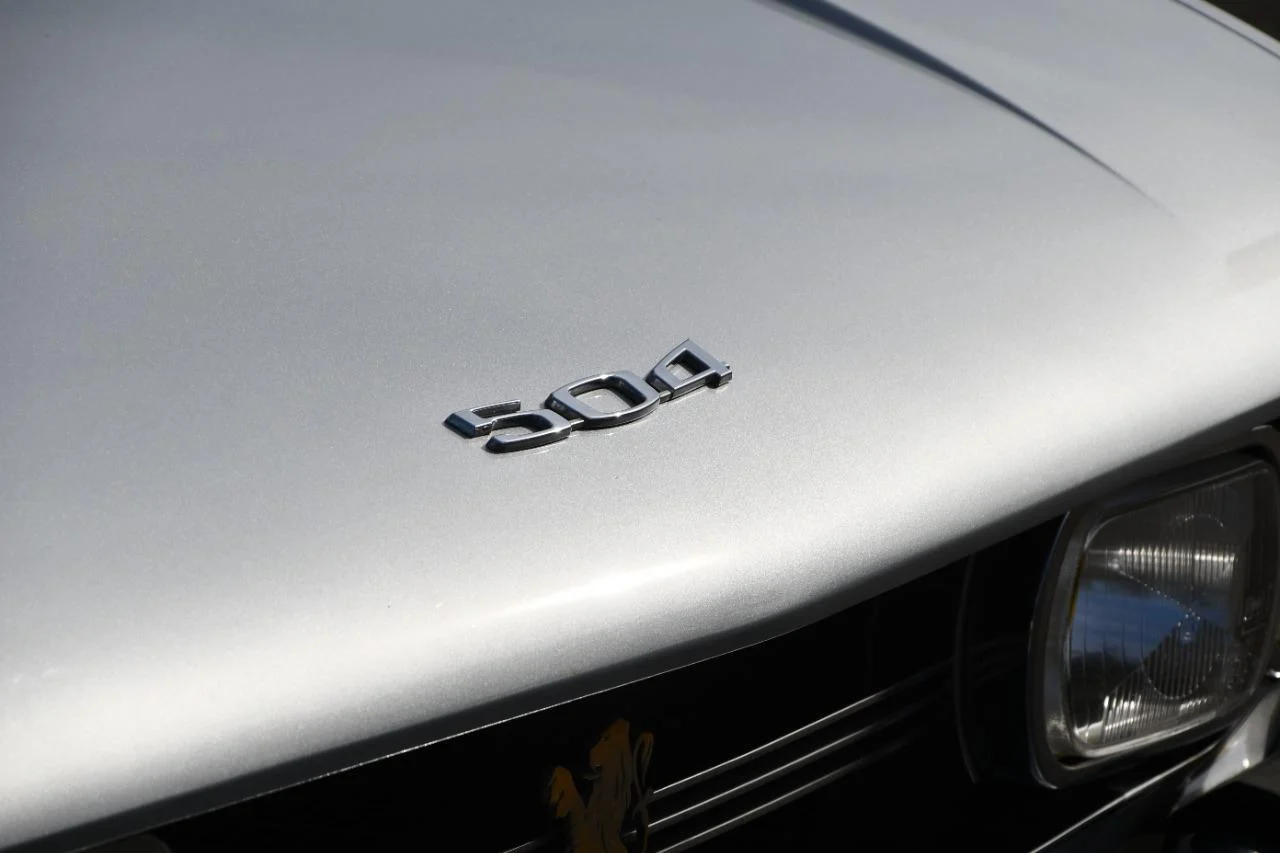
Launched in 1968, the Peugeot 504 became the brand’s defining family saloon of the late 1960s and 1970s. It combined styling by Pininfarina with unburstable mechanicals that made it a firm favourite everywhere from Britain to Burundi. Over time, the 504 range expanded to include estate (“Break”/“Familiale”) and pickup variants, reflecting its dual mission as refined family transport and go-anywhere workhorse. Lauded for its ride comfort and stability, the 504 was noted for having independent suspension on saloon/coupé/cabrio (estates/pickups used a live rear axle). Front discs standard; many saloons had four-wheel discs, but some trims used rear drums; at a time when such features were still relatively rare. Thanks in part to its forward-thinking mechanicals, the 504 was crowned European Car of the Year in 1969. The 504’s impact stretched far beyond its home market of France. While European production wound down in 1983, manufacturing continued under license in global markets, ultimately surpassing 3.7 million units and remaining in production in parts of Africa and South America into the mid-Noughties. This longevity, allied to the car’s ability to shrug off rough roads, made it an icon of everyday reliability across emerging markets, as well as an all-time best-seller in Peugeot’s history. Motorsport success underlined the 504’s inherent toughness. Works and privateer 504s won the Safari Rally (1975, 1978), the Rallye du Maroc (1975, 1976), and the Bandama/Côte d’Ivoire Rally (multiple years), inspiring buyers who needed real-world resilience.
C&C Expertise
It’s hard to think of a car that’s had more of a global impact than the Peugeot 504. Celebrated across Europe, Africa and South America for its sheer, uncompromising toughness, the 504’s star feature is its simplicity, which has led to its production in various body styles, including saloon, estate, coupé, cabriolet and pickup truck. Styling came courtesy of Pininfarina, so they’re incredibly good-looking too. It’s no exaggeration to say that a well-maintained 504 would make as good a workhorse today as it did fifty years ago.
Peugeot 504 Price
- Starting price
- £865
- Average price
- £16,658
- Price range
- £865 - £43,186
Peugeot 504 Specifications
- Production (UK/EU)
- 1968–1983
- Body Styles
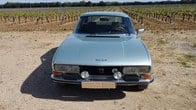
- Saloon, estate; coupé & cabriolet (V6)
- Layout
- Front-engine, rear-wheel drive
- Engines (Petrol)
- 1.8L, 2.0L I4; 2.7L V6 (coupé/cabrio)
- Engines (Diesel)
- 2.0L, 2.1L, 2.3L I4
Peugeot 504 in Detail
Origins (1968–1969)
Planned for spring 1968 but delayed by France’s infamous social unrest that year, the 504 finally debuted on the eve of the Paris Motor Show. It immediately established a new approach for Peugeot, blending restrained design with robust engineering. It went on to win the European Car of the Year trophy in 1969 – Peugeot’s first COTY title.
Range-building and design (1969–1974)
Buoyed by the saloon’s early success, the elegant Pininfarina Coupé and Cabriolet arrived in 1969, followed by long-roof Break and seven-seat Familiale estates. Contemporaneous praise highlighted the independent suspension and four-wheel disc brakes on many versions, and these mechanical hallmarks ensured the car rode beautifully even on rough surfaces.
African rally toughness (1975–1978)
Ove Andersson and Arne Hertz won the 1975 Safari Rally in a 504 TI, while Jean-Pierre Nicolas and Jean-Claude Lefèbvre took the 1978 Safari Rally in a 504 V6 Coupé. Further wins across Morocco and Côte d’Ivoire underlined the model’s durability.
Globalisation and late-life production (1980s–2000s)
As the Peugeot 505 (launched in 1983) replaced it across Europe, the 504’s popularity remained undimmed elsewhere. L’Aventure Peugeot records 3,713,356 units being sold in total, and production continued as recently as the mid-Noughties, with regional Peugeot histories describing the 504 as the marque’s longest-produced model.
Legacy
The 504 became everyday transport across continents, earning it the title of ‘Africa’s workhorse’. Its Pininfarina themes are acknowledged in modern Peugeot concept cars like the e-LEGEND. Its blend of comfort, toughness and understated style are still appreciated by classic car buyers, decades after production ended.
From launch, the 504 offered four-cylinder petrol and diesel drivetrains for saloon/estate models, and a Pininfarina-styled coupé/cabriolet that later gained a PRV V6. Below is a concise, model-family snapshot, although figures vary by year, market and body style.
Variant | Engine and fuel | Displacement | Power | 0–100 km/h | Top speed |
|---|---|---|---|---|---|
504 1.8 (carb) | Inline-4, carburettor | 1796 cc | 82 hp | ~15.8 s | ~163 km/h |
504 1.8 (high-tune carb) | Inline-4, carburettor | 1796 cc | 97 hp | ~14.7 s | ~171 km/h. |
504 2.0 TI (saloon/coupé) | Inline-4, Kugelfischer mech. injection | 1971 cc | ~104–106 PS | ~12.1–10.7 s | ~173–179 km/h. |
504 V6 (coupé/cabriolet) | 90° PRV V6 (later with Bosch K-Jetronic on Injection models) | 2664 cc | ~136–144 PS | ~10.5–9.4 s | ~186–189 km/h. |
504 2.1 Diesel | Inline-4 diesel (Indenor) | 2112 cc | ~65 hp | ~27.5–20.7 s | ~133–136 km/h. |
504 2.3 Diesel | Inline-4 diesel (Indenor) | 2304 cc | ~70 hp | ~20.2 s |
Mechanical highlights
Drivetrain and gearboxes: The 504 was front-engined and rear-wheel drive with a torque-tube driveline on most models. A 4-speed manual was common, with later 5-speed gearboxes on some models. An optional 3-speed ZF automatic was joined by a 3-speed GM unit on certain V6s.
Suspension: Saloons/coupés/cabriolets had four-wheel independent suspension (MacPherson struts front; semi-trailing arms rear), whereas estates/pickups used a live rear axle (replaced by coils on the Break/Familiale).
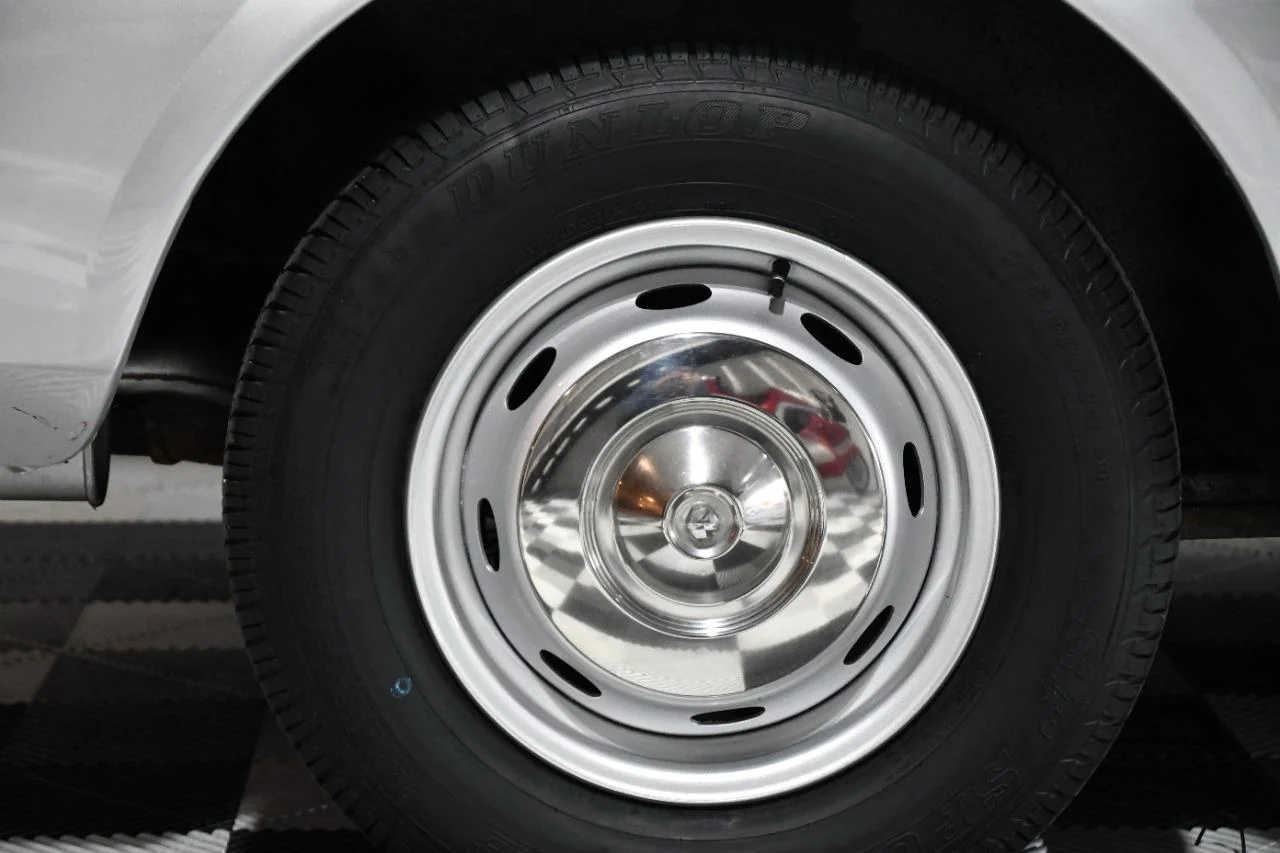
Brakes: Front disc brakes were standard. Many saloons featured four-wheel discs, while other markets used rear drums on lower-power variants.
Steering: Rack-and-pinion (power-assisted on many) for both saloon and estate models.
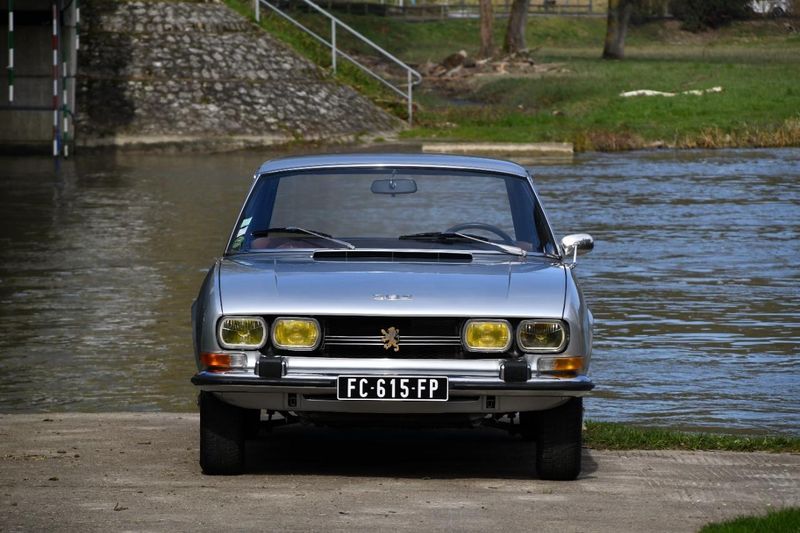
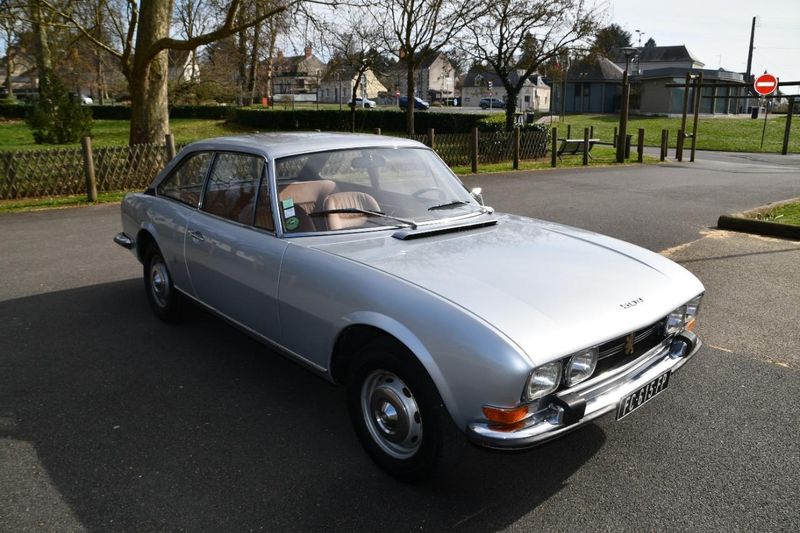
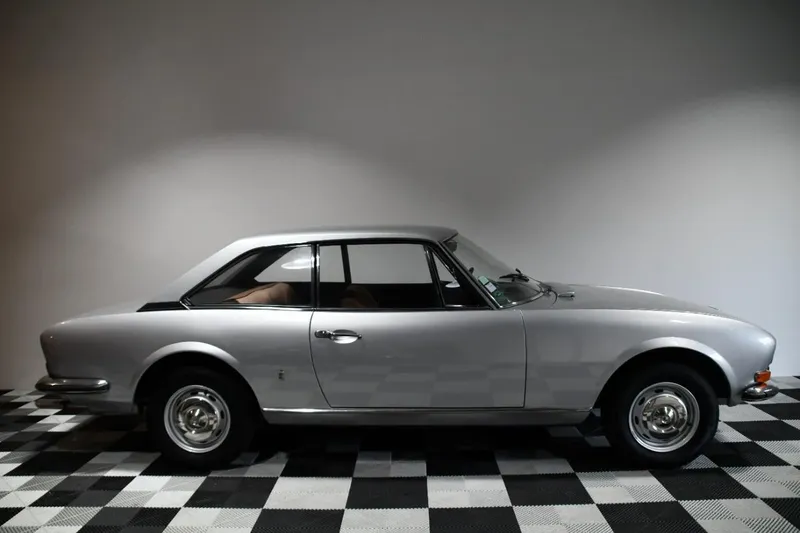
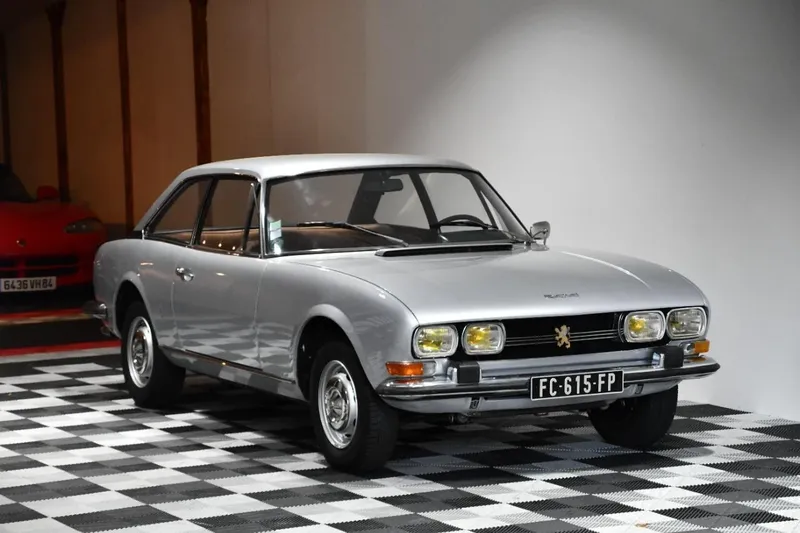
The 504 fused Pininfarina styling with Peugeot’s “go-anywhere” brief to deliver clean surfaces, confident proportions and generous quantities of glass. Peugeot later acknowledged the 504 Coupé’s influence by reinterpreting its cues on the e-LEGEND concept.
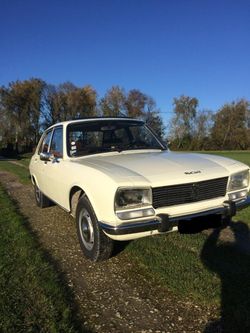
Saloon (Berline): A long, low bonnet and crisp shoulder line framed a tall, airy cabin. Early cars wore distinctive diagonal rear lamps, and detail changes through the 1970s refreshed bumpers and lighting.
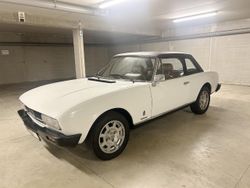
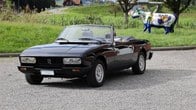
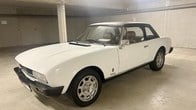
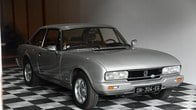
Coupé and Cabriolet (designed by Pininfarina): A shorter wheelbase, ‘glassy’ greenhouse and slender pillars gave the two-doors a lighter, coach-built stance. Phase changes altered the lighting, such as the original twin headlamps being replaced by single wide units, although the silhouette remained largely unaltered throughout the 504’s lifetime.
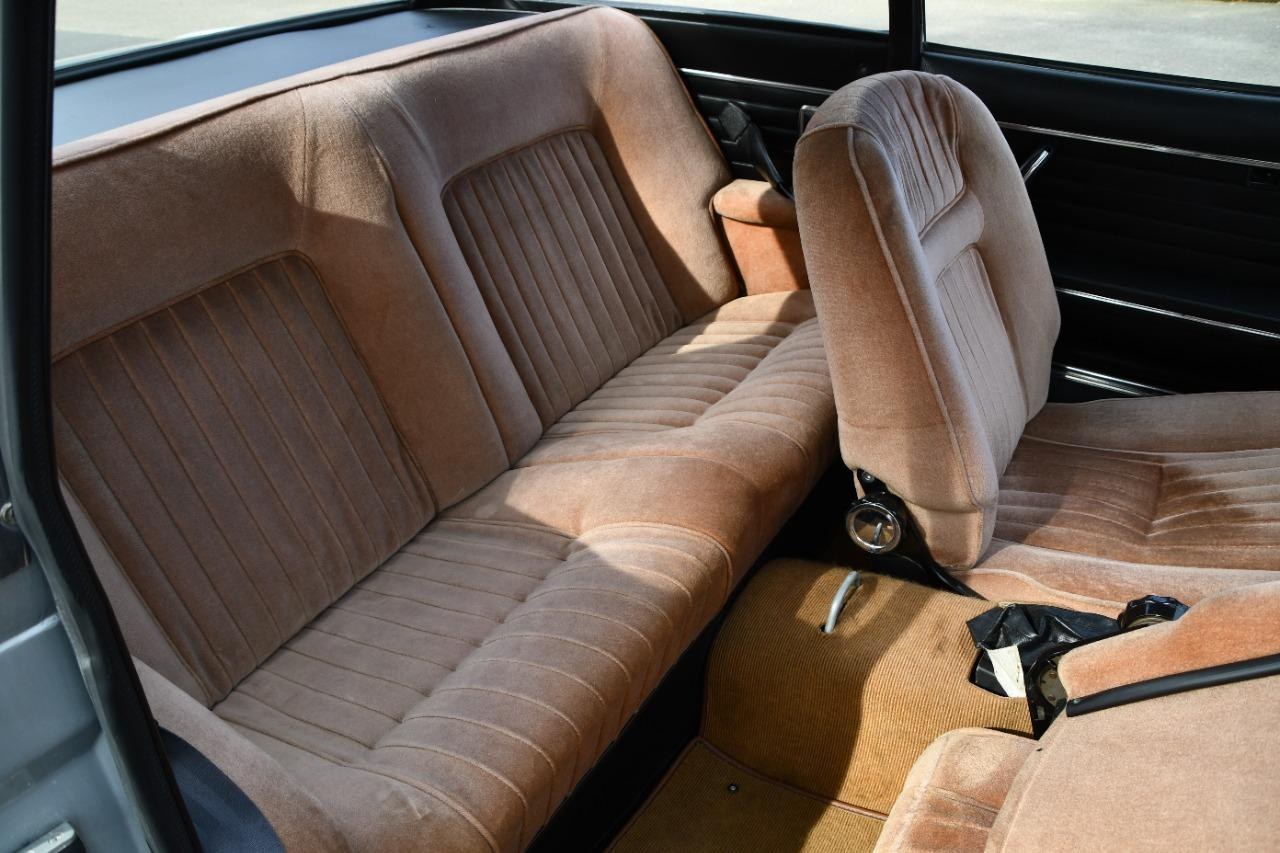
Panoramic outlook: Peugeot made safety a priority decades before its competitors. A wraparound windscreen and curved rear/side glass delivered a claimed very large glass area and excellent outward visibility. Retractable front head restraints were designed to improve the rearward view.
Space and seating: Wide-opening doors, fully reclining front bucket seats and thoughtful storage made daily use painless. Seat trims ranged by model and market, from durable leatherette/vinyl to more upmarket finishes in Pininfarina cars.
Ride-first philosophy: Contemporary tests and reviews consistently praised the seat support and long-travel suspension tuning as delivering calm, unflustered progress.
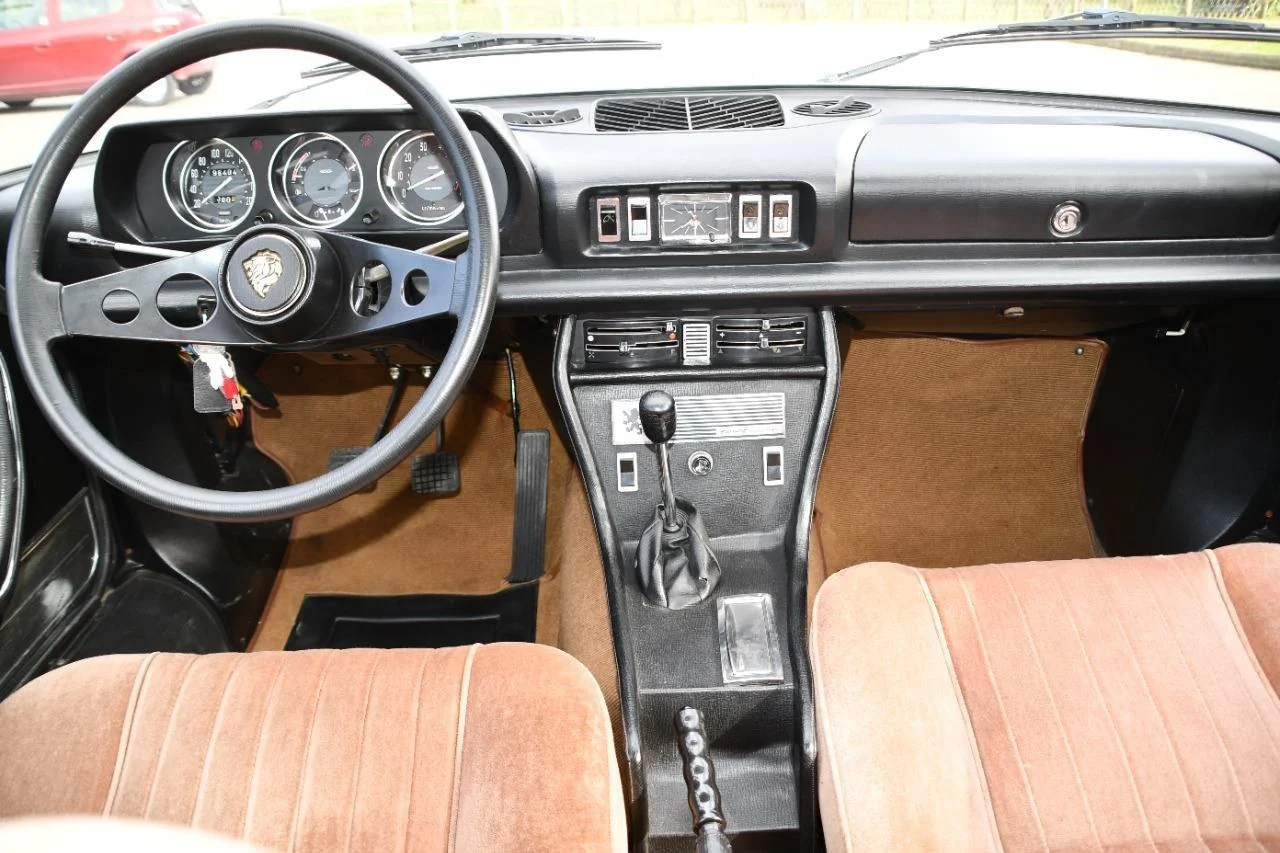
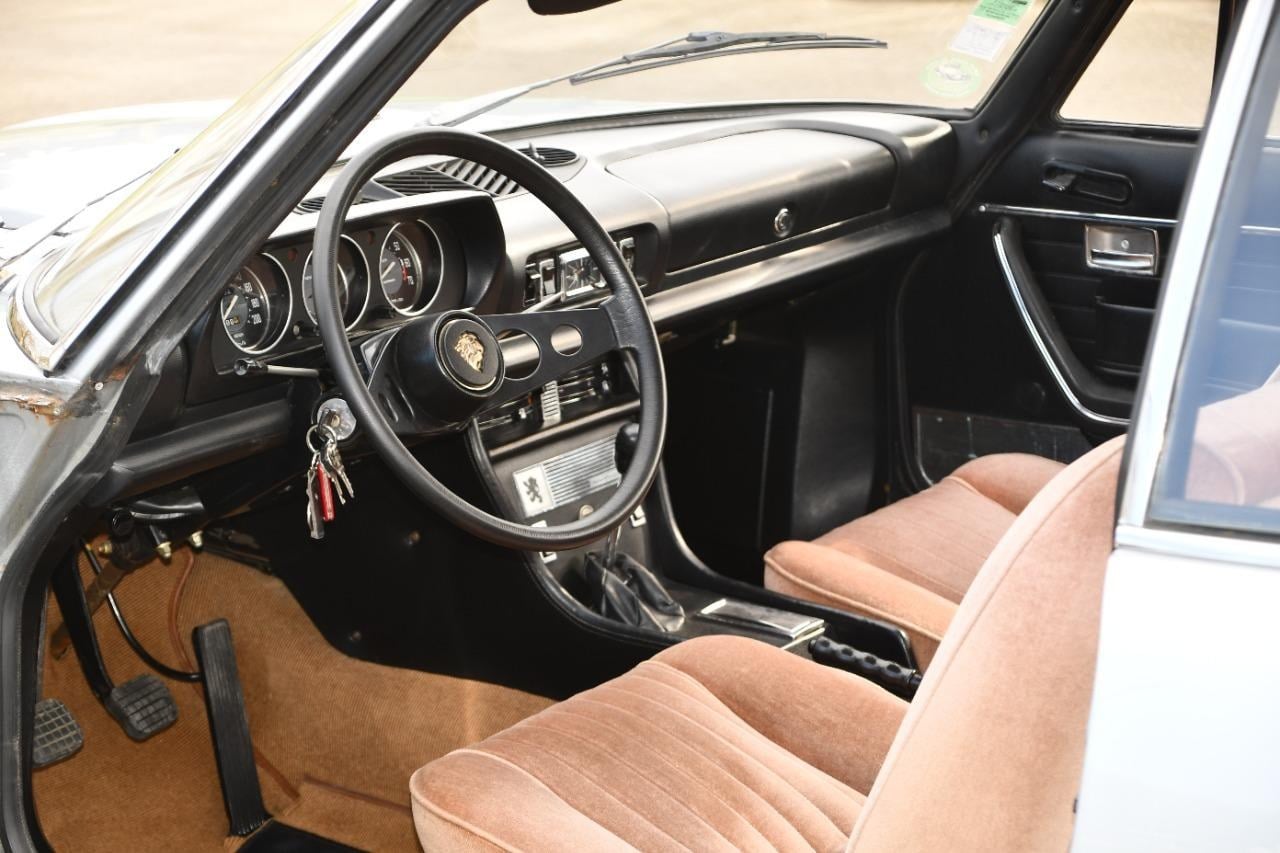
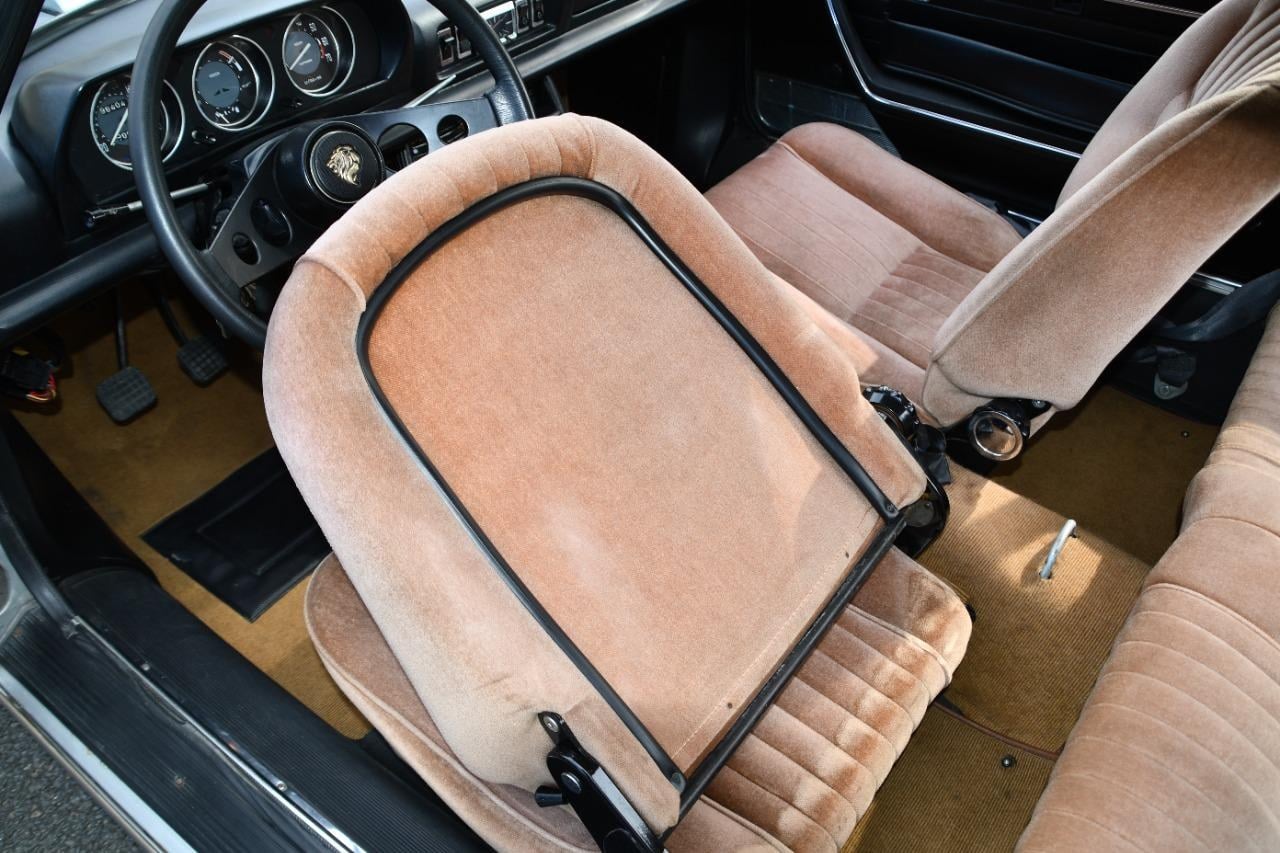
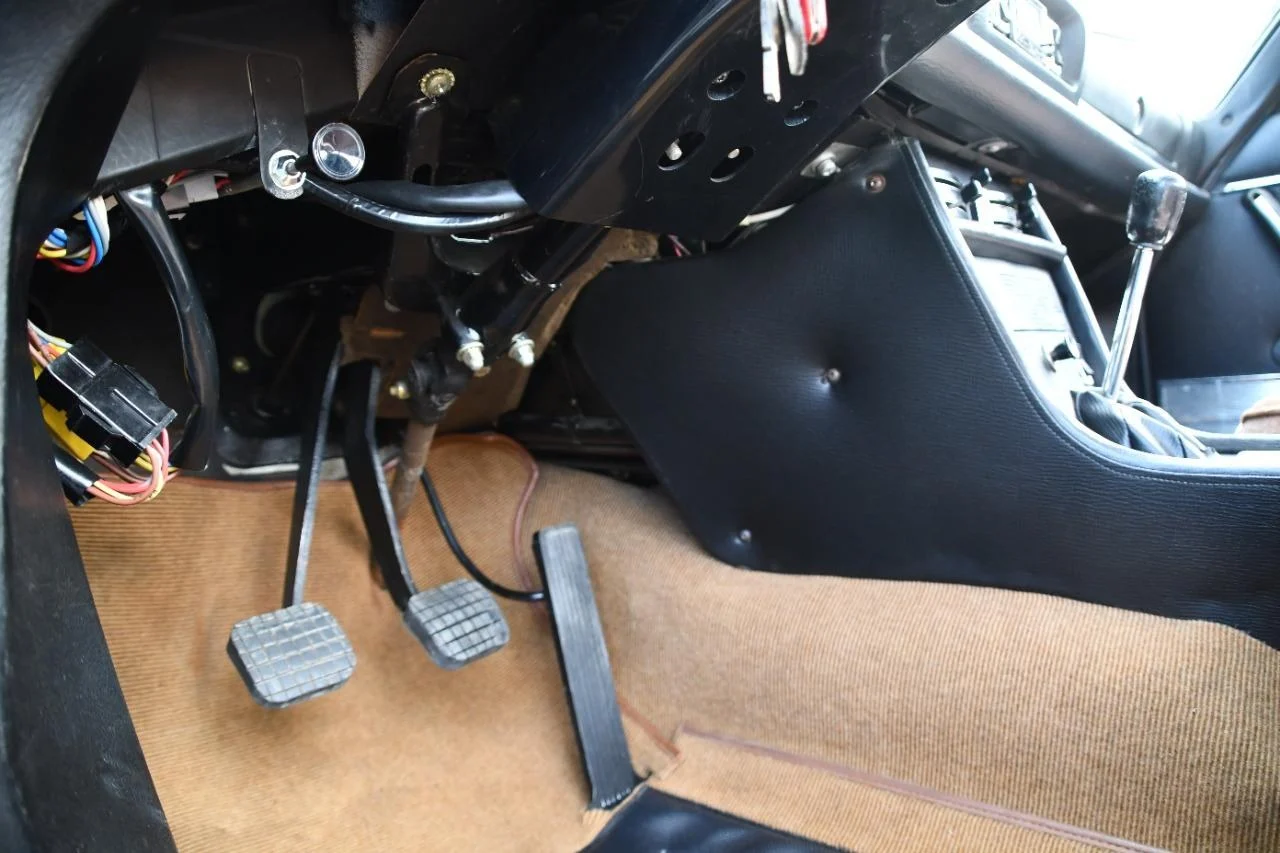
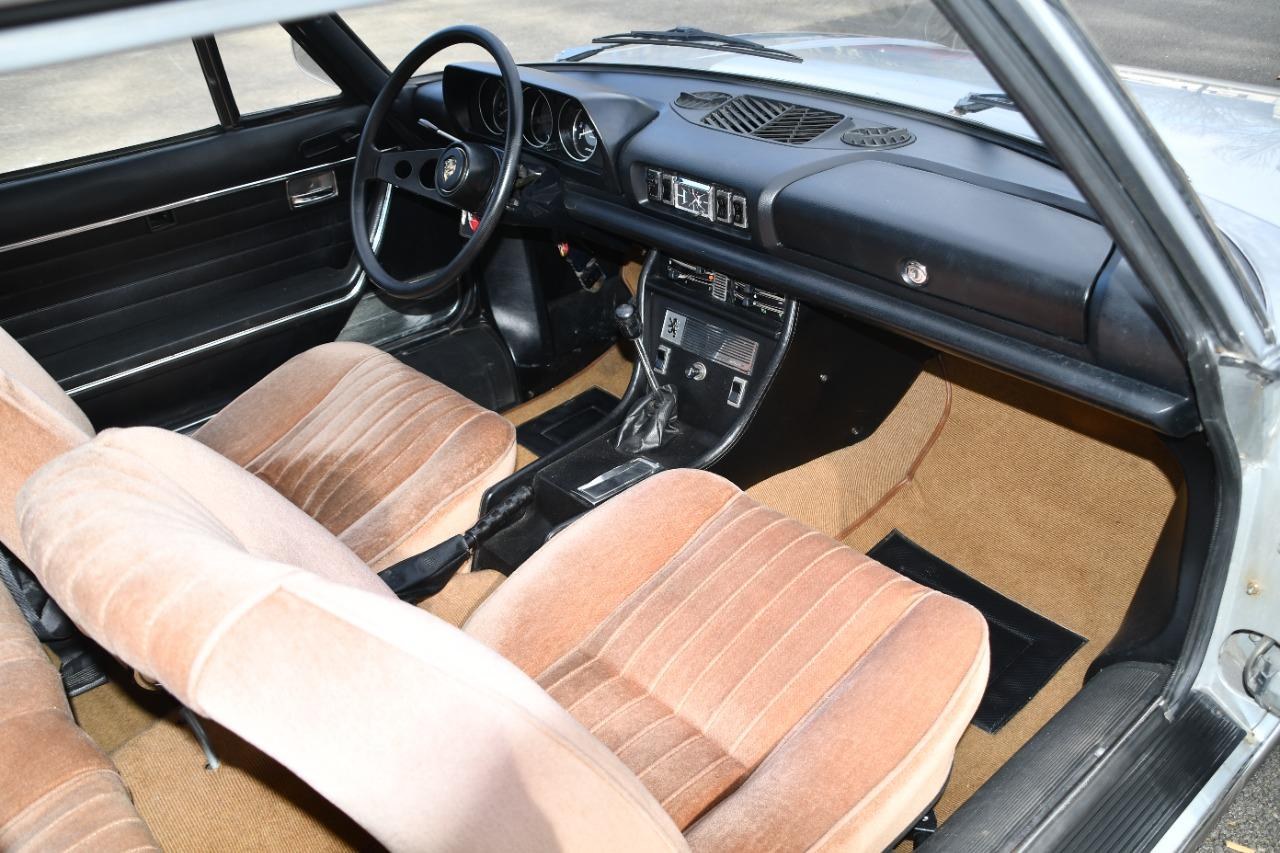
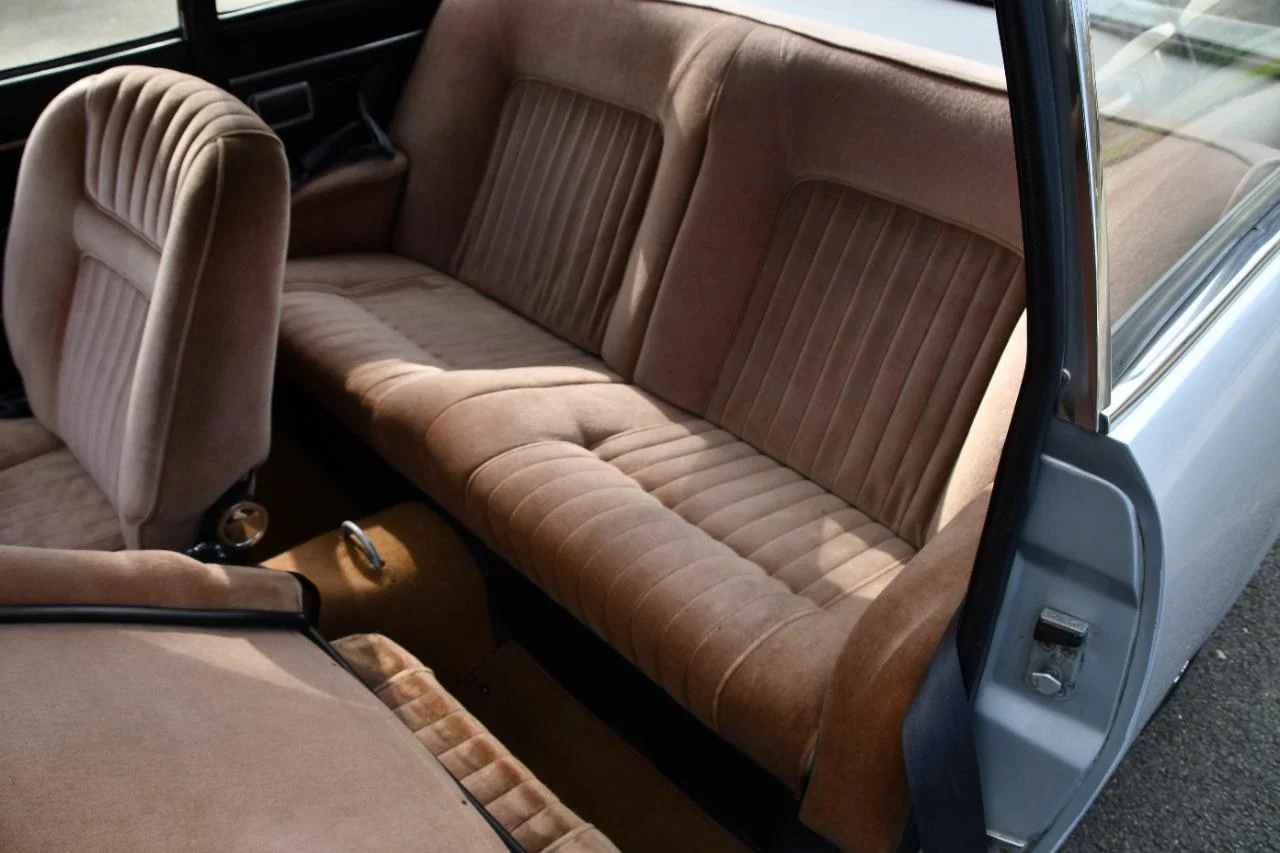
Naturally, the 504 is devoid of today’s modern safety features. However, it was a well-built car with a strong monocoque chassis that was far safer than several of its rivals in period. Peugeot framed 504 safety as more than mere crash protection, emphasising preventive stability and control so that accidents were less likely to occur.
Active (preventive) Safety
Chassis balance: The 504’s balanced weight distribution and long wheelbase/low centre of gravity were marketed as reducing over/under-steer while keeping the car planted in gusty crosswinds and sharp turns.
Steering and tyres: Rack-and-pinion steering paired with Michelin radial tyres delivered secure wet-weather grip at a time when many cars still had cross-ply tyres.
Braking: Many saloons were advertised with power-assisted discs on all four wheels, while estates typically combined front discs with heavy-duty rear drums.
Driver awareness: Selected models featured a brake-pad wear warning lamp in the instrument cluster, which was advanced for the era.
Passive (protective) Safety
Occupant restraints: Front seatbelts became a standard fitment early in the 504’s lifetime. Adjustable head restraints hid away to improve rearward visibility when unoccupied, and they could be lowered fully so the seats could be reclined.
Steering column: A collapsible energy-absorbing column mitigated steering wheel injury risk in frontal impacts.
Child protection and visibility: Child-proof rear door locks and an unusually generous glass area supported safer manoeuvring and spatial awareness.
Peugeot 504 Variants & Generations
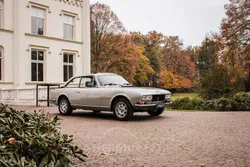
The 504 family encompassed a variety of body styles and configurations, including estates and pickups, and even 4×4 conversions. Some of these models were never sold in the UK, barring personal imports, but Peugeot’s official heritage lists the 504 range spanning multiple body styles and an overall production run which runs into the millions.
Price trends
Most recent sale
£3,000
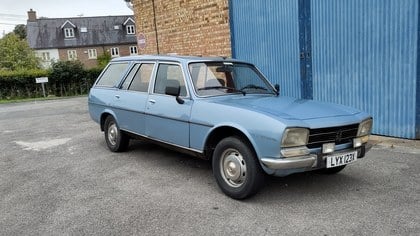
1982 Peugeot 504 Estate
Sep 21, 2023
Currently for sale
77
1 live auction
76 adverts
Total sold
153
Highest sale price
£43,186
Average price
£16,658
Lowest price
£865
FAQs
1.8- and 2.0-litre four-cylinders (the 2.0 also offered mechanical injection in period), robust Indenor diesels (2.1/2.3L), and a 2.7-litre PRV V6 for the Pininfarina Coupé/Cabriolet.
Rust is the enemy of any 504, so check the front inner wings/strut tops, arches, sills, floor and rear suspension mounts. Italian-built two-doors are especially susceptible to rot. Sourcing trim parts on Coupé/Cabriolet models can be difficult, although Peugeot’s heritage arm (L’Aventure Peugeot) supports classic parts supply and restorations.
The Peugeot 505 took over the role in Europe from 1983, while the 504 continued in production under licence in various regions.