Peugeot 505: Models and Specs
1979–1992 (France); 1979–1997 (global) · 1.8–2.8-litre petrol; 2.3–2.5-litre diesel · Front-engined, rear-wheel drive · Saloon/estate
Overview
Launched as the successor to the indomitable 504, the Peugeot 505 would prove to be Peugeot's final rear-wheel drive car. It arrived in 1979 as European manufacturers were adopting front-wheel-drive architecture almost across the board, so Peugeot went against the grain by retaining the 504’s proven rear-drive platform. The 505 was a mature and unhurried car built for long distance journeys, with a suppleness to its ride that reflected Peugeot's tradition of large family cars designed to combine durability and comfort. The sheer breadth of its engine range, from economy diesels to V6 performance saloons, meant over 1.35 million 505s were built in France, Argentina, China, Nigeria, Thailand and Indonesia.
Price
- Starting price
- $1,301
- Average price
- $5,697
- Price range
- $1,301 - $15,189
Specifications
- Production years
- 1979–1992 ( France); to 1997 (other markets)
- Total production
- 1,351,254
- Body styles
- 4-door saloon; 5-door estate
- Layout / Drive
- Front-engined, rear-wheel drive
- Engine family
- petrol (1.8–2.2-litre); Turbo (2.2-litre); PRV V6; diesel (2.2–2.5-litre)
Peugeot 505 in Detail
Development of the 505 began in the early 1970s, with Peugeot commissioning Pininfarina to style the body as a continuation of the 504. The brief was to improve on the 504's packaging and refinement while retaining its platform architecture. Longer, lower and more aerodynamically resolved than the 504, its numerical successor was unmistakably cut from the same Gallic cloth.
The 505 saloon retained its predecessor’s MacPherson strut front suspension and a trailing arm independent rear. The estate used a rigid rear axle for load-carrying durability, which gave it a distinctly different dynamic character even though both vehicles shared the same 2,743mm wheelbase.
Peugeot's decision to retain rear-wheel drive at a time when Volkswagen's Golf and the Citroën BX were defining the future FWD consensus reflected how the 505 was being positioned as an establishment choice. The range expanded progressively as the 1.8-litre petrol gave way to larger 2.0 and 2.2-litre units and the Turbo Injection arrived as the range-topping performance variant. The PRV (Peugeot-Renault-Volvo) 2.8-litre V6 provided a prestige alternative. while diesel variants gave the 505 one of the widest powertrain spreads in its class.
A Phase II facelift in 1985 brought a revised front end, updated interior and a refreshed trim hierarchy, but the underlying platform and engineering remained intact. The French factory ceased production in 1992 but assembly continued in Argentina until 1995 and in other markets until as late as 1997.
The 505 range spans a wider performance envelope than almost any other family car of its era, from a 69hp diesel to a 172hp turbocharged petrol version which was among the fastest family saloons available in France in its day. Perhaps the only aspect all the different variants share is composure; the ability to cover ground with minimal drama.
Variant | Engine | Power | Top Speed |
Petrol (GL/GR/SR) | 1.8–2.2-litre Douvrin I4 | 80–123 hp | 100–118 mph |
Turbo Injection (STI/STX/Turbo S) | 2.2-litre Chrysler-Simca I4 Turbo | 150–172 hp | 128–130 mph |
V6 | 2.8-litre PRV V6 | 143 hp | 124 mph |
Diesel (GLD/GTD) | 2.3-litre XD I4 | 69–80 hp | 96–103 mph |
Turbodiesel (GTD) | 2.5-litre XD I4 Turbo | 95 hp | 106 mph |
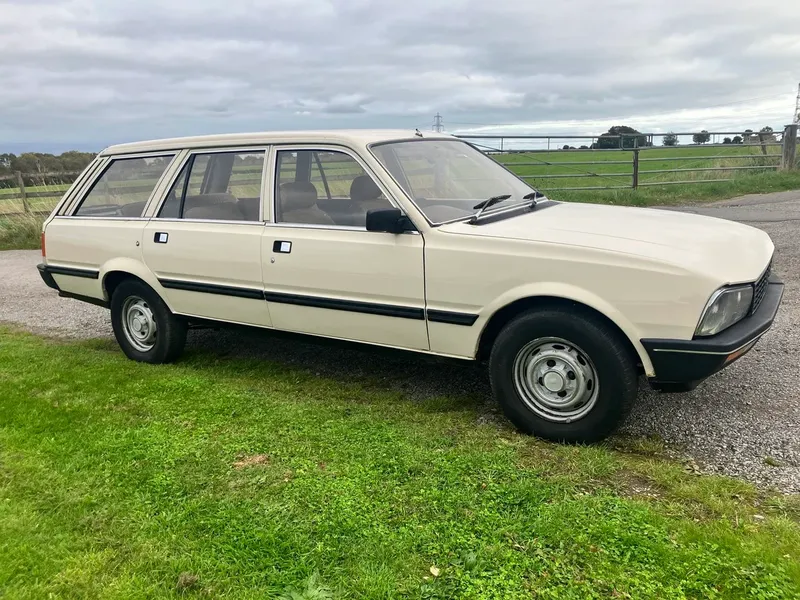
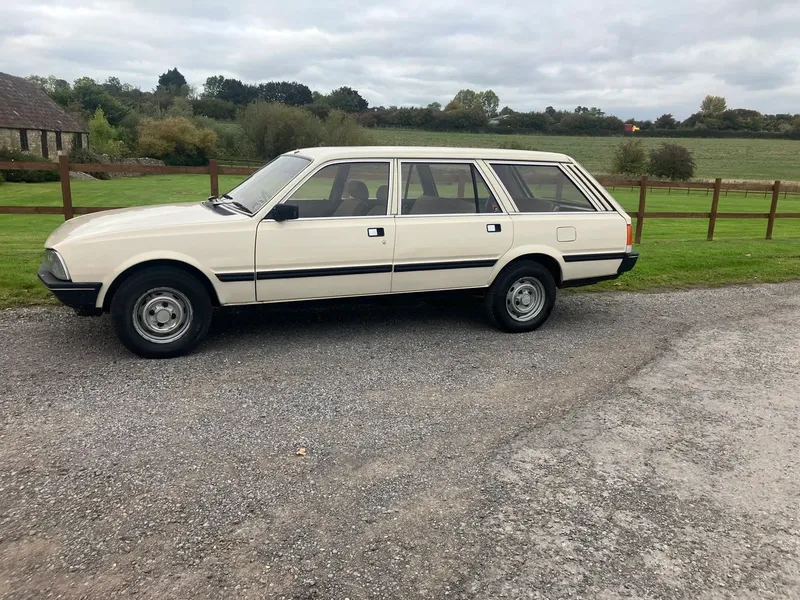
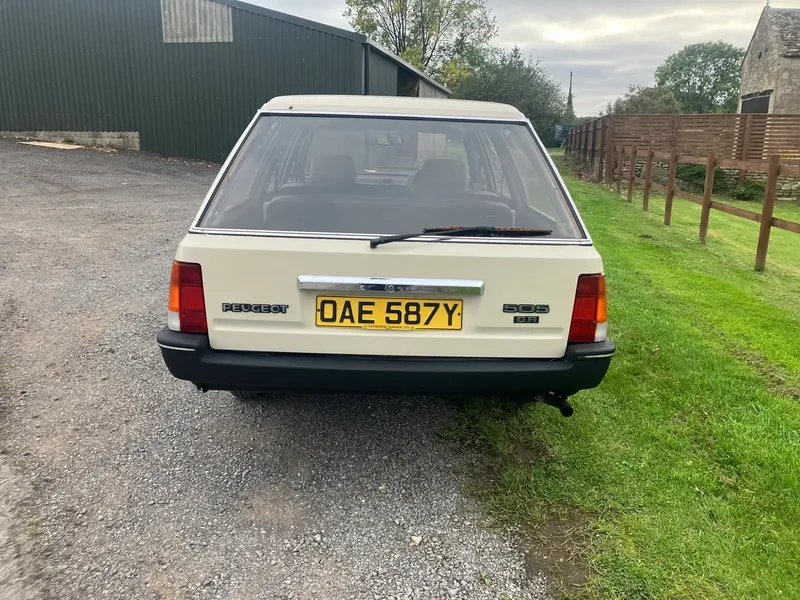
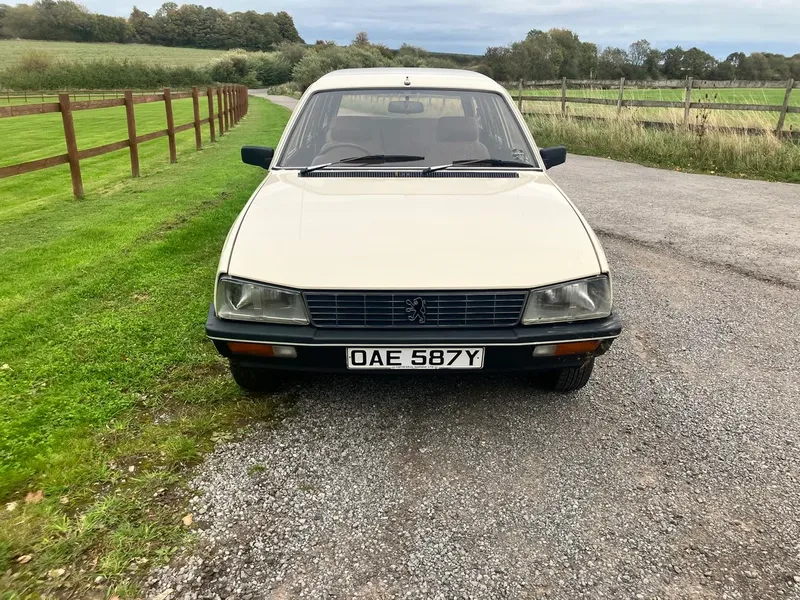
The 505's visual identity is defined by a long and low four-door shape with clean flanks, a gently raked roofline and none of the surface drama that characterised rivals from Germany or Italy. The estate extends these proportions handsomely, making it one of the most elegantly resolved load-carriers of its era.
Inside, the cabin is unambiguously French, from seats that prioritise long-distance comfort over lateral support through to a dashboard that places legibility above sportiness. The tactile quality of the controls and the softness of the seating were the car's defining cabin characteristics. There’s no attempt at driver-focused ergonomics, with passengers insulated from the road rather than connected to it.


The 505 Phase II facelift in 1985 brought styling and trim updates, with no changes to its platform or engineering. Throughout its lifespan, the 505 was powered by a variety of engines, summarised below.
[GL/GR/SR/GTI]
1.8–2.2-litre Douvrin I4, 80–123hp. The mainstream range, comprising most surviving cars.
[STI/STX/Turbo S]
2.2-litre Chrysler-Simca I4 with Garrett T3 turbo, 150–172hp. The performance variant and a distinct engine family from the rest of the range.
[V6]
2.8-litre PRV V6, 143hp. Prestige and refinement-focused.
[LD/GTD/GTD Turbo Diesel]
2.3–2.5-litre XD I4, 69–95hp. Economy and longevity-focused, becoming dominant in fleet and African markets.
The 505 was designed and sold within a pre-electronic safety aids era, though ABS became available as an option on higher-specification variants from the mid-1980s. Peugeot's safety philosophy for the 505 was structural, with the platform engineered for rigidity and durability, and the car's longevity in Third World markets confirms the durability of its underlying structure.
Pros
The Turbo Injection's powertrain gives performance-focused buyers a different proposition to run-of-the-mill 505 models
With over 1.35 million units built across global production sites until the late 1990s, mechanical parts availability is strong
The Break Familiale was a spacious seven-seater estate, which was unusual in the pre-SUV era
Very comfortable interior, particularly the seats
Cons
No model was particularly exciting to drive
Sunroof surrounds and floorpans are documented rust points
Body panels and exterior trim are increasingly difficult to source
A diesel-spec 505 and a Turbo Injection share almost no powertrain components, so models need to be chosen with care
Peugeot 505 for Sale
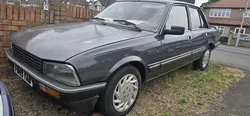
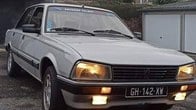
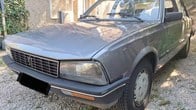
The 505 market is broad in geography but thinning in supply. The four powertrain families require separate evaluation criteria, and you’ll find models being marketed through Car & Classic right here.
Price trends
Most recent sale
£5,600
1990 Peugeot 505

Currently for sale
10
1 live auction
9 adverts


Total sold
29
Highest sale price
€15,189
Average price
€5,697
Lowest price
€1,301
FAQs
The 505's reputation for reliability is legendary across all major markets. Indeed, its extended production life in Africa, South America and Asia was directly attributable to the durability of the XD diesel and Douvrin petrol engines. Low-stressed engines with regular oil changes can record very high mileages without major mechanical failure.
Peugeot's official production figure reported 1,351,254 units, of which 1,116,868 were saloons. Production ran at the Sochaux factory in France from 1979 to 1992, with assembly continuing in Argentina to 1995 and in other markets until 1997.
The later Turbo S is the fastest 505 ever produced, with a published top speed of 130mph and a 0–62mph time of approximately 8.4 seconds. The 2.2-litre 172hp Chrysler-Simca turbocharged and fuel-injected engine made it one of the faster family saloons available in France.
A post-1985 petrol saloon with a documented service history and provenance offers the widest parts availability, the broadest specialist support and the most straightforward ownership introduction. Buyers drawn to the Turbo Injection or V6 should treat these cars as more demanding purchases with narrower parts availability and higher running costs.
Beyond the obvious body variations, the estate uses a rigid rear axle rather than the saloon's trailing arm independent rear suspension, which gave it a different dynamic character. The estate was also available in 7-seat Familiale configuration.