Porsche 356: Models and Specs
1948–1965, air-cooled flat-four, rear-engined, rear-wheel drive, coupé/cabriolet/roadster.
Overview
It’s hard to imagine a motoring world without Porsche, but the 356 is where the Porsche road-car story began. This was the first production model to carry the Porsche name, evolving from early Gmünd-built cars into the more developed Stuttgart coupés, cabriolets and open sports models that established Porsche’s reputation for compact rear-engined sports cars. The 356 is defined by its light weight, compact proportions and rear-engined traction. It was never a large-capacity grand tourer or a conventional sports car - instead, it was aerodynamic, mechanically efficient and carefully developed. As such, it set the template for the brand’s later focus on engineering detail and incremental improvement rather than dramatic revolution. So much of Porsche’s later identity can be traced back to the 356, from the rear-mounted engine and rounded body form to its driver-focused cabin and ability to generate serious real-world pace from modest engine capacity. The 911 which replaced it in the 1960s carried forward many of the same ideas.
Price
- Starting price
- € 10.000
- Average price
- € 90.128
- Price range
- € 10.000 - € 549.995
Specifications
- Production years
- 1948–1965
- Body styles
- Coupé, Cabriolet, Speedster, Roadster
- Layout/drive
- Rear-engined, rear-wheel drive
- Engine family
- Air-cooled flat-four petrol engines
- Transmission
- Manual gearbox
Porsche 356 in Detail
The Porsche 356 began with the accurately (if unglamorously) named Type 356 No. 1 Roadster, which received road approval in June 1948. Early production took place in Gmünd, Austria, before Porsche moved production to Stuttgart-Zuffenhausen in 1950. From there, the 356 became the company’s first series-production car - and the foundation for Porsche’s road-car business.
Although the first prototype used a mid-engined layout, the production 356 established the rear-engined format that would become central to Porsche’s identity. Its engineering owed something to earlier Volkswagen concepts, but Porsche developed the 356 into a distinct model with its own body, character and performance. The mechanicals included air/oil-cooled flat-four power, carburettors and pushrod valve gear, a four-speed manual transmission and rear-wheel drive.
While early cars are now commonly called Pre-A, they were followed by the Teutonically titled 356 A, 356 B and 356 C. Changes brought improvements to body design, visibility, refinement, braking, engine output and usability, but the underlying identity remained consistent. Meanwhile, Porsche used the 356 to burnish its sporting credentials. Carrera versions introduced a more exotic four-cam engine, while models such as the Speedster gave the 356 a strong following in the American market.
By the time production ended in 1965, the 356 had become a much more mature car than the early Gmünd originals. The final 356 C added four-wheel disc brakes and more developed pushrod engines, making it the most refined stage of the model before Porsche moved into the 911 era.
The Porsche 356’s performance evolved steadily over its life. Early cars used small-capacity air-cooled flat-four engines with modest output, while later pushrod cars and Carrera four-cam models delivered much stronger performance.
Item | Details |
Engine family | Air-cooled flat-four, 1.1 to 2.0 litres |
Power range | 40 hp in early 1100 models to 95 hp net for late SC pushrod cars; Carrera four-cam versions sat above the regular pushrod range |
Top speed | 87 mph for an early 1950 1100 Coupé, rising to 120–125 mph in later SC/Carreras |
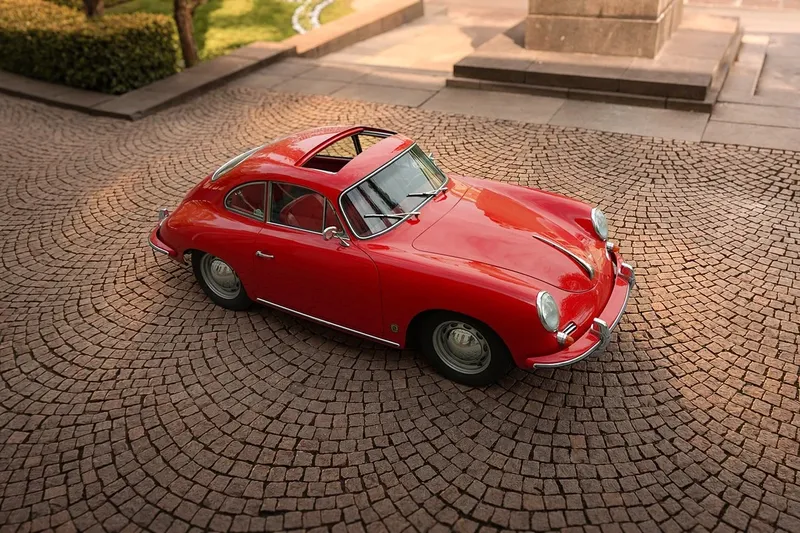
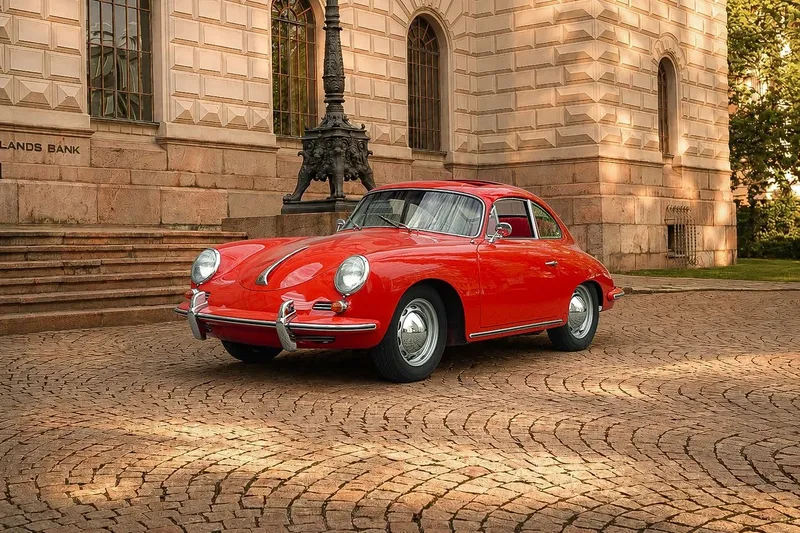
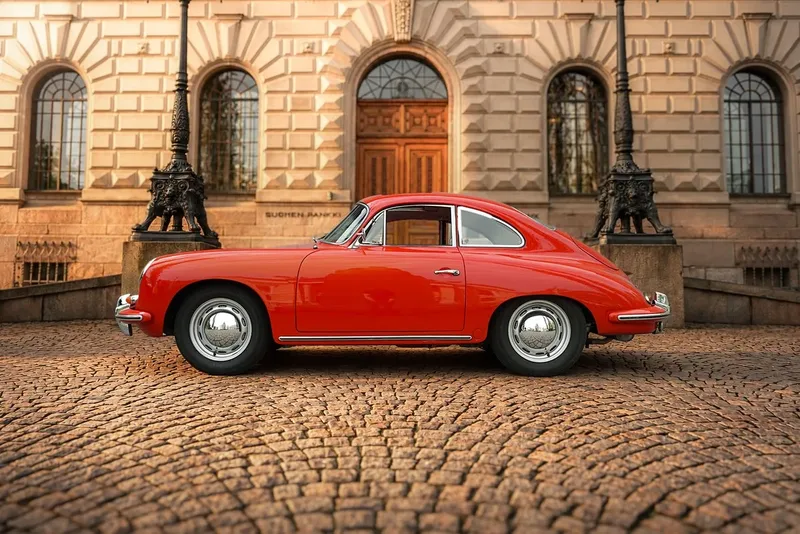
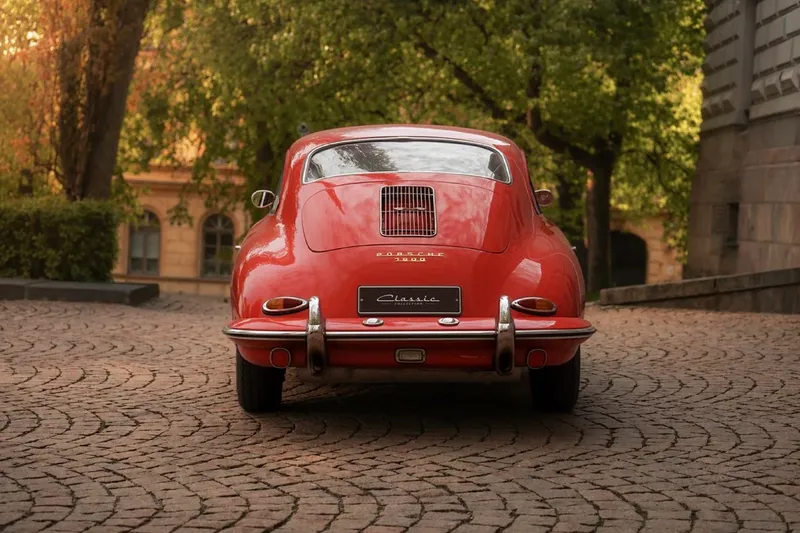
The Porsche 356 is recognisable thanks to its compact, rounded silhouette, low roofline, short overhangs and rear-engined stance. Its shape is clean rather than aggressive, with a smooth nose, curved wings and a tapering rear that make the car look light and aerodynamic even by later standards. That visual simplicity is one of the reasons the 356 has aged so well.
With the engine behind the rear axle and the cabin set forward within a small body, the 356 has a very different balance from a traditional front-engined British or Italian sports car. Its visual DNA later fed into the 911, but the 356 feels softer, narrower and more delicate. It’s the same story inside, where the cabin is functional but basic with clear instruments, a slim dashboard and little unnecessary weight.
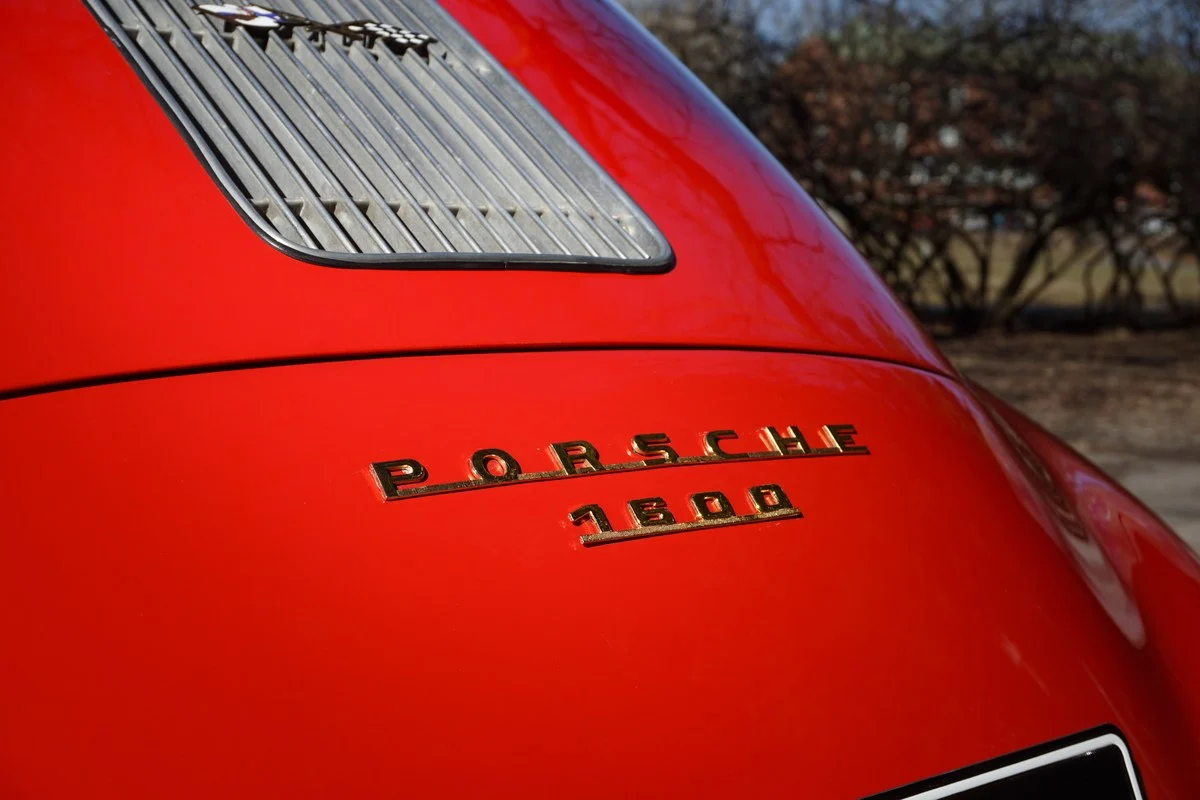
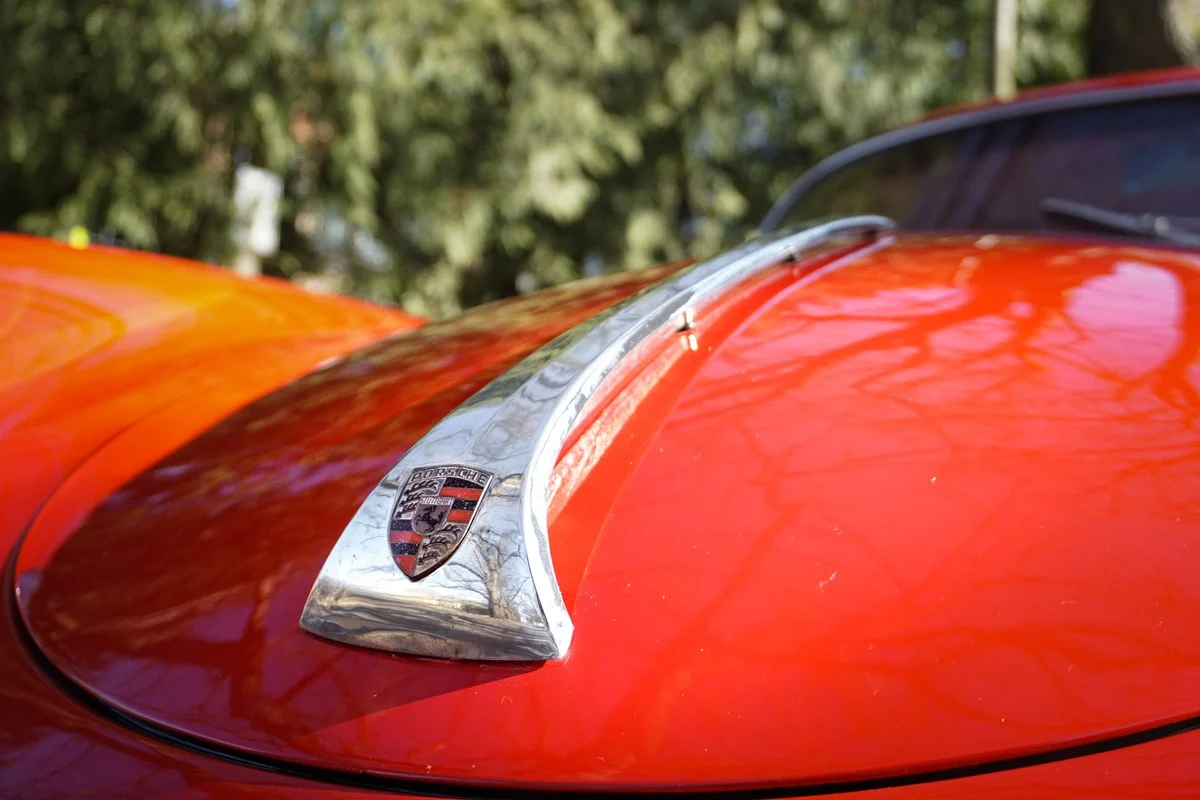
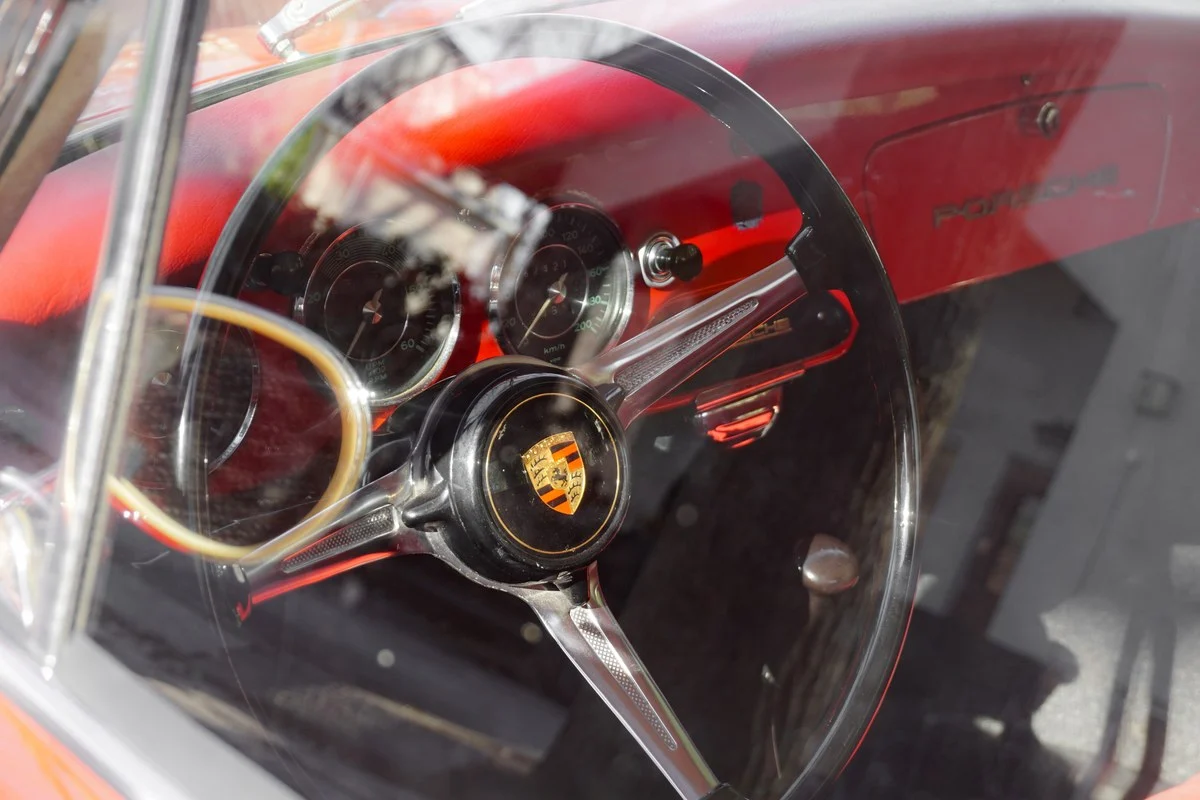
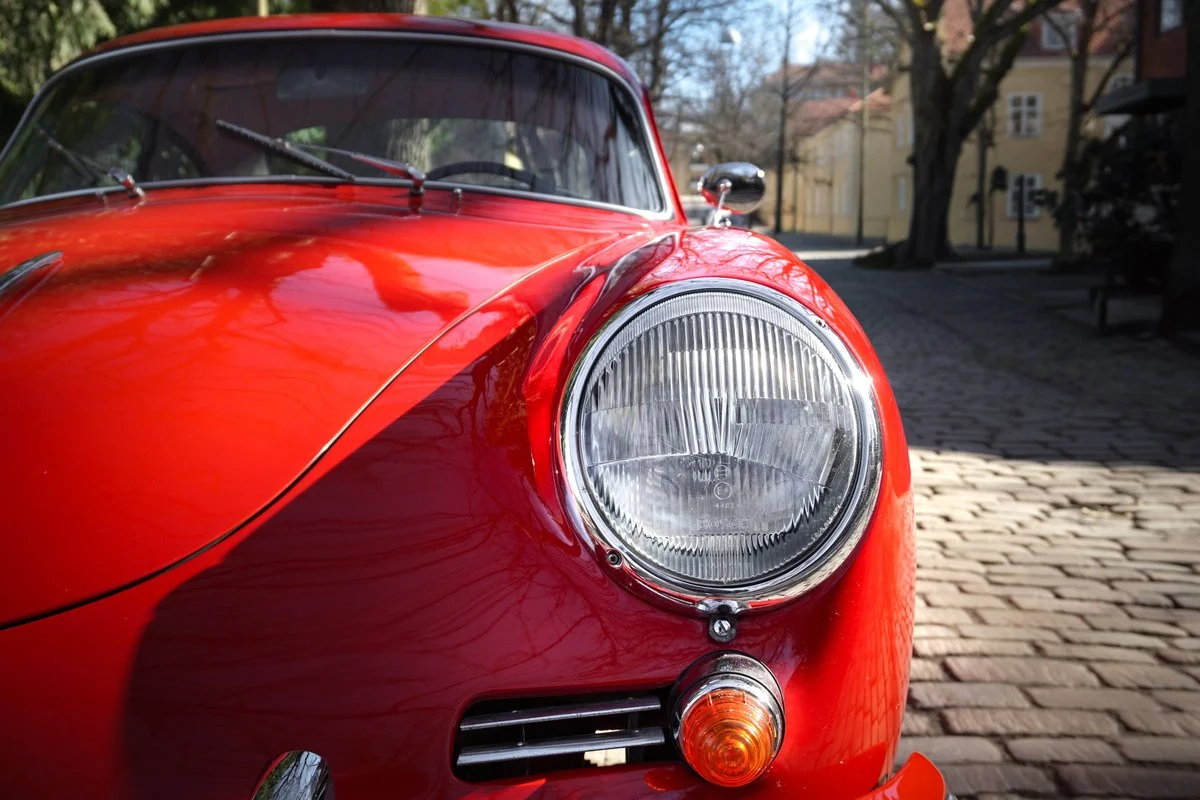
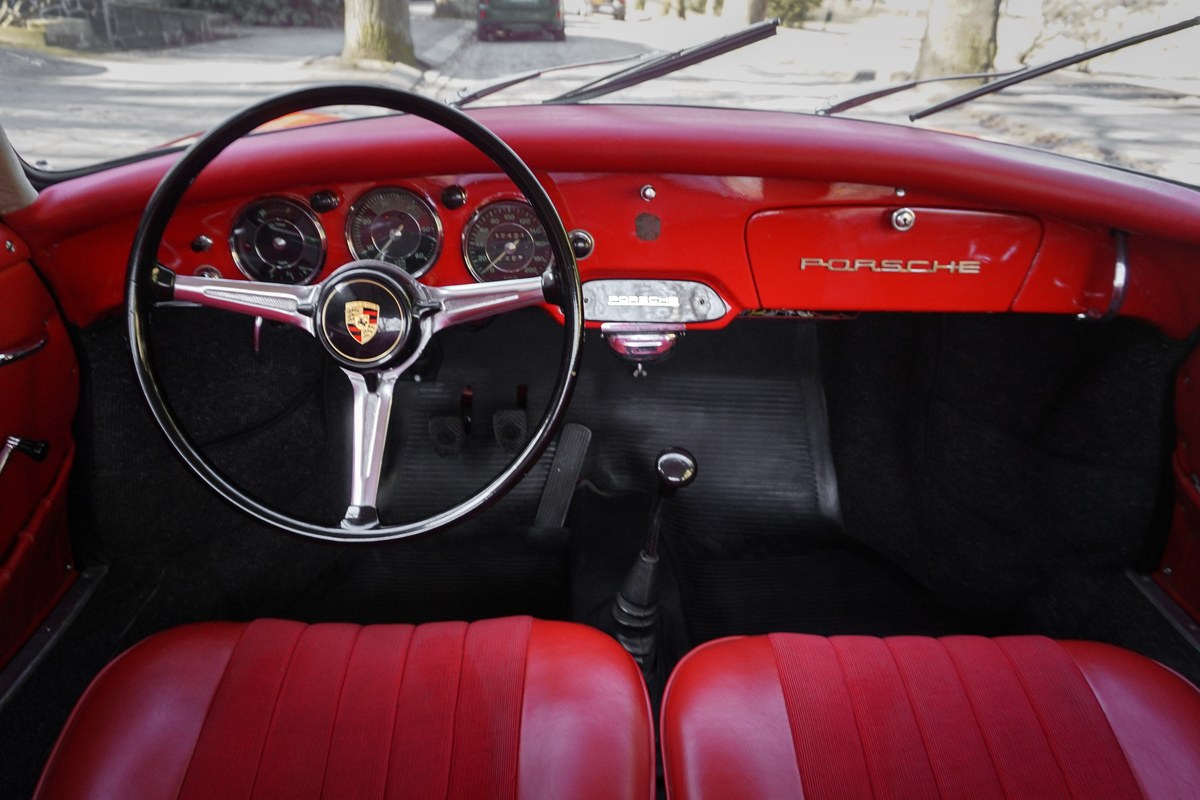
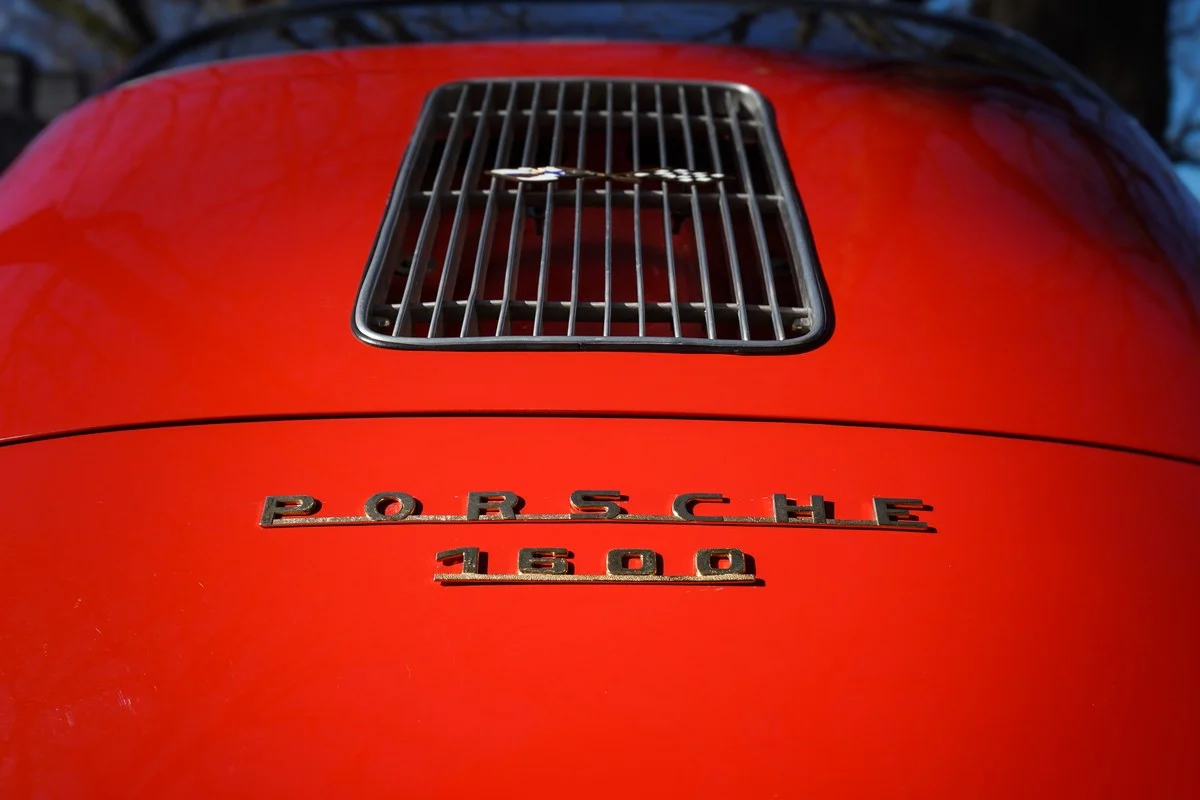
The Porsche 356’s safety philosophy was based on its light weight, visibility and compact dimensions. Early cars used drum brakes, while the final 356 C introduced four-wheel disc brakes, making it the most developed version from a braking and usability perspective
Generation | Details |
Porsche 356 Pre-A | The earliest 356 phase, covering the Gmünd-built origins and early Stuttgart production before the 356 A name arrived. Known for its simpler body details. |
Porsche 356 A | The first major recognised development stage, bringing a more modern curved windscreen, revised styling and broader engine choice. |
Porsche 356 B | A more visibly developed 356, with changes to body details, bumpers, lighting position and cabin usability. |
Porsche 356 C | The final and most refined 356, mechanically notable for four-wheel disc brakes and stronger late pushrod engines. |
Pros
The foundational Porsche model holds major brand significance.
Light, compact and strongly connected to the later 911.
A clear generation structure helps buyers choose between early purity and later usability.
Cons
Age and rarity has resulted in significant prices being commanded by surviving models.
The driving experience is unusual, in tandem with a very challenging driving position.
Values and desirability vary considerably by body style, originality and generation.
Porsche 356 for Sale
The Porsche 356 remains one of the most important classic Porsche models, with values shaped by generation, body style, originality and engine specification. Browse Porsche 356 examples for sale on Car & Classic.
Prijsontwikkeling
Meest recente verkoop
£ 92.500
1964 Porsche 356 Coupe

Momenteel te koop
251
0 live veilingen
251 advertenties


Totaal verkocht
281
Hoogste verkoopprijs
€ 549.995
Gemiddelde prijs
€ 90.128
Laagste prijs
€ 10.000
FAQs
More than 76,000 Porsche 356s were built between 1948 and 1965. Production covered the early Pre-A cars, followed by the 356 A, B and C. Coupés were built in far greater numbers than open versions.
The 356 A, B and C are the main recognised development stages of the Porsche 356. The 356 A brought the first major update after the earliest Pre-A cars; the B introduced more visible body and usability changes; and the C was notable for four-wheel disc brakes and a simplified engine range.
The Porsche 356 Speedster combines rarity, open-body desirability, strong US-market history and one of the most recognisable silhouettes in early Porsche history. However, beware of replicas, which are numerous. A genuine Porsche 356 Speedster should be verified through chassis identity, body details, documentation, provenance and expert inspection.
No. The Porsche 356 came first and used an air-cooled flat-four engine, while the 911 followed with a more powerful flat-six layout. Both are rear-engined Porsche sports cars, but the 356 is smaller, lighter and the original incarnation of Porsche’s road-car identity.