Porsche Cayman: Models and Specs
2005–2025 · flat-six/flat-four turbo · mid-engined, rear-wheel drive · fastback coupé
Overview
Despite occasionally being dismissed as a derivative of the 911, the Porsche Cayman is a purpose-built mid-engine fastback coupé, making it Porsche's most structurally optimised sports car. Its mid-mounted engine results in near-perfect weight distribution and a handling balance that rivals costing far more struggle to match. Critics and enthusiasts have consistently acknowledged it as one of the finest driver's cars at any price. The Cayman remained accessible and rewarding across every generation, even though Porsche restricted its performance ceiling to protect the 911's supremacy.
Price
- Starting price
- $7,950
- Average price
- $43,085
- Price range
- $7,950 - $192,603
Specifications
- Production years
- 2005–2025
- Body styles
- Two-door fastback coupé
- Layout / drive
- Mid-engined, rear-wheel drive
- Engine family
- Flat-six; flat-four turbo; flat-six 4.0-litre
- Transmission types
- 6-speed manual; 7-speed PDK; 5-speed Tiptronic
Porsche Cayman in Detail
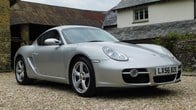
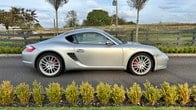
Launched at the 2005 Frankfurt Motor Show as the Cayman S, the 987.1’s fixed-roof structure delivered around 40 per cent greater torsional rigidity than the open-top Boxster it shared a platform with, enabling sharper suspension calibration. The base Cayman arrived in mid-2006, but the 987.2 facelift of 2009 was the 987's defining upgrade. Direct Fuel Injection arrived across the range, PDK became available, the base engine grew to 2.9 litres and revised exterior styling updated the aesthetics. This generation concluded with the 2011 Cayman R, which was 55 kg lighter than the standard car thanks to less equipment, carbon sport seats and lightweight door cards.
The 981 of 2013 brought an entirely new platform. The wheelbase was extended by 60 mm, the front track widened by 40 mm and torsional rigidity improved by a further 40 per cent compared to the 987. This inspired the 2015 GT4, with a 3.8-litre naturally aspirated flat-six sourced from the 991.1 Carrera S, GT3-derived brakes and suspension.
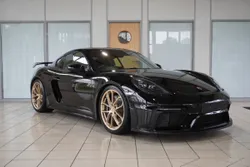
The 718 generation of 2017 revived the historic racing name and controversially switched both base and S models to turbocharged flat-fours. Porsche addressed this criticism in 2020 when the GTS 4.0 and GT4 returned the naturally aspirated flat-six, and in 2021 the GT4 RS became the first Cayman to wear the RS badge. Production of all 718 variants concluded in October 2025.
Twenty years is a long time for any model to survive, and Cayman production consequently encompassed everything from a 241bhp entry-level sports car to a 493bhp trackday monster. The engine family moved through three distinct architectures:
The M96/M97 naturally aspirated flat-six.
The turbocharged flat-four of the 718 base/S models.
The 9A2 Evo 4.0-litre naturally aspirated flat-six of the GT performance variants.
Each version had its own character and performance identity, defined by the quality of delivery rather than peak output figures. Mid-engine stability and chassis balance make every number more accessible than the figures below might suggest.
Metric | Range (Model-Wide) |
Engine family | 2.7–3.8-litre flat-six (naturally aspirated); 2.0–2.5-litre flat-four turbo; 4.0-litre flat-six (NA) |
Power (bhp) | 241bhp (987.1 base) – 493bhp (718 GT4 RS) |
0–62mph | 6.1 sec (987.1 base, manual) – 3.4 sec (718 GT4 RS) |
Top speed | 145mph (987.1 base) – 196mph (718 GT4 RS) |
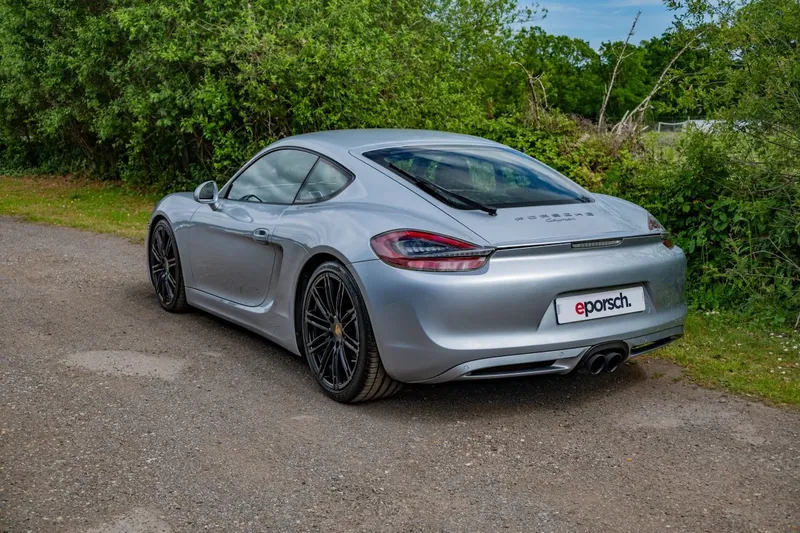
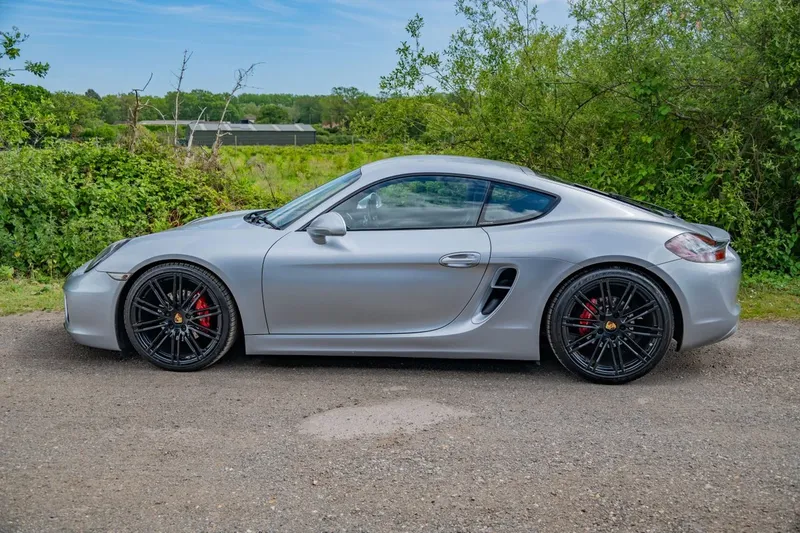
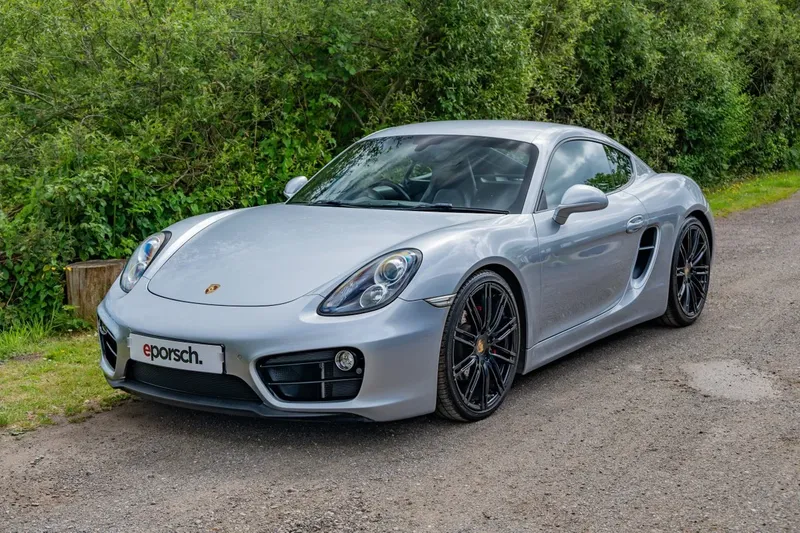
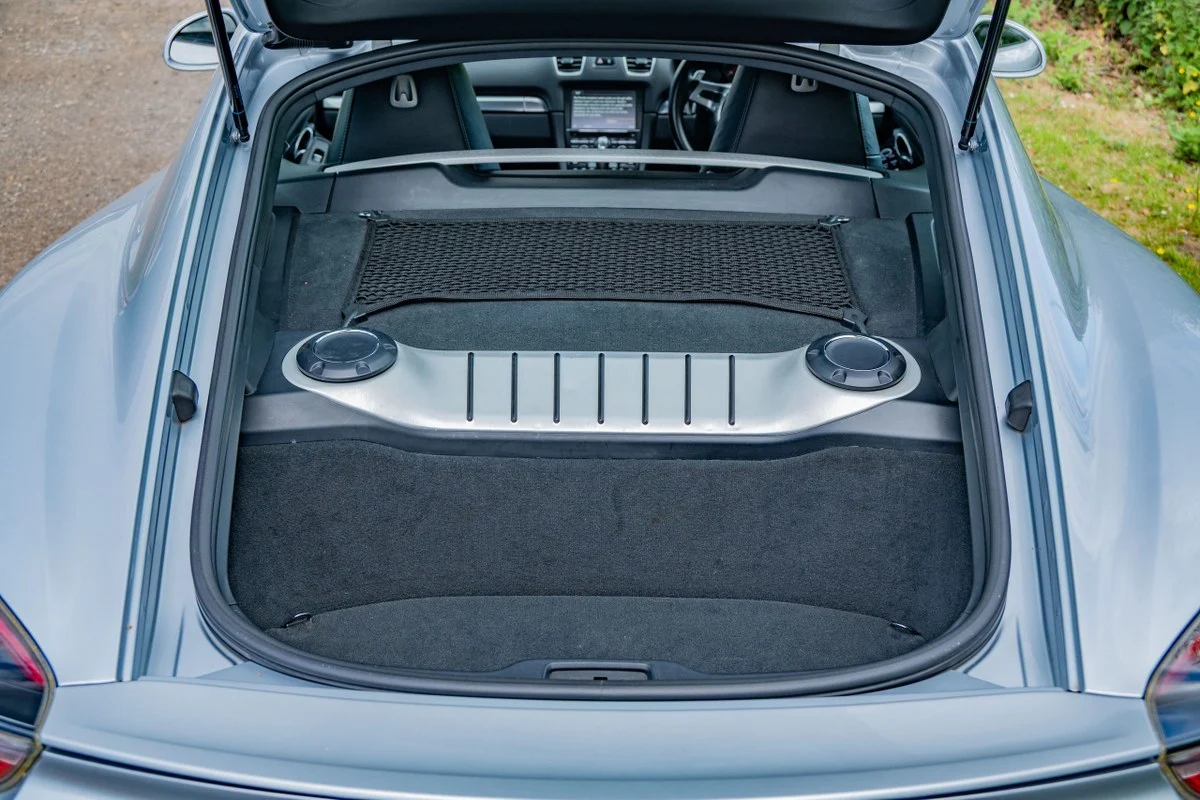
The Cayman's proportions are defined by its mid-engine architecture. This stipulated a minimal front overhang, a prominent fastback roofline flowing into a high-mounted hatchback aperture and flared rear haunches accommodating a wide rear track. The large trapezoidal side air intakes are its most distinctive signature, helping to anchor the body's visual mass over the rear wheels. Styling references across all generations draw on Porsche's historical vocabulary: the 987 echoed the 356 and 904, while the 981 and 718 aligned with the contemporary 911 family.
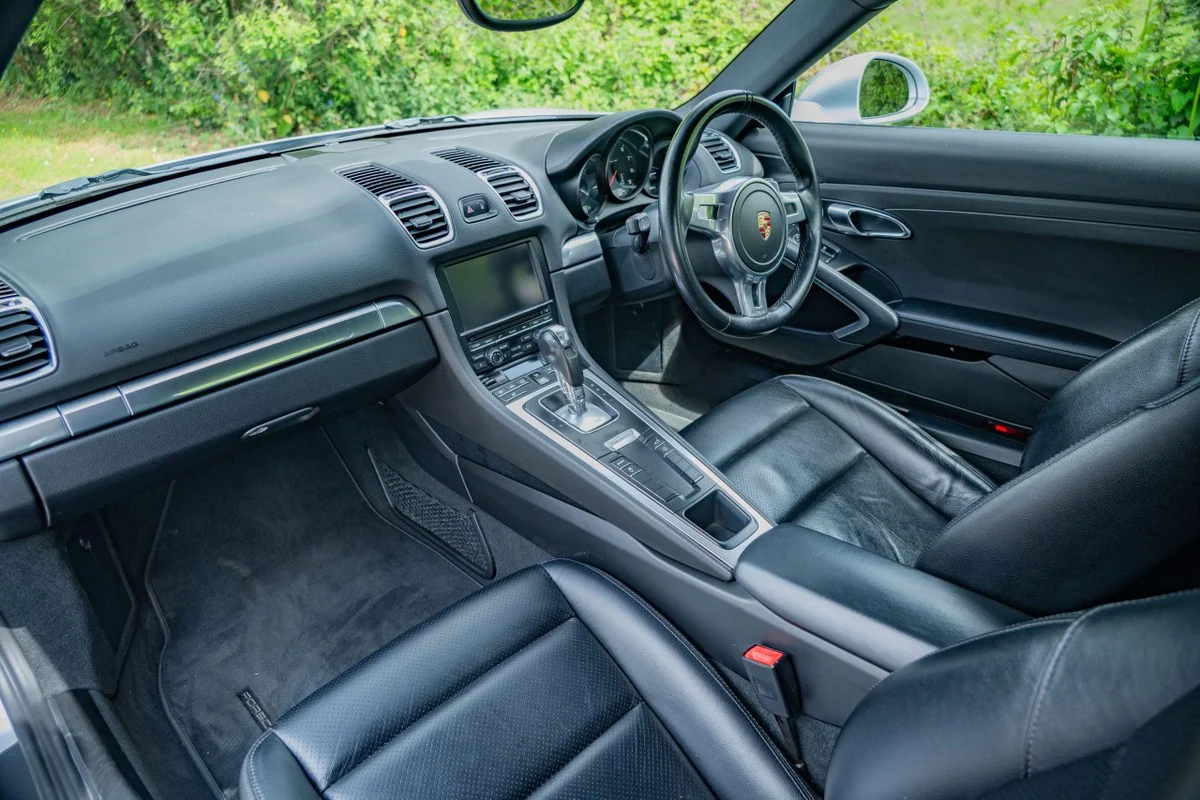
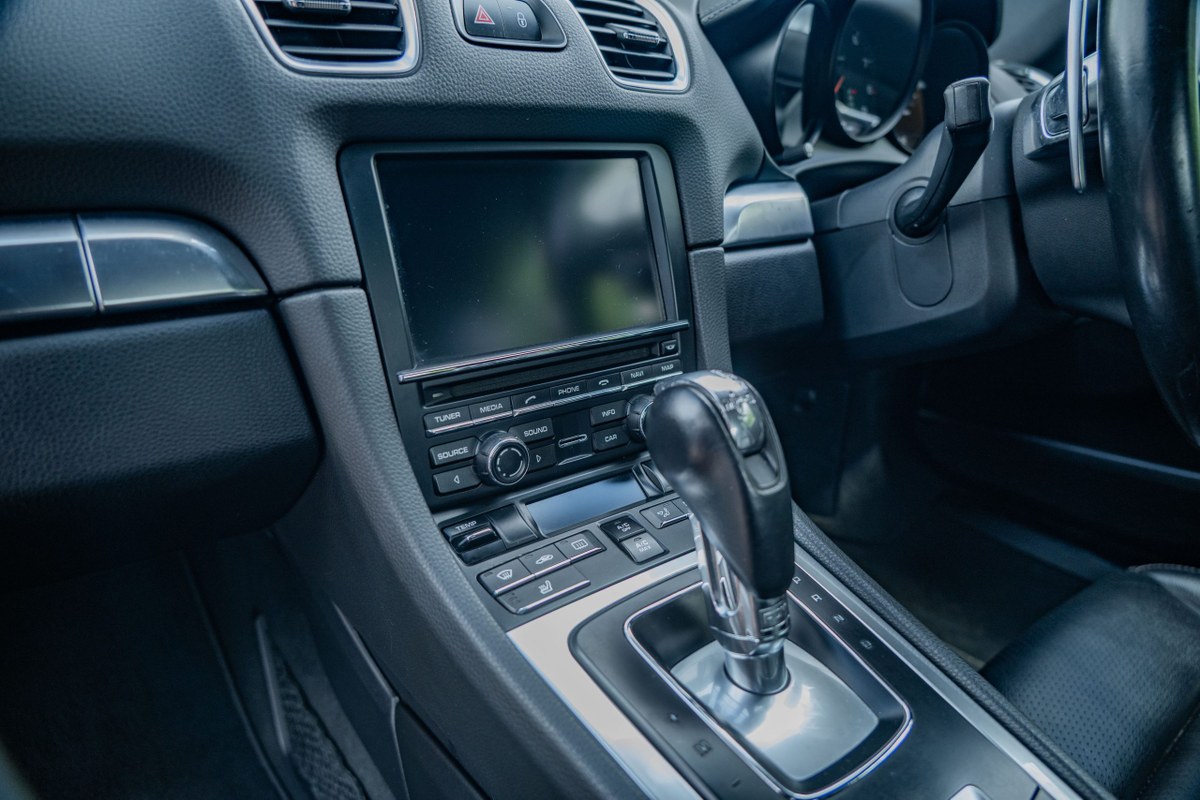
Inside, a central tunnel dominates the cockpit, the seating position sits low against the car's spine and controls are positioned for utility rather than ambience. The high-mounted gearlever, central rev counter and tightly grouped instrumentation were constants across the model's life, though PCM infotainment arrived with the 718.
987 era (2005–2012): The 987.1 launched with ABS, twin front airbags and Porsche Stability Management (PSM) as a factory option; active safety electronics were primarily optional rather than standard. The 987.2 made PSM more widely specified and added the PDK's integrated traction management.
981 and 718 era (2013–2025): Both generations progressively standardised active safety systems, with PASM sensors communicating with the car’s stability control. On the 718, driver assistance systems including lane departure warning were available on higher specifications.
Generation | Years | Summary |
987.1 | 2005–2008 | First Cayman; M96/M97 flat-six engine, Tiptronic or 6-speed manual; S trim launched first and base model followed in 2006. |
987.2 | 2009–2012 | Facelift; DFI and PDK allied to a power increase; Cayman R (2011) became a lightweight flagship. |
981 | 2013–2016 | New platform with longer wheelbase, wider track and electric steering; GTS and GT4 added. |
718 (982) | 2017–2025 | 718 name revived; flat-four for base/S; GTS 4.0, GT4, GT4 RS added. Production ended October 2025. |
Pros
Greater torsional rigidity than the ragtop Boxster makes the Cayman the better-handling of the two cars
Porsche's internal performance restraint across early generations means the Cayman was engineered with potential it rarely got the chance to exploit, producing a car that feels more capable than its official outputs
The GT4 RS heralded full RS-grade engineering, including a 493bhp 9,000rpm flat-six fitted into the Cayman for the first time
Cons
On 987.1 models, IMS bearing failure can necessitate a complete engine rebuild, making pre-purchase inspection and bearing condition verification non-negotiable on any pre-2009 car
Porsche's performance management through the 987 and early 981 era left those cars beneath their engineering potential, so the 911 wasn’t challenged
Despite three World Performance Car awards, the "lesser Porsche" perception has historically suppressed Cayman values on models other than the GT4 and GT4 RS
Porsche Cayman for Sale
The Cayman now offers a comprehensive spread of used models, from affordable 987.2 versions, appreciating 981 GT4s and recently discontinued 718 production cars. Generation choice matters more than mileage, and any available models will be listed right here.
Price trends
Most recent sale
£12,495
2006 Porsche Cayman 987
20 June 2019
Currently for sale
110
0 live auctions
110 adverts



Total sold
445
Highest sale price
€192,603
Average price
€43,085
Lowest price
€7,950
FAQs
Porsche replaced the 981's naturally aspirated flat-six with turbocharged flat-fours to meet tightening EU emissions regulations, while simultaneously improving torque delivery and outright performance. Both the 2.0-litre and 2.5-litre units are measurably quicker than the flat-sixes they replaced, but the flat-four's sound divides opinion among buyers who prized the 981's engine note.
They share the same platform but they’re very different propositions. The GT4's 3.8-litre naturally aspirated flat-six, GT3-derived suspension and motorsport-spec brakes produce a harder, more emotionally involving experience. By contrast, the GTS is better suited to mixed road use since it has lower long-term maintenance costs and more adjustable comfort settings. If track use or strong residual values are priorities, the GT4 justifies its price premium, with only around 2,500 ever built.
Both share the M96/M97 engine architecture in 987.1 form, so the IMS bearing vulnerability applies equally to models built before 2009. The 987.2's revised DFI engine mitigated this issue, and the 981 and 718 generations are entirely free of IMS-related risk. Any 987.1 Cayman should have documented IMS inspection or bearing upgrade before purchase. If it doesn’t, walk away.
The Cayman's mid-engine layout produces more neutral and balanced handling than the 911's rear-engine architecture. Many motoring publications placed the Cayman GT4 and GT4 RS above comparably priced 911 variants in back-to-back testing. The 911 carries greater prestige and more daily versatility, but the Cayman is the purer driving instrument in GT4 or GT4 RS form.
The GT4 RS is the most extreme Cayman ever made, pumping out 493bhp from the same 4.0-litre flat-six as the 911 GT3 via a PDK-only transmission. It has a naturally aspirated 9,000rpm redline and aerodynamic bodywork producing 25 per cent more downforce than the GT4. It lapped the Nordschleife 23 seconds faster than its sibling and is the first Cayman to carry the RS badge, which is a designation Porsche had previously reserved exclusively for the 911.