Porsche Panamera: Models and Specs
2009–present, V6/V8 petrol, diesel and plug-in hybrid powertrains, front-engined, rear- or all-wheel drive, four-door saloon/Sport Turismo/Executive.
Overview
If the Cayenne SUV represented a radical departure for Porsche, the Panamera seemed far more logical. This low-slung four-door performance grand tourer was created to transfer Porsche’s sports-car engineering into a luxury saloon format. It sits apart from the 911, Cayman and Boxster because it was designed around long-distance comfort, rear-seat usability and high-speed refinement, while still retaining Porsche’s focus on chassis control and driver engagement. The Panamera is larger, heavier and more luxurious than Porsche’s traditional sports cars, but it was engineered to feel more precise than a conventional executive saloon. It gives Porsche buyers a way into a car that can cover family, business and touring duties without leaving the performance side of the brand behind. The Panamera expanded Porsche into a segment that had previously belonged to luxury saloons and fast GT cars. It also became one of Porsche’s key platforms for hybrid performance, with later E-Hybrid models showing how electrification could support both efficiency and acceleration. Porsche unveiled the third-generation Panamera in November 2023.
Price
- Starting price
- 8 000 €
- Average price
- 47 205 €
- Price range
- 8 000 € - 149 500 €
Specifications
- Production years
- 2009–present
- Body styles
- Saloon, estate, LWB Executive
- Layout/drive
- Front-engined, rear/all-wheel drive
- Engine family
- V6/V8 petrol, diesel, plug-in hybrid
- Transmission
- PDK dual-clutch/Tiptronic automatic
Porsche Panamera in Detail
The Panamera was Porsche’s first series-production four-door performance saloon. Its role was to create a new bridge between the marque’s legendary performance and the executive-car practicality of German and British luxury marques. Early versions included the Panamera S, 4S and Turbo, before the range expanded with V6, diesel, hybrid and later plug-in hybrid models.
A front-mounted engine, rear- or all-wheel drive and sophisticated chassis systems gave the Panamera a very different brief from the rear-engined 911. It was designed for fast road use, long journeys and high-speed composure rather than compact sports-car purity or track day thrills - though it could certainly deliver the latter.
Introduced in 2016, the second-generation Panamera sharpened that brief. It brought new styling, a more modern cabin and a wider spread of powertrains, including stronger plug-in hybrid models. The Sport Turismo body style also gave the range a more practical estate-like option, while Executive versions catered to buyers wanting extra rear-seat space. The third-generation Panamera moved the model into Porsche’s hybrid era, and the current range includes E-Hybrid models, GTS and Turbo E-Hybrid versions.
Panamera GTS
The GTS is a more driver-focused Panamera, traditionally using V8 power, all-wheel drive and a sharper chassis. In the current range, Porsche lists the Panamera GTS at 493 bhp, reaching 0–62mph in 3.8 seconds and going onto a 188mph top speed, making it the performance saloon of choice for many buyers.
Panamera 4S
The Panamera 4S is usually favoured by buyers who want more performance than the base models without the cost, complexity or output of Turbo and Turbo S versions. It’s hosted naturally aspirated V8 power, twin-turbo V6 and more recent hybrid guises.
The Panamera’s performance has evolved from naturally aspirated V8 saloons into a broad range of turbocharged petrol and plug-in hybrid models. These are some of the key figures from the main powertrain configurations.
Item | Details |
Engine family | V6 and V8 petrol engines, diesel engines and plug-in hybrids |
Power range | 246 bhp (diesel) to 670 bhp (Turbo E-Hybrid) |
Top speed | 150mph in lower-output models to 196mph for current Turbo E-Hybrid |
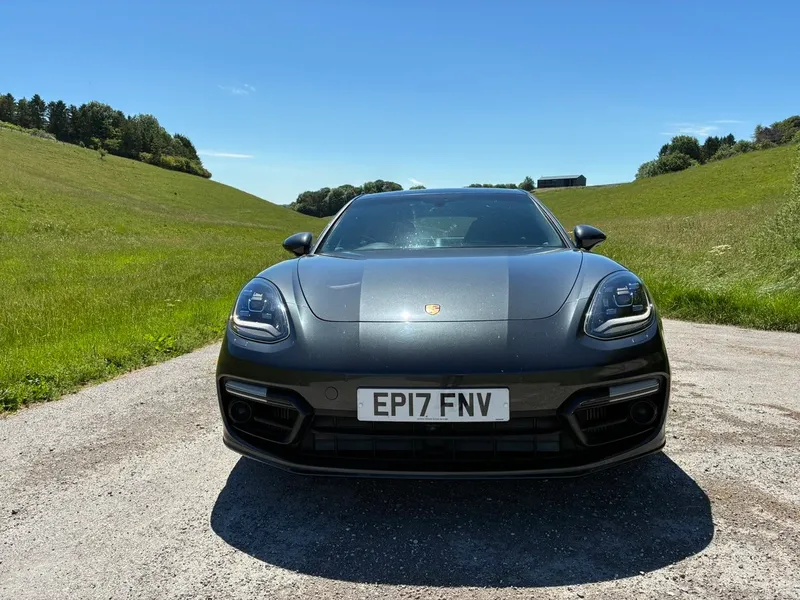
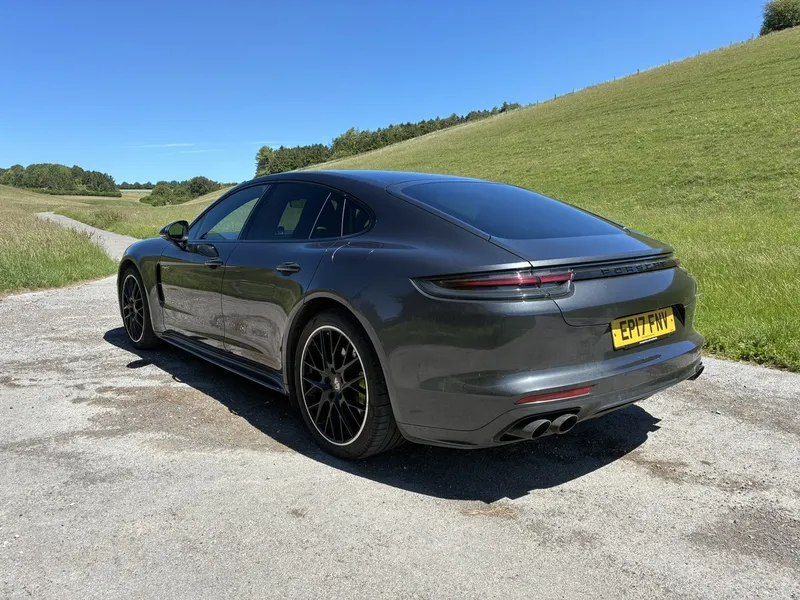
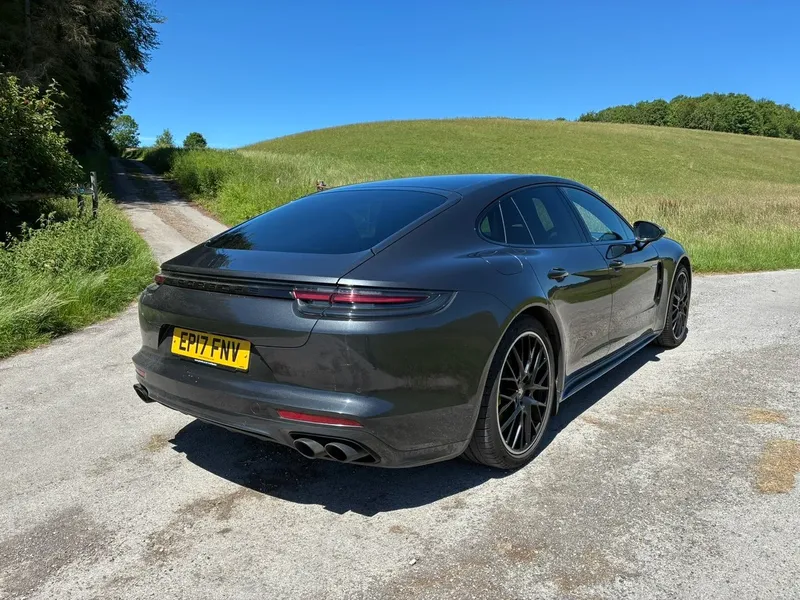
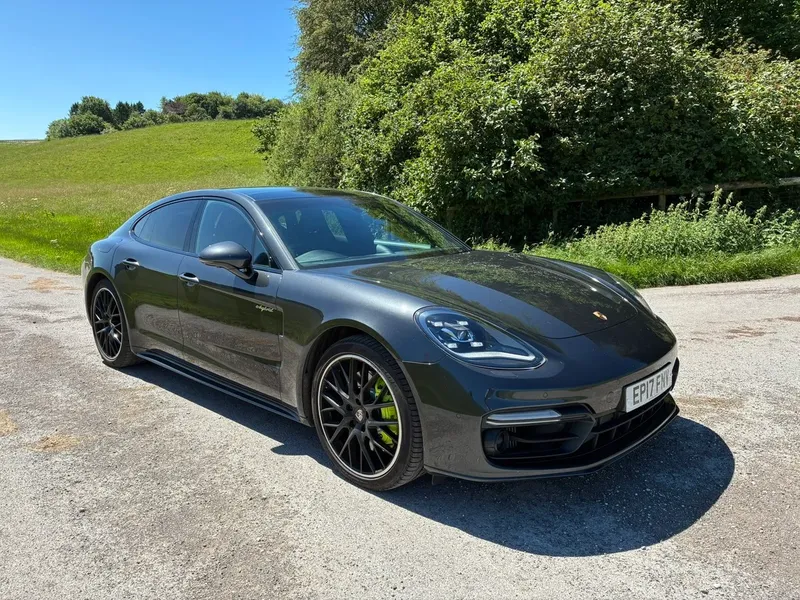
The Panamera applies Porsche’s low, rounded visual language to a long four-door body. Its sloping roofline, muscular rear haunches and hatchback-style tail give it a more sporting silhouette than a traditional executive saloon. This clearly isn’t a stretched 911, but it retains Porsche styling cues including clean lighting signatures and a broad, planted body.
A front-mounted engine, long wheelbase and four-door cabin make the Panamera a grand tourer first and foremost, but the low seating position and driver-focused controls stop it feeling like a conventional luxury saloon. The cabin is more spacious and equipment-led than a typical Porsche, while the dashboard, central rev counter and driving position are designed to keep the driver feeling central to the action.
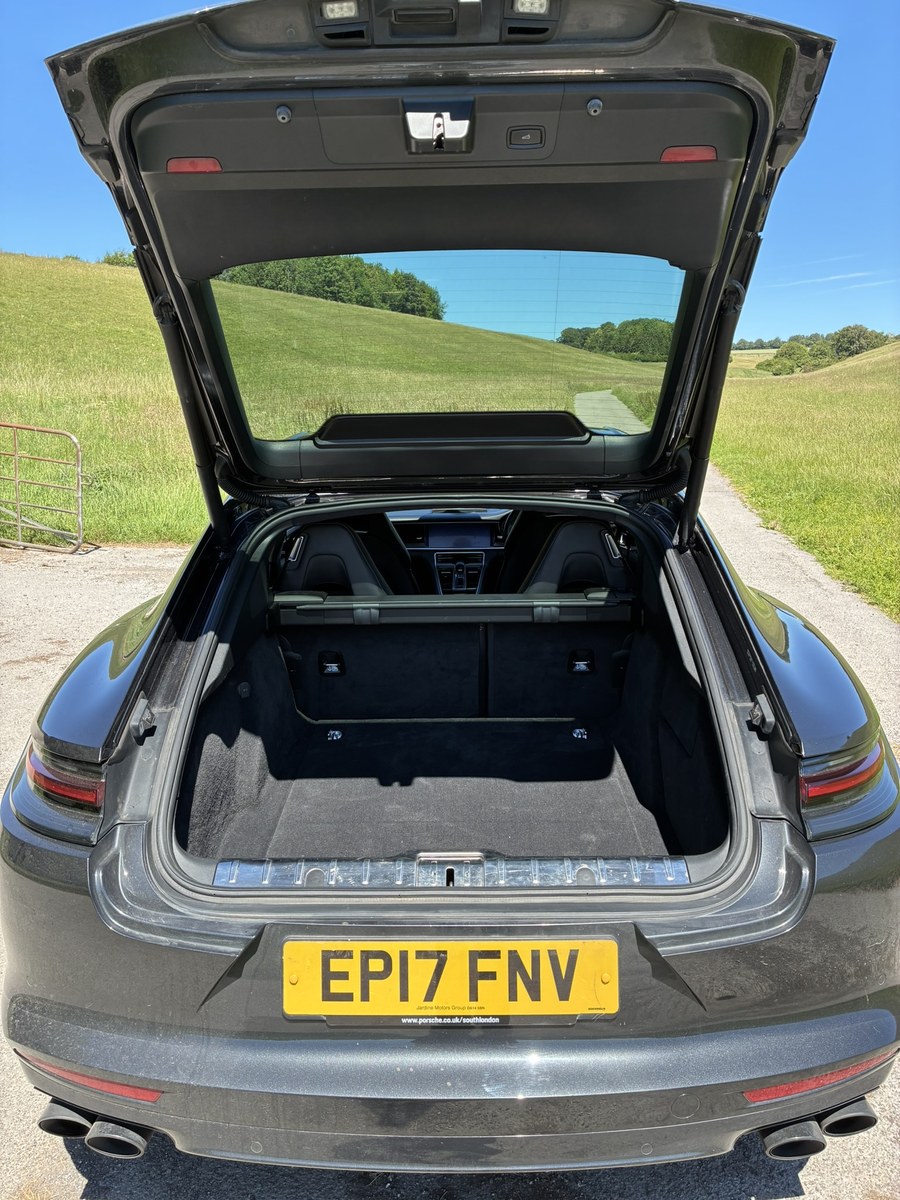
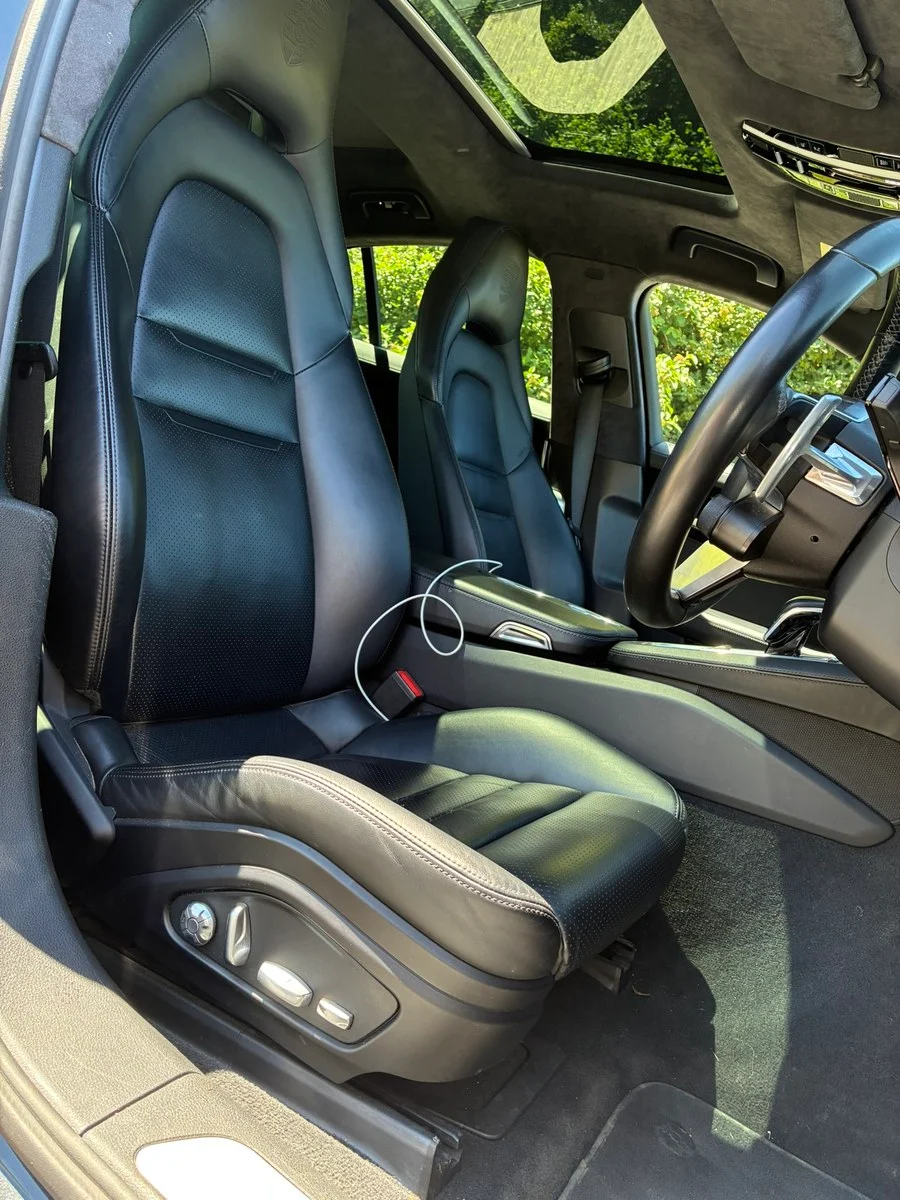
Unlike older classic Porsches, the Panamera’s safety philosophy is based on combining a strong luxury-car structure with electronic stability systems, all-wheel-drive availability, advanced braking and driver assistance. Later generations added more advanced suspension, hybrid control systems and electronic driver aids, while the latest models continue Porsche’s migration towards integrated braking/chassis/powertrain management.
Generation | Details |
First-generation | Launched in 2009, establishing the four-door Porsche GT formula with V8, V6, diesel and hybrid versions. |
Second-generation | Introduced in 2016 with sharper styling, a more modern cabin, wider powertrain choice and Sport Turismo availability. |
Third-generation | Introduced in 2023, with a stronger emphasis on plug-in hybrid performance, modern chassis technology and updated luxury. |
Pros
Distinctive brand positioning: a four-door GT with genuine performance identity.
Broad powertrain choice from V6 and V8 petrol to plug-in hybrid models.
Combines blistering performance with continent-crushing refinement.
Cons
Specification, body style and powertrain choice can make choosing the right model challenging.
Plug-in hybrid and high-output versions are highly technical, and not for the fainthearted.
The Panamera is larger and more luxury-led than Porsche’s sports cars, which may not suit traditionalists or people who think a GT3 RS is a bit soft.
Porsche Panamera for Sale
The Porsche Panamera is one of Porsche’s most versatile performance cars, capable of being all things to all buyers. Browse Porsche Panamera examples for sale on Car & Classic.
Prisutveckling
Senaste försäljningen
20 995 £
2009 Porsche Panamera 4S

För närvarande till salu
41
1 pågående auktion
40 annonser



Totalt sålda
117
Högsta försäljningspris
149 500 €
Genomsnittspris
47 205 €
Lägsta pris
8 000 €
FAQs
The Panamera GTS is the more driver-focused version, traditionally positioned around stronger chassis tuning, V8 character and a more sporting specification. The Panamera 4S is a more rounded all-wheel-drive performance model, sitting above the entry versions but below the sharper GTS and Turbo models.
The Sport Turismo body style is no longer part of the latest Panamera generation. Porsche has focused the current Panamera range on the saloon and long-wheelbase Executive body styles. Earlier Sport Turismo models remain attractive used buys among people who want more practicality and a rarer shape.
A used Porsche Panamera can be a strong buy for someone who wants Porsche performance with four-door practicality, especially since depreciation makes earlier cars look tempting compared with newer luxury saloons. A 4S is often the sweet spot for all-weather performance and everyday pace, a GTS suits buyers who want the most driver-focused character and a Sport Turismo adds estate-style practicality.
Confusingly, the standard Panamera is usually described as a four-door luxury sports saloon, despite having a large hatchback-style tailgate rather than a conventional boot. The Sport Turismo is the estate-like version, with more shooting-brake practicality and a distinct roofline.