Renault 12: Models and Specs
1969–1980 | 1.3–1.6-litre inline-four | Front-engine, front-wheel drive | Saloon/Estate
Overview
Even in its day, the Renault 12 wasn’t an exciting car, but it did lay the foundations for every small Renault which followed. Launched at the 1969 Paris Motor Show to replace the ageing Renault 8 and 10, it featured front-wheel drive with a longitudinally mounted engine, a conventional three-box body and a spacious family interior at a time when many rivals were still rear-engined or rear-drive. As such, it could be fairly described as the first ‘modern’ family Renault. Known internally as Project 117, the 12 was developed with a clear brief to be economical, not very sophisticated, but offering a roomy interior and large boot. It also had to be easy to produce and capable of being built all over the world, with none of the complexity associated with the Citroen DS or GS. Project 117 was achieved so successfully that the car was ultimately assembled under licence across four continents, and derivatives remained in production in Romania until 2004. Today, the 12 offers the classic buyer something different from the mainstream French classic market. It’s bigger, more practical and more mechanically accessible than a Renault 4 or 5, yet it sits well below the values of rarer French collectibles. The Gordini variant adds a performance dimension to a car otherwise celebrated for its competence and honesty rather than any drama or elan.
Price
- Starting price
- € 589
- Average price
- € 5.506
- Price range
- € 589 - € 26.966
Specifications
- Production years
- 1969–1980
- Body styles
- Saloon (Berline); estate (Break)
- Layout
- Front-engine, front-wheel drive
- Engine family
- 1.3/1.6-litre inline-four
- Transmission
- 4/5-speed manual; automatic
Renault 12 in Detail
History
The Renault 8 and 10 were becoming long in the tooth by the late Sixties, and Renault needed a replacement in the competitive family car segment. The large Renault 16 hatchback had proven the appeal of the front-engine, front-wheel-drive layout, so the 12 was conceived to bring that architecture to a wider market. It debuted in October 1969 as an affordable four-door saloon in L and TL trim, both powered by a 1289cc engine.
While front-wheel drive was not unusual for Renault at the time, the 12 was one of the few models in the range with its engine mounted longitudinally ahead of the front axle. This gave the car notably better handling characteristics than might be expected from a mainstream family saloon. Unlike the torsion-bar independent rear suspension found on the Renault 16, the 12 used a conventional solid beam rear axle with coil springs, a deliberate choice for robustness and ride consistency across varied road surfaces.
The estate (known as the Break) and the performance Gordini variant were both introduced in 1970. The Gordini carried the tradition of the Renault 8 Gordini into the front-wheel-drive era, featuring a larger 1565cc engine, bucket seats, a rev counter and a five-speed gearbox. The TS variant followed in 1972, using the standard 1289cc engine but allied to a double Weber carburettor, while the 1973 TR offered automatic transmission as standard.
The whole range received a facelift in 1975 with a new grille, revised rear lamps and an updated dashboard, but the Gordini was dropped from the line-up. By the time French production ended in 1980, the 12 had sold 2.5 million examples worldwide.
Specifications & Performance
The Renault 12's performance figures reflect its purpose as a well-engineered family car rather than a sporting one - with one significant exception. The standard models used the 1289cc engine throughout its production life, with output varying modestly by trim and carburation. However, the Gordini is an entirely different proposition, using a larger twin-carb unit from the Renault 16 TS and producing acceleration that was competitive for the early 1970s.
Engine | 1.3-litre inline-four |
Power output | 54–60bhp |
Top speed | 87–92mph |
Engine (Gordini) | 1.6-litre twin carburettor inline-four |
Power output (Gordini) | 111bhp |
Top speed (Gordini) | 115mph |
Design and Cabin Identity
The Renault 12 is an entirely functional piece of design. The three-box saloon body is clean and upright, prioritising interior volume over visual flair. Horizontal headlights, a simple grille and unadorned flanks give it a deliberately anonymous quality: the 12 was meant to appeal to the maximum number of buyers, rather than make a stylistic statement.
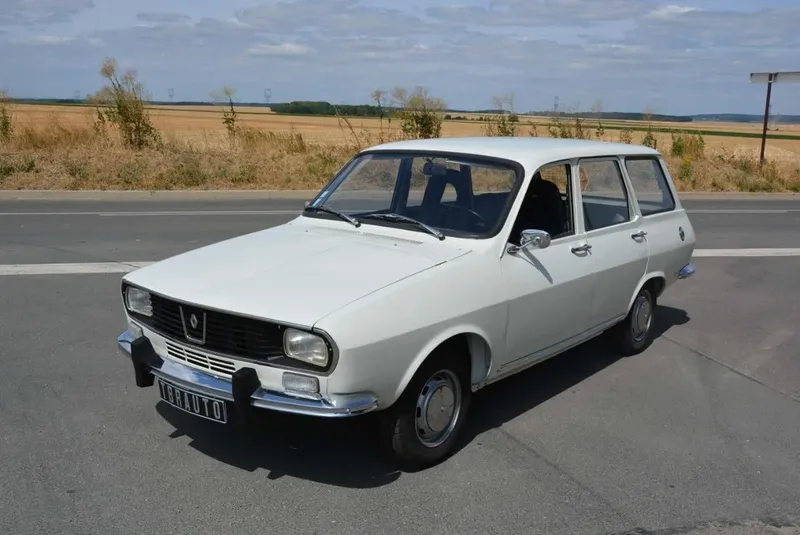
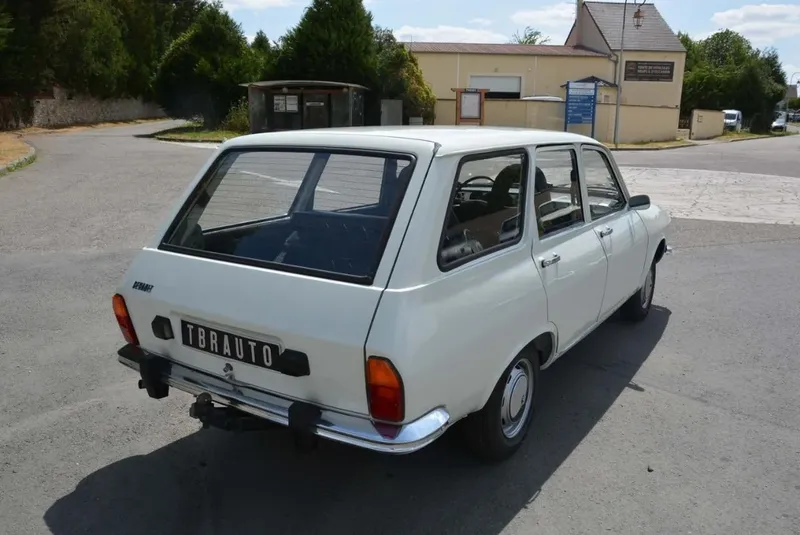
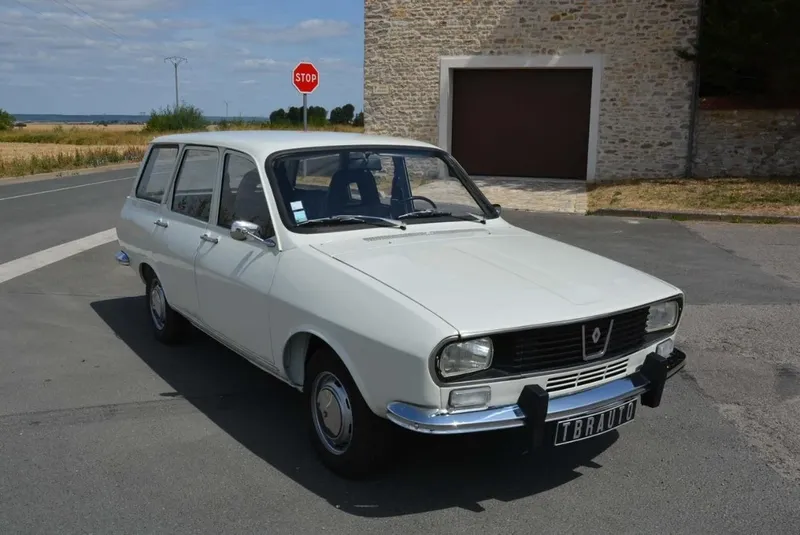
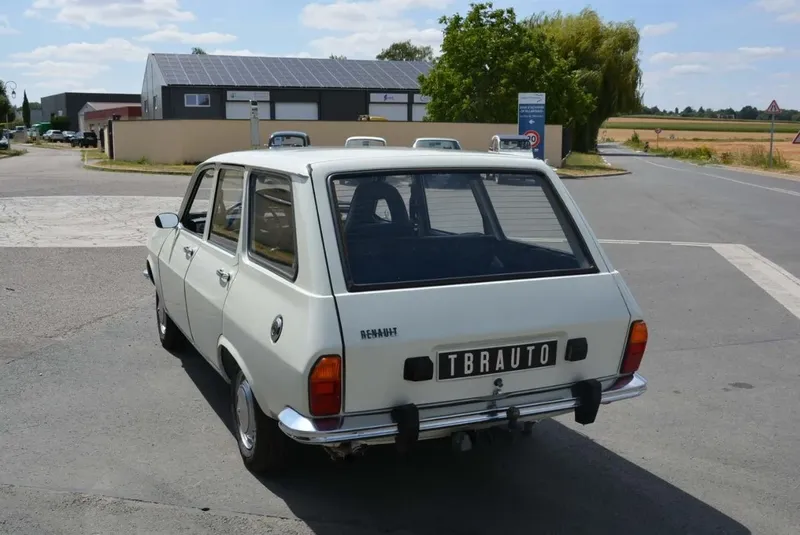
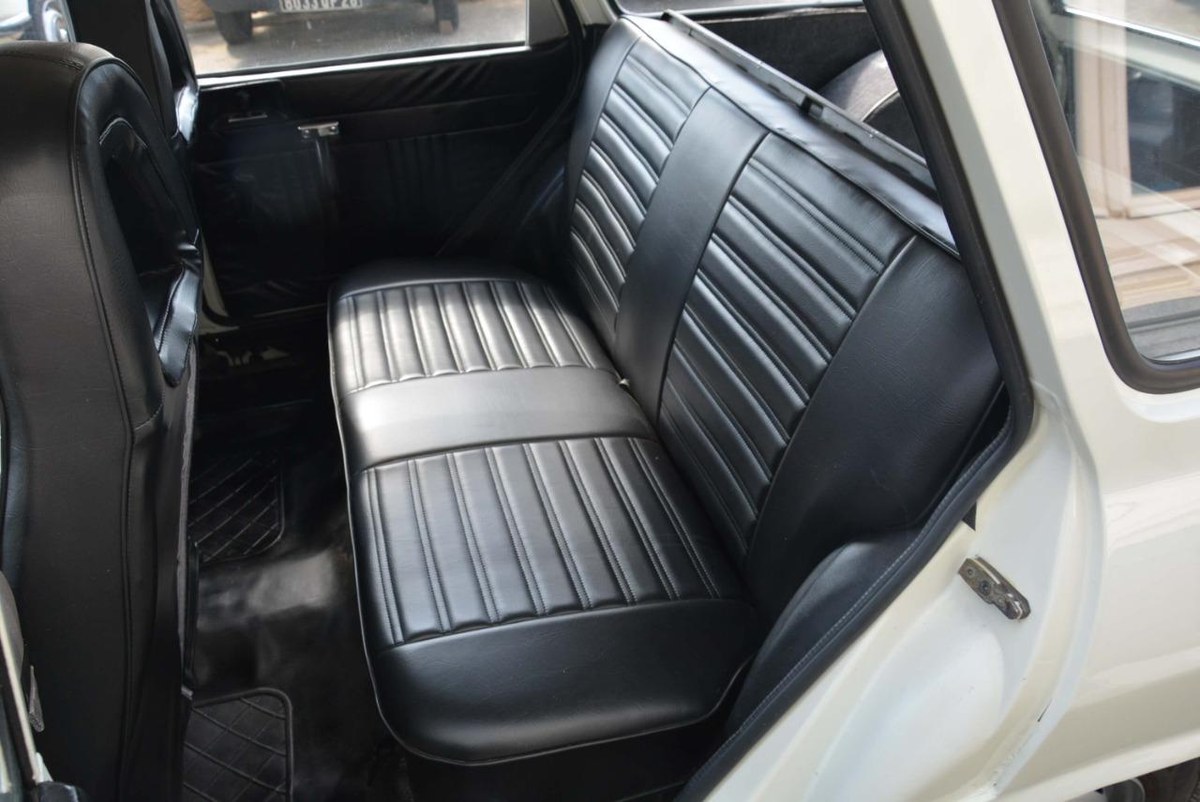
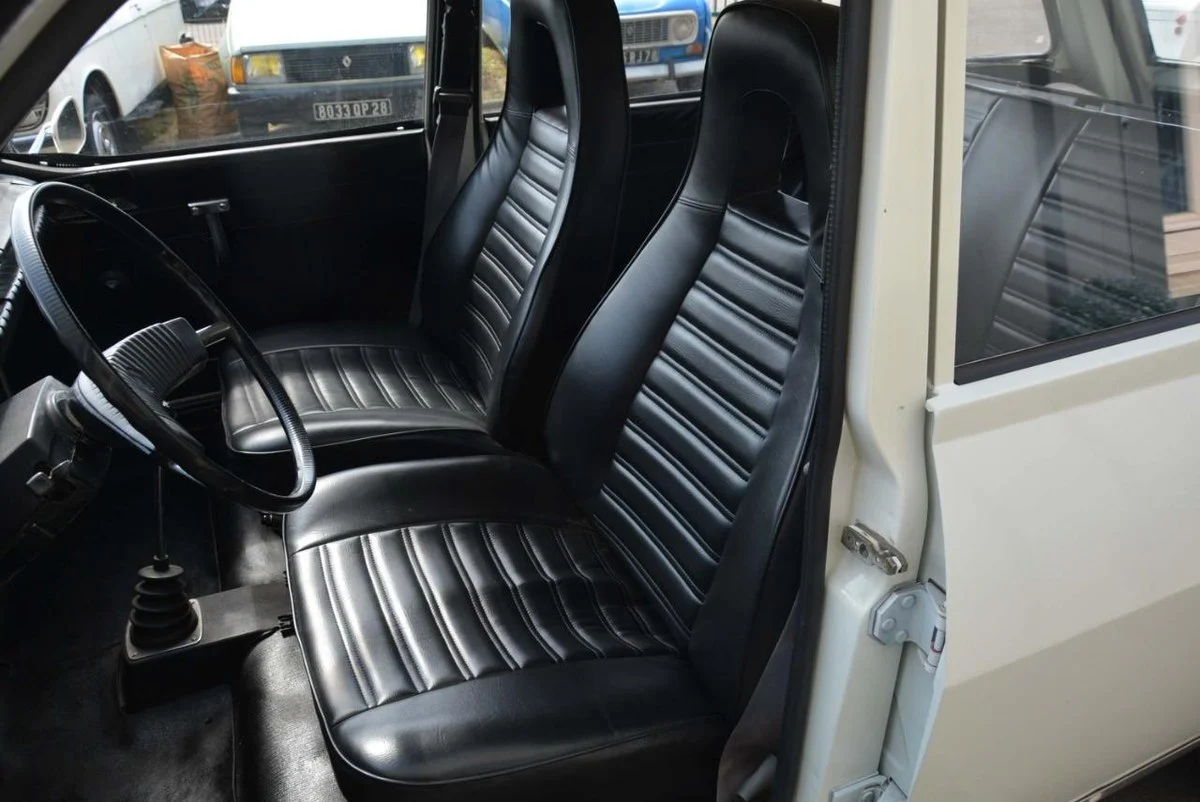
The Break extends the roofline rearward with a large glass area and a wide-opening tailgate providing generous load access, while large rear windows provide near-360° aspects. Inside, the cabin is almost Spartan with three round dials and minimal switchgear, vinyl/cloth seating and a strong emphasis on passenger space over driver engagement. The Gordini adds a little interest with bucket seats, a tachometer and the twin-stripe exterior livery that made it immediately distinguishable from cooking 12s.
Safety
The Renault 12 was built to a budget in an age before safety legislation, so you can’t expect much in this regard. Inertia-reel front seatbelts became standard during the production run, but passive safety provision was limited by the standards of the time. The 12 was structurally adequate for its era, but buyers should approach it as a vehicle to be driven with considerable care.
Variant Overview
Renault 12 Saloon (Berline). Available in L, TL, TS and TR trim, the most common survivor today and the most accessible entry point to the 12 range.
Renault 12 Break (Estate). Extended by 4cm compared to the saloon, the Break offered a large-windowed, practical loadspace that anticipated the estate car format.
Renault 12 Gordini. The performance variant, produced from 1970 to 1974, using a five-speed gearbox and a 1565cc engine fed by twin double-barrel Weber carburettors. The most sought-after and most valuable 12, but beware of replicas.
Pros and Cons
Pros
The longitudinally mounted front-wheel-drive layout gives the 12 better handling than the more wayward behaviour of the Renault 4 and early 5.
Mechanical simplicity was a core design requirement from the outset, and that accessibility still benefits owners today.
The Gordini's four-year production run and distinct mechanicals make genuine examples rare, underpinning collector value.
Cons
Decades of inattentive daily use means many 12s were poorly maintained, and corrosion in the sills, floor pan and rear suspension mounting areas is common.
The Gordini's desirability has made it a replica target, with a well-established risk of buyers encountering rebadged standard cars.
The 12 was considered dull and worthy even in its day, and it’s likely to disappoint modern drivers seeking excitement or character.
Renault 12 for Sale
We list Renault 12 saloons, Breaks and Gordinis across varying conditions and markets. Browse Renault 12s for sale here on Car & Classic.
Prijsontwikkeling
Meest recente verkoop
€ 35.000
1972 Renault 12

Momenteel te koop
18
0 live veilingen
18 advertenties



Totaal verkocht
36
Hoogste verkoopprijs
€ 26.966
Gemiddelde prijs
€ 5.506
Laagste prijs
€ 589
FAQs
Is the Renault 12 the same car as the Dacia 1300?
At launch they were effectively identical, since the Dacia 1300 was produced directly from Renault 12 tooling and was a technical and visual copy of the French car. They diverged significantly after Dacia's cooperation with Renault ended in 1978, with the Romanian car developing revised bodywork, interior and engineering updates. Today, the practical distinctions involve parts networks and ownership communities.
Why did the Renault 12 Gordini only stay on sale for four years?
The 1975 facelift of the Renault 12 range removed the Gordini from the line-up because Renault's performance focus had shifted to the Renault 5 Alpine and the Alpine A110, and the Gordini brand was being repositioned.
How do I know if a Gordini is genuine?
Replica and rebadged standard Renault 12s presented as Gordinis are sadly well-documented. A genuine Gordini should have the correct 1565cc engine number, the five-speed gearbox (unavailable on standard 12s), four round headlights and matching chassis documentation. Gordinis are highly collectable and correct engine parts can fetch significant sums, so replicas are inevitable. Carefully confirm any car marketed as authentic has the evidence and pedigree to back up its claims.
How does the Renault 12 Break compare to the saloon?
They share the same platform, engine and running gear, but the Break is a different car in character and use. The estate weighed under 1,000kg and extended the saloon's roofline rearward with large rear windows and a wide-opening tailgate. For a buyer whose priority is usability and load capacity, the Break offers a more distinctive ownership proposition and has historically been harder to find in good condition than the saloon. Indeed, condition and corrosion history should be the deciding factors in any potential purchase.