Renault Dauphine: Models and Specs
Renault Dauphine (1956–1967) rear-engine, rear-wheel-drive small family car with 845cc inline-four, 3-speed or 4-speed manual transmission, available in standard, Ondine (luxury) and Gordini (sport) variants.
Overview
The Renault Dauphine is the successor to the hugely successful 4CV, and like its predecessor, it became one of France's most important post-war exports. Launched in 1956, it offered more space, better performance and modern styling compared to the tiny 4CV, while reprising its rear-engine layout and wallet-friendly running costs. The Dauphine is a hugely significant part of 1950s and 1960s French motoring, with period charm, simple mechanics and a surprisingly roomy cabin considering its compact footprint. The Gordini variants add genuine sporting appeal, with rally pedigree and more engaging performance - words you’d never have associated with the 4CV. Sadly, rust was the Dauphine's nemesis, particularly on 1959–1963 models, which used inferior-quality steel. A solid example with good bodywork and careful maintenance is far more valuable than a shiny restoration hiding structural problems.
C&C Expertise
An unlikely rally legend winning the 1958 Monte Carlo Rally outright and dominating the 1,000cc class in events including the Mille Miglia, the Renault Dauphine was a car that punched well above its weight. Buyers could choose between sporting Gordini-tuned variants and clever tech like the ‘Ferlec’ semi-automatic transmission featuring an electromagnetic clutch. Unfortunately, Dauphines were famous for corrosion even in their day, so those in search of one today should keep a keen eye out for the dreaded tin worm. In most other respects, they’re pretty simple old cars, so perfect for the DIY mechanic.
Price
- Starting price
- 1.712 €
- Average price
- 7.906 €
- Price range
- 1.712 € - 22.260 €
Specifications
- Manufacturer
- Renault
- Production Years
- 1956–1967
- Vehicle Class
- Economy car
- Body Styles
- 4-door saloon (rear-hinged front doors)
- Layout and Drive
- Rear-engine, rear-wheel drive
Renault Dauphine in Detail
1956–1959: Launch and early success
The Dauphine was unveiled at the 1956 Paris Motor Show as the 4CV's replacement, offering a larger body, more power (admittedly starting with just 27 hp) and improved refinement. Production ramped up quickly at Renault's Flins factory (some later models were manufactured in Acton), and the Dauphine became a sales phenomenon.
1960–1962: Improvements and performance variants
Renault addressed the 3-speed gearbox's shortcomings by introducing a 4-speed option in 1960, significantly improving drivability and performance. The Ondine luxury variant also arrived in 1960 with better trim and equipment, while the sporting Dauphine Gordini was launched in 1961 with revised suspension and distinctive white-and-blue livery. The Gordini proved highly competitive in rallying, achieving class wins at the Monte Carlo Rally.
1964–1967: Final years and succession
Production continued through the mid-1960s as Renault focused on the newer R8, which shared its mechanical DNA but offered more modern packaging. The Dauphine remained in production until 1967, by which time over two million had been built globally.
Performance is modest by today’s standards, but the light kerb weight and willing engine make the Dauphine more enjoyable to drive than the figures alone suggest, especially the peppy Gordini.
All Dauphines use a rear-mounted 845cc inline-four driving the rear wheels through either a 3-speed or 4-speed manual gearbox, with no synchromesh on first gear. The 4-speed cars are noticeably more flexible and usable in modern traffic.
Note: Early 3-speed Dauphines feel very undergeared and lack the mid-range flexibility of later 4-speed models. If you're buying for driving pleasure, search for a 4-speed car or a Gordini, since the difference in real-world usability is profound.
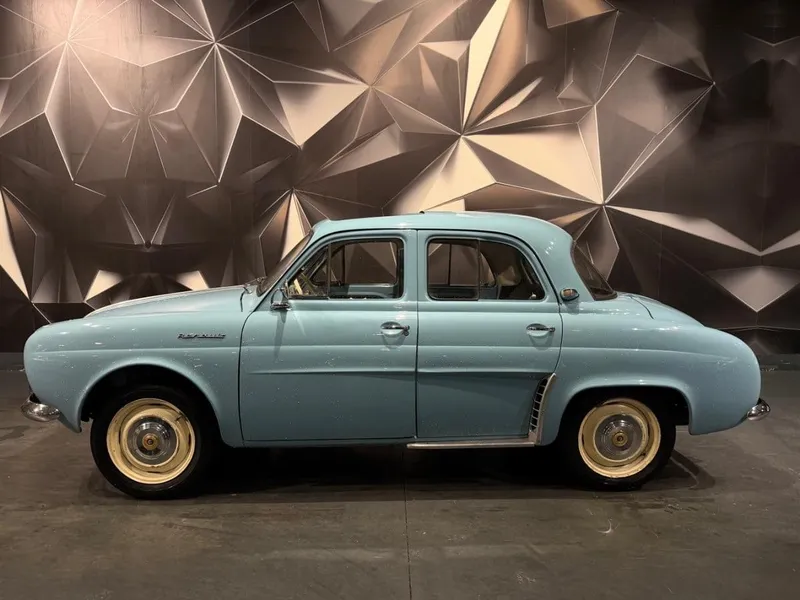
The Renault Dauphine is compact by modern standards, yet it offers surprisingly good interior space thanks to its rear-engine layout and clever packaging.
Measurement | Value |
|---|---|
Length | 4.14 m |
Width | 1.52 m |
Height | 1.44 m |
Wheelbase | 2.27 m |
Kerb weight | |
Body style | 4-door saloon with rear-hinged front doors |
Note: The Dauphine's narrow track and light weight make it easy to park and manoeuvre, but the rear-engine layout and swing-axle suspension demand respect in wet conditions, especially on worn tyres or tired suspension bushes.
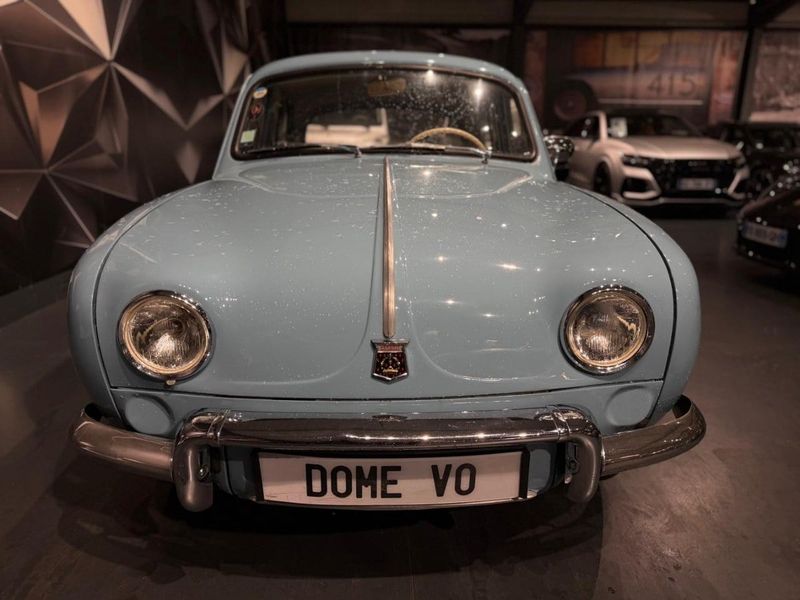
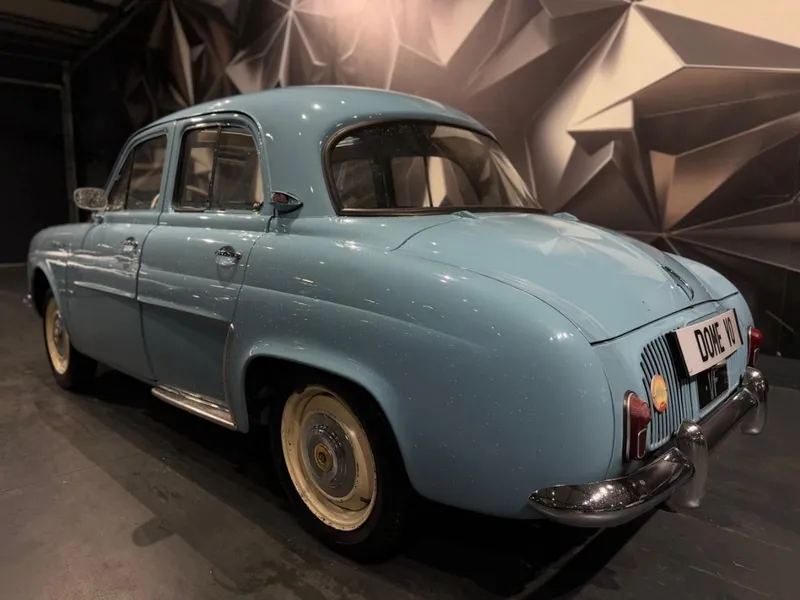
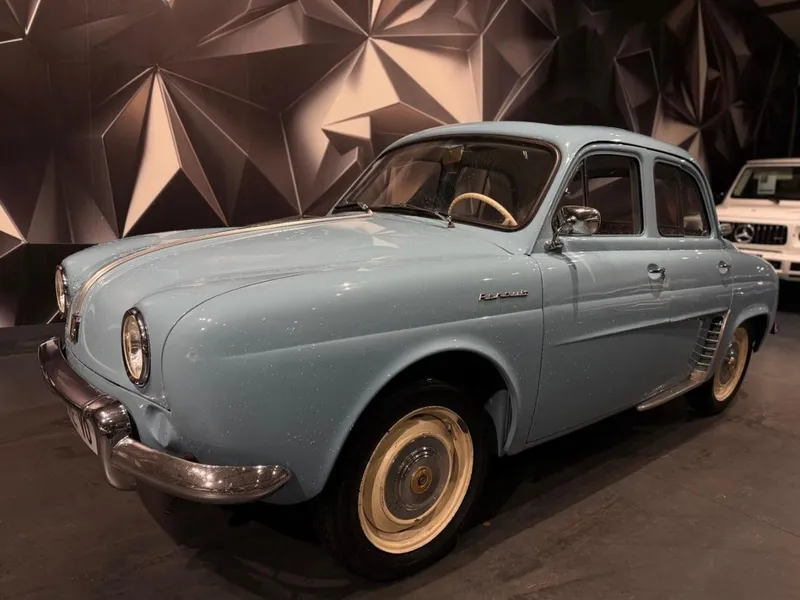
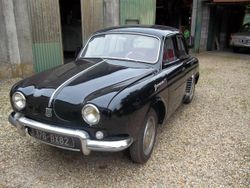
The Dauphine's design is softer and more rounded than the outgoing 4CV, with a friendlier face and more modern proportions for the mid-1950s. Styled by Renault's in-house team, it features a short front overhang and a longer rear deck, immediately marking it out as a rear-engined car.
Key design details include a smooth, rounded body with integrated wings and minimal creasing, a small front chrome grille, and rear-hinged suicide doors for easier cabin access. Gordini models are instantly recognisable by their white-and-blue livery, additional badging and sportier wheel trims.
As you might expect from a car that predates the Beatles, there are many aspects to consider when viewing a Dauphine. The 1959–1963 models used particularly poor-quality steel and tended to rust aggressively; therefore, scrutinise all body and engine bay components.
The front luggage compartment floor may be corroded due to water ingress or battery leaks, and the simple construction means the panels should fit well; uneven gaps suggest accident damage or poor repairs.
Despite its small footprint, the Dauphine offers space for four modestly proportioned adults, thanks to the rear-mounted engine and its flat cabin floor. The driving position is upright and spacious, with good headroom and a simple, uncluttered dashboard. Standard models have vinyl or cloth seats, minimal sound deadening, and painted metal surfaces, while Ondine variants feature plusher fabrics, more chrome trim, and improved fit and finish.
Arguably, Gordini models are the ones you really want, with sportier interiors encompassing bucket seats and additional instrumentation alongside the standard dashboard with clear instruments and large period switchgear.


The Renault Dauphine was designed in the mid-1950s, so safety reflects its era. In the positive column, the monocoque body construction offers greater structural rigidity than chassis-on-frame contemporaries, while there’s good visibility thanks to generous glass areas and an upright seating position. On the debit side of the ledger, the Dauphine's rear-engine layout and swing-axle suspension make handling frisky in poor conditions, especially with worn bushes, old tyres or an inexperienced driver.
We’ve already mentioned that 1959–1963 models used particularly poor-quality steel. Floors and sills rust from the inside out, so lift carpets and look for water traps around seals and drain holes.
There’s little to fear from the simple and robust 845cc engine, though rear crankshaft oil may weep onto the clutch, betrayed by oily smells or slipping clutches. Similarly, the cooling system components (hoses, radiator, water pump) are often tired on unrestored cars.
The 3-speed gearboxes are robust but feel very different from modern cars, while 4-speed units are more flexible but can suffer from worn synchromeshes. Clutch and clutch cable wear is common, so check for smooth engagement and no slipping. And while handling can become anxiety-inducing even in a well-preserved Dauphine, swing-axle rear suspension bushes and joints wear with age, potentially making the car feel particularly nervous and vague.
Finally, Gordini-specific parts (badges, trim, upholstery) are increasingly rare and valuable, while interior trim, headlinings and door cards age visibly and can be hard to source nowadays.
Variants & Generations
Preisentwicklung
Letzter Verkauf
8.500 £
1957 Renault Dauphine

Derzeit zum Verkauf
40
0 Live-Auktionen
40 Anzeigen



Verkauft
91
Höchster Verkaufspreis
22.260 €
Durchschnittlicher Preis
7.906 €
Niedrigster Preis
1.712 €
FAQs
Renault produced the Dauphine from 1956 to 1967, with the model first shown at the 1956 Paris Motor Show and entering volume production shortly afterwards.
Early cars (1956–1959) used a 3-speed gearbox that felt very undergeared. Renault responded to the deserved criticism in 1960 by offering a 4-speed option, which greatly improved usability and mid-range flexibility.
The Ondine was the luxury version of the Dauphine, introduced in 1960 with plusher trim, more chrome, better equipment and the 4-speed gearbox as standard.
The Gordini (1961–1967) is the sporting Dauphine with 38–40 hp, 4-speed gearbox, revised suspension, and distinctive white-and-blue rally livery. It's the most desirable mainstream Dauphine, with proven competition pedigree.
The Dauphine shares the 4CV's rear-engine, rear-wheel-drive layout, which creates a flat cabin floor and good interior space but requires careful driving in poor conditions due to the swing-axle rear suspension.
Launched in 1962, the Renault 8 gradually replaced the Dauphine as Renault's mainstream small family car, offering more modern styling and improved refinement while retaining the same rear-engine, rear-wheel-drive layout.