Rolls-Royce Camargue: Models and Specs
1975–1986 · 6.75‑litre naturally aspirated V8 · Front-engine, rear-wheel drive · Two-door coupé
Overview
The Rolls-Royce Camargue went big from the outset. The most expensive production car in the world at its launch in March 1975 (costing nearly twice as much as a Silver Shadow) retained this distinction for the majority of its opulent 11-year production life. The Camargue represented a rather implausible collaboration between Rolls-Royce and Pininfarina, creating a completely new model from a blank sheet of paper. The result was the first Rolls-Royce in the company's post-war history to be designed entirely outside its own studios. The Camargue's character is built on three foundations: rarity (531 cars assembled across 11 years), the visual drama of Pininfarina coachwork draped over a Rolls-Royce chassis, and a specification that placed it above every other car on sale. It wasn’t faster than the Silver Shadow or more spacious than the Corniche, but it was far more expensive and exclusive.
Specifications
- Production years
- 1975–1986
- Total production
- 531 cars
- Body styles
- Two-door coupé
- Layout / drive
- Front-engine, rear-wheel drive
- Engine family
- 6,750cc V8
Rolls-Royce Camargue in Detail
From Park Ward to Pininfarina
The Camargue's development began in October 1970, when Rolls-Royce dispatched a Mulliner Park Ward Silver Shadow saloon to Pininfarina's Turin headquarters. The commission was to design an entirely new body for a range-topping grand tourer, so Paolo Martin, the young designer responsible for the brief, dismantled the Silver Shadow's floorpan and designed a deliberate break from the formal Rolls-Royce visual language with lower and more emphatically Continental proportions.
Under the Pininfarina body, the Camargue shared its floorpan, 6.75‑litre V8 engine and GM Turbo-Hydramatic transmission with the Silver Shadow and Corniche. In February 1977, the car received the Silver Shadow II's power rack-and-pinion steering rack; in 1979, the rear independent suspension of the Silver Spirit was adopted. The Camargue was also the first Rolls-Royce to feature a dual-zone automatic air-conditioning system.
An Anniversary Edition was produced in limited numbers with a revised centre console incorporating a television and VCR, with aspects of the trim colour-coded to specification. The Camargue name was discontinued in 1986.
The Rolls-Royce Camargue's performance was never its primary proposition, and Rolls-Royce indicated this by declining to publish official power or torque figures. Period road test figures established a top speed of 120 mph and a 0–60 mph time of 11.3 seconds, which was comparable with the Silver Shadow saloon, which lacked the Camargue's more powerful Solex carburettor but weighed 228 kg less.
The performance figures were consistent throughout the production run because the engine specification underwent no major changes. What defines the Camargue's performance character is the quality of its power delivery; the 6.75‑litre V8's effortless torque at low revs, the self-levelling suspension's ability to maintain a steady ride height regardless of load, and the near-total absence of mechanical noise.
Engine | Power | 0–60 mph | Top speed |
RR L-series 6,750cc V8, twin SU carbs (cars 1–65) | 200 bhp (approx) | 11.5 sec | 118 mph |
RR L-series 6,750cc V8, Solex 4A1 four-barrel (cars 66 onwards) | 220 bhp approx) | 11.3 sec | 120 mph |
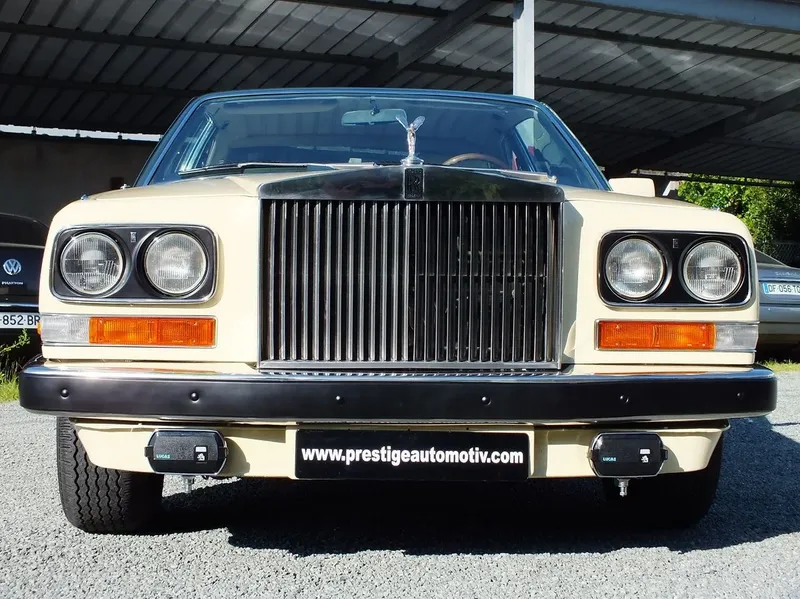
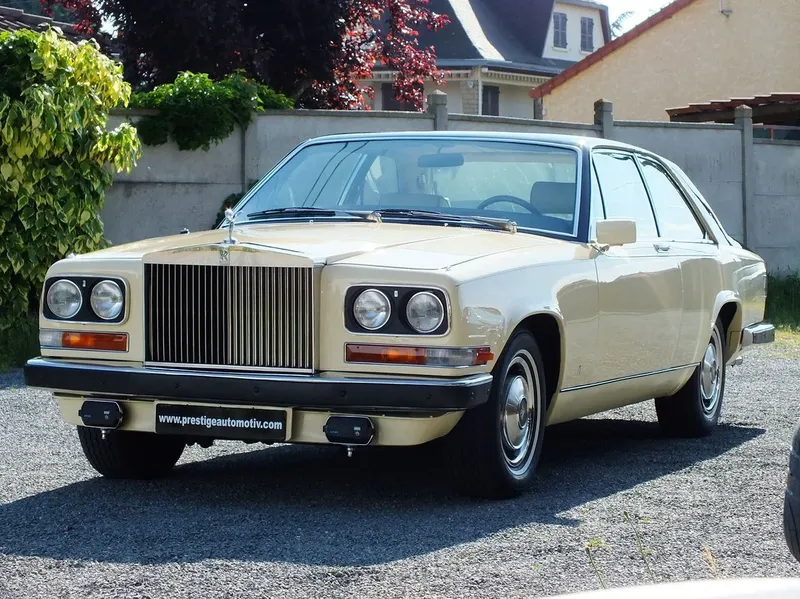
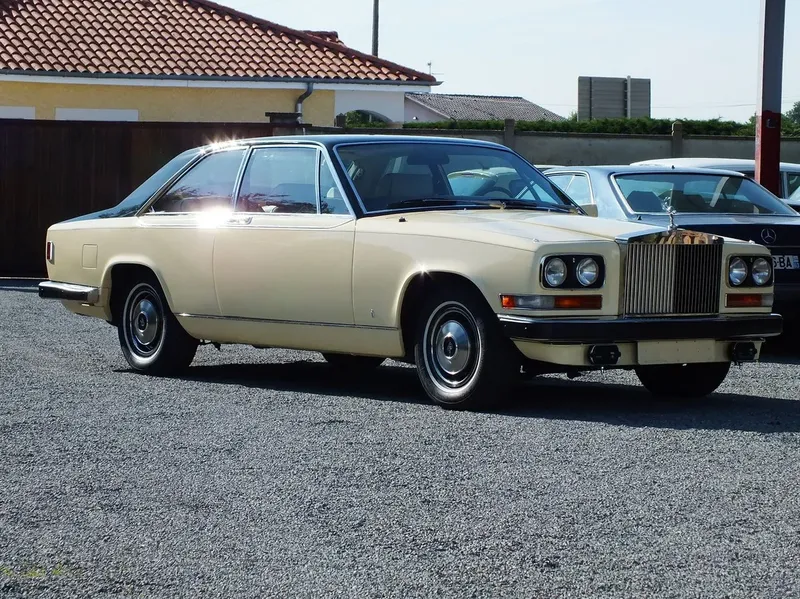
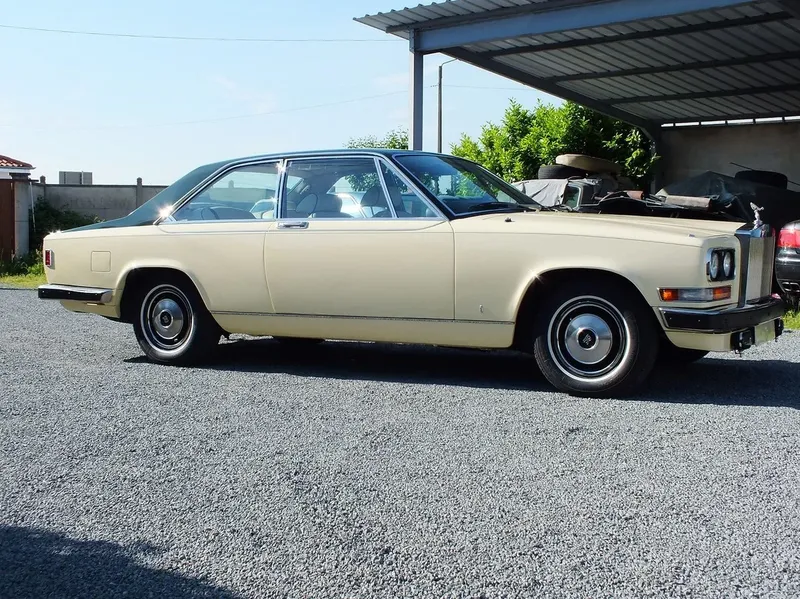
The Rolls-Royce Camargue is immediately identifiable, as it’s unlike any other Rolls-Royce ever produced. A two-door coupé with a wide and low stance, it sports a near-horizontal Pininfarina roofline and the marque's Pantheon grille tilted at a seven-degree angle rather than held perfectly vertical. The tilt was a deliberate provocation, underlining that the Camargue was not bound by the visual conventions of the Silver Shadow family it sat above.
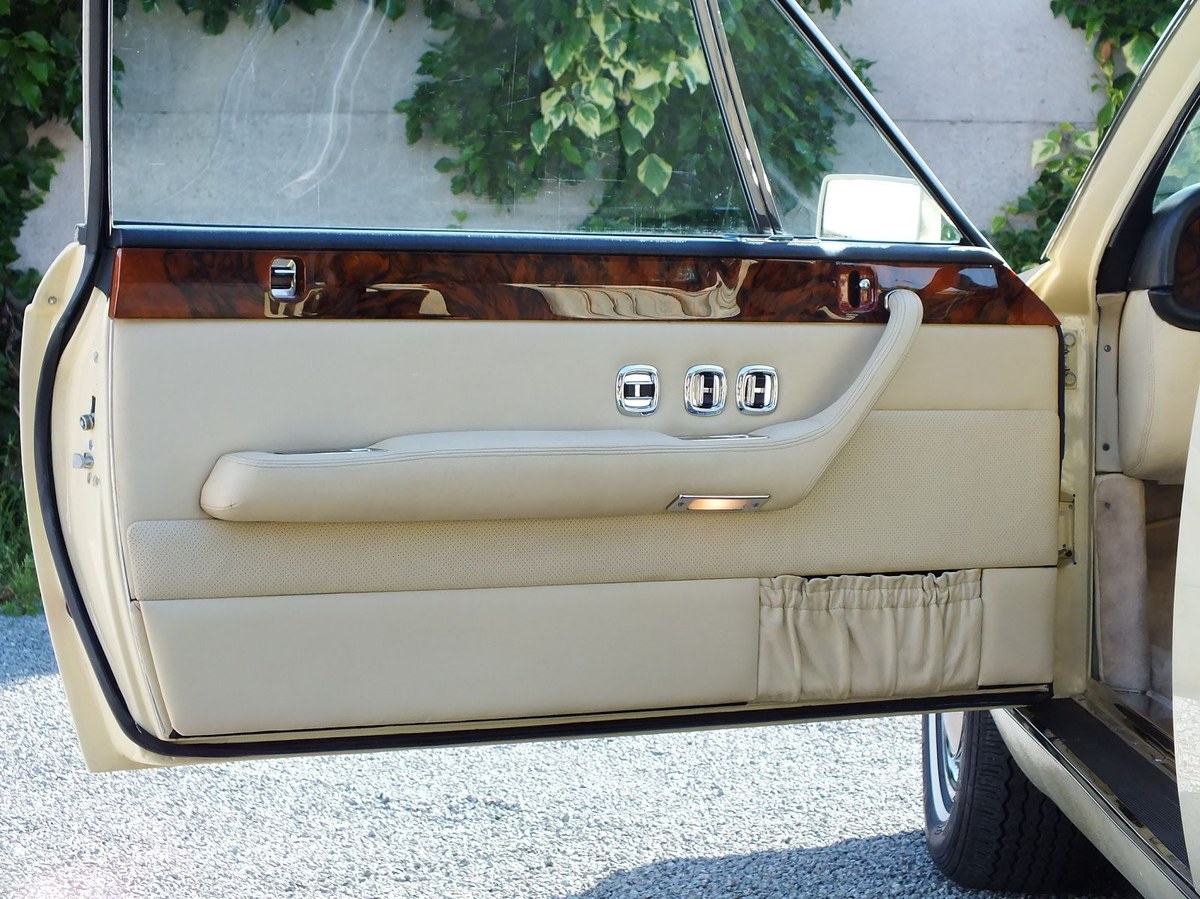
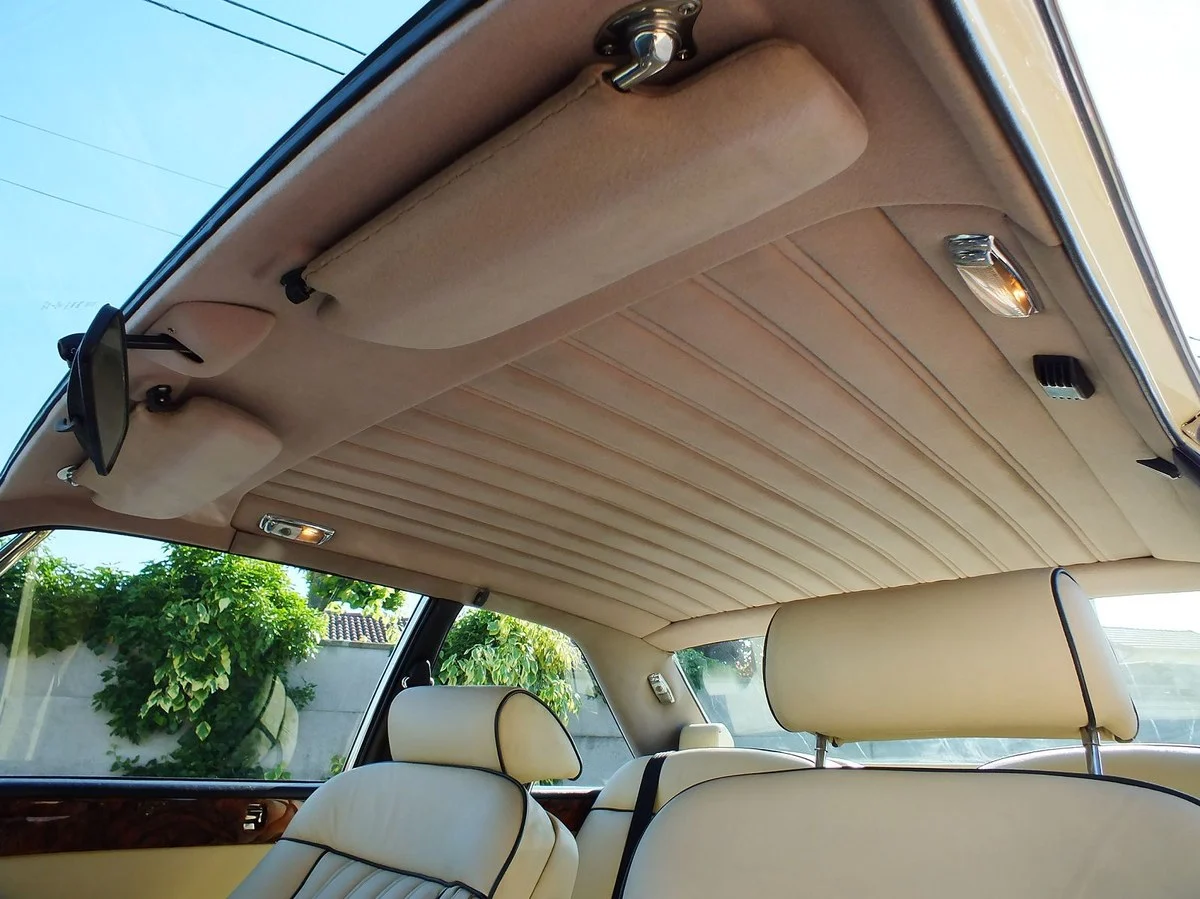
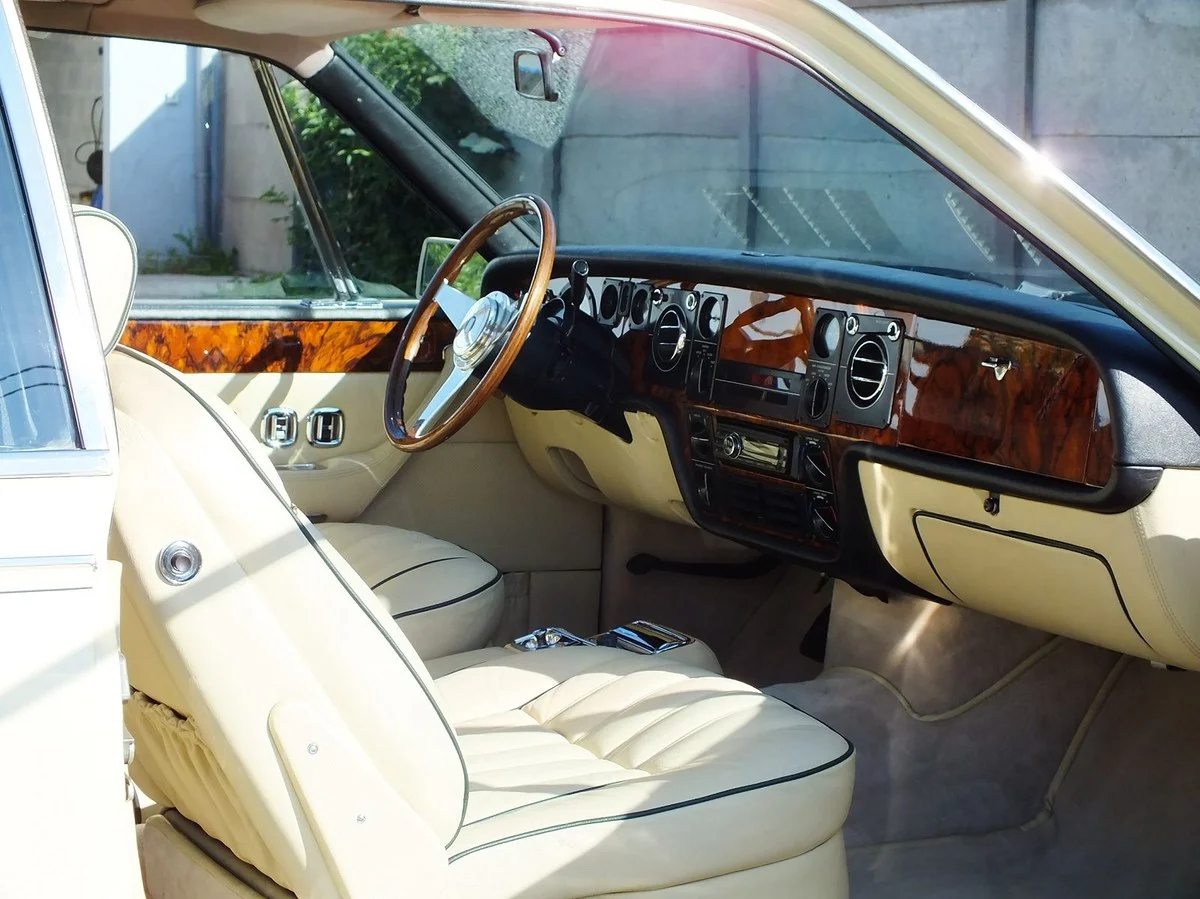
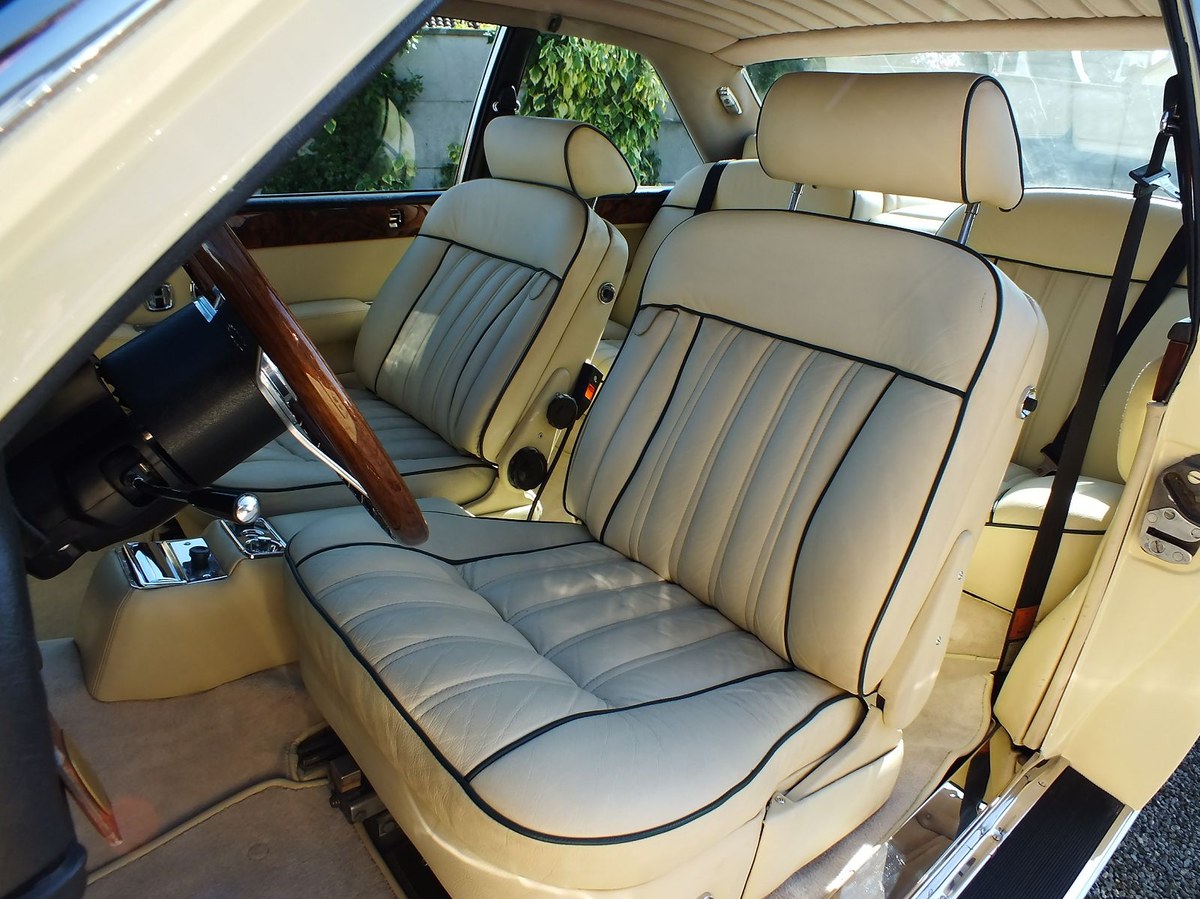
Inside, the Camargue's cabin featured hand-stitched Connolly hides, Wilton wool carpets, machined aluminium fascia details and the split-level automatic climate control system that proved to be the Camargue's most significant engineering legacy. The rear accommodation is 8.5 inches wider than the Corniche's, and the 25 cubic feet of boot space was the largest in the Rolls-Royce range.
The Camargue is a single-generation model with no architectural changes across its production life.
Standard production Camargue (1975–1986). All 531 cars share the same Pininfarina body, 6.75‑litre V8 and GM automatic transmission; rolling refinements are tracked by chassis number rather than named model updates.
Anniversary Edition. A limited production run with revised centre console, factory-fitted television and VCR and colour-coded interior trim.
The Rolls-Royce Camargue was the first Rolls-Royce to be designed with passive safety explicitly in mind from the outset, since the development brief given to Pininfarina included structural safety requirements. The Volante-style A-pillar and reinforced sill structure were direct results of that brief. Four-wheel disc brakes provided the car's primary active stopping system throughout production.
Pros:
The only post-war Rolls-Royce with a Pininfarina body, giving the Camargue a design provenance that no other car in the range shares
Pioneer of split-level automatic air-conditioning, a technology Rolls-Royce subsequently adopted across its entire model range
Only 531 cars were built across 11 years, creating genuine and irreplaceable rarity within the Rolls-Royce family
Cons:
At 2,347 kg, the Camargue is 228 kg heavier than the Silver Shadow, suppressing performance despite its more powerful Solex engine
Those Solex 4A1 carburettor parts are scarce, and warping issues have led many surviving cars to be converted to twin SUs, reducing performance
The Camargue is an expensive vehicle to buy, run, service and maintain
FAQs
At its 1975 launch price of £29,250, the Camargue was the most expensive production car on sale anywhere, and its price continued to rise to reflect inflation and the car's continued position at the apex of the Rolls-Royce range.
The Corniche and Camargue share the Silver Shadow platform and 6.75‑litre V8, but are otherwise distinct cars. The Camargue carries a Pininfarina two-door coupé body, whereas the Corniche had Mulliner Park Ward coachwork; the Corniche was available as both a coupé and a convertible, whereas the Camargue was only ever produced as a coupé.
Documented service history with continuous specialist maintenance is the single most important aspect. The 6.75‑litre V8 and GM automatic transmission are robust when properly maintained but become costly when neglected. The self-levelling hydraulic suspension should be checked for correct operation, and a Camargue that sits unevenly or rides poorly has a system fault that’ll be expensive to rectify correctly.
The Camargue was the first Rolls-Royce to be fitted with a dual-zone automatic air-conditioning system that independently controlled temperature and airflow across different areas of the cabin. The system was so successful that Rolls-Royce adopted it across its entire model range in subsequent years.