

Spyker C8: Models and Specs
2000–2014 | 4.2-litre Audi V8 | Rear mid-engine, rear-wheel drive | Roadster (Spyder) / Coupé (Laviolette) / Coupé and Roadster (Aileron)
Overview
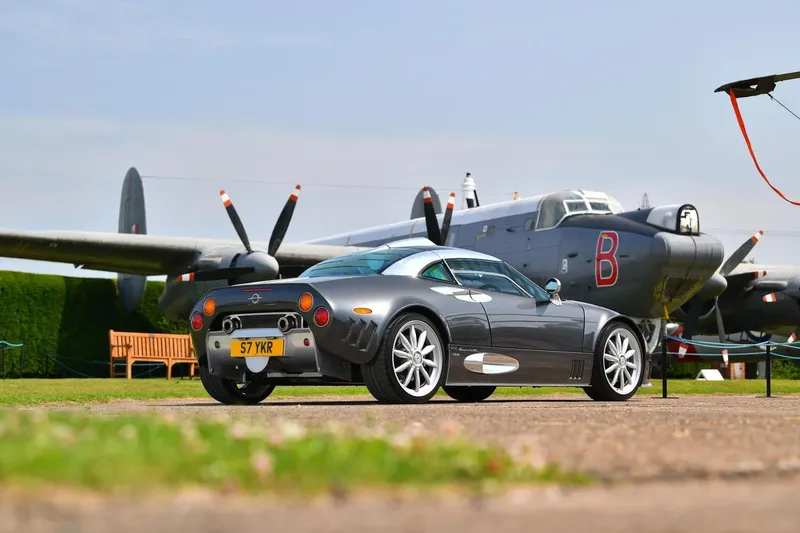
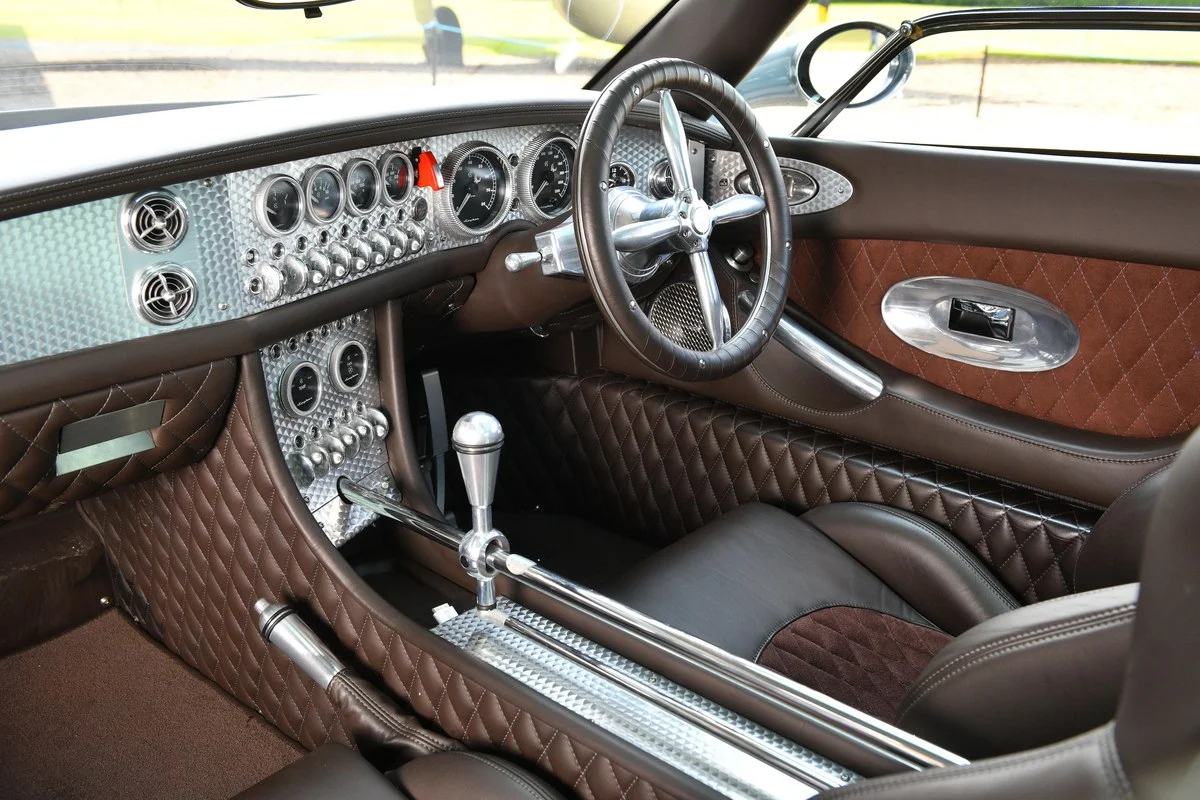
It’s not uncommon nowadays for an unknown car manufacturer to release a dramatic debut model, but in 2000, the Spyker C8 fell from a clear sky to become one of the most singular vehicles of the early 21st century. Conceived by a Dutch businessman and bearing a brand name that had been dormant since 1925, it was completely uncategorisable. Not quite a supercar, not quite a GT, not exactly rational, but entirely coherent nonetheless. Founded by Victor Muller and Maarten de Bruijn, the reconstituted Spyker company was set up to manufacture exclusive sports cars. It began with the C8, which debuted at the Birmingham Motor Show in 2000 as a hand-built, mid-engined two-seater whose identity was inspired by the language of early aviation. The C8 was a riot of exposed rivets, propeller motifs, an aluminium dashboard and a gear linkage left deliberately visible through the floor. These were mechanics functioning as sculpture. The Audi V8 has been a constant in all Spyker road cars, with turbocharging and supercharging deployed on a few models. The aluminium spaceframe chassis is clothed in aluminium panels, with state-of-the-art suspension throughout. The C8 was certainly not a high-volume car, with annual sales never exceeding double figures, but this rarity is now its defining characteristic.
Specifications
- Production years
- 2000–2014
- Body styles
- 2-door roadster/coupé
- Layout
- Rear mid-engine, rear-wheel drive
- Engine family
- 4.2-litre Audi V8
- Transmission
- 6-speed manual; 6-speed auto
Spyker C8 in Detail
History
The C8's origins lie in a squat, Audi-powered mid-engine prototype called the Silvestris V8, designed by Maarten de Bruijn and showcased at the 1999 Goodwood Festival of Speed. When Victor Muller saw it, he joined forces with de Bruijn and the two turned the Silvestris into the Spyker C8, draping hand-crafted aluminium bodywork over an ultra-rigid spaceframe.
The Laviolette fixed-roof coupé followed in 2001, named after Joseph Valentin Laviolette, who helped develop Spyker racecars in the early 1900s. In 2002, Spyker unveiled the road-legal performance Double 12S using a Mader-BMW 4.0-litre V8 rather than the Audi unit. The Double 12 name referenced the 24-hour world speed record set in 1922 by racing driver Selwyn Edge.
In March 2009, Spyker introduced the production version of the C8 Aileron, featuring a longer wheelbase, more interior space, improved ergonomics and the option of a ZF six-speed automatic alongside the Getrag manual. Final assembly was relocated from Zeewolde to Coventry, closer to key suppliers. The final Spyker C8 Spyder was completed in 2014, just before the company entered bankruptcy proceedings.
Specifications & Performance
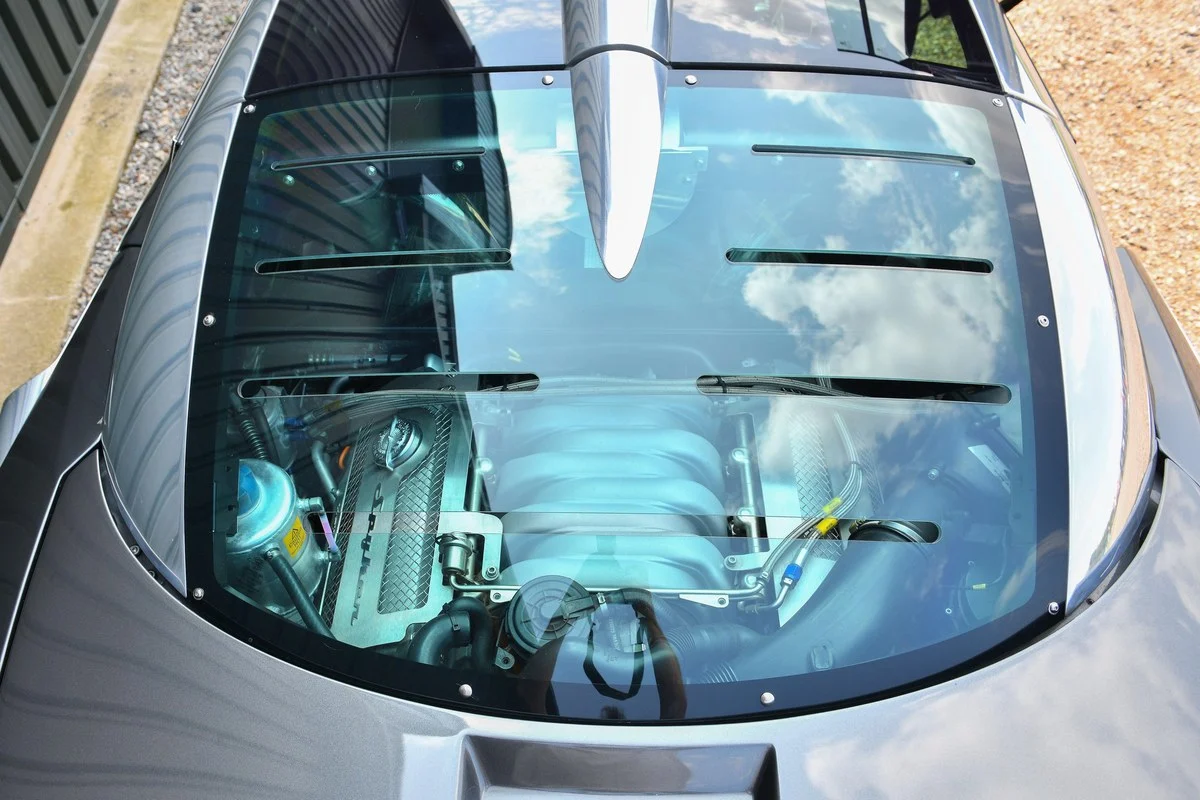
The Audi 4.2-litre V8 from the B7 RS4 was fitted to virtually every road-going C8 across its production run, producing approximately 395bhp in naturally aspirated form. The C8 was always defined by the combination of a sonorous naturally aspirated V8, a manual gearbox, an aluminium structure and a low weight which mainstream supercars of comparable price struggled to match.
Engine | 4.2-litre Audi V8 |
Power | 395bhp |
0–62mph | 4.5 seconds |
Top speed | 186mph |
Variant Overview
C8 Spyder (2000–2014). The founding model and longest-running variant; an open-top roadster on the original short-wheelbase platform.
C8 Laviolette (2001–2014). A fixed-roof coupé counterpart to the Spyder whose jet-fighter canopy roofline gave it a distinct character from the roadster. Includes the limited-run LM85, a road-legal tribute to the GT2-R Le Mans racer, appropriately limited to 24 examples.
C8 Aileron/Spyder (2009–2014). This substantially revised second-generation car had a longer wheelbase, a more resolved interior, an automatic gearbox option and meaningfully updated styling.
Design and Cabin Identity
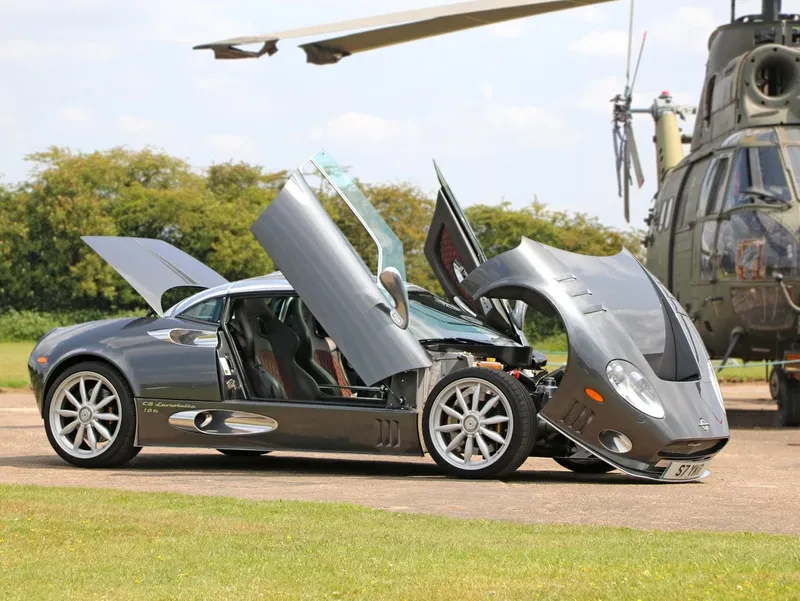
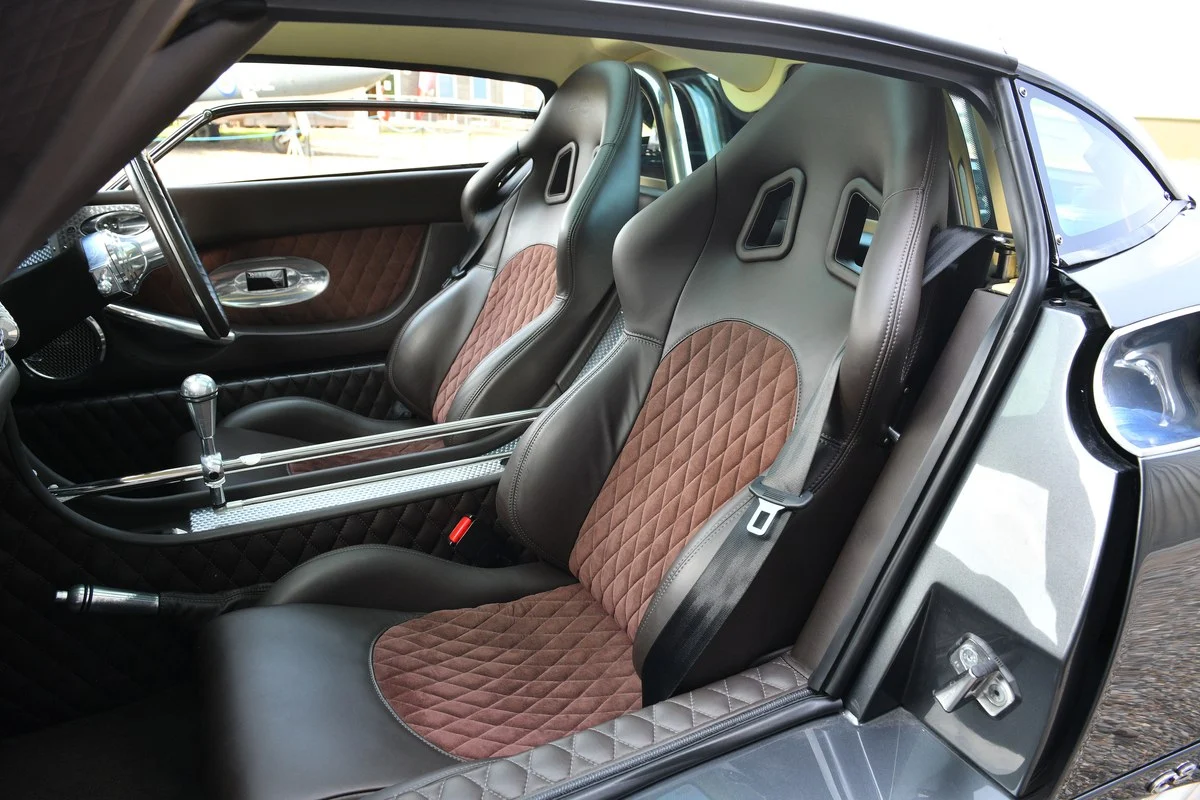
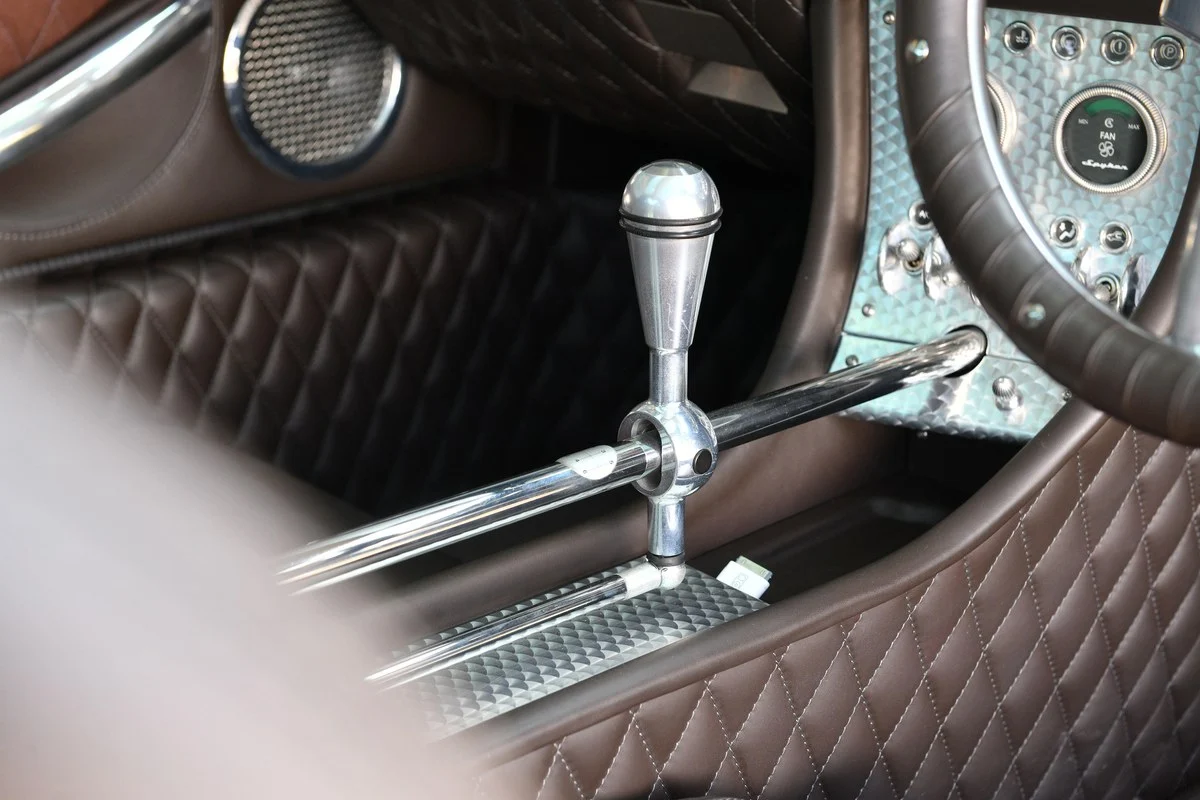
Despite hints of Aston Martin, the C8 is immediately recognisable. The proportions are those of a classic mid-engine two-seater with a long bonnet, cab-rearward layout and compact tail. What makes it singular is the treatment. Upward-opening swan-style doors reveal a diamond-quilted leather interior that recalls a giant Chanel handbag. Inspired by vintage aviation, the aluminium dash, exposed shift linkage and pedal box are sheer works of art.
In first-generation cars, a propeller design was applied to many elements, but the Aileron exhibited a transition to turbine engine-inspired design while exposed rivets reference aircraft construction. NACA ducts appear as functional air intakes wearing their aeronautical identity, and even the wheels suggest turbine blades. The cabin, meanwhile, is intimate and handmade. It’s not a comfortable place for the taller driver, and the ergonomics prioritise experience over convenience, but those aren’t criticisms among the buyers the C8 is aimed at.
Safety
The Spyker C8 was manufactured at a time when features like traction control and stability systems were becoming standard. All road-going C8s were fitted with ABS and airbags, with AP Racing brakes across the range. The aluminium spaceframe structure provides a rigid safety cell appropriate to the car's performance envelope, but this is emphatically not a car for the inexperienced driver. It has no electronic safety net to rein in its substantial power, resulting in a driving character that rewards commitment while punishing inattention.
Pros and Cons
Pros
The exposed gear linkage is art in motion, and it makes every gear change in a C8 a tactile and visual event that no other road car replicates.
With fewer than 300 examples built across the entire production run, the C8 occupies a very exclusive tier of rarity.
Buying a C8 involves acquiring a specific story of marque revival, which gives Spyker ownership a historical weight disproportionate to its production numbers.
Cons
Spyker's endless financial difficulties mean the official parts and service infrastructure has never achieved the stability of other low-volume manufacturers.
The C8's positioning as performance art as much as a car means its market is narrow and illiquid.
Without access to a marque-experienced technician, routine maintenance becomes both difficult and expensive.
FAQs
What are the differences between the Spyker C8 Spyder, Laviolette and Aileron?
The Spyder and Laviolette are the open and closed body styles of the original short-wheelbase C8, sharing the same platform, engine and core architecture. The 2009 Aileron is a different car with a longer wheelbase, more interior space, improved ergonomics and the addition of an optional ZF six-speed automatic gearbox alongside the Getrag manual. The Aileron was the definitive C8, better in almost every measurable way than the original, though early models retain the appeal of being original and purer.
Is the Spyker C8 engine reliable?
The Audi 4.2-litre V8 at the heart of virtually every road-going C8 is one of the most proven engines of its generation. Lifted from the B7 RS4, it was used across the Audi and Volkswagen Group ranges in multiple applications. The engine itself isn’t the risk here; the risk is the bespoke spaceframe structure, hand-built bodywork and specialist components around it.
How many Spyker C8s were built?
By 2011, around 240 vehicles had been built, including racing versions. The final car was completed in 2014 just before the company entered bankruptcy, with its chassis number (110) displayed on a side-skirt badge. Total road car production across all C8 variants from 2000 to 2014 stands at under 200 examples, making the C8 one of the rarest sports cars of the modern era.
How does the Spyker C8 compare to a Porsche 911 or Ferrari F430 as a buying decision?
The 911 and F430 were volume sports cars with established dealer networks, strong parts availability and proven reliability records. The C8 offers none of those things. Instead, it’s an object of unique visual identity, total rarity and a handmade character that no volume manufacturer can replicate. A buyer choosing between a C8 and a 911 is making a choice between two entirely different philosophies; bespoke artistry or off-the-peg familiarity.