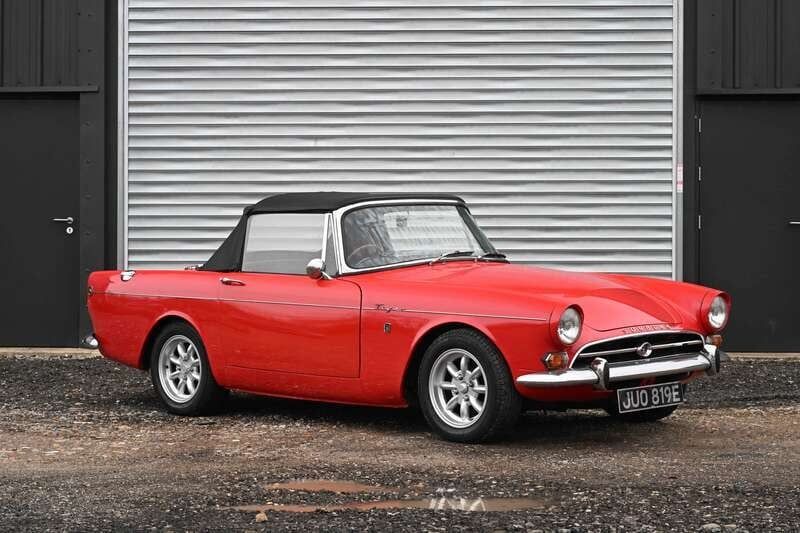
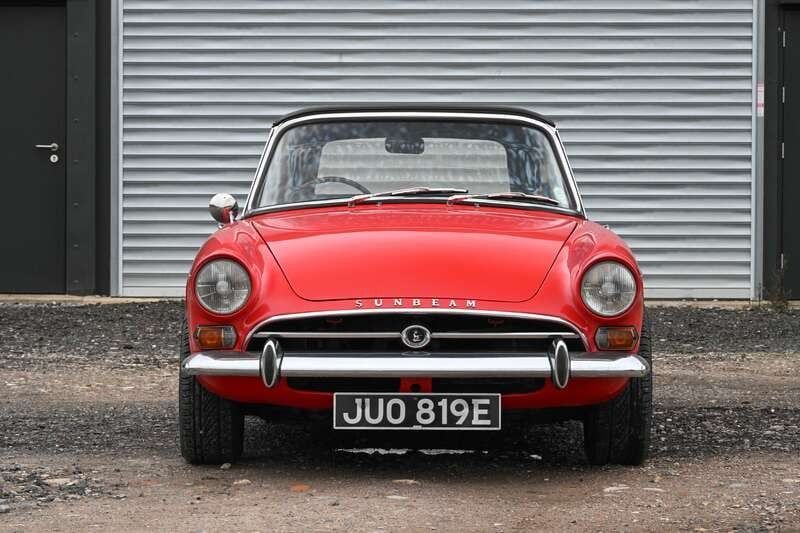
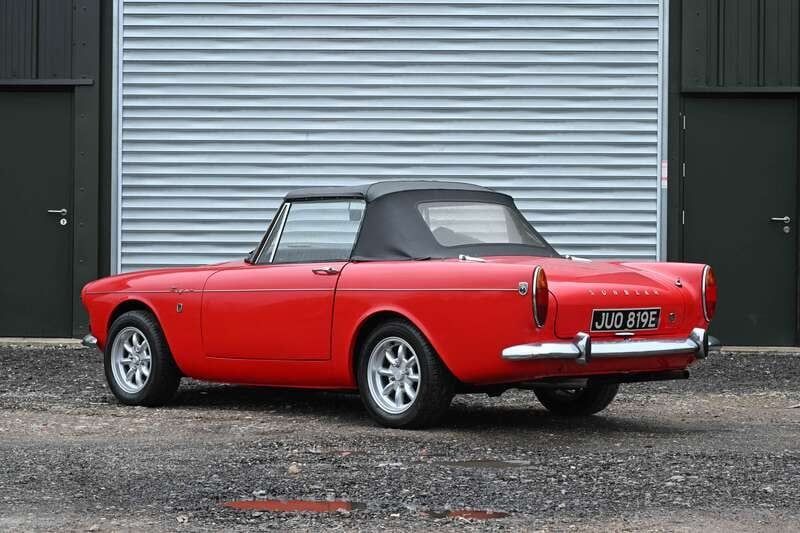
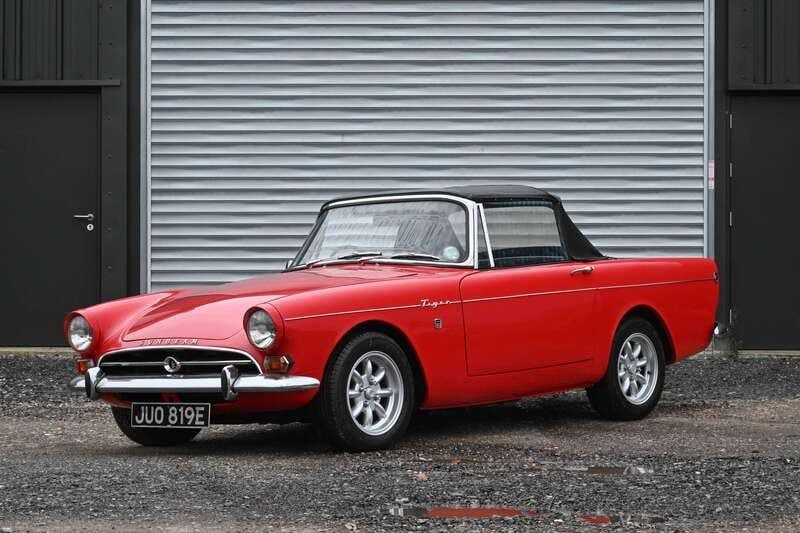
Sunbeam Tiger: Models and Specs
1964–1967 · 4.3–4.7‑litre V8 · Front‑engine, rear‑wheel drive · Two‑seater roadster
Overview
The Sunbeam Alpine was an affordable post-war British roadster, which inspired the rather more ambitious Sunbeam Tiger of the mid-1960s. This has become one of the most charismatic British sports cars of the era, powered by an American small‑block V8 developed with input from Carroll Shelby, and positioned as a more affordable alternative to the AC Cobra. Built on the Sunbeam Alpine platform but transformed by the introduction of a Ford V8, the Tiger occupies a unique space within the Rootes Group’s lineup as the only factory‑produced V8 the company ever sold. It was launched at the 1964 New York Auto Show and quickly gained a reputation for blending British roadster dynamics with V8 punch in a compact, lightweight package. Around 7,000 units were built between 1964 and 1967, making it rare enough to be collectable but common enough to sustain an active specialist ecosystem.
Price
- Starting price
- € 20.000
- Average price
- € 35.504
- Price range
- € 20.000 - € 66.252
Specifications
- Production years
- 1964–1967
- Total production
- 7,067 units
- Body styles
- Two‑seat roadster
- Layout / drive
- Front‑engine, rear‑wheel drive
- Engine family
- Ford small‑block V8: 4.3‑litre, 4.7‑litre
Sunbeam Tiger in detail
The Tiger’s origins lie in the Sunbeam Alpine, Rootes’ compact sports roadster which was already a hit in the US market. A West Coast Rootes dealer approached Carroll Shelby with the idea of fitting a Ford small‑block V8 into the Alpine, and a prototype was quickly built, shipped back to Coventry and driven by Lord Rootes - reportedly with the handbrake still on. Despite this literal drag on performance, Rootes ordered 3,000 V8s, and the Sunbeam Tiger duly launched at the 1964 New York Auto Show.
Production began with the Mk I (split across Series I and IA), using the Ford V8 in the rounded‑door Series IV and later the square‑door Series V; the latter is often referred to as the Mk IA by enthusiasts. The 1967 Mk II upgraded to a 4.7-litre V8 with higher compression, stronger valve springs, an oil cooler, an alternator and a wider‑ratio gearbox.
The Tiger’s performance identity is defined by its V8‑in‑a‑small‑body concept. The 4.3-litre engine gives the Mk I strong torque and brisk acceleration for a compact roadster, while the Mk II’s larger unit turns everything up to 11. That said, all Tigers are torque‑led, with their engines happiest in the mid‑range where the car feels perky rather than peaky.
Engine family | Power range | 0–60 mph | Top speed |
Ford V8 4.3‑litre | 164 bhp | 9.5 sec | 117 mph |
Ford V8 4.7‑litre | 200 bhp | 7.5 sec | 122 mph |
The Sunbeam Tiger is instantly recognisable as a British sports roadster, even if it has an American heart. Its short overhangs, low beltline and a gently sloping rear deck are pure Alpine, whereas the twin exhausts and bulge in the bonnet hint at this car’s true nature. The Mk I’s rounded doors and bootlid give it a softer and more traditional look, while the Mk II’s square‑cornered bootlid and egg‑crate grille signify a more modern, performance‑oriented variant.
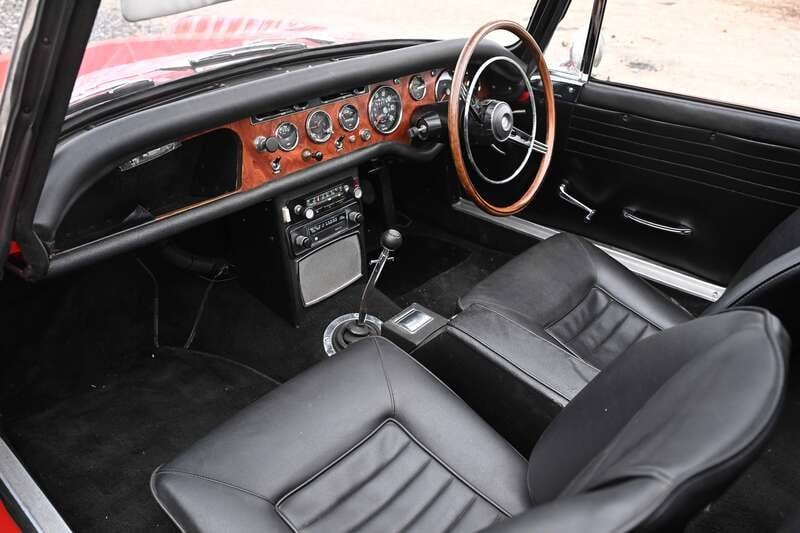
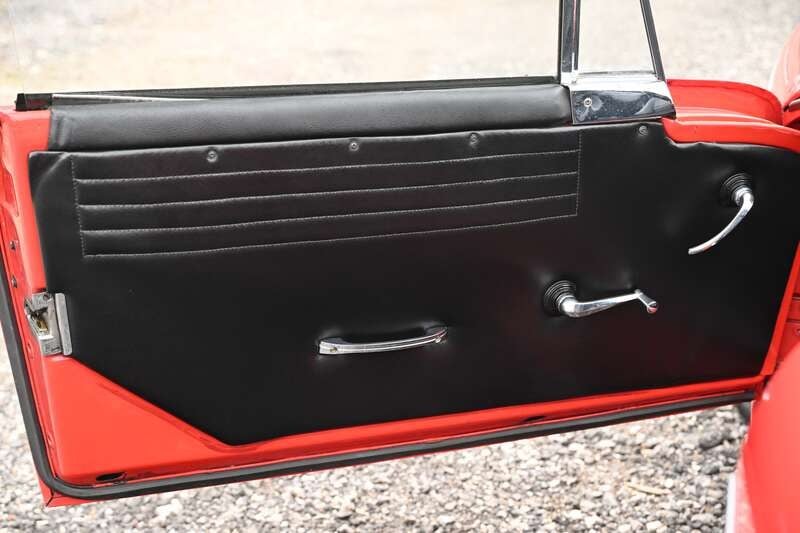
Inside, the Tiger’s cabin philosophy involves roadster simplicity with a focus on driving rather than comfort. The dashboard is compact and driver‑oriented, with a full set of gauges but minimal trim beyond that. The constantly audible V8 is a reminder that this is a serious performance car, albeit in a diminutive package.
The Sunbeam Tiger is universally treated as a single model with two main generations:
Sunbeam Tiger Mk I (1964–1966). Ford V8, Alpine‑based bodyshell (based on the Series IV and later Series V, often called Mk IA by enthusiasts). This is the most commonly available example today.
Sunbeam Tiger Mk II (1967). A larger 4.7-litre Ford V8 clad in updated body panels, grille and cosmetic details. Only 536 units were built, making it the rarest and most sought‑after Tiger.
Front disc brakes and rear drums were standard, with the Mk II receiving uprated components to cope with its additional power. The car’s open‑top roadster layout offers no rollover protection, and its compact size and low weight mean it’s temperamentally unsuited to high‑speed motorway use without careful consideration.
Pros:
Unique “Cobra‑lite” positioning of a British roadster with an American V8
Strong club and specialist parts network sustained by enthusiasts
Rear‑wheel drive and well‑resolved suspension result in rewarding driving dynamics
Accessible pricing of Mk I examples
Cons:
Rootes’ industrial turbulence of the 1960s affected build quality consistency
The open‑top layout and low scuttle create an exposed ambience
Not an easy car to drive on the motorway
This is a long-defunct marque and parts are increasingly difficult to source
Prijsontwikkeling
Meest recente verkoop
£ 45.000
1965 Sunbeam Tiger
2 nov 2023

Momenteel te koop
14
0 live veilingen
14 advertenties


Totaal verkocht
16
Hoogste verkoopprijs
€ 66.252
Gemiddelde prijs
€ 35.504
Laagste prijs
€ 20.000
FAQs
Chrysler’s acquisition of Rootes in 1967 ended the Tiger programme, since Chrysler had no interest in selling a Ford‑powered car, and production ceased after roughly three years. The Tiger’s legacy is therefore that of a pragmatic but ultimately unfulfilled attempt to replicate the Cobra formula in a more usable and more affordable package.
Carroll Shelby was an American racing driver and also an automotive designer. He created the Shelby Cobra and high‑performance Ford Mustang models, becoming a central figure in American motorsport and performance car culture. Any engine or vehicle bearing his name tends to command a price premium thanks to its association with him.
For most buyers, a well‑preserved Mk I represents the optimal entry point into Tiger ownership. It’s the original formula, the most commonly available example and more affordable than the Mk II. The sequel is undoubtedly more rewarding to drive and own, but it commands a significant premium and requires more specialist knowledge to maintain correctly.