Triumph GT6: Models and Specs
1966–1973 · 2.0-litre inline-six · Front-engine, RWD · Fastback coupé
Overview
The Triumph GT6 is one of the most elegant British sports cars of the Sixties and Seventies. A six-cylinder fastback coupé built on the Spitfire platform, it introduced greater refinement without sacrificing the lightweight, driver-focused character that defined its rivals. It arrived in 1966 as a rival to the MGB GT and offered something its rival couldn’t: a smooth, torque-rich straight-six in a compact, Michelotti-styled body. The GT6 occupied a unique position within the Triumph range, above the Spitfire in terms of performance and refinement, but below the TR series in size and price. It was a car that made six-cylinder smoothness accessible at a price MG buyers could consider, and it found an immediate audience. The GT6's seven-year production run of 40,926 units was defined as much by Triumph's willingness to address its shortcomings as by the original car's strengths. The Mk1's notorious swing-axle rear suspension, which exhibited highly unsatisfactory camber behaviour at the limit, was comprehensively redesigned for the Mk2. The car's exterior was progressively refined through to the Mk3's front-end reskin in 1970, resulting in three distinct Marks united by one of the most characterful small six-cylinder engines the British motor industry ever made.
Price
- Starting price
- 3 450 €
- Average price
- 18 803 €
- Price range
- 3 450 € - 42 995 €
Specifications
- Production Years
- 1966–1973
- Body Style
- 2-door coupé
- Layout
- Front-engine, rear-wheel drive
- Engine Family
- 1,998cc inline-six
- Power Output Range
- 95 bhp – 104 bhp
Triumph GT6 in Detail
The GT6's origins can be traced back to Triumph's early 1960s Le Mans programme, where streamlined fastback bodies fitted to Spitfire racers demonstrated the visual and aerodynamic benefits of a closed coupé on the Spitfire's platform. The production road car took the Spitfire's chassis, widened the engine bay to accept the 2.0-litre straight-six from the Triumph Vitesse and 2000 saloon, and clothed it in a Michelotti fastback body with a large glass rear hatch. The result offered six-cylinder performance and refinement, yet at a price close to the four-cylinder MGB GT.
Production began at Triumph's Canley factory in 1966, with the original GT6 priced at £985. The car was offered exclusively as a fastback coupé throughout its production run, preserving a clear distinction from the Spitfire convertible. The 2.0-litre inline-six produced 95 bhp in Mk1 specification, rising to 104 bhp for the Mk2 and Mk3 thanks to revised carburation and porting. The Mk1's Spitfire-derived swing-axle rear suspension was addressed in the Mk2 of 1968, when Triumph's engineers installed a reversed lower wishbone arrangement. This transformed the car's handling behaviour and resolved the most strident criticisms of the Mk1.
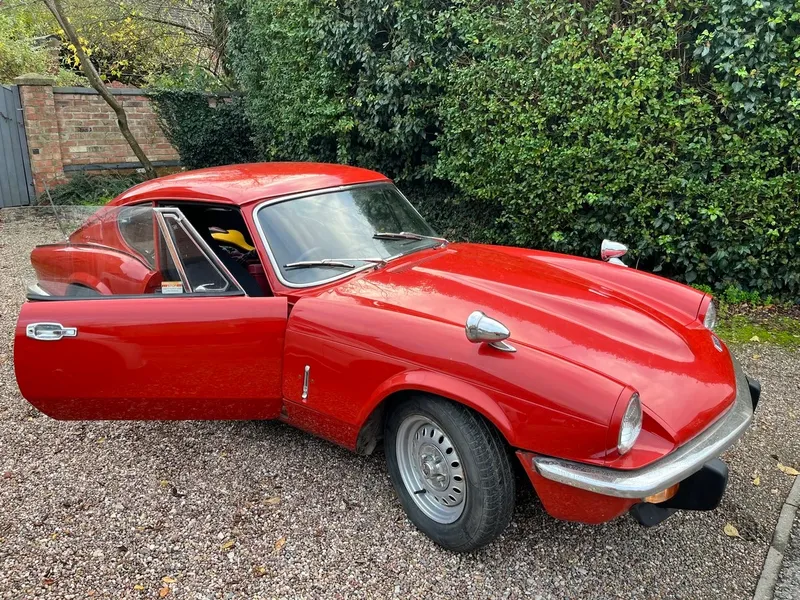
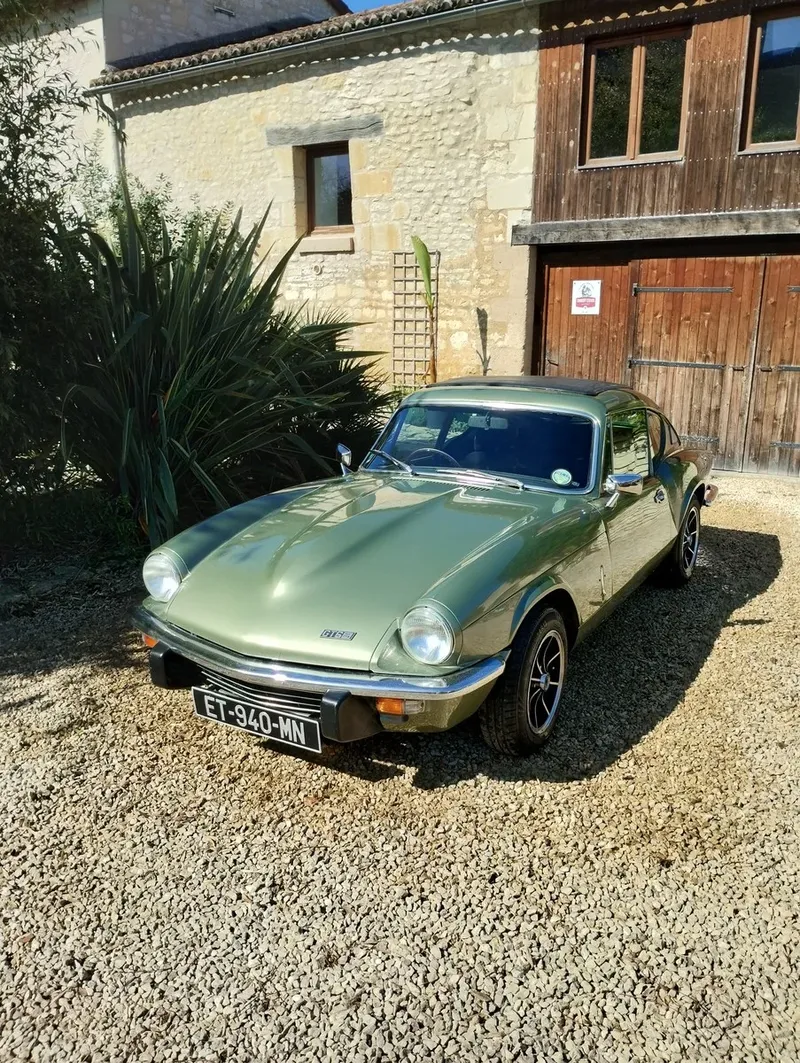
The 1970 Mk3 brought a completely reskinned front end with the radiator opening relocated below the new bumper line, deletion of the bonnet vents, recessed door handles and a revised dashboard. Total production ended in 1973 after 40,926 cars, when British Leyland rationalised its sports car range and the GT6 was discontinued without a direct replacement.
The GT6's 2.0-litre straight-six is a torque-led unit that delivers its performance across a wide rev range rather than demanding to be worked hard. Power figures vary modestly between the Mk1 and later cars, and the performance improvement should be thought of as a refinement rather than a step change. The straight-six's smoothness at all engine speeds was a key GT6 advantage over the four-cylinder MGB GT.
Mk1 (1966–1968) | Mk2/Mk3 (1968–1973) | |
Engine | 1,998cc inline-six OHV | 1,998cc inline-six OHV |
Power | 95 bhp | 104 bhp |
Torque | 117 lb ft | 117 lb ft |
0–60 mph | 12.0 sec | 10.1 sec |
Top Speed | 106 mph | 112 mph |
Transmission | 4-speed manual | 4-speed manual |
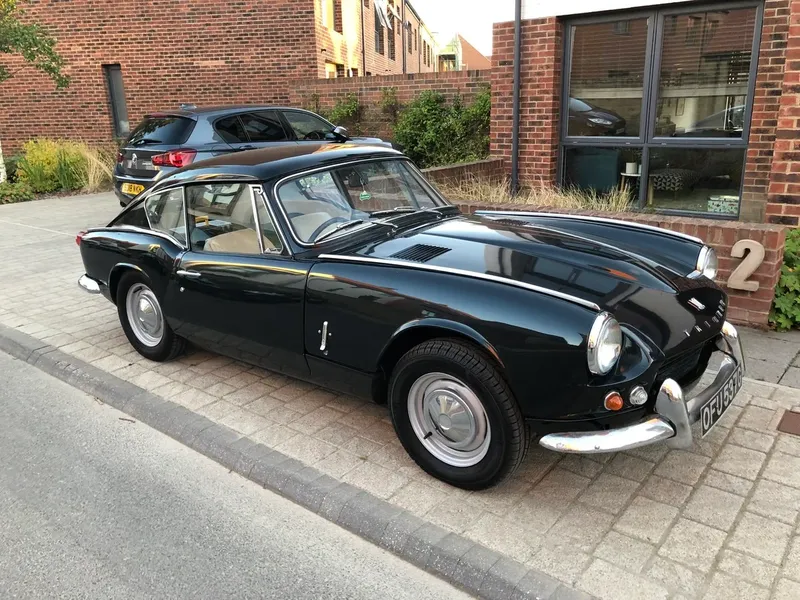
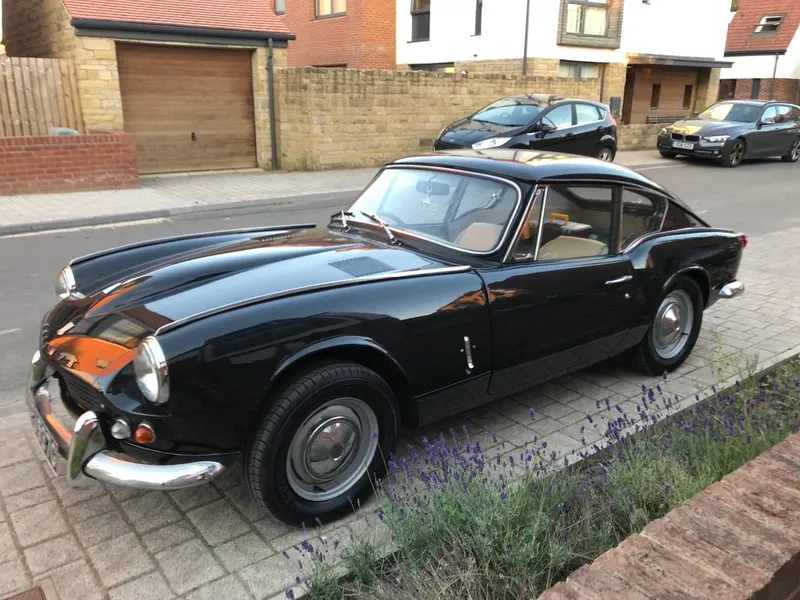
The GT6 is immediately identifiable by the wide, low bonnet of a six-cylinder car married to the finely detailed body of a small British sports coupé. Giovanni Michelotti's design extended the Spitfire's front end rearward into a fastback roofline that terminates in a full-width glass rear hatch.
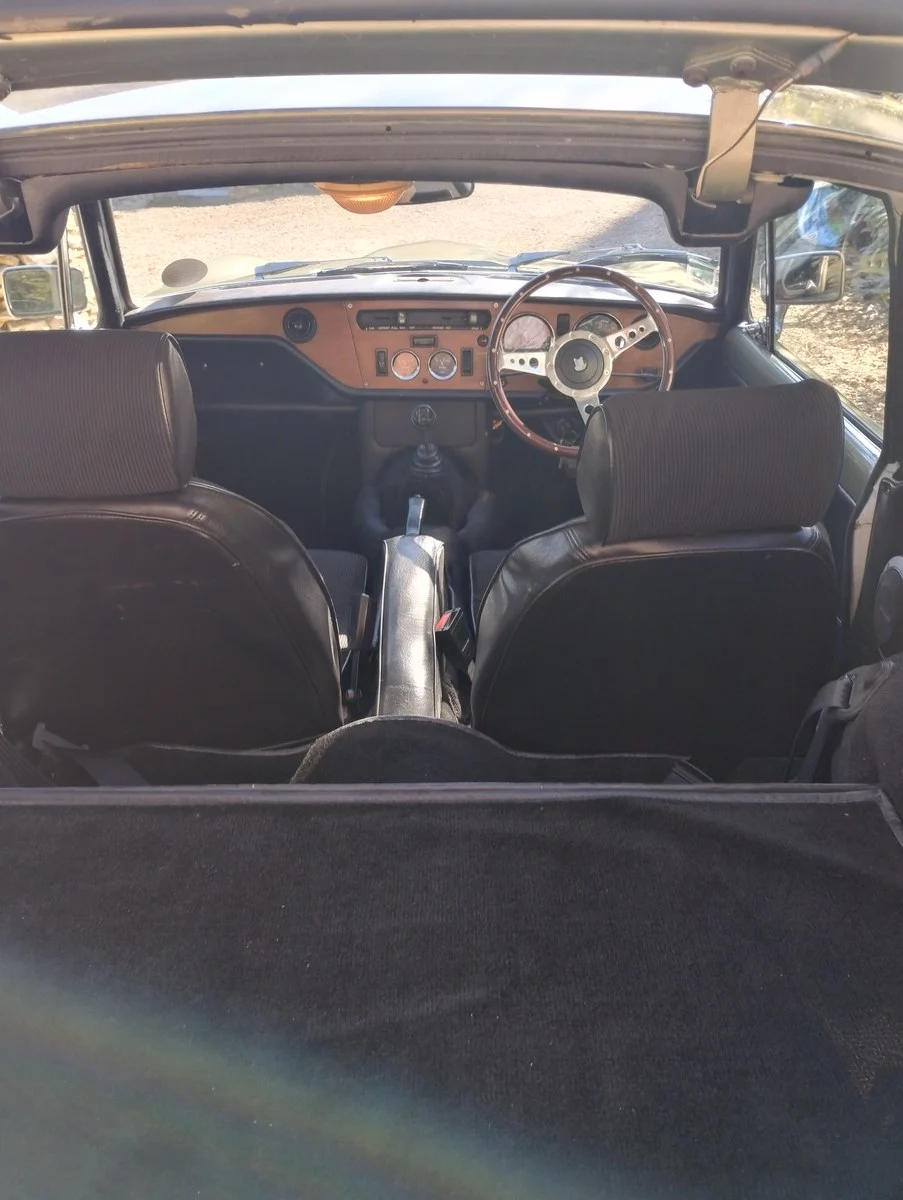
Inside, the snug cabin has two deeply bolstered bucket seats, a full complement of instruments ahead of the driver and a central transmission tunnel. There’s no room for people in the back, since the space behind the seats is luggage accommodation accessed through the rear hatch. The instrument layout was a known period criticism, with gauges and switches scattered around seemingly randomly, but the overall cabin atmosphere is one of driver-centred commitment that accurately reflects the car's character.

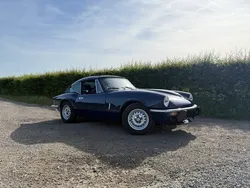
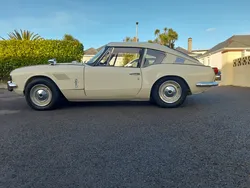
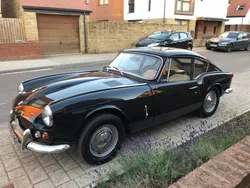
Mk1 (1966–1968). The original GT6 had 95 bhp, swing-axle rear suspension, chrome-bezel instruments and wire wheels. The most raw and characterful GT6, and the subject of the most significant criticism for its handling traits.
Mk2 (1968–1970). A 104 bhp model with a comprehensive rear suspension redesign replacing the swing axle with reversed wishbone and rotoflex couplings. This resolved the Mk1's primary shortcoming.
Mk3 (1970–1973). Complete front-end reskin ahead of recessed door handles and a revised dashboard. Late-production cars transitioned from rotoflex to Spitfire Mk IV-style independent rear suspension.
The Triumph GT6 was produced between 1966 and 1973 before any mandatory safety legislation reached the statute books. Seatbelts weren’t standard on the earliest cars, but the Mk2 introduced a 3-point safety harness as standard fitment. Front disc and rear drum brakes were standard throughout the production run, while a brake servo became standard on Mk3 cars from 1973.
Pros
The 2.0-litre straight-six's integration into a Spitfire-derived platform is unique in the British sports car market
Engine internals shared with the Triumph TR5 and 2000 saloon extend mechanical parts support beyond the GT6's 40,926-unit production run
A finite production run ended in 1973 with no replacement; values have appreciated consistently since the mid-2010s as surviving numbers shrink
Cons
Structural sill rot is the GT6's defining ownership risk. The backbone chassis makes the sills load-bearing, meaning corrosion is a structural failure risk
GT6-specific ancillaries (sump, inlet manifolds, etc) are model-specific parts that can’t be sourced from the TR5 or 2000 parts pool
The Mk1's swing-axle rear suspension produces documented camber behaviour at the limit that requires awareness and adjustment
Triumph GT6 for Sale
The Triumph GT6 represents one of the most rewarding entry points into the British six-cylinder classic market. Browse current Triumph GT6s for sale on Car & Classic.
Tendances des prix
Vente la plus récente
15 250 £
1968 Triumph GT6 Mark 1
1 oct. 2023

Actuellement en vente
30
1 enchère en direct
29 annonces




Total vendu
80
Prix de vente le plus élevé
42 995 €
Prix moyen
18 803 €
Prix le plus bas
3 450 €
FAQs
The Mk2 is probably the strongest all-round starting point. The swing-axle rear suspension of the Mk1 was resolved, the 104 bhp engine is the definitive GT6 powertrain, and the Mk2's body predates the Mk3's reskin which some buyers consider purer in appearance. A car fitted with the Laycock de Normanville overdrive is strongly preferred over a non-overdrive example for any buyer planning motorway use.
The GT6 and MGB GT occupy the same classic market bracket, and running costs are broadly comparable. The GT6's straight-six has more components than the MGB's four-cylinder, but the shared block architecture with higher-volume Triumph models keeps parts costs reasonable. Both cars benefit from strong specialist and owner club networks, but the MGB's separate chassis is less of a structural concern.
Engine internals shared with the TR5 and 2000 saloon are available through Triumph specialists. GT6-specific body panels are available from specialist suppliers but require careful verification of Mark compatibility, as Mk1, Mk2 and Mk3 body panels aren’t always interchangeable.
The GT6 and Spitfire share the same backbone chassis and Michelotti body origins, but they differ in key respects. The GT6 uses a 2.0-litre straight-six producing 95–104 bhp versus the Spitfire's 1.3-litre four-cylinder; the GT6 has a unique fastback coupé body with a rear hatch rather than the Spitfire's convertible; and the GT6 is heavier and longer. Most significantly, the GT6 was never produced as a convertible, to avoid competing with its open-top Spitfire sibling.