Triumph TR4: Models and Specs
Italian-designed British two-seater sports car produced 1961–1965, straight-four 2.1-litre engine producing 100 bhp, four-speed manual with optional overdrive, rear-wheel drive, standard soft-top or available hard Surrey-top.
Overview
The Triumph TR4 is what happens when a British sports car company finally embraces the 20th century. Its TR3A predecessor was brilliant in its simplicity, but by 1960, it already felt like something from a bygone age. So Triumph did what they did best, recruiting Italian designer Giovanni Michelotti to wrap leftover mechanicals in a modern body, creating something beautiful and effective in equal measure. The TR4 is modern enough to be pleasant to live with, yet old enough to avoid undue complexity. It'll do 100 mph while handling properly, and it doesn't require a computer to diagnose issues when something breaks. For a buyer seeking a genuine, usable piece of British sports-car heritage, the TR4 is ideal. The challenge with buying a TR4 isn't whether it'll be fun or special. It's whether you're acquiring one that's been properly cared for, or one that's been left to rot while someone dreamed about restoring it one day.
C&C Expertise
Michelotti’s Latin-inspired styling transformed the rather dowdy TR into something altogether more modern and appealing to the car’s mainly American buyers. These are strong and generally mechanically robust cars, supported by excellent part supply, but the body and structure are less so. Start by looking at the door shut line on the B pillar - there should be an even gap indicating a level, strong chassis, particularly at the rear. Check the chassis itself, especially the outriggers, and look for rot in the base of the doors and wings. It’s all fixable, but could be at a considerable cost.
Price
- Starting price
- € 6.421
- Average price
- € 26.039
- Price range
- € 6.421 - € 41.524
Specifications
- Manufacturer
- Triumph Motor Company (Standard-Triumph)
- Production Years
- 1961–1965
- Vehicle Class
- Sports car
- Body Styles
- Soft-top roadster, Surrey-top hardtop
- Layout and Drive
- Front-mounted engine, rear-wheel drive
Triumph TR4 in Detail
The Triumph TR4 arrived in 1961 as the logical evolution of the TR2/TR3 lineage, but with the crucial benefit of looking like it belonged to its era. The TR3A had been trundling along since 1956 with minimal changes, before Giovanni Michelotti arrived with a simple brief: keep the mechanics but redesign the body. What he penned was sophisticated for the time, designed to be lighter and more aerodynamic than its predecessor.
Under the skin, the TR4’s engine increased from 1991cc to 2138cc, though it produced only 5 bhp more. Full synchromesh was available across all four gears instead of the top three, and overdrive (which had been a single option for top gear only on earlier cars) could now be selected on second, third, and fourth, effectively creating a seven-speed manual. Triumph’s much-praised rack-and-pinion steering replaced the old recirculating-ball system, too.
Production ran from 1961 until 1965, with 40,253 examples built. The car proved so popular that it established the template for every sports car Triumph would build in the next decade, including the TR5 and TR6.
The TR4 was built for spirited cross-country driving, and 100 horsepower in a 966 kg car guarantees punchy performance on A-roads. However, the real measure of the TR4 was never its numbers, but rather its mechanical feel and communicative chassis.
Model | Engine | Power | Top Speed | 0–60 mph |
|---|---|---|---|---|
Triumph TR4 (1961–1965) | 2138cc straight-four | 100 bhp @ 4,600 rpm | 110 mph | 10.9 sec |
Dimension | Triumph TR4 |
Wheelbase | 2,238 mm (88.1 in) |
Length | 3,962 mm (156.0 in) |
Width | 1,461 mm (57.5 in) |
Height | 1,270 mm (50.0 in) |
Curb Weight | 966 kg (2,130 lb) |
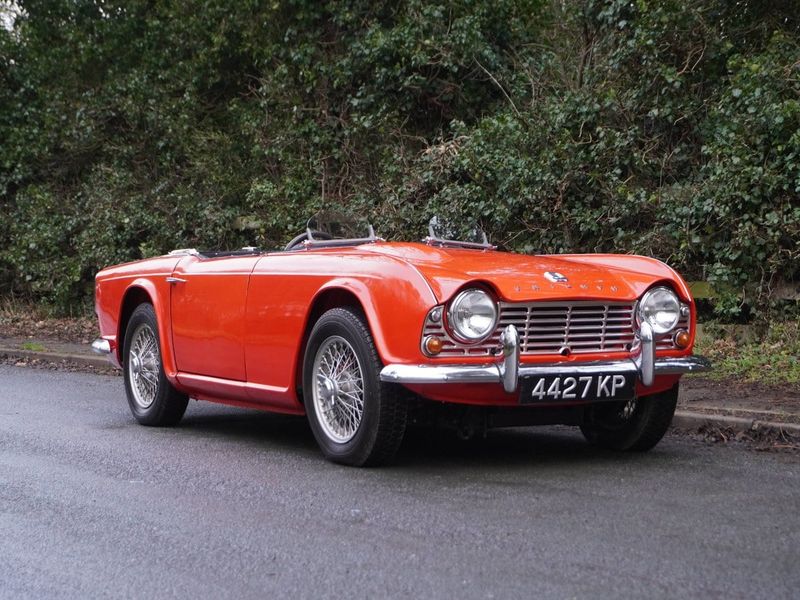
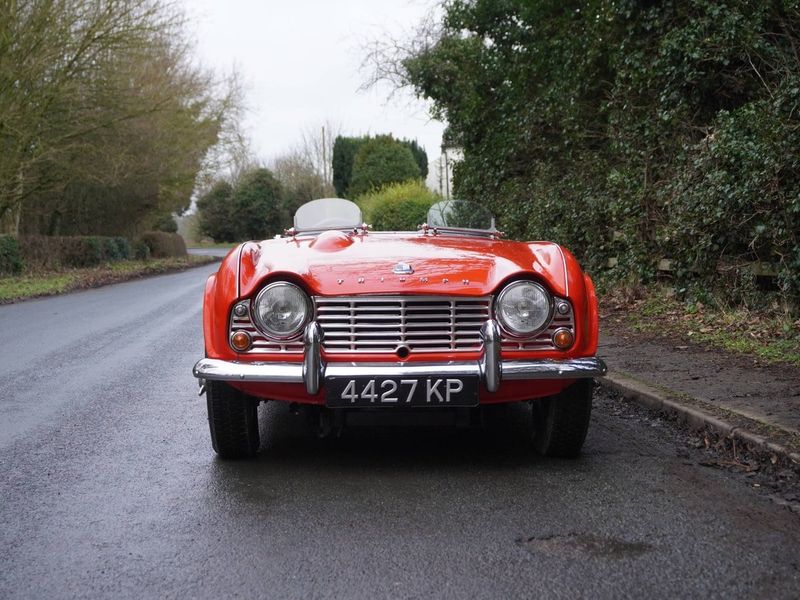
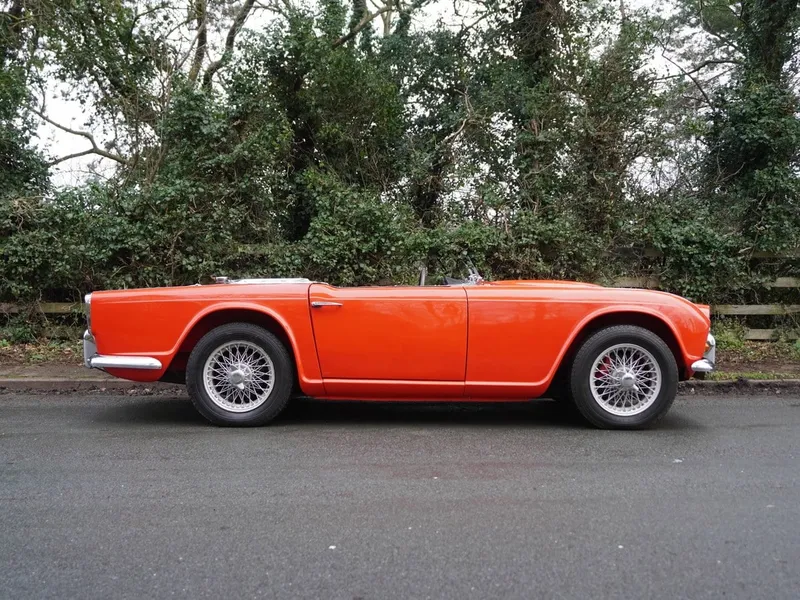
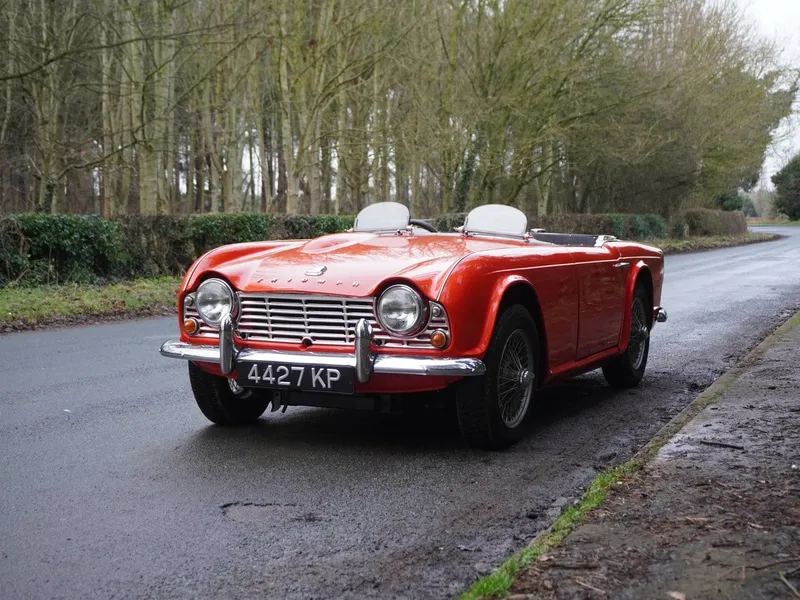
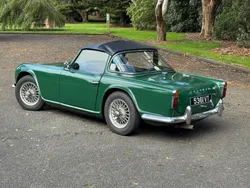
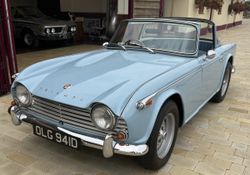
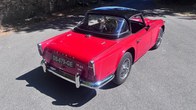
Michelotti's TR4 design modernised the rounded, somewhat conservative styling of the TR3A. In came cleaner lines, higher headlights and overall proportions that felt contemporary.
A TR4's exterior condition is immediately visible because the car is relatively simple, so there's no way to hide faults behind complicated trim or glossy details.
What to beware when viewing a TR4:
Chassis and structural condition. The separate frame is the foundation of any TR4, so look for welded repairs. Old MoT-style patches hiding rust underneath are a serious concern, so wriggle underneath the car with a torch and a magnet to find deal-breaking evidence of pitting or soft metal.
Rust in the body. A 1960s car is entitled to have imperfect bodywork, but the tops and bottoms of the wings and door seams are notorious rust areas. They are repairable, but this can be expensive.
Panel gaps and alignment. The body sits on the frame, so it should look square and aligned. Uneven gaps, panels that sit proud of their neighbours, or doors that don't close smoothly suggest frame damage or poor restoration work. Overspray on glass, lights, or trim; mismatched colours between panels could indicate that previous repairs were not well executed.
Windows and seals. Water ingress is a known issue on the TR4; soft-tops develop leaks, and even hardtops suffer moisture ingress around their frames. Look for water stains inside or perished rubber seals. Check that the soft-top frame mechanism works smoothly as well.
The TR4's interior is sparse by modern standards, but it was well-designed for its time, with everything organised logically. The dashboard is a black PVC panel with a simple gauge cluster, ignition switch and column stalks. The interior panels are hardboard or millboard, typically trimmed in vinyl or coloured leather, while seats are basic but supportive.
What to check when viewing:
Seat condition. Original seats have either a spring-and-diaphragm or rubber-webbing suspension system. Check for collapsed cushions which sag on one side, torn covers or suspicious stains. Seats can be reupholstered, but frame damage is a more serious flaw.
Interior trim and fabrics. Check for water staining or cracking. Hardboard panels can warp if the car has been left open to the weather, while water stains suggest the car has been exposed to damp and/or hasn't been used regularly. Original carpets are rare, so lift their replacements to check underneath for floor rust or water pooling in the footwells.
Steering wheel and controls. The TR4’s original thin-rimmed wooden wheels are desirable, but aged steering wheels are common with cracks in the original leather. Check whether the stalks operate smoothly, and the switches click properly.
Comfort and practicality:
The driving position is upright and commanding, with good visibility in all directions. The seats are firm rather than luxurious, which is fine for short trips but can become tiring on longer drives. Heating is basic, but adequate for winter.


The TR4 comes from an era when safety meant good visibility and a driver paying attention. The front disc brakes perform well but require firm pedal pressure, while the rear drum brakes are inferior. The unassisted steering is heavy at parking speeds yet communicative at driving speeds. A live rear axle and leaf springs can make the car nervous on poor surfaces, but the independent front end and rack-and-pinion steering help to keep things manageable.
The TR4 is mechanically straightforward, but even a newer model will be over 60 years old, so certain issues have become familiar among Triumph enthusiasts.
Engine issues:
Water in the coolant (wet-sleeve engines). This is a common yet serious issue. Those 2.1-litre engines have wet cylinder liners held in place by two figure-of-eight seals in the bottom of the block. If the seals fail, coolant leaks into the sump and mixes with oil. Check the coolant for emulsified oil or a creamy mayonnaise-like appearance, which indicates an overhaul is required.
Worn crankshaft thrust washers. Excessive crankshaft end-float (measured with a screwdriver or pry bar between the pulley and block) indicates worn washers. This is a slowly developing issue that can eventually cause the engine to bind if it’s ignored.
Timing chain rattle. A light rattling from the front of the engine at idle usually denotes a worn timing chain. It's annoying but not immediately threatening, and replacement is straightforward.
Oil leaks. Some weeping from gaskets and seals is normal and expected on these cars, so don't be concerned about minor surface leaks. A big puddle under the car is another story, though.
Gearbox and clutch:
Weak second-gear synchro. Synchromesh was fitted only to the top three gears, and a worn synchro on second is very common (and noisy), even though the box will keep working.
Heavy clutch. The clutch pedal must be fully depressed to disengage properly. If it doesn't, gear changes will be noisy.
Overdrive issues. If overdrive is fitted but it snatches or won't engage, it's usually due to a faulty solenoid, steering column switch or wiring issue.
Electrical gremlins:
Corroded connectors. The TR4 uses unreliable "bullet" connectors throughout its electrical system, where corrosion commonly causes intermittent problems such as lights not working or ignition challenges. Undersized wiring and poor grounds are common, though intermittent electrical faults often point to poor connections rather than pricier component failure.
Suspension and brakes:
Steering joints. Worn steering joints can cause steering play or uneven tyre wear. Check for play by grasping the wheel and moving it side-to-side.
Brake line corrosion. Copper brake lines corrode from the inside out. Flex each line gently, as brittle lines will crack.


Variants & Generations
Use the carousel below to explore the Triumph TR4, its specification options and related models, and jump straight to cars currently for sale.
Prijsontwikkeling
Meest recente verkoop
£ 16.500
1964 Triumph TR4 TR4 Convertible
Momenteel te koop
127
3 live veilingen
124 advertenties


Totaal verkocht
202
Hoogste verkoopprijs
€ 41.524
Gemiddelde prijs
€ 26.039
Laagste prijs
€ 6.421
FAQs
By classic car standards, the engine and gearbox are bulletproof, and their proven mechanical components mean few things tend to fail catastrophically. The main issue is water ingress into the engine if the car hasn't been maintained properly. If serviced regularly and kept dry, a TR4 should prove very reliable.
Thousands of people do, since a well-sorted TR4 is no more demanding than a modern manual sports car. The heavy steering, firm clutch, and mechanical brakes make the driver feel involved.
Get a pre-purchase inspection from a TR4 specialist. Check the wet-liner seal condition, scrutinise the chassis for rust and welded repairs, test the brake/fuel lines and electrical connectors for corrosion.
Yes, since it transforms motorway driving from noisy and laboured to relatively comfortable. At 60 mph in fourth gear, the engine is spinning at only 2,500rpm, compared with 3,500rpm or more in direct drive.
Values are gradually rising as these cars become rarer and more sought after. However, don't expect dramatic returns on a TR4 purchase.
A car might look great cosmetically but have water ingress in the engine or interior, which can be ruinous, so get it properly inspected. More broadly, restoration is expensive and time-consuming. Unless you have experience (and ideally a workshop), buy the best-condition TR4 you can afford.