Volvo 740: Models and Specs
1984–1992 · 2.0–2.3 litre inline-four · Front-engine, rear-wheel drive · Saloon/Estate
Overview
The Volvo 740 was the last of Volvo’s classic boxy rear-drive cars. Before the 850 earned its Touring Car stripes and the S/V series brought luxurious cabins and thunderous sound systems, the 740 helped to elevate Volvo from a respected niche manufacturer into the mainstream premium market. Introduced in 1984 as a more accessible four-cylinder companion to the existing 760 GLE, the 740 targeted the same buyer who might otherwise have chosen a BMW 5-Series or Mercedes W123 on quality grounds, and offered them Volvo's then-unrivalled reputation for structural safety and long-term durability at a lower price. In just eight years of production, over a million 740s were built, including 650,443 saloons and 358,952 estates. As such, the 740 became one of the most commercially successful cars Volvo ever produced. Its character is utilitarian, serving its occupants without drama, retaining its structural integrity at high mileages and ageing with dignity. Today it occupies an interesting position in the classic market - too recent and numerous to be conventionally collectable, but old enough and purposeful enough to attract genuine appreciation from drivers who value substance over sentiment.
Price
- Starting price
- 1.500 €
- Average price
- 4.000 €
- Price range
- 1.500 € - 18.185 €
Specifications
- Production years
- 1984–1992
- Body styles
- Saloon; Estate
- Layout / drive
- Front-engine, rear-wheel drive
- Engine family
- Inline-four 2.0/2.3-litre; 2.3-litre turbo; inline-six 2.4-litre diesel
- Transmission types
- Four/five-speed manual; three/four-speed automatic
Volvo 740 in Detail
The 740 was inspired by the success of the Volvo 760, which had been introduced in 1982 as Volvo's re-entry into the upper-medium premium segment after years of relying on the ageing 200 series. The 760's PRV (Peugeot, Renault, Volvo) V6 engine and upmarket specification positioned it above the reach of many buyers Volvo wanted to attract. The 740 was developed to fill this gap by sharing the 760's body structure, rear-wheel drive platform and dimensions while offering more accessible four-cylinder engines.
The 740 was launched in 1984 in GLE specification with the Bosch LH-Jetronic fuel-injected B23E engine, producing 131bhp; a turbocharged variant with the B23ET followed shortly after. From 1985, the engine family transitioned to the revised B230 unit which became the definitive 740 powerplant in naturally aspirated and turbocharged forms throughout the production run. The estate was introduced for the 1985 model year, offering a significantly larger load area through a raised roofline and extended bodywork from the B-pillar rearward.
An autumn 1988 facelift brought revised front and rear bumpers, updated interior trim, the introduction of Bosch LH 2.4 fuel injection on petrol engines and widespread availability of ABS as an option. The Volkswagen-sourced D24T six-cylinder turbodiesel offered a fuel-efficient alternative. From August 1990, the 740 was produced in parallel with the incoming 940 before the latter took over as the 740's successor in 1992.
Given its aerodynamics, the 740 never set out to be sporting, though its live rear axle was capable of providing entertaining rear-drive handling. The fuel-injected B230 engine had a strong torque curve, whereas the turbocharged and intercooled B230FT produced 182bhp and delivered a 124mph top speed that allowed it to compete against more expensive contemporaries.
Metric | Figure |
Engine family / displacement range | Volvo B200/B230 inline-four / 1986cc–2316cc; Volkswagen D24T diesel / 2383cc |
Power range | 82 bhp (B200K carburettor) to 182 bhp (B230FT Turbo, intercooled) |
0–60 mph range | 13.5 sec (D24 non-turbo diesel) to 7.7 sec (B230FT Turbo) |
Top speed range | 99 mph (B200K carburettor) to 124 mph (B230FT Turbo) |
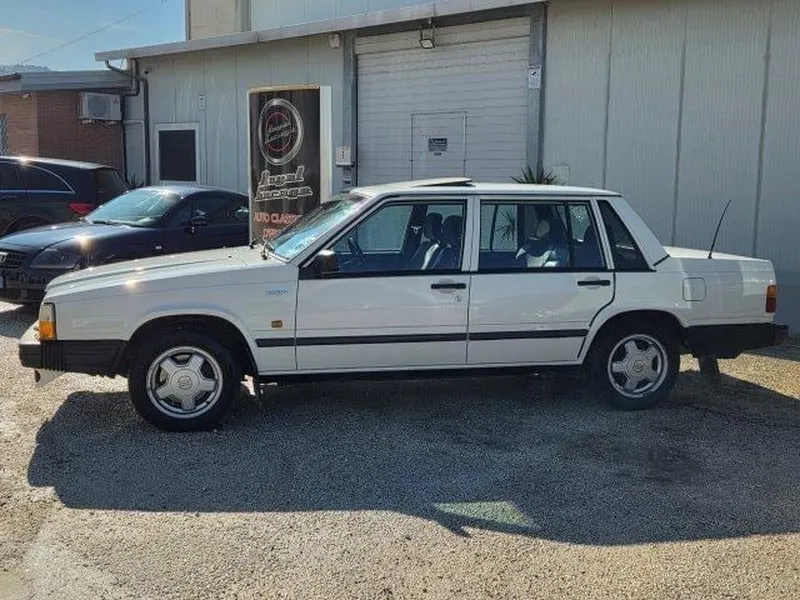
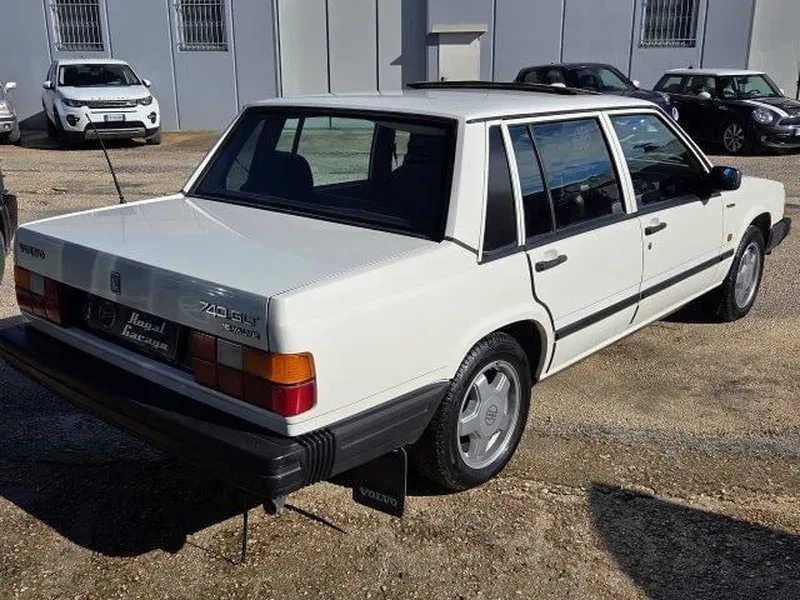
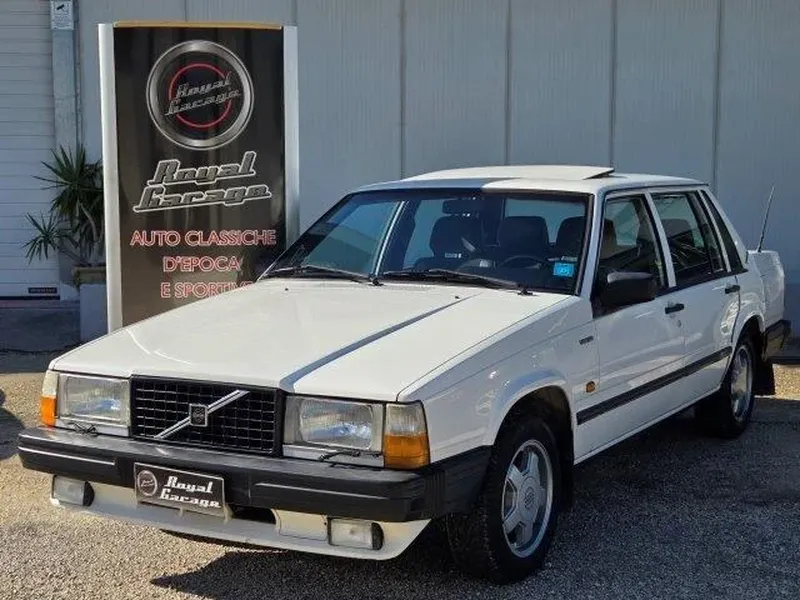
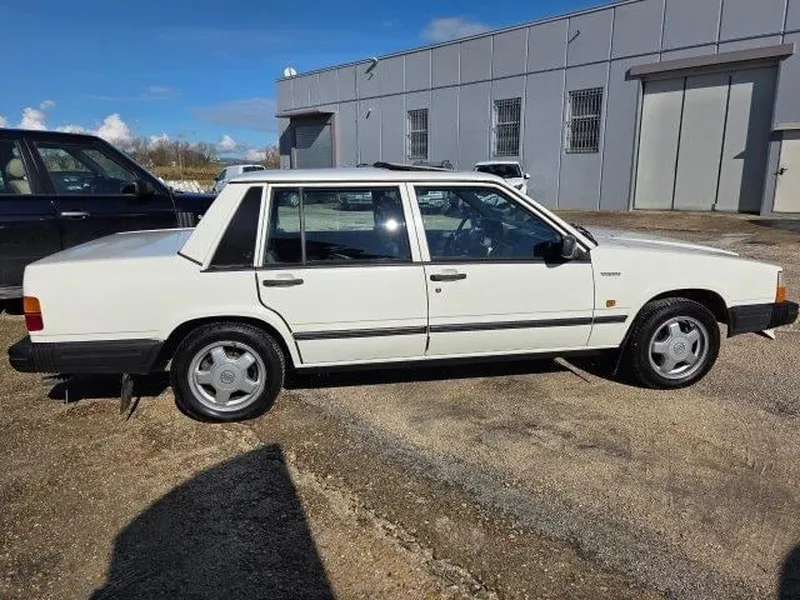
The Volvo 740 is a classic piece of 1980s car design - horizontal with a high roofline, flat glasshouse, prominent shoulder line and a long, level bonnet. There are no decorative flourishes here and the estate is especially uncompromising, though it is very adept at swallowing a grandfather clock.
Inside, the robust (rather than luxurious) materials reflect a car built to be used hard over high mileages. Seats are long-travel and supportive in the characteristically Scandinavian manner, the visibility is excellent in all directions, and the estate adds a vast, flat-floored luggage area with a low load sill. The 740’s cabin isn’t going to impress a first date, but it has remained intact over subsequent decades in a way few rivals have accomplished.
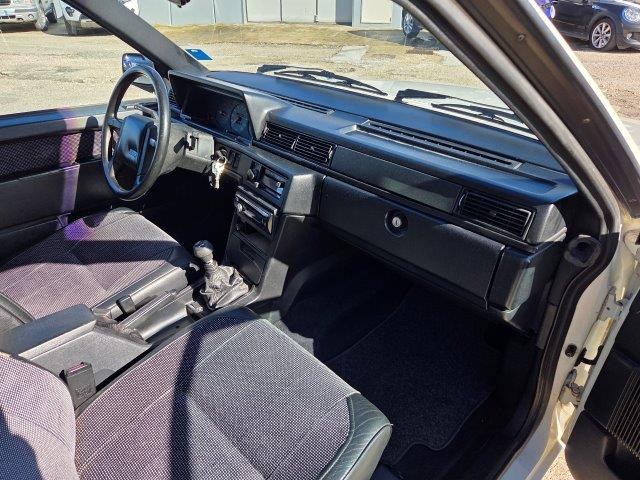
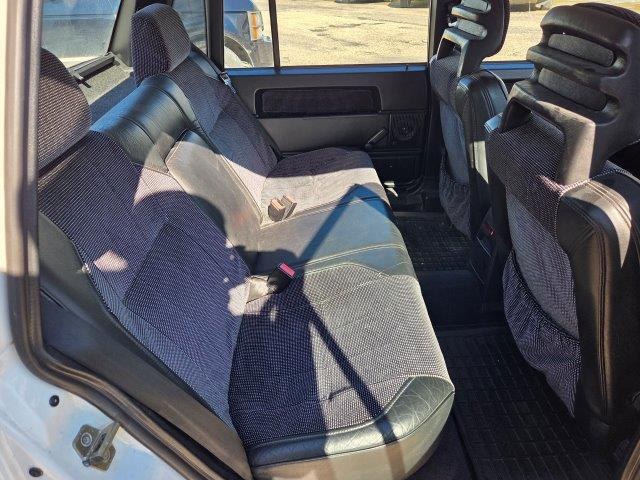
The Volvo 740’s rear-wheel-drive architecture, body structure and engine family remained consistent from 1984 to 1992. It came in two main guises:
740 Saloon (744). The four-door notchback body and the core 740 proposition for the private buyer and fleet market, comprising around two thirds of sales.
740 Estate (745). The five-door estate with an extended body from the B-pillar rearward now enjoys a market premium over the saloon equivalent.
The Volvo 740 was among the most safety-focused production cars of its era. Three-point seatbelts were standard throughout the cabin at a time where not all rivals offered this, and laminated windscreens were fitted to reduce injury risk in impacts. ABS became available as an option on higher-specification cars from the mid-production period, and this was one of the first cars to offer a driver’s airbag from 1990 onwards.
Pros
The B230 engine is among the most durable four-cylinder units of its era, with documented longevity beyond 300,000 miles under correct maintenance
A combined production run of over one million units gives the 740 one of the broadest parts ecosystems of any 1980s European classic
Bulletproof reliability was allied to impressive (and foresighted) levels of safety equipment
The estate offered load carrying capabilities few rivals were able to match
Cons
Pre-facelift wiring harnesses are prone to cracking and age-related deterioration
B230K and B230KH engines use Pierburg carburettors with parts now very difficult to source
The 740's working-car reputation means many survivors have been used to the point of exhaustion
Rear-wheel drive could make the 740’s handling tricky in adverse weather conditions
Tendencias de precios
Venta más reciente
3000 £
1988 Volvo 740

Actual en venta
2
0 subastas en marcha
2 anuncios
Total vendidos
20
Precio de venta más alto
18.185 €
Precio promedio
4000 €
Precio más bajo
1500 €
FAQs
Reliability is one of the 740’s two trump cards, alongside safety. The B230 engine family is renowned for its long-term durability, and Volvo's engineering philosophy throughout the 740's production prioritised structural robustness and mechanical longevity. Injection-spec cars are more straightforward to maintain than carburettor variants.
Both cars share the same body structure, rear-wheel-drive platform and dimensions, but were positioned at different price points with different engine families. The 760 carried the PRV V6 petrol and a straight-six diesel, with a higher standard of interior specification. The 740 was developed as the more affordable four-cylinder alternative.
The 740 shares its platform and engine family with the Volvo 940 and early 960, covering a decade of production. Mechanical, engine, suspension and braking components are well supported through the Volvo specialist network and general aftermarket suppliers. The exception is the Pierburg carburettor fitted to B230K and B230KH variants; parts for this unit are now very difficult to obtain, making injection-spec cars preferable.
With correct maintenance, the B230 engine can exceed 300,000 miles thanks to the engine's oversquare architecture, conservative tune and the relative simplicity of its injection system. The limiting factor on high-mileage cars is typically the body and electrical systems rather than the engine; rust in the sills, wheel arches and undercarriage are the conditions that commonly end 740 lives.