Rover P5 / P5B: Models and Specs
1958–1973 · 3.0–3.5-litre inline-six/V8 · Front-engine, rear-wheel drive · Saloon/coupé
Overview
The Rover P5 was built to compete with Rolls-Royce and Bentley at the top of the British market, and for 15 years it did so very successfully. This impeccably appointed and consciously restrained car transported Prime Ministers and members of the Royal Family not because it was the most powerful or expensive car available, but because it conveyed the right combination of authority and understatement on behalf of the British establishment. The P5 represented Rover's first unitary-construction car and its most ambitious single engineering project to date. A full-size prestige saloon designed by David Bache and engineered with input from Spen King and Gordon Bashford, it outlasted three changes of British government and two complete engine families.
Price
- Starting price
- 4 500 €
- Average price
- 11 734 €
- Price range
- 4 500 € - 28 870 €
Specifications
- Production years
- 1958–1973
- Body styles
- 4-door saloon; 2-door coupé
- Layout
- Front-engine, rear-wheel drive
- Engine family
- 2,995cc straight-six; 3,528cc V8
- Transmission types
- 4-speed manual; 3-speed automatic
Rover P5 in Detail
Rover had produced the respected but modestly sized P4 saloon throughout the early 1950s, and it was clear the company needed a larger and more prestigious car if it was to compete above (rather than against) volume manufacturers. The P5 project began around 1954, switching from a separate-chassis construction to a unitary body. The result was a car of considerable size and presence, marketed as the Rover 3-Litre after its 2,995cc straight-six.
Evolution was suitably genteel. Front disc brakes were added by October 1959 after the original all-drum setup proved inadequate for a 3,500lb saloon, overdrive became standard equipment from May 1960, and a twin-carburettor version of the straight-six producing 134bhp was offered from 1965. The Coupé arrived in 1962 as a more rakish alternative to the saloon, using the same floorpan and wheelbase.
The car’s transformation from good to exceptional came in 1967 after Rover refined Buick's all-aluminium 3,528cc V8 engine and created the P5B. This iteration was meaningfully quicker than its predecessor, lighter over the front axle and more refined at motorway speeds. The "B" in P5B stood for Buick, though Rover marketed the car publicly as the "3.5 Litre." The P5B was offered exclusively with Borg Warner Type 35 three-speed automatic transmission, on the basis that the car's primary market had never favoured anything so proletarian as changing their own gears.
Production of both variants ended in 1973, when Rover's attention shifted to the SD1 project, which would become its replacement. Total P5 and P5B production ran to approximately 69,000 cars across all variants.
The P5's 3-litre straight-six was a long-stroke, torque-biased unit that delivered relaxed, smooth performance throughout the lower rev range. The P5B was substantially different, thanks to the Buick-derived V8's combination of 160bhp, an aluminium block that saved weight over the front axle, and broad torque across the rev range. This turned the P5 from a dignified cruiser into a genuinely fast saloon.
Specification | Detail |
Engine family | 2,995cc straight-six; 3,528cc V8 |
Power range | 115 – 160bhp |
Torque range | 162lb ft – 210lb ft |
0–60mph | 17.1 sec – 11.7 sec |
Top speed | 95mph - 110mph |
Fuel consumption | 16–20mpg |
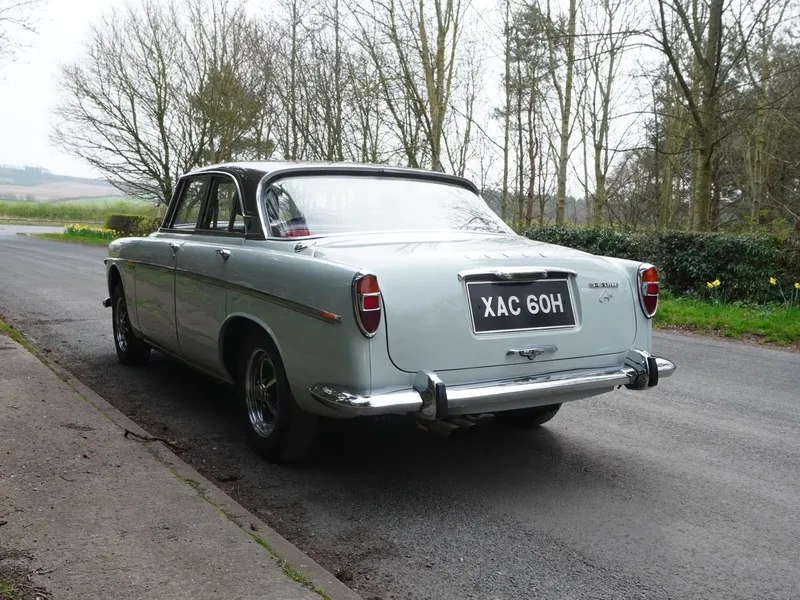
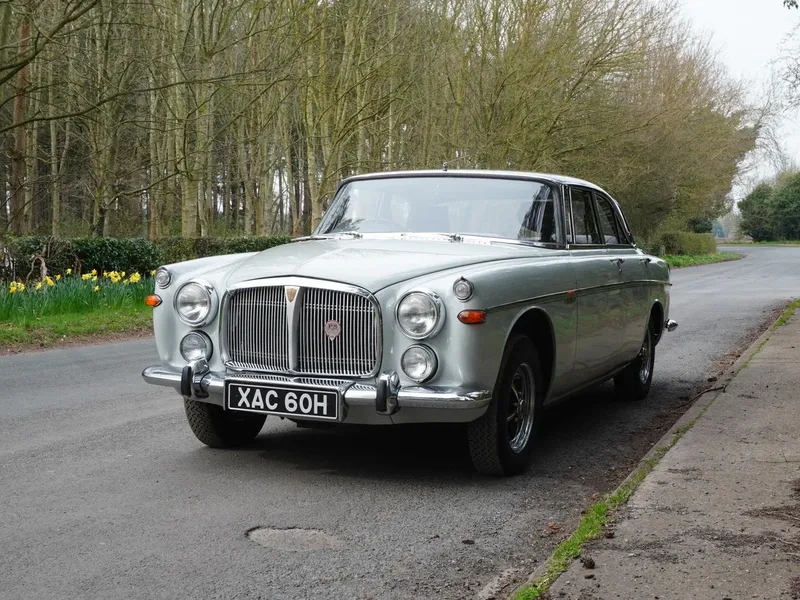
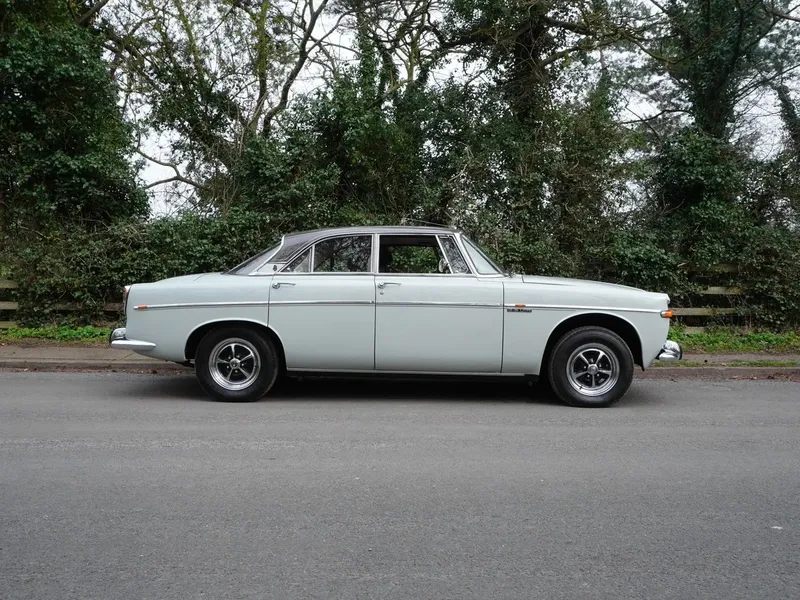
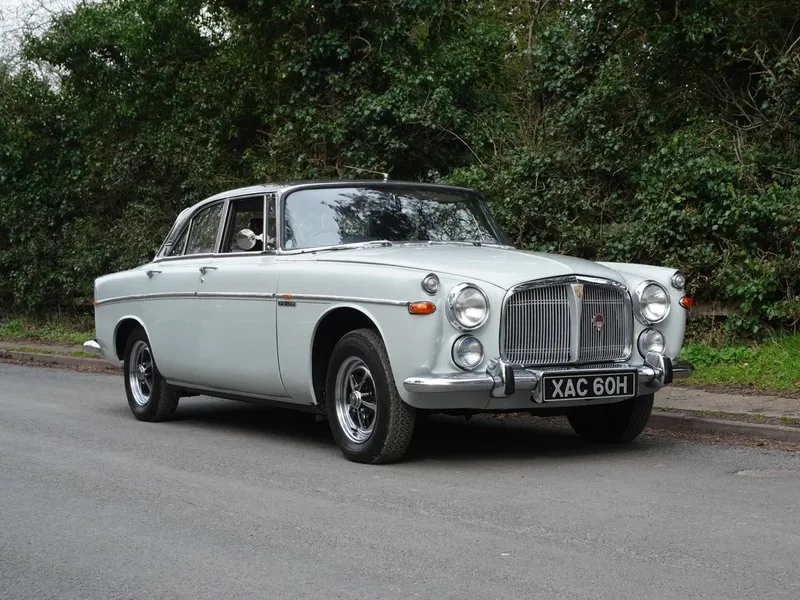
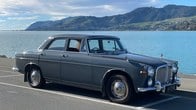
The P5 presents a silhouette that seemed traditional even at its 1958 launch, standing upright and wide with a long bonnet and a gently sloping rear roofline rather than the low-waisted, glassy proportion of contemporary Italian designs. The Coupé achieved a more swept profile courtesy of its reduced roofline, while retaining the same substantial front end.
The P5 was built to compete with the best British interiors of its era, and the standard specification included walnut veneer capping across the dashboard and doors, leather upholstery throughout, and deep-pile carpets. Instrumentation is clear and traditional, with individual round dials, restrained chrome detailing, and a close-set, upright steering wheel. The rear seat offers exceptional legroom and a commanding seating position that explains much of the car's appeal to official and diplomatic users.


The Rover P5 was produced in two distinct engine configurations and two body styles across its 15-year life. The P5 3-litre (1958–1967) used the 2,995cc IOE straight-six in 115bhp or later 134bhp twin-carburettor form, and was the only version available with a manual gearbox. The P5B (1967–1973) replaced the straight-six with the 3,528cc all-aluminium Rover V8 producing 160bhp, and was offered exclusively with the Borg Warner three-speed automatic. From outside, the P5B is identifiable by its chromed Rostyle wheels and optional fog lamps.
Both engine variants were offered in saloon and Coupé body styles. The saloon ran throughout the full 1958–1973 production period, whereas the Coupé was introduced in 1962 and continued through to the end of P5B production.
The Rover P5 and P5B production run ended in 1973, well before modern driver technologies arrived on the British market. The original 1958 specification used drum brakes on all four wheels, but front disc brakes were added by October 1959 and remained standard across all subsequent production.
Seat belts were fitted as standard equipment progressively through the production run, and power-assisted steering was available as a factory option on 3-litre cars and standard on the P5B.
Pros
The 3,528cc V8 fitted to every P5B is the same unit subsequently used in the Range Rover, Rover SD1 and Morgan Plus 8, so parts are readily available
The P5 and P5B's use as official transport for British Prime Ministers and Queen Elizabeth II distinguishes them from other large British saloons of the same period
The Rover P5 Club maintains a full technical archive, parts register and specialist directory covering both engine variants and both body styles
Cons
The 2,995cc IOE straight-six uses an inlet-over-exhaust valve arrangement, and specialist machining knowledge is required for cylinder head work
Rover's unitary construction introduced corrosion traps (sills, rear suspension mounts, D-posts and the floorpan) that pose a structural risk on any P5
P5B chromed Rostyle wheels are the model's most recognisable exterior feature and are expensive to restore
Price trends
Vente la plus récente
5 995 £
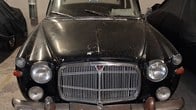
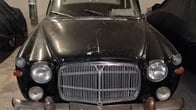
1959 Rover P5

Actuellement en vente
9
2 enchères en direct
7 annonces

Total vendu
12
Prix de vente le plus élevé
28 870 €
Prix moyen
11 734 €
Prix le plus bas
4 500 €
FAQs
The two cars offer different ownership experiences despite sharing the same body. The 3-litre straight-six is available with a manual gearbox and delivers a quieter, more traditional character at lower speeds. The P5B is the choice for outright performance and refinement, and its automatic-only transmission is non-negotiable.
Both body styles share the same ADO15 floorpan, wheelbase, mechanical specification and interior quality. The Coupé achieves its lower, more rakish profile by reducing the roofline by 2.5 inches and thinning the B-pillars. The saloon offers a more commanding rear-passenger experience, whereas the Coupé is the sportier-looking choice.
For the P5B, mechanical parts availability is broad, mainly thanks to the number of models that share its 3,528cc V8. For the P5 3-litre, the IOE straight-six requires more targeted sourcing. Body panels and interior trim for both variants require specialist knowledge to track down.
The P5 and P5B were used as official government transport from the early 1960s through to the early 1980s because they combined the interior quality and rear-seat presence expected of official British transport with a discretion that a Rolls-Royce couldn’t deliver amid a period of industrial austerity. Harold Wilson, Edward Heath and Margaret Thatcher all used P5B saloons and coupés for official duties. Queen Elizabeth II personally drove her P5B, rather than being chauffeured in it.