Mercedes-Benz SL55 AMG: Models and Specs
2002–2008 - V8, 5.4-litre or 5.5-litre, supercharged - Rear-wheel drive - 5-speed automatic - 476–517 hp - 1,845–1,875 kg - 0–100 km/h: 4.5–4.7s - Top speed: 250 km/h
Overview
When the SL55 AMG was introduced in 2002, it was the most powerful road car Mercedes-Benz had ever built. This R230 model was a supercharged V8 grand tourer that could demolish supercars before gliding serenely across a continent. The 5.4-litre supercharged V8 delivered 476 hp and 700 Nm of torque with almost no lag. Later 2003–2006 models gained 500 hp, while the 2006 facelift heralded a 5.5-litre engine with 517 hp and 720 Nm, enough to outpace a Ferrari 360. Yet rather than being a track-focused vehicle, the SL55 incorporated luxury items like a retractable hardtop, leather interior and Active Body Control suspension that delivers both comfort and control. This is a shockingly fast car that’s also suitable as a daily driver. The SL55 AMG is not a sensible purchase, but rather a high-maintenance relationship with extraordinary rewards, including explosive performance, refined cruising and timeless style.
Price
- Starting price
- 2 314 €
- Average price
- 30 594 €
- Price range
- 2 314 € - 1 972 272 €
Specifications
- Manufacturer
- Mercedes-AMG GmbH
- Generation
- R230 SL-Class
- Production Years
- 2002–2008
- Body Styles
- 2-door roadster
- Layout & Drive
- Front-engine, longitudinal / Rear-wheel drive
Mercedes-Benz SL55 AMG in Detail
The SL55 AMG debuted in 2002 as the flagship of the R230 SL-Class. It replaced the naturally aspirated SL60 AMG and reintroduced forced induction to the SL lineup for the first time since the 1980s 500 SL.
Pre-Facelift (2002–2006)
Early cars (2002) featured a 5.4-litre supercharged V8 with 476 hp, which increased to 500 hp in 2003 due to revised mapping and exhaust. The Eaton supercharger delivered explosive mid-range torque from 2,750 rpm, but true theatre was found slightly higher up courtesy of the Vario-roof retractable hardtop. This used 13 electric motors and multiple hydraulic cylinders to perform a convertible ballet in around 16 seconds. When it worked, it was brilliant, but when it failed, it was expensive.
Similarly, the Active Body Control (ABC) suspension used hydraulic struts controlled by a central valve block to achieve adaptive damping, active anti-roll and self-levelling. It transformed handling dynamics but at the cost of complexity, with failures costly and complex in equal measure. And then there was the Sensotronic Brake Control, which replaced traditional vacuum-assisted brakes with electro-hydraulic actuation. It offered exceptional pedal feel and emergency braking assistance, but early systems suffered failures that could disable the brakes entirely, which wasn’t optimal on a supercharged V8. Needless to say, it became a safety-critical recall issue.
Facelift (2006–2008)
The 2006 facelift introduced revised front and rear styling, updated LED taillights, and a larger 5.5-litre engine producing 517 hp and 720 Nm of torque. Performance increased notably, while interior upgrades included an updated COMAND infotainment system, revised trim options, and improved build quality.
Production ended in 2008, with the SL55 replaced by the SL63 AMG, which featured a naturally aspirated 6.2-litre V8. The SL55 remains the last supercharged SL, adding further exclusivity to the allure of resale models.
Model | Engine | Power | Torque | 0–100 km/h | Top Speed |
SL55 AMG (2002) | 5.4-litre V8 supercharged | 476 hp | 700 Nm | 4.7s | 250 km/h |
SL55 AMG (2003–2006) | 5.4-litre V8 supercharged | 500 hp | 700 Nm | 4.5s | 250 km/h |
SL55 AMG (2006–2008, facelift) | 5.5-litre V8 supercharged | 517 hp | 720 Nm | 4.5s | 250 km/h |
Driving character
Stamp on the loud pedal and the M113 supercharged V8 responds instantly, with the Eaton blower howling as 700 Nm of torque arrives at just 2,750 rpm. The five-speed Speedshift transmission kicks down aggressively, yet body roll is non-existent, bumps are absorbed effortlessly and high-speed stability is phenomenal.
Wind buffeting from the Vario-roof is minimal, and its insulation rivals a fixed roof when closed, though this complexity often breeds failure.
Buyer Note: The 5.5-litre engine found in facelifted models delivers more torque and slightly sharper responses, though pre-facelift cars offer similar performance at lower prices.
Length: 4,540 mm (pre-facelift) / 4,555 mm (facelift)
Width: 1,820 mm
Height: 1,300 mm (roof up) / 1,280 mm (roof down)
Wheelbase: 2,560 mm
Weight: 1,845 kg (pre-facelift) / 1,875 kg (facelift)
The SL55 is wide, low, and imposing. Boot space is adequate with the roof up, but severely compromised with it down, at just 11.2 cu ft.
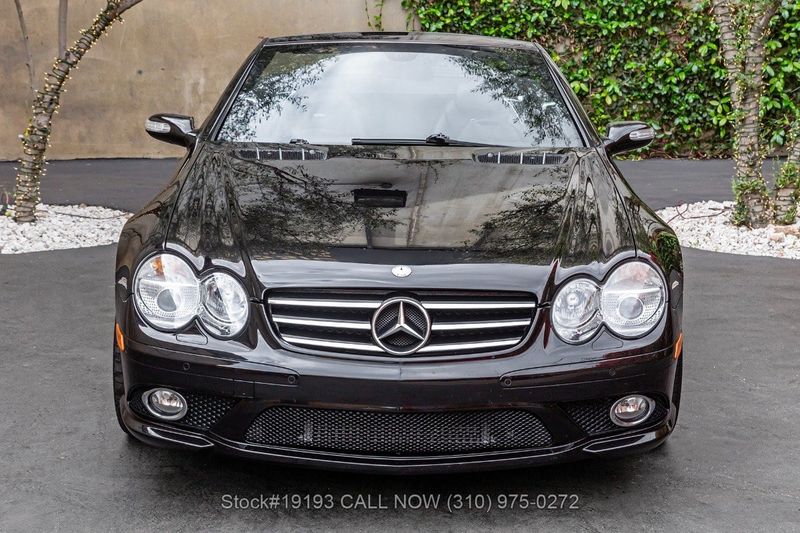
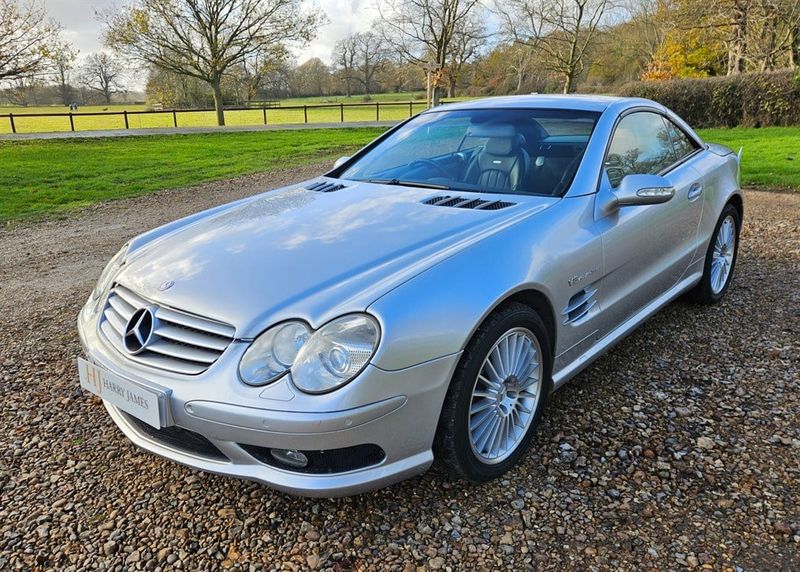
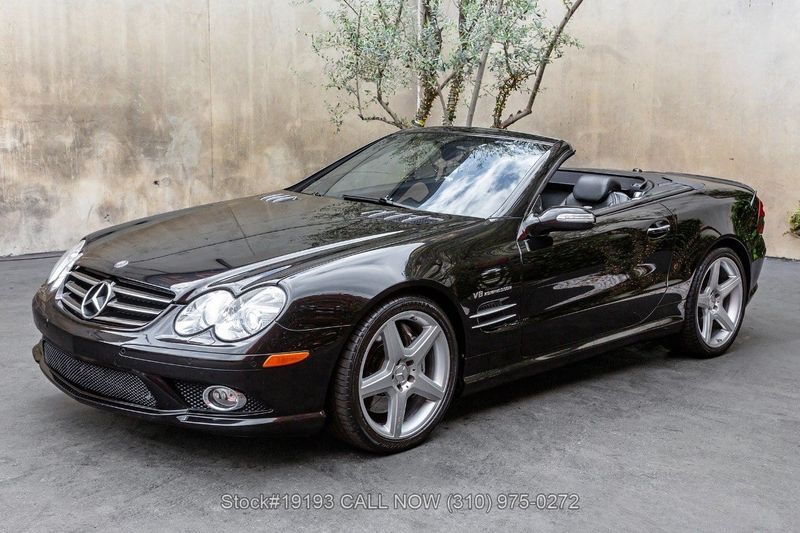
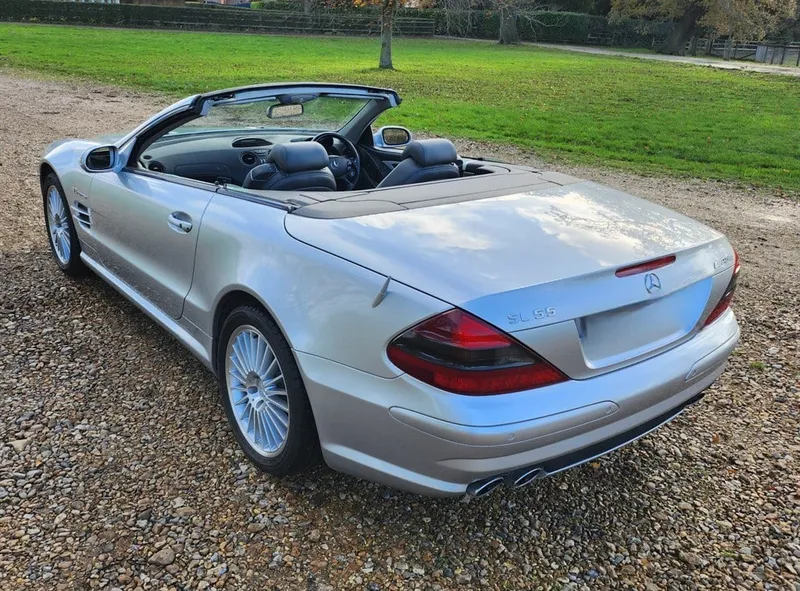
The SL55 didn’t need to shout about its prodigious power, though it still packed quad exhausts, an AMG front apron and 18-inch alloys with 19-inchers optional. The 2006 facelift ushered in updated bumpers, revised LED taillights and subtle styling tweaks.
Inspection priorities:
ABC suspension: Check for sagging corners, oil leaks from struts and/or warning lights. Fluids should be red, not brown.
Vario-roof operation: Run multiple open/close cycles, listening intently for unusual noises while looking for hydraulic leaks in the boot or water ingress around the seals. Repairs range from a few hundred pounds to a few thousand.
Supercharger pulley bearing: Listen out for squealing or grinding from the engine bay, since bearing failure is common.
Rust: Check the wheel arches, door sills, and boot floor for corrosion. AMG wheels are also prone to cracks and corrosion.
Bright silver and obsidian black paint schemes suit the SL55's character, but avoid cars with poorly repaired accident damage or aftermarket body kits.


The SL55’s cabin is a symphony of wood and heated/ventilated leather seats, with a dated COMAND navigation system and a premium audio setup. Thoroughly test the COMAND functionality and air conditioning performance, since refrigerant leaks are common.


Standard equipment on every SL55 includes ABS, ESP, multiple airbags and active safety features. SBC brake issues are safety-critical, so verify that any recalls were completed.
The M113 supercharged V8 is bulletproof, and many SL55s exceed 150,000–200,000 miles with proper maintenance. However, the electronics are era-typical Mercedes, so expect gremlins, module failures and high diagnostic costs. On that note, the aforementioned ABC suspension can cost as much as £8,000 for a full system rebuild.
When viewing an SL55, a full service history from Mercedes or AMG specialists with invoices and no gaps is critical. On a test drive, listen out for pulley bearing squealing from the supercharger and check for oil leaks from its seals. A gearbox conductor plate failure sends the car into limp mode and can cost £1,500 to repair, while electronics module failures are common and expensive in equal measure.
Buyer Note: Don't buy the cheapest SL55 you find, since deferred maintenance could prove costly. Buy the best-maintained example on the market with a full history, and set up a reserve fund to address inevitable maintenance issues.
Price trends
Venda mais recente
17 000 £
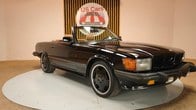
1985 Mercedes SL Class 500 SL R107 Convertible

Atualmente à venda
1025
27 leilões ao vivo
998 anúncios

Total vendidos
1991
Preço de venda mais alto
1 972 272 €
Preço médio
30 594 €
Preço mais baixo
2314 €
FAQs
Pre-facelift models offer similar performance at lower prices, though a facelifted SL55 has updated styling, refined SBC brakes and - this next point is relative - improved electronics. Choose your car based on condition and history, not any power differences, which are negligible on the road.
Struts cost £600–£1,200 each, a valve block rebuild can reach £800, with hydraulics more than doubling this, and even hoses coming in at £200 each. ABC fluid changes every two years to help prevent failures, so look for evidence of this in accompanying paperwork.
The supercharged M113K is one of Mercedes' most robust engines. Oil leaks from valve covers and the rear main seal are common but manageable. The engine itself is bulletproof - it's everything else that breaks. For instance, pre-facelift cars are more prone to SBC failures, while all models suffer hydraulic leaks, sensor failures and worn seals. These may cause the roof to stop mid-cycle or leak water into the boot, potentially damaging the car’s electronics.
The V8 supercharged SL55 is more reliable, cheaper to maintain and easier to work on than the V12 twin-turbo SL65. The latter is faster and more exotic, but its complexity and cost are eye-watering.
This car is comfortable, refined and surprisingly practical with the roof up. However, its reliability is fragile, so budget for breakdowns as well as a prodigious thirst (12–18 mpg) and typical annual maintenance costs between £2,000 and £4,000.