BMW E9: Models, Specs and Buyer's Guide
Core Specs: 1968–1975 • 2.8–3.0L M30 inline-six • 170–206 bhp
BMW E9 Overview
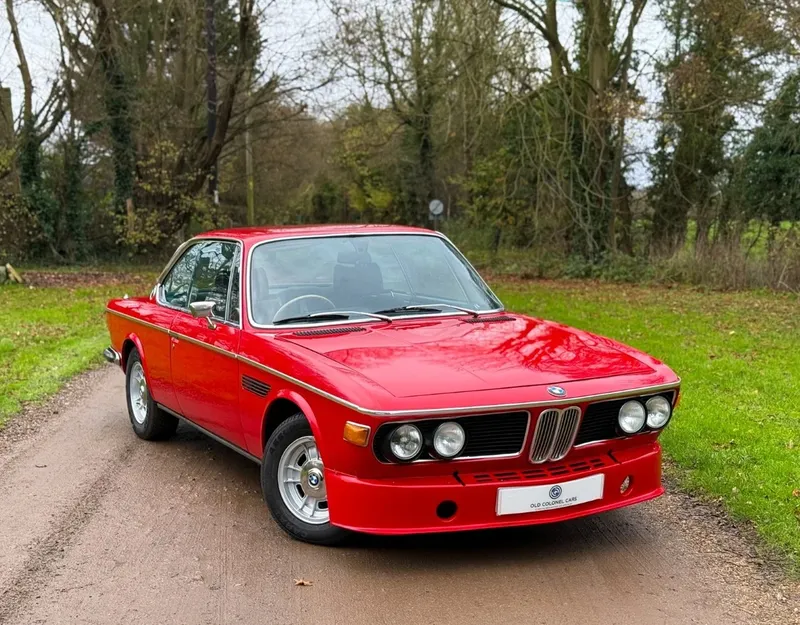
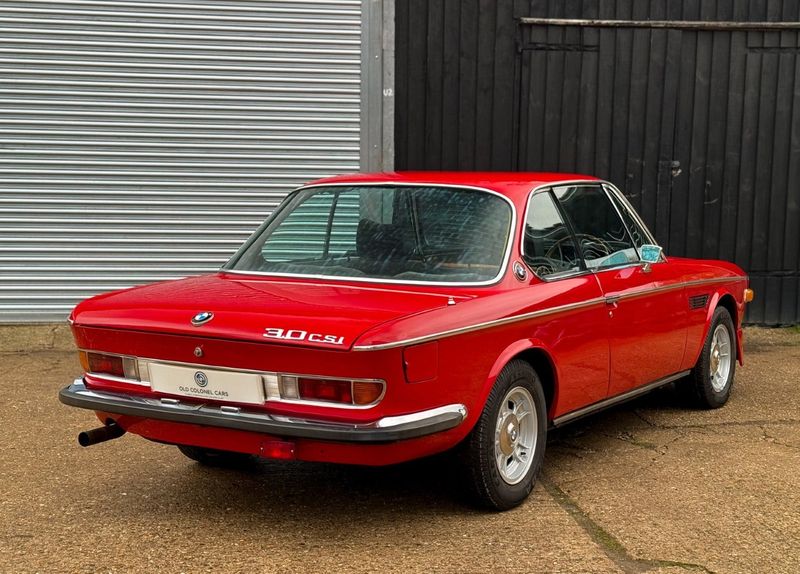
Remarkably, by the late 1960s, BMW wasn’t renowned as a manufacturer of exceptionally stylish or continent-devouring cars. The E9 grand-touring coupé, therefore, represented a welcome development when it was introduced in late 1968, elevating the Bavarian firm into the realms of six-cylinder performance. Designed under the supervision of Wilhelm Hofmeister (who gave his name to the rear window kink which has been associated with BMWs ever since) and built by Karmann, the E9 was based on a lengthened platform of the E3 New Class sedans, albeit offering far superior performance. That voluptuous bonnet accommodated the potent 3.0 CS/CSi powertrains in 1971, offering up to 200 hp in fuel injection guise, before the legendary 3.0 CSL was spawned in 1972. Known as the Batmobile, this stripped-out lightweight homologation racer cemented BMW’s motorsport identity and served as the precursor to BMW’s Motorsport GmbH performance division. The E9 sold in limited numbers despite remaining in production until 1975, when it was succeeded by the BMW 6 Series (E24). This makes the E9 a bridge between BMW’s compact New Class and its modern luxury‑sport coupés, having helped to consolidate the firm’s reputation for combining refined design, engineering excellence and a racing pedigree.
C&C Expertise
Pretend you’re Toine Hezemans at Le Mans or just enjoy taking something stylish and practical down to the shops. This design classic from the Hoffmeister era is still hard to beat. In range-topping 3.0 CSL form, it won six driver’s championships during the 1970s, showcasing the iconic “Batmobile” aero kit. The perfect choice for cross-continental jaunts, while still practical and well-made, the E9 remains to many the ultimate classic BMW
BMW E9 Price
- Starting Price
- € 14.536
- Average Price
- € 49.680
- Price Range
- € 14.536 - € 176.969
BMW E9 Specifications
- Engine Power
- 170–206 hp (134–151 kW)
- Body Type
- Coupé
- No. of Seats
- 4
- No. of Doors
- 2
BMW E9 in Detail
BMW E9 History
The E9 arrived in 1968 with the launch of the 2800 CS model, marking BMW’s return to the luxury coupé segment. Built by Karmann, it featured a 2.8-litre straight-six engine with 170 hp and elegant proportions that paved the way for future BMW coupés.
In 1971, the 2800 CS was replaced by the 3.0 CS and 3.0 CSi. The CS offered 180 hp, while the CSi added Bosch fuel injection for an extra 20hp of output. However, this range is surely best remembered for the 1972 3.0 CSL, launched as a lightweight homologation special to meet motorsport criteria. With aluminium panels, Perspex windows and up to 206 hp on tap, it dominated European touring car racing and earned the nickname “Batmobile” thanks to its aerodynamic kit.
Production ended in 1975, with around 30,500 units having been made. The E9 paved the way for the BMW 6 Series (E24), which maintained BMW’s legacy as a grand touring specialist.
Model | Years | Engine (cc) | Power (hp) |
2800 CS | 1968–1971 | 2,788 | 170 |
3.0 CS | 1971–1975 | 2,985 | 180 |
3.0 CSi | 1971–1975 | 2,985 | 200 |
2.5 CS | 1974–1975 | 2,494 | 150 |
3.0 CSL | 1971–1975 | 2,985–3,153 | 180–206 |
BMW E9 Specifications & Performance
From its launch in late 1968 until production ended in December 1975, the BMW E9 was exclusively powered by the inline‑six BMW M30 family of engines. Displacement ranged from 2.5 to 3.15 litres with outputs between 150 PS (110 kW) and 206 PS (151 kW). While early models were carburettor-fed, Bosch D‑Jetronic fuel injection was subsequently introduced to enhance performance and drivability.
Model | Engine Type | Displacement (cm³) | Power (PS / kW) | 0–100 km/h (s) | Top Speed (km/h) |
2.5 CS | M30 inline‑6, Carburettor | 2,492 | 150 PS / 110 kW | ~9.9 s | ~200 km/h |
2800 CS | M30 inline‑6, Carburettor | 2,788 | 170 PS / 125 kW | ~9.1 s | ~200 km/h |
3.0 CS | M30 inline‑6, Carburettor | 2,986 | 180 PS / 132 kW | ~8.9 s | ~213 km/h |
3.0 CSi | M30 inline‑6, Fuel Injected | 2,986 | 200 PS / 147 kW | ~7.7 s | ~220 km/h |
3.0 CSL | M30 inline‑6, Carb/Injected | 3,003–3,153 | 180–206 PS | ~6.9–7.4 s | ~220 km/h |
BMW E9 Dimensions
Variant | Wheelbase (mm / in) | Length (mm / in) | Width (mm / in) | Height (mm / in) |
2800 CS | 2,624 mm / 103.3 in | 4,660 mm / 183.5 in | 1,670 mm / 65.7 in | 1,370 mm / 53.9 in |
3.0 CS / CSi | 2,624 mm / 103.3 in | 4,660 mm / 183.5 in | 1,670 mm / 65.7 in | 1,370 mm / 53.9 in |
3.0 CSL | 2,624 mm / 103.3 in | 4,660 mm / 183.5 in | 1,670 mm / 65.7 in | 1,370 mm / 53.9 in |
BMW E9 Design
Created under the stewardship of Wilhelm Hofmeister and handbuilt in Germany by coachbuilder Karmann, the E9 is regarded in some quarters as one of the best-looking cars of all time. Its svelte lines brought BMW’s trademark shark nose and Hofmeister kink styling cues to the fore, and they have endured for decades.
BMW E9 Exterior
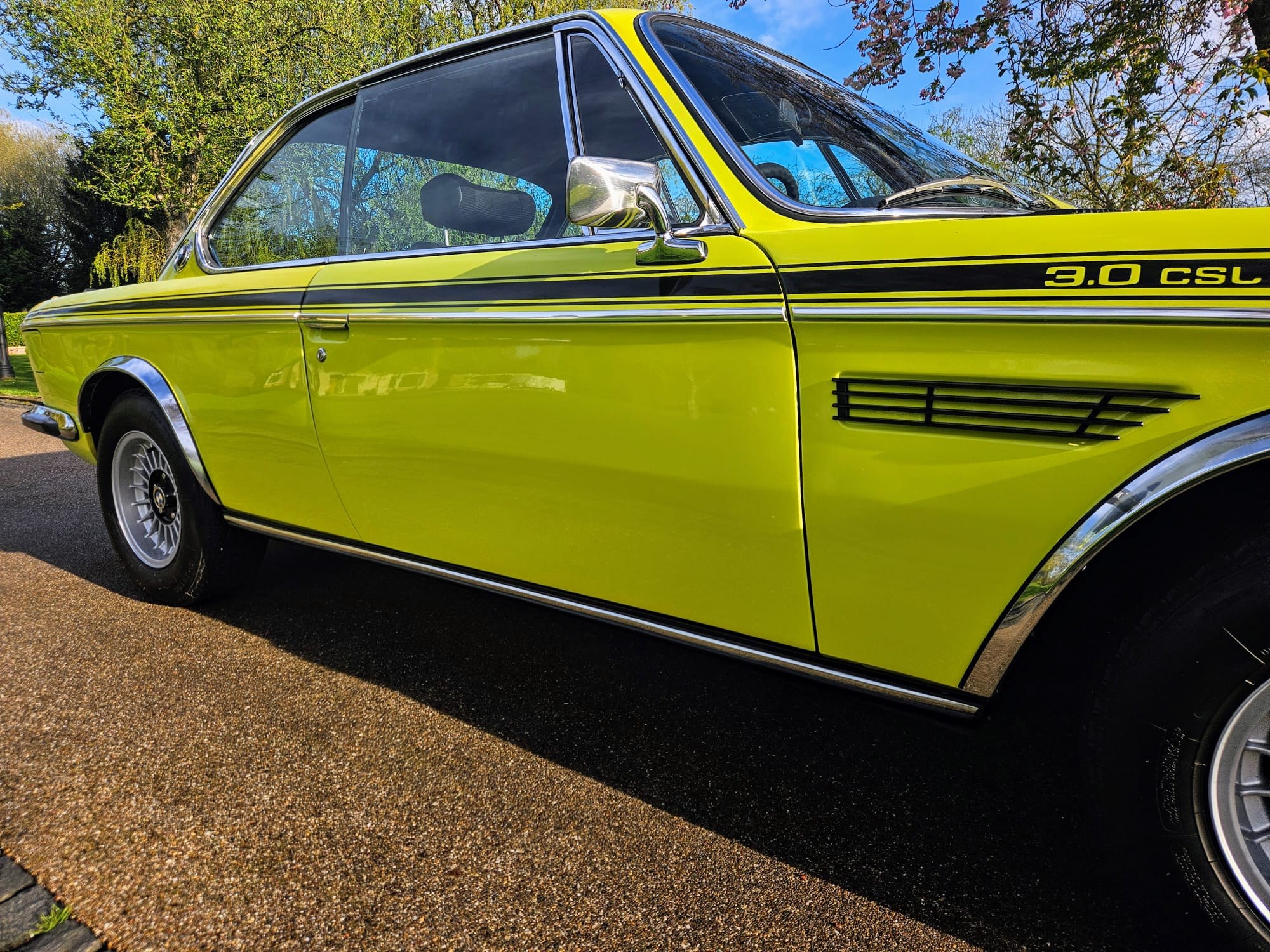
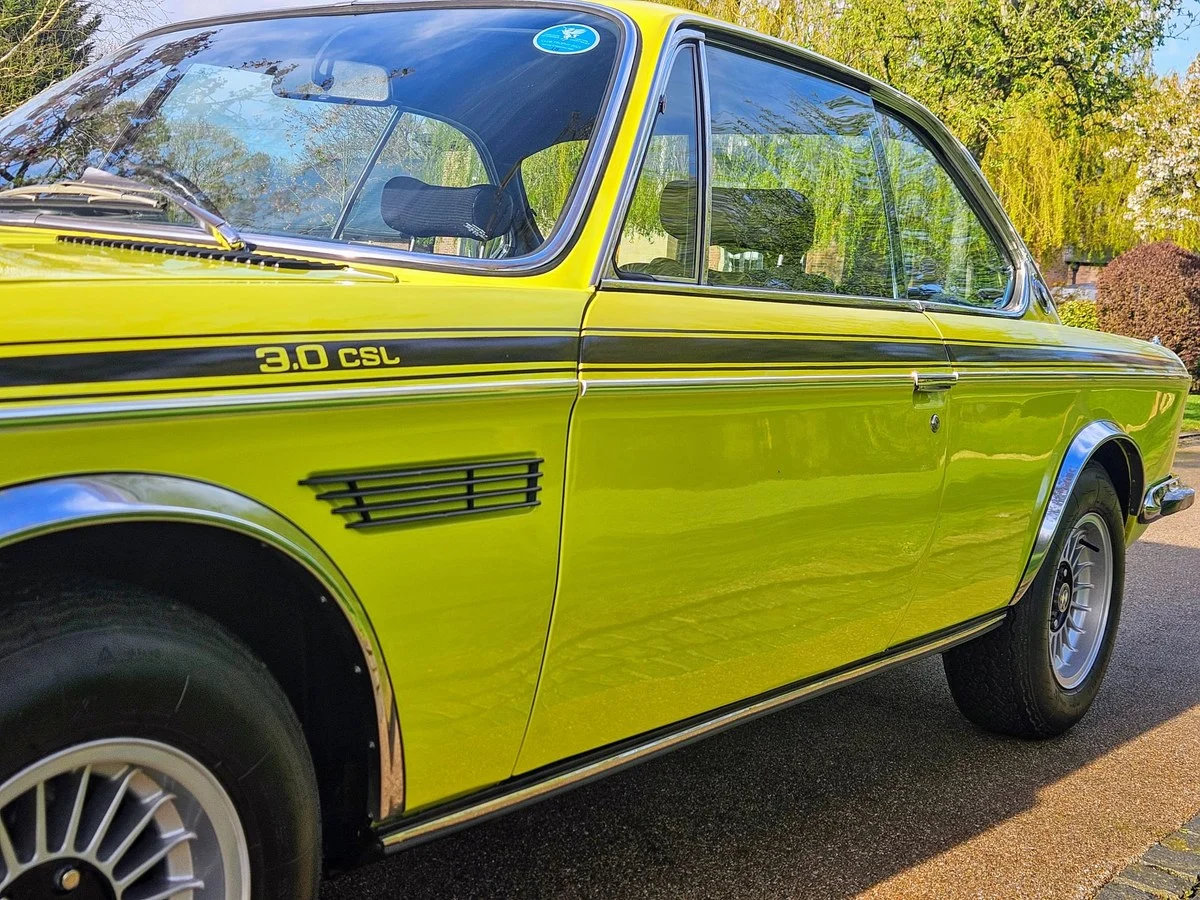
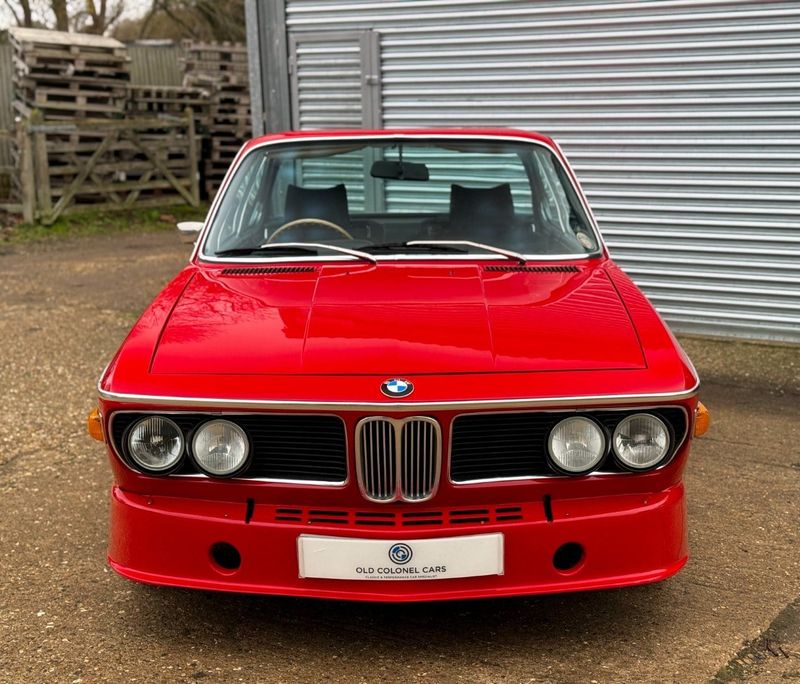
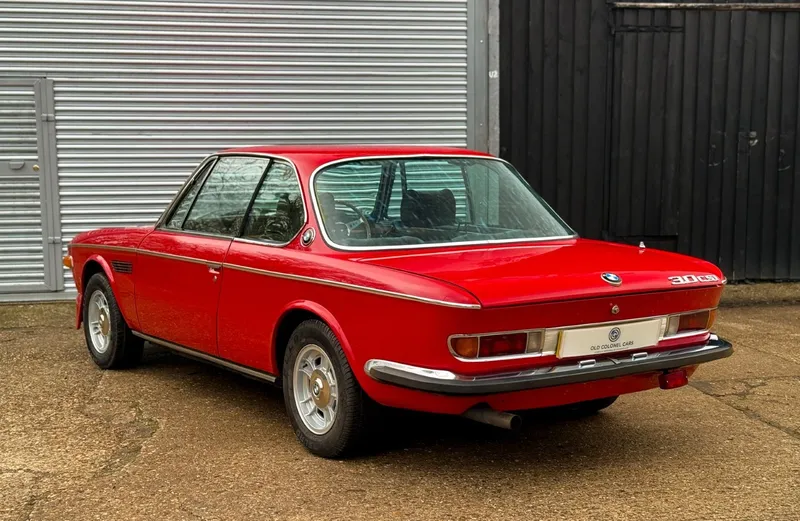
The E9’s exterior was distinguished by its refined coupé silhouette. A pronounced “sharknose” front end with twin round headlights framed the iconic kidney grille, visually aligned with BMW’s larger E3 sedans of the era. The sweeping Hofmeister kink is a forward-facing rear pillar crease that imparts character to the side profile. In contrast, the racing-oriented 3.0 CSL turned everything up to 11 with lightweight aluminium panels and an aerodynamic package fitted.
BMW E9 Interior
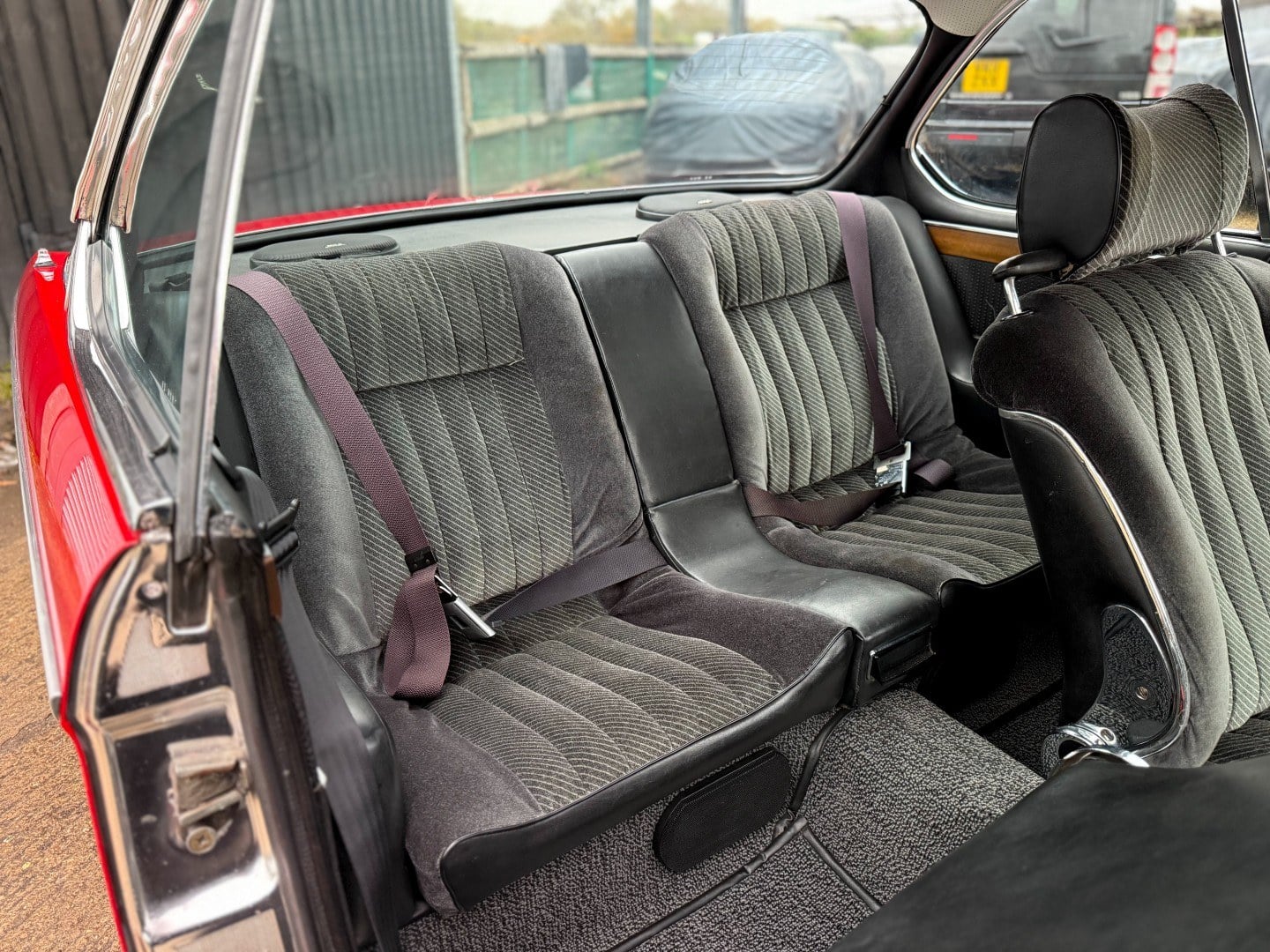
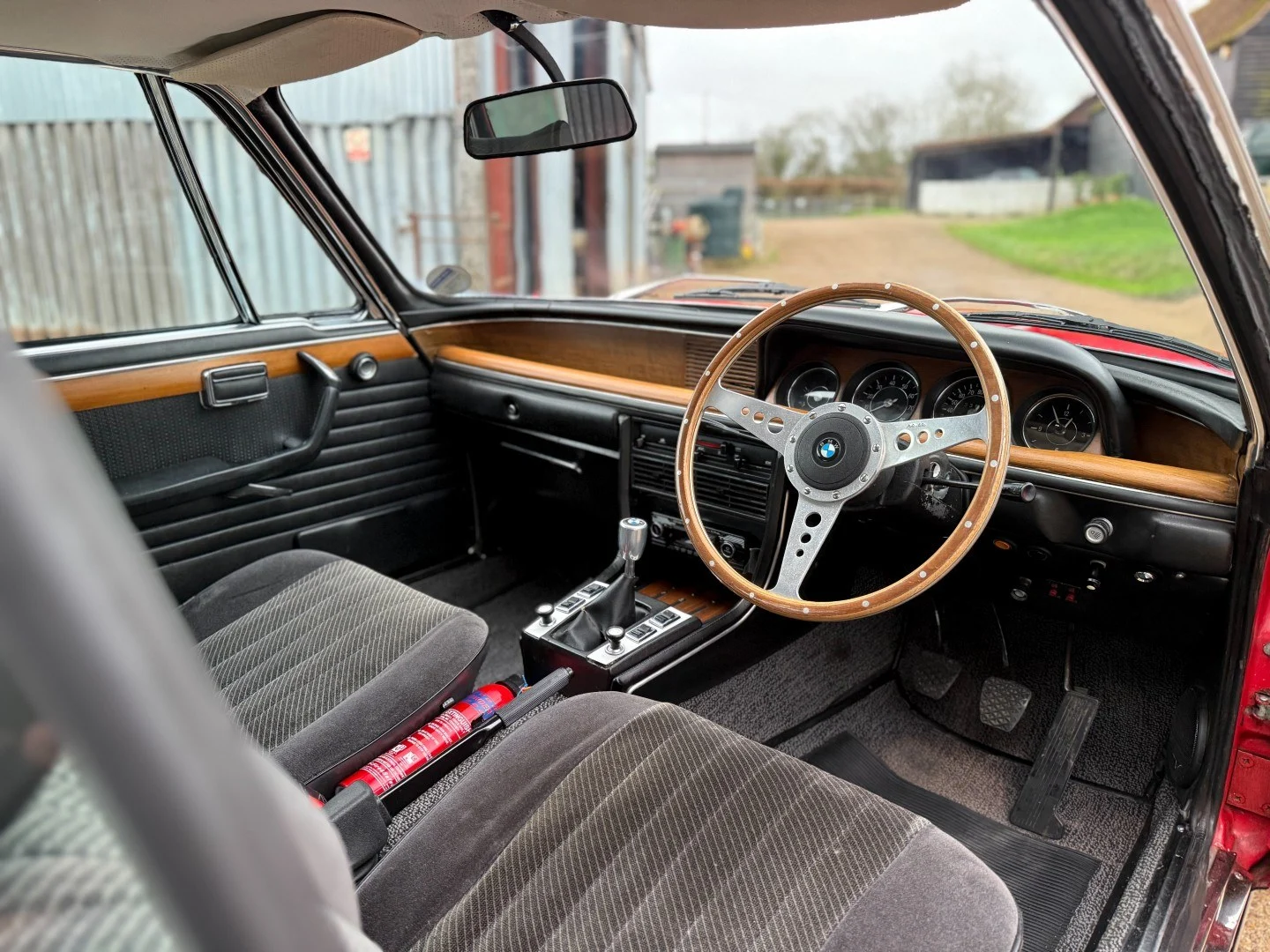
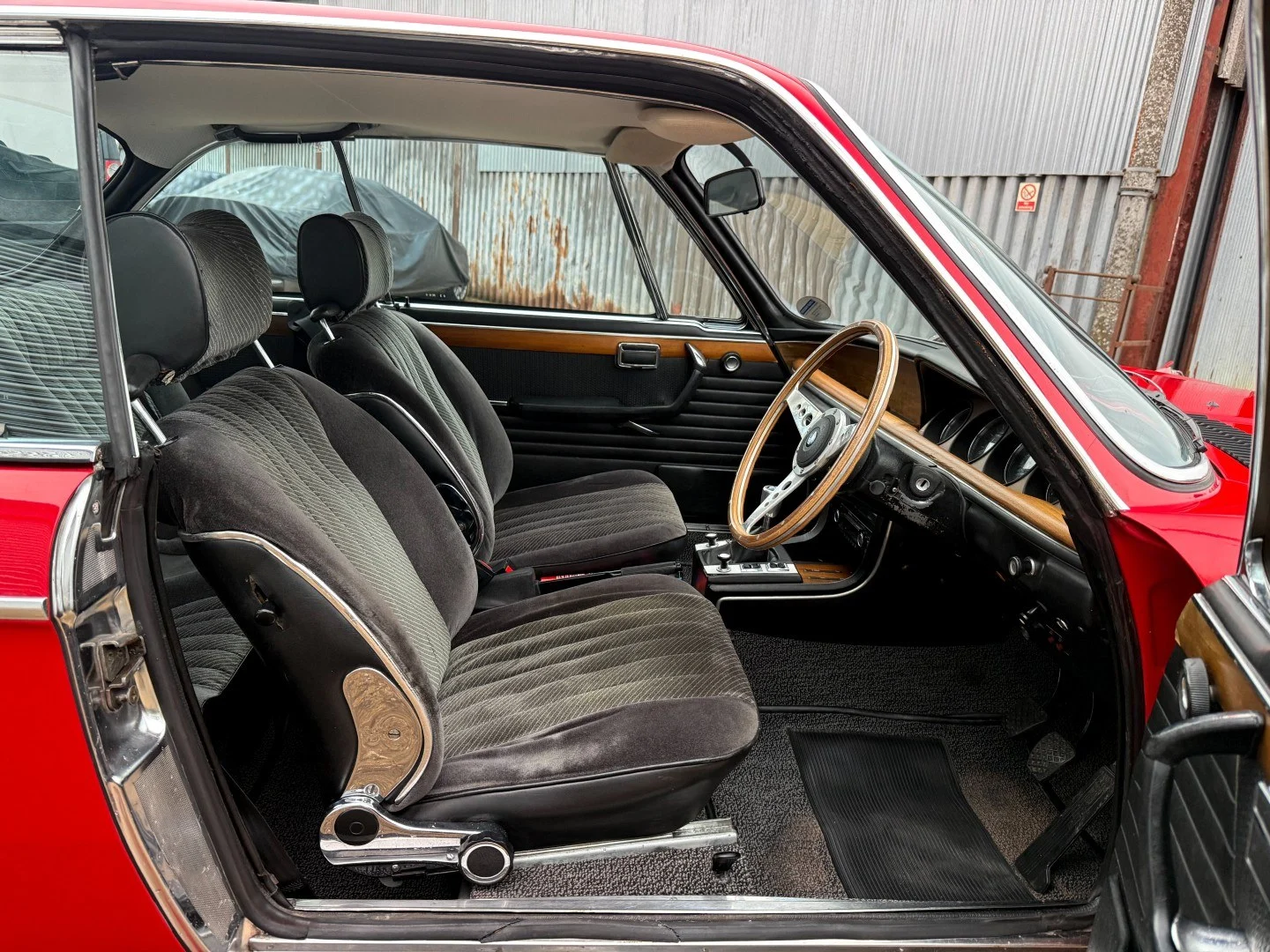
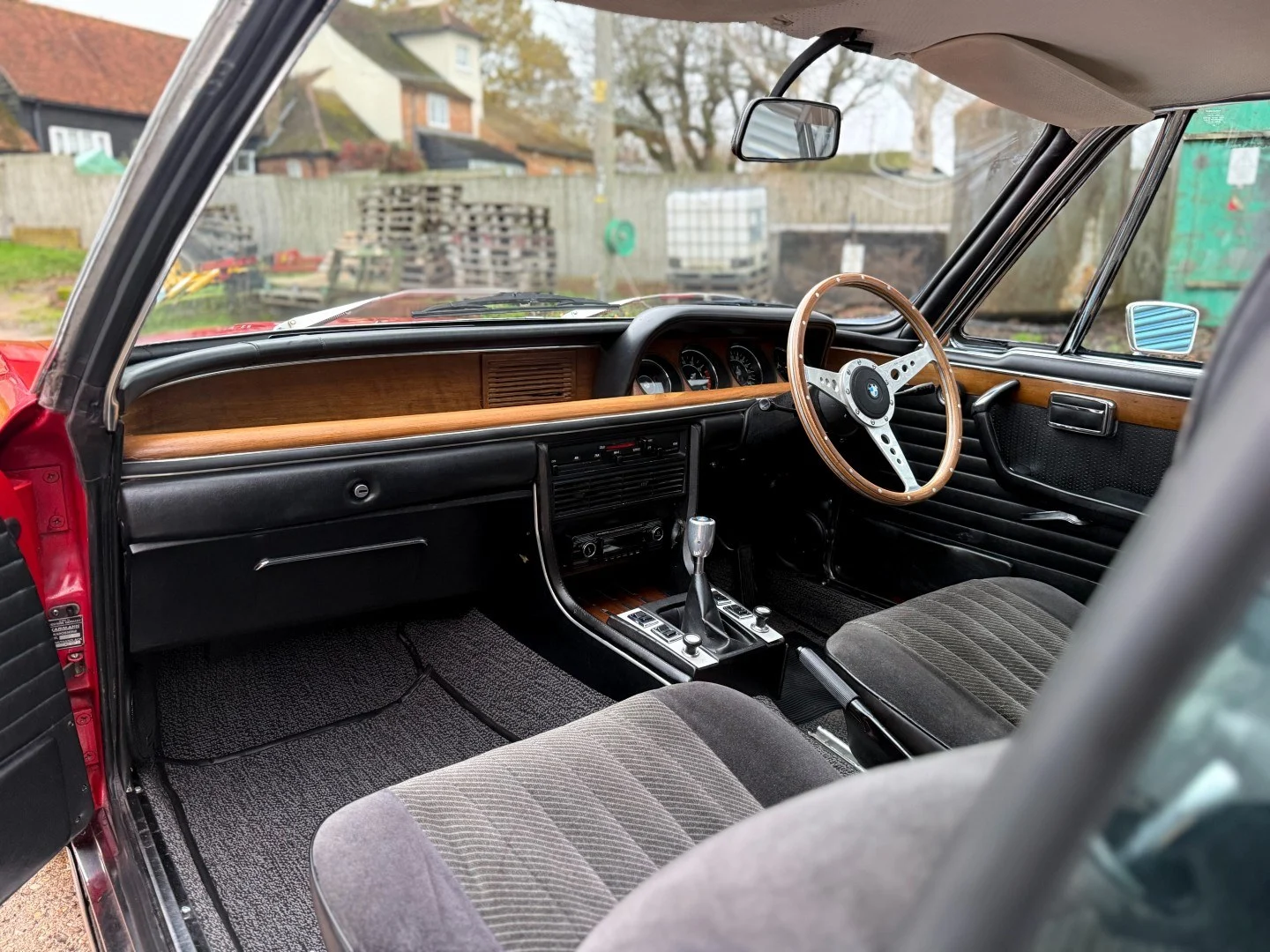
Inside, the E9 was one of the first BMWs to be distinguished by driver-focused ergonomics. The cockpit layout remains simple yet purposeful to this day, with a broad woodgrain dashboard curving across the cabin and housing clear, round analogue gauges in concentric pods.
Seats were well-padded and upholstered in high-quality vinyl or leather, often in contrasting tones such as walnut brown or black, to offset the natural wood trim. The centre console extends low between the seats, with simple mechanical controls and a tactile gear selector. The E9 had good sound insulation for the time and a more generous specification than later BMWs, while spacious rear seating in non-CSL models underscored the car’s grand‑touring credentials.
BMW E9 Safety
No car of this vintage can be considered especially safe by modern standards, but the BMW E9 was advanced for its era. It incorporated a robust steel unibody structure and solid crash protection. The combination of four-wheel independent suspension delivered stable handling and predictable braking responses, helping to mitigate the risk of rear-drive oversteer despite the rear suspension limitations.
Passive Safety Features
The front and rear of the E9's body incorporated crumple zones, which were designed to absorb and deflect crash energy away from the passenger compartment.
The E9 was fitted with three-point seat belts for the front and rear occupants, which restrain passengers and minimise the risk of ejection.
To reduce occupant injuries during a collision, the E9's dashboard and other interior surfaces were padded.
The windscreen and other windows were made of safety glass to prevent shattering into sharp fragments upon impact.
Active Safety Features
All E9s had front disk brakes. Later variants also had disk brakes in the rear.
The E9's rigid chassis, independent suspension, and powerful engine gave it predictable and stable handling.
BMW E9 Variants & Generations
Prijsontwikkeling
Meest recente verkoop
£ 27.250
1971 BMW E9 3.0 CS Coupe
2 okt 2023

Momenteel te koop
32
0 live veilingen
32 advertenties


Totaal verkocht
34
Hoogste verkoopprijs
€ 176.969
Gemiddelde prijs
€ 49.680
Laagste prijs
€ 14.536
FAQs
1. What does the term “E9” mean?
The “E9” designation refers to the chassis code BMW used for a series of two-door coupés which succeeded the New Class coupes. The designations were not affected by engine choice.
2. Which models were produced under the E9 name?
E9 variants included the 2800 CS, carburettor and fuel-injected 3.0 models (the CS and CSi), plus the lightweight homologation 3.0 CSL and the forgotten economy-oriented 2.5 CS.
3. What distinguishes the CSL “Batmobile” model?
Built for homologation, the CSL will forever be remembered for its optional aerodynamic kit, including a massive rear spoiler. To reduce weight, it featured aluminium panels and lightweight trim.
4. Where are typical rust and mechanical trouble spots?
Rust is the biggest killer of E9s. Pay close attention to the front fenders, shock towers and firewall, as well as areas like sunroof drains and ageing sound-deadening materials. It’s also important to look out for cooling issues, which could cause head gasket failure on the M30 engine.
5. What optional features were available on E9 coupes?
Options at different times included leather seats, air conditioning, a manual (and later power) sunroof and power windows, plus a limited-slip differential.