Citroën GS: Models and Specs
1970–1986 · 1.0–1.3-litre air-cooled flat-four (plus Wankel twin-rotor) · Front-engined, front-wheel drive · Fastback saloon/estate
Overview
The Citroën GS is one of the most technically ambitious family cars ever put into mass production. Launched in 1970 to fill the gap between the economy 2CV/Ami range and the prestige DS, it was a rewarding and characterful family car for the everyday buyer. It quickly became Citroën's best-selling model, with 1,896,742 GS and 576,757 GSA units produced between 1970 and 1986. The GS delivered DS-class engineering at family car prices, with the same self-levelling hydropneumatic suspension, the same fully powered disc brakes and an air-cooled flat-four engine designed to deliver a low centre of gravity. The GS became the first Citroën to win the European Car of the Year award in 1971, proving engineering innovation and commercial success don’t have to be mutually exclusive.
Price
- Starting price
- € 2.115
- Average price
- € 6.619
- Price range
- € 2.115 - € 9.308
Specifications
- Production years
- 1970–1979 (GS) 1979-1986 (GSA)
- Total production
- 2,473,499 (GS + GSA)
- Body styles
- Saloon; estate; van
- Layout / Drive
- Front-engined, front-wheel drive
- Engine family
- Air-cooled 1,015cc/1,129cc/1,222cc/1,299cc flat-four
Citroën GS in Detail
Development of the GS began as early as 1956 under the internal designation Project G, and that fourteen-year gestation explains the car’s maturity at launch. Citroën's brief was to produce a car that gave the ordinary family buyer access to the engineering philosophy of the DS, at a price point somewhere between the Ami and the DS itself.
Hydropneumatic suspension sits at the heart of the car's identity, with each wheel independently controlled by a sphere of compressed nitrogen and hydraulic fluid, giving the GS a ride quality without parallel in its class. The braking system was equally radical with fully powered hydraulic disc brakes on all four corners, with inboard front discs mounted outboard of the gearbox to reduce unsprung weight.
The air-cooled flat-four was designed specifically for the GS, positioned low and transversely to achieve a centre of gravity well below the class norm. It grew progressively across the production run, from 1,015cc at launch to 1,299cc in the closing years. The GSX sports variants introduced a Weber carburettor, higher compression and uprated driveshafts. However, the most dramatic engineering footnote was the Birotor (1973–1975). This joint venture with NSU featured a twin-rotor Wankel engine, delivering 106hp and making the Birotor the fastest GS by a large margin. Priced at 70 per cent more than a standard GS, it sold fewer than 1,000 units before the 1973 oil crisis and Citroën's deepening financial difficulties ended production.
In 1979, the GS evolved into the GSA - a five-door hatchback on the same platform with a revised body, updated interior and the introduction of a five-speed gearbox. The GSA is the later expression of the same car rather than a successor or new generation, and production continued until 1986 when the BX replaced it.
The GS is a car that achieves more at any given speed than figures on paper might suggest. The one-litre engine that powered the model in 1970 produced 55.5hp, yet period road tests recorded a top speed of over 90 mph, thanks in large part to a class-leading Cd of 0.318. The GS had the enviable ability to sustain high cruising speeds with minimal mechanical strain. The Birotor exists entirely outside this performance context, with its Wankel architecture, separate transmission and substantial power output.
Variant | Engine | Power | Top Speed | 0–60 mph |
Standard (1015cc) | 1.0-litre air-cooled flat-four | 55.5 hp | 89–92 mph | 16–18 sec |
Standard (1129cc) | 1.1-litre air-cooled flat-four | 57–60 hp | 91–95 mph | 16 sec |
Standard (1222cc) | 1.2-litre air-cooled flat-four | 59–65 hp | 94 mph | 15–16 sec |
GSX/X2 (1222cc) | 1.2-litre Weber-carb flat-four | 65 hp | 100 mph | Not published in period tests |
X3/GSA (1299cc) | 1.3-litre air-cooled flat-four | 65–70 hp | 96–99 mph | 14.2 sec (0–100 km/h) |
Birotor | 0.995L Comotor twin-rotor Wankel | 106 hp | 109 mph | Not published in period tests |
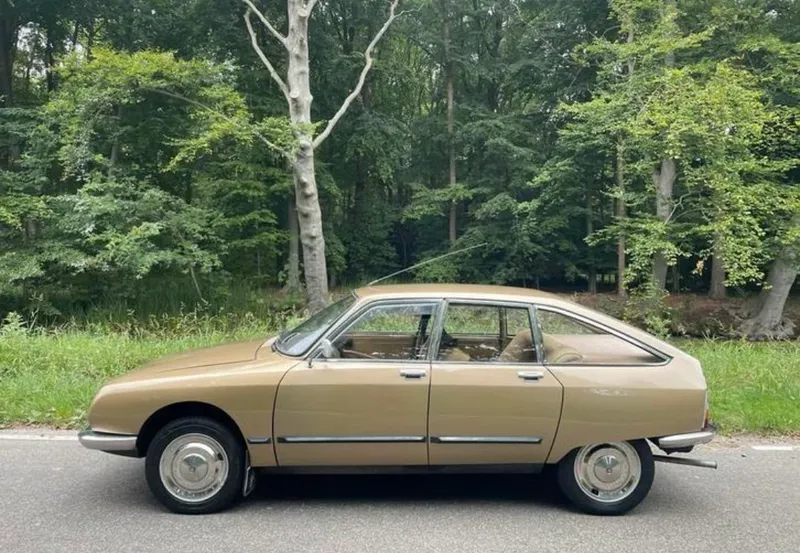
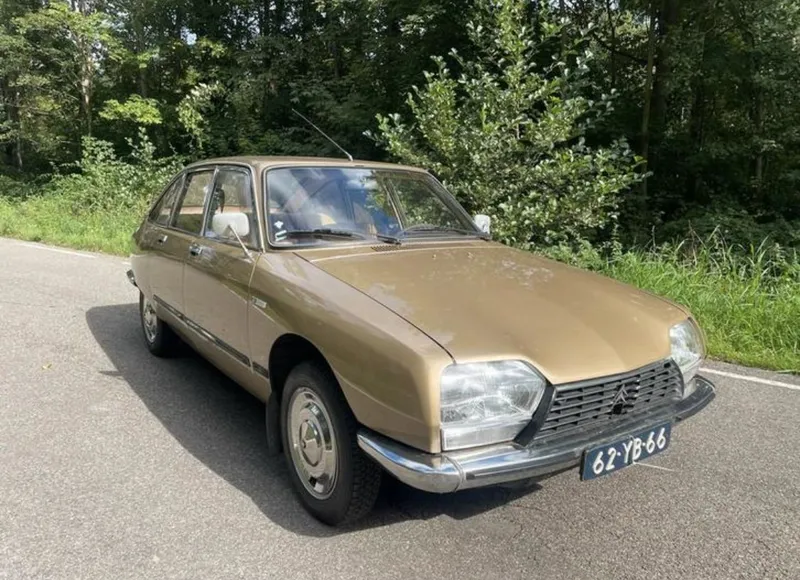
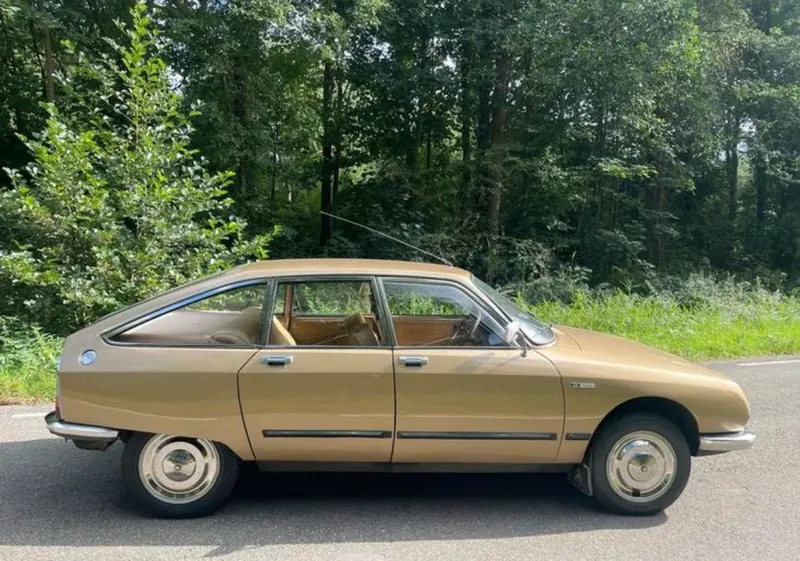
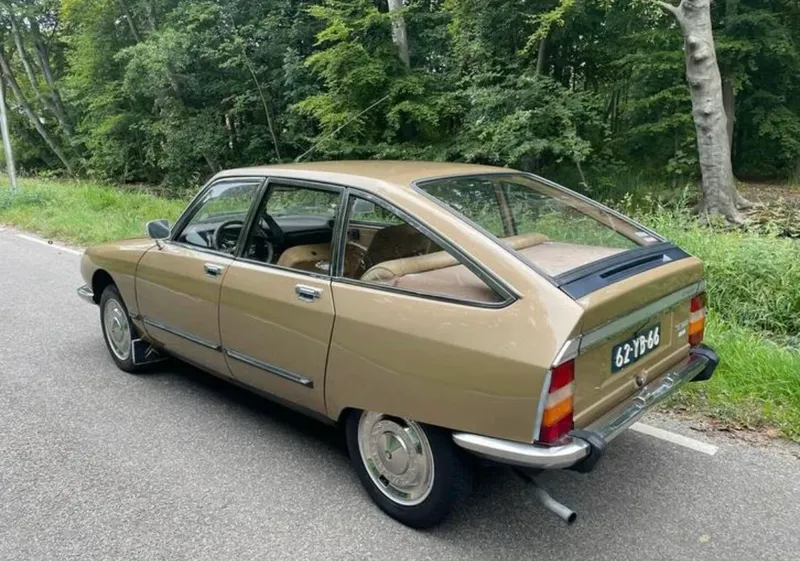
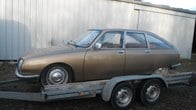
The GS is immediately recognisable by its two-box fastback profile, with a sweeping roofline flowing into a near-vertical Kamm tail above semi-enclosed rear wheelarches. Robert Opron's design shares the same family DNA as the DS and SM, with surfaces that are smooth and uncluttered without being bland. The Break estate extends these proportions rearward, and was one of the most aerodynamically agile load-carriers of its era.
Inside, the cabin philosophy was based on Citroën's "comfortable efficiency" school. The single-spoke steering wheel, grouped satellite controls and deeply reclined front seats suggested a driving environment designed to shrug off long distances rather than offering driver engagement. The hydropneumatic suspension means the car rises gently to its ride height when the engine is started, while headroom and front passenger space are direct beneficiaries of the flat-floor architecture enabled by inboard front brakes and a low-mounted suspension system.
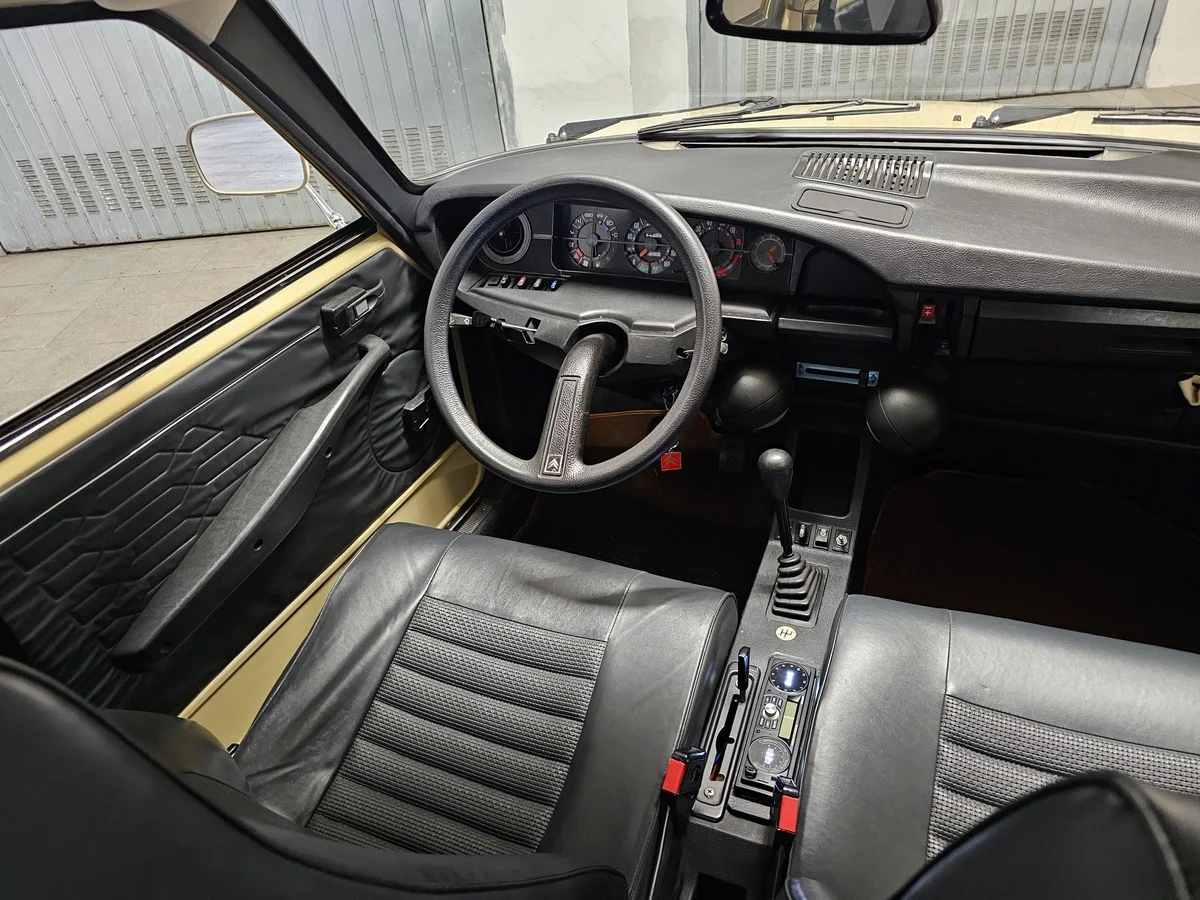
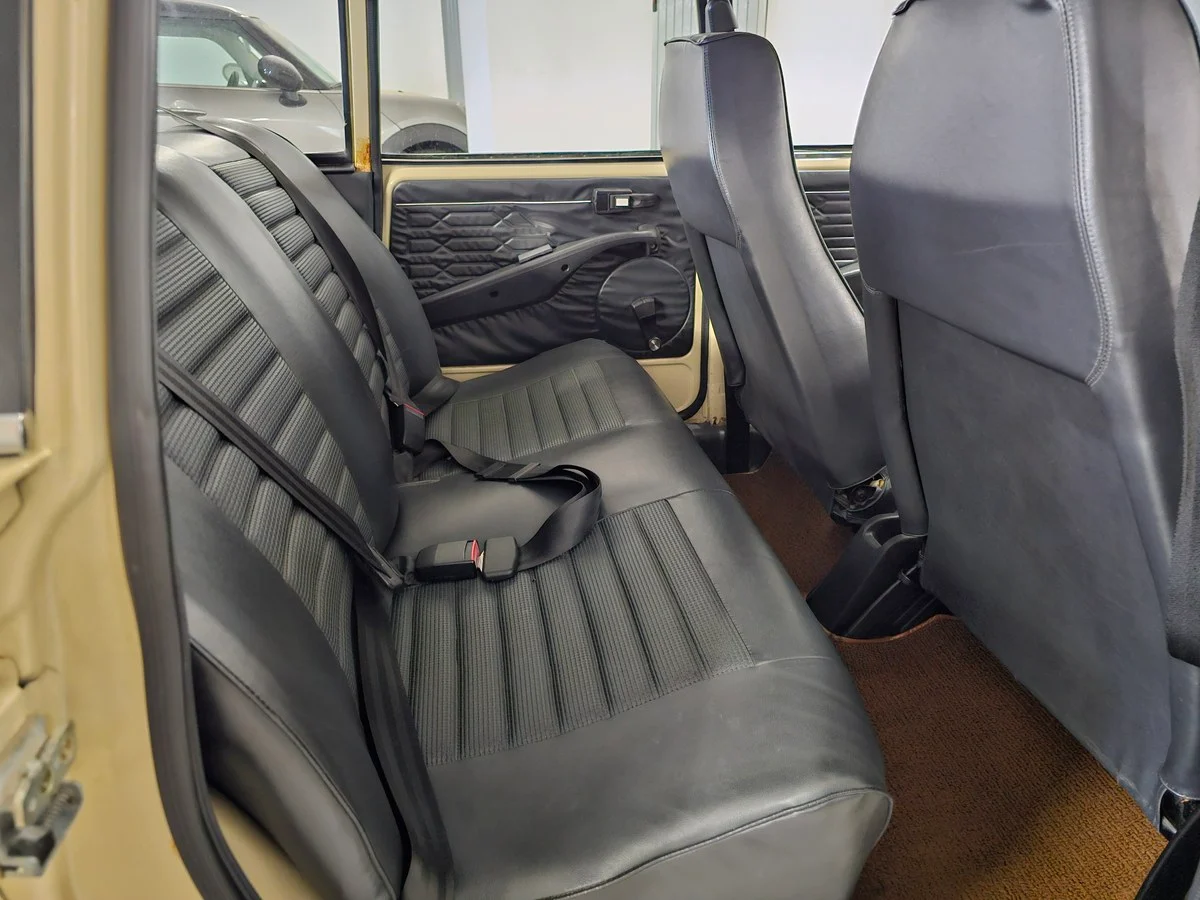
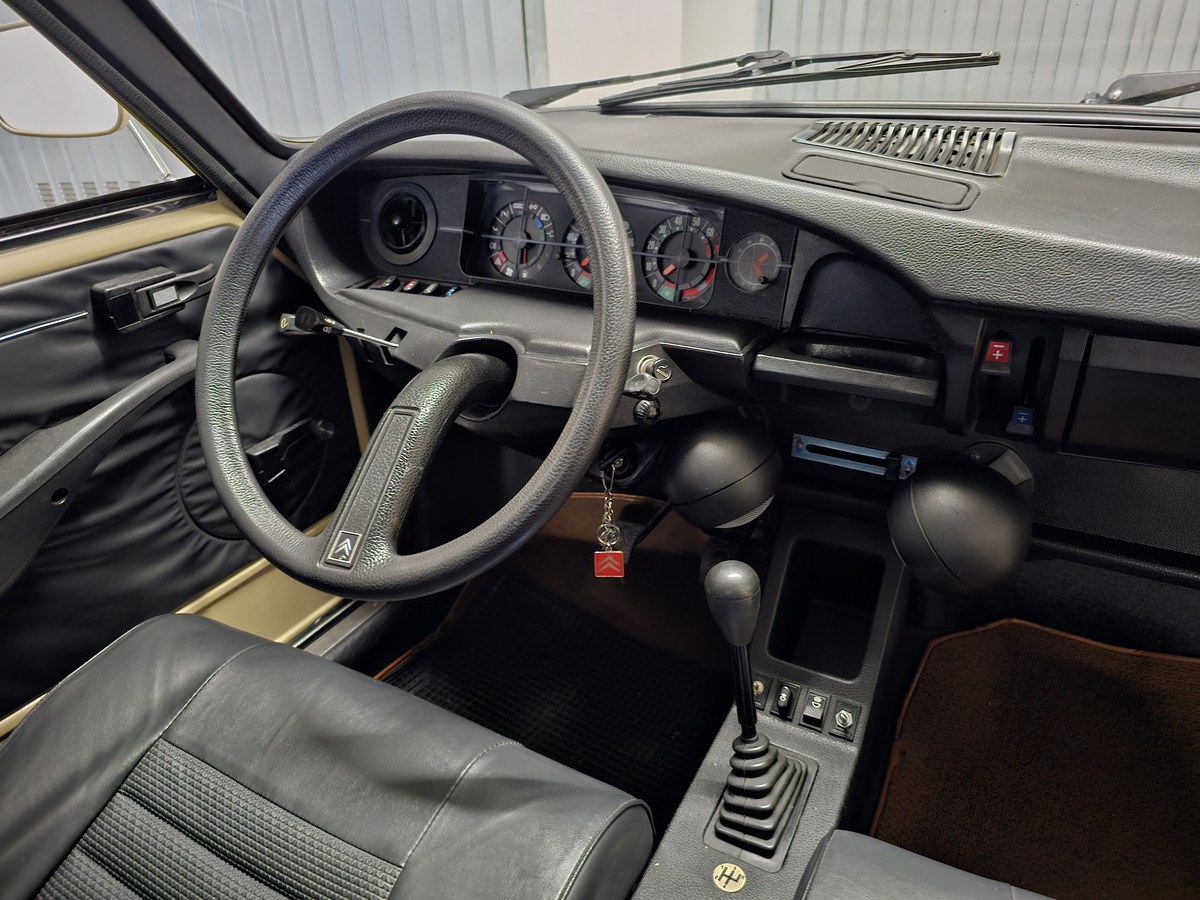
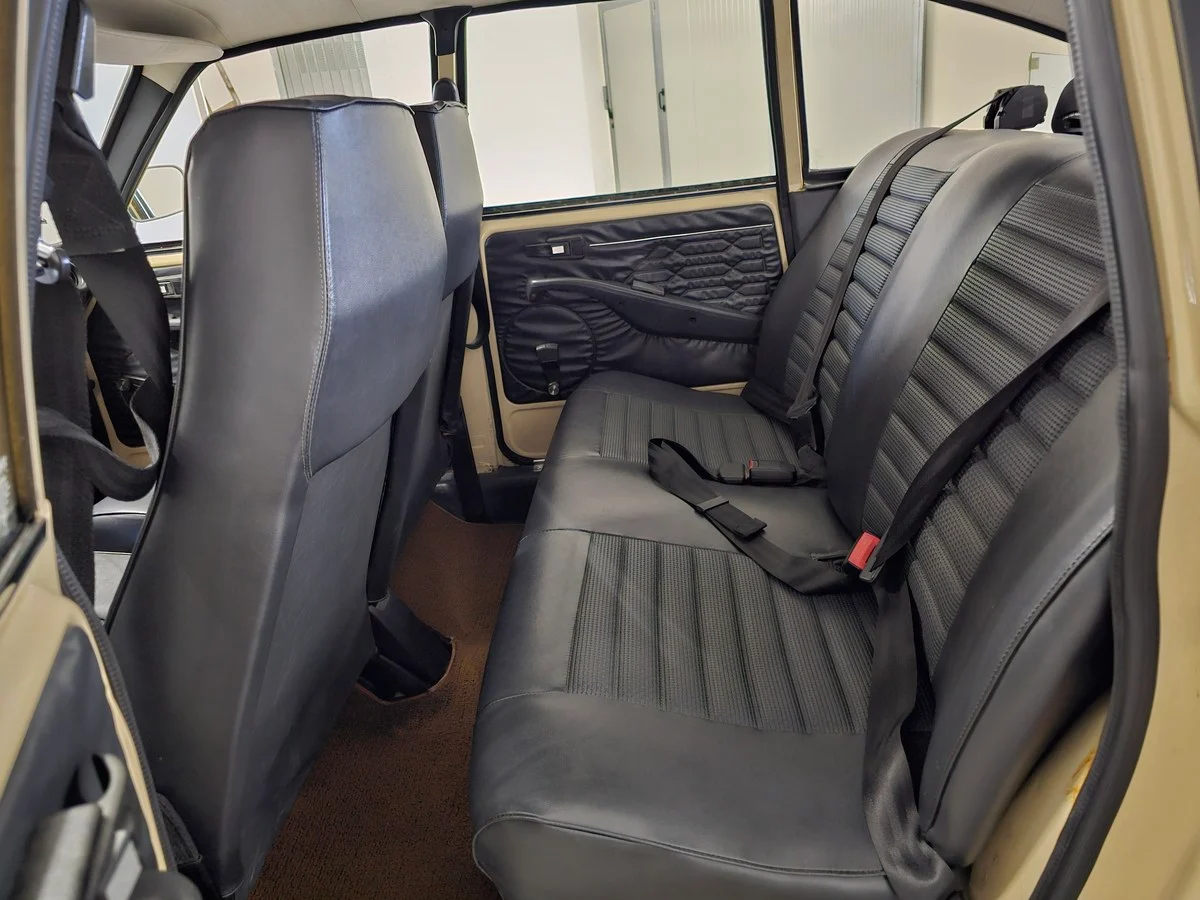
The GS/GSA family reflects a body and equipment evolution within the same platform, not a generational split, so all variants below were available across both body eras unless noted.
[G Spécial/Club/Pallas/GSA]
1.0–1.3-litre air-cooled flat-four engine producing 55–70hp. This formed the core of the range and comprises the vast majority of surviving cars.
[GSX/X2/X3]
Distinguished by a Weber carburettor, higher compression and uprated driveshafts. The X3 exclusively used a 1,299cc engine.
[Birotor (GZ)]
A Comotor twin-rotor Wankel generating 106hp, 3-speed semi-automatic only. Fewer than 1,000 were built between 1973 and 1975, so survivors are exceptionally rare.
The fully powered disc brakes on all four corners of every GS (inboard at the front) provided stopping performance that was class-leading at the time. The hydropneumatic suspension maintained a consistent ride height under load, ensuring superior road contact under braking compared to conventional spring-and-damper systems.
Pros
Fully powered hydraulic disc brakes pressurised by the hydropneumatic circuit delivered class-leading stopping performance
With 2.47 million units built across 16 years of global production, mechanical parts availability is substantially better than UK road presence suggests
Sumptuous ride quality elevated the GS above any contemporaries, as well as most subsequent family cars
Cons
Interior trim and fittings (specifically heater controls) were fragile and are regularly missing or damaged on surviving cars
Only approximately 44 GS/GSAs remain in use on UK roads
The Birotor's combination of rarity and unusual engine architecture makes any surviving example an exceptionally high-risk purchase
Prijsontwikkeling
Meest recente verkoop
£ 15.500
1974 Citroen GS Break Estate

Momenteel te koop
9
0 live veilingen
9 advertenties



Totaal verkocht
20
Hoogste verkoopprijs
€ 9.308
Gemiddelde prijs
€ 6.619
Laagste prijs
€ 2.115
FAQs
The air-cooled flat-four engines are durable and well-understood by specialists, and the Citroën Car Club documents high-mileage ownership with regular maintenance. The hydropneumatic system requires disciplined fluid changes every three years or 30,000 miles; it’s not an unreliable system in the hands of a conscientious owner, but it’s an unforgiving one when neglected.
1,896,742 GS and 576,757 GSA vehicles gave a combined total of almost 2.5 million cars. Despite this considerable production volume, UK survivors are exceptionally scarce, with only 44 cars remaining taxed and on the road.
The GSA (1979–1986) is the same car on the same platform. A new five-door hatchback body replaced the original GS saloon, while there was a revised interior and a five-speed gearbox. The engines, suspension, braking architecture and wheelbase are unchanged.
Engines, gearboxes, hydropneumatic spheres and brake components are well supported by the Citroën Car Club and a network of French and UK specialists. Interior trim, body panels and heater control assemblies are documented challenges, with club networks and specialist dealers the best places to start your search.