De Tomaso Pantera: Models, Specs and Buyer's Guide
Core Specs: 1971–1992 • 5.8L Ford 351 Cleveland V8 • 300–350 bhp
De Tomaso Pantera Overview
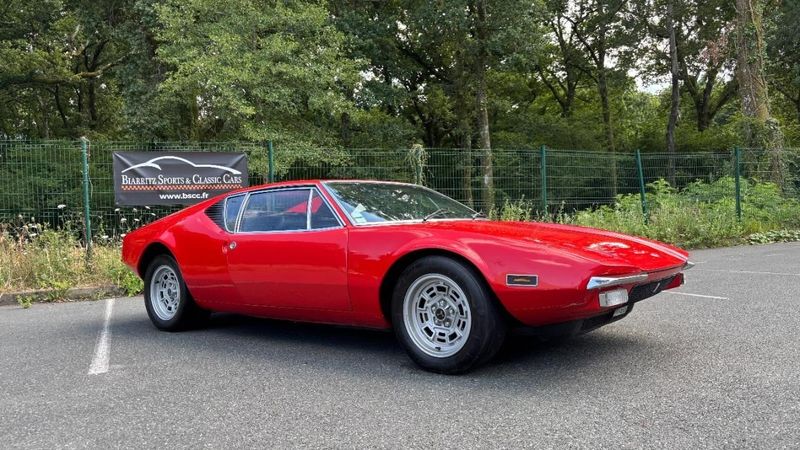
Exotic Italian sports cars are known to be highly strung and fragile, but that's where the De Tomaso Pantera was different. Tom Tjaarda’s styling is Carrozzeria Ghia at its best, utterly outrageous in the best possible way. At the same time, the Pantera’s engine is rock-solid American muscle in the form of a Ford V8, mid-mounted like the Le Mans-dominating Ford GT40. The alliance with Ford was a masterstroke. Despite being such an obscure marque, De Tomaso had a foothold in its most promising market: the United States. The Pantera was offered through Lincoln-Mercury dealerships in America. The model was on sale from 1971 through the early 1990s, a commendable production run for any manufacturer, especially one so small and specialised as De Tomaso. To this day, the Pantera remains a collector's favourite thanks to its striking design, aggressive performance and unique Italo-American heritage. With up to 350 hp in its 5.8-litre form, it’s still quick by modern standards, and a reputation for raw, unbridled dynamics makes the Pantera an eminently worthy addition to any collection.
C&C Expertise
I’ll always have a soft spot for the Pantera, having seen a black GTS land on the pavement outside a Paris nightclub in the early hours of the morning. It might not be the easiest to handle, best on fuel or even that well built, but it certainly makes up for all that in style and presence and that V8 rumble is hard to beat. Join the hordes of famous owners like Elvis Presley, but go easy on the loud pedal - raw V8 power and zero driver aids call for some serious driving skills.
De Tomaso Pantera Price
- Starting Price
- £25,963
- Average Price
- £113,589
- Price Range
- £25,963 - £260,000
De Tomaso Pantera Specifications
- Engine Power
- 330–350 hp (246–261 kW)
- Engine Type
- 5.8L Ford 351 Cleveland V8 (4.9L EFI Ford 302 used only on 1990–1993 Pantera 90 Si)
- Transmission
- 5-speed ZF manual
- Body Type
- Coupé
- Layout
- Mid-engine, rear-wheel drive
De Tomaso Pantera in Detail
The De Tomaso Pantera debuted in 1970. Designed by Ghia and built in Modena, it replaced the outgoing De Tomaso Mangusta, heralding a more modern, user-friendly layout. The car adopted a steel monocoque chassis for the first time in De Tomaso’s history. However, the real attraction for driving enthusiasts was the centrally mounted 5.8-litre Ford V8, a proven unit which delivered awe-inspiring performance while remaining simple to maintain and very reliable.
Early models, known as "Pre-L" (Pre-Lusso), featured minimal bumpers and a raw mechanical edge, catering to pure performance enthusiasts. In 1972, the Pantera L ("Lusso") was introduced with larger safety bumpers, improved cooling, and refinements aimed at the U.S. market, where the car was sold through Lincoln-Mercury dealers. Most Panteras were exported to the United States in the first few years of production, although the car remained in small-scale production for an additional 17 years after Ford ended its partnership in 1975.
Model | Years | Engine (cc) | Power (bhp) |
Pantera (Pre-L) | 1971–1972 | 5,763 | 330 bhp |
Pantera L | 1972–1974 | 5,763 | 330 bhp |
Pantera GTS (EU) | 1973–1975 | 5,763 | 350 bhp |
Pantera GT5 | 1980–1985 | 5,763 | 350 bhp |
Pantera GT5-S | 1985–1990 | 5,763 | 350 bhp |
Pantera 90 Si | 1990–1993 | 4,942 (Ford 302) | 305 bhp |
For the UK and European markets, the De Tomaso Pantera retained its signature 5.8-litre (351 cu in) Ford Cleveland V8 throughout most of its life. This ensured naturally aspirated power with minimal electronic interference. European-spec models, particularly the GTS, GT5, and GT5-S, benefitted from higher compression ratios, performance exhausts and tuning tweaks, pushing peak outputs as high as 350 bhp.
Unlike the U.S. models, which became increasingly restricted by emissions equipment in the mid-1970s, EU models remained more performance-focused. Nonetheless, by the time the axe fell in the early 1990s, the Pantera 90 Si featured a smaller and smoother fuel-injected 4.9-litre V8 sourced from the Ford Mustang.
Model | Engine Type | Displacement (cc) | Power (bhp) | 0–60 mph | Top Speed |
Pantera (Pre-L) | 5.8L V8 (Cleveland) | 5,763 | 330 bhp | ~5.8 sec | ~155 mph |
Pantera L | 5.8L V8 (Cleveland) | 5,763 | 330 bhp | ~6.0 sec | ~150 mph |
Pantera GTS (EU) | 5.8L V8 (Cleveland) | 5,763 | 350 bhp | ~5.5 sec | ~160 mph |
Pantera GT5 | 5.8L V8 (Cleveland) | 5,763 | 350 bhp | ~5.4 sec | ~160 mph |
Pantera GT5-S | 5.8L V8 (Cleveland) | 5,763 | 350 bhp | ~5.4 sec | ~160 mph |
Pantera 90 Si | 4.9L V8 (EFI 302) | 4,942 | 305 bhp | ~5.7 sec | ~150 mph |
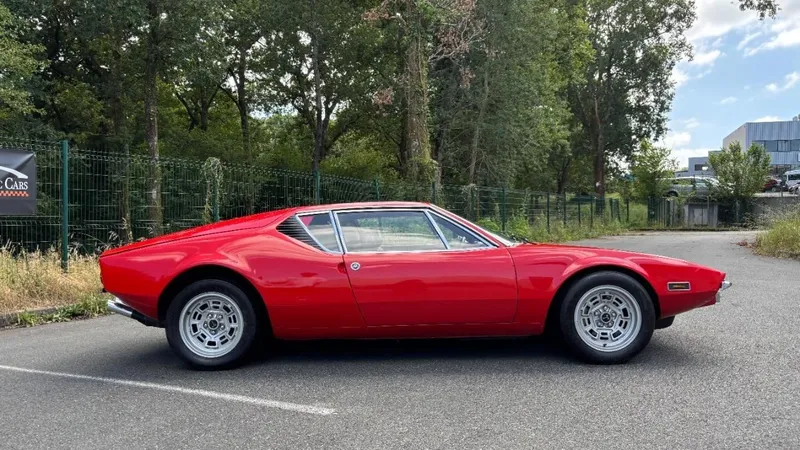
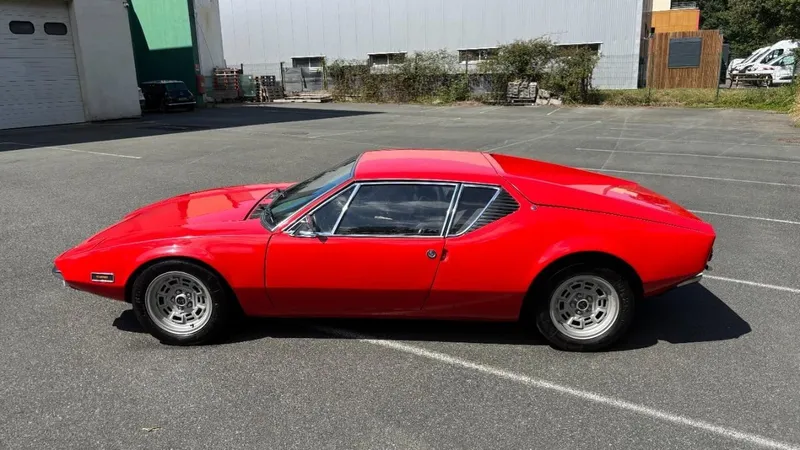
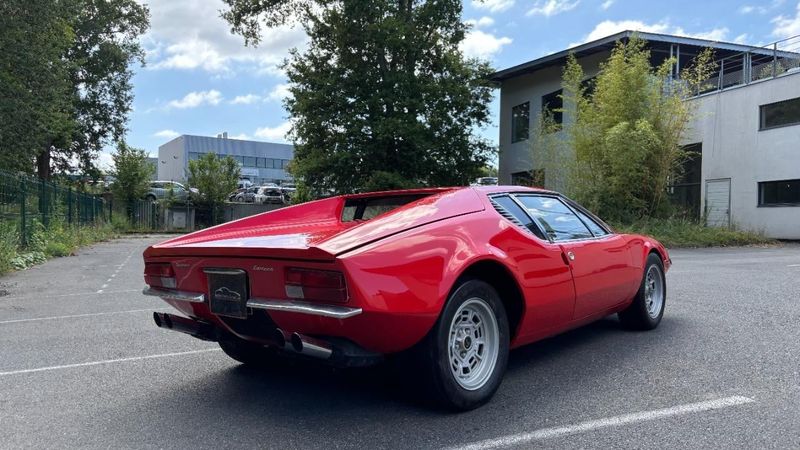
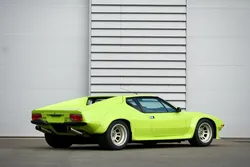
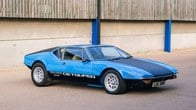
The De Tomaso Pantera was designed with a low, wide stance that emphasised its mid-engine layout and aggressive presence. Despite its supercar silhouette, the Pantera retained relatively compact two-seater proportions, making it suitable for European roads while still delivering a strong visual impact. The body changed very little, with those triangular rear windows particularly prominent; however, a vast variety of spoilers, body kits, and bonnets served to diversify the car’s appearance.
Variant | Length (mm) | Width (mm) | Height (mm) | Wheelbase (mm) | Weight (kg) |
Pantera, L and GTS | 4,270 | 1,811 | 1,100 | 2,515 | ~1,420 |
Pantera GT5-S | 4,250 | 1,985 | 1,110 | 2,515 | ~1,500 |
Pantera 90 Si | 4,300 | 1,900 | 1,150 | 2,515 | ~1,450 |
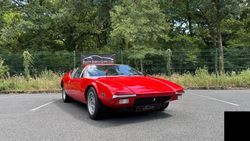
A striking blend of Italian styling and American brutality, the De Tomaso Pantera’s design still retains the power to shock. Styled by Tom Tjaarda at Ghia, the Pantera combined sharp lines, a wedge-shaped stance and purposeful aerodynamics that reflect its performance intent. Its mid-engined proportions and minimalist two-seater cockpit (with a quartet of dials sweeping down from the dashboard to the transmission tunnel) collectively created a motorsport-inspired mechanical rawness that has aged exceptionally well in today’s electronic age.
The Pantera’s exterior design is unapologetically dramatic, a product of the optimistic pre-OPEC era of brash, early-Seventies sports cars. Its long and sloping bonnet, hidden pop-up headlights and angular bodywork still retain the power to startle passers-by. The mid-engine layout allows for short overhangs and a low rear deck, balanced by wide haunches that emphasise the rear-wheel-drive power delivery.
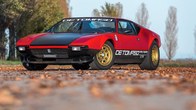
European variants, such as the GTS and GT5-S, diluted the original design’s simplicity with widebody kits, deep chin spoilers, and extended wheel arches. Other notable design features included pop-up headlights, aerodynamic flush door handles, wide alloy wheels with deep-dish rims and (on GT5/GT5-S models) integrated front and rear spoilers.


Opening the door and settling into the Pantera’s tight two-seater cabin proves to be almost as dramatic as the car’s external appearance. The interior is compact, featuring deeply bucketed leather seats, a flat dashboard, and a distinctively canted centre console angled toward the driver, which offers information on various temperatures and pressures courtesy of the four descending VDO dials.
UK and European models received more luxurious trim over time, with better materials, improved switchgear, and added comfort features in GT5-S and 90 Si variants. However, the overall layout remained true to its Seventies origins with manual controls, analogue gauges and little in the way of distraction.
Despite its low roofline, the Pantera offered decent visibility and a surprisingly comfortable driving position for long journeys, especially with later updates to cabin ergonomics. Sound insulation was minimal, but the burble of the V8 made that an understandable choice.


The De Tomaso Pantera was engineered for performance rather than safety. It offered a modern steel monocoque chassis, but construction was lightweight, and the Pantera predated the era of airbags and other such safety systems we benefit from today. Owing to its immense performance and lack of driver aids, the Pantera is a challenging car to drive, demanding respect and skill.
Passive Safety
Steel monocoque construction added strength compared to many fibreglass-bodied rivals.
The Pantera L introduced reinforced bumpers and better crash protection for export markets, including the UK and Europe.
Active Safety
The car was fitted with disc brakes on all four wheels (upgraded to ventilated versions on later variants), offering competitive stopping power for the time.
Independent suspension, featuring coil springs and wishbones, aimed to deliver more stable handling under load, while the heavy-rack-and-pinion steering provided direct feedback.
De Tomaso Pantera Variants & Generations
Aside from one major facelift by Marcello Gandini to create the Pantera 90 Si, which also introduced a new (slightly smaller) engine towards the end of its life, the Pantera didn’t undergo significant evolution over its 21-year production run. There were occasional offshoots, such as the widebody GT5 and refined GT5-S editions, which were sold exclusively in Europe.
Price trends
Most recent sale
€141,500
1972 De Tomaso Pantera

Currently for sale
26
0 live auctions
26 adverts


Total sold
25
Highest sale price
£260,000
Average price
£113,589
Lowest price
£25,963
FAQs
The Pantera’s Ford V8 engine is known for its durability and ease of maintenance. However, early Italian-built electrical systems and cooling issues can affect reliability without proper upkeep or modern upgrades.
Most Pantera models reached 0–60 mph in around 5.5 seconds, with top speeds up to 160 mph for the GTS and GT5 variants.
The Pantera was officially available in the UK and Europe, with small numbers sold in the UK through select dealers in the 1970s. European buyers also had access to higher-performance versions, such as the GTS and GT5-S.
By 1970s standards, it absolutely qualified as a supercar. With its mid-engine layout, exotic styling, and V8 power, the Pantera delivered supercar performance at a more accessible price than its contemporaries, such as the Lamborghini Countach.
The Pantera was built as a raw sports car. Its heavy steering, low ground clearance and cabin heat have always made it better suited for weekend drives and classic car events than day-to-day driving.