Hillman Minx: Models and Specs
1932–1970 · Side-valve 1.0-1.3‑litre through to OHV 1.5-1.7‑litre inline-four · Front-engine, rear-wheel drive · Four-door saloon/convertible/estate
Overview
With hindsight, it’s remarkable to think that the Hillman Minx was manufactured for longer than the Ford Escort. Remaining in production continuously for 38 years, across four fundamentally different generations, this family saloon became one of the longest-running and most architecturally varied names in British motoring. The Minx was the volume backbone of the Rootes Group from the early 1930s onwards, consistently competing against the Ford Popular/Anglia and Morris Minor for the attention of British family buyers. What distinguishes the Minx from most of its peers is the sheer breadth of its story, from a pre-war side-valve curiosity through to the American-influenced Audax saloon that attracted export interest across dozens of markets, including Japan, where Isuzu built a licensed version. The Minx's core character is accessible competence. It was never a performance car, or a luxury car for that matter, but it was a consistently well-engineered and well-equipped family car that offered buyers a level of refinement the competition couldn’t always match.
Price
- Starting price
- £1,250
- Average price
- £5,561
- Price range
- £1,250 - £15,995
Specifications
- Production years
- 1932–1970
- Total production
- 500,000 (all generations)
- Body styles
- Four-door saloon; 2-door convertible (pre-war and Audax); estate/Husky van (post-war and Audax); 2-door hardtop coupé "Californian" (Audax)
- Layout / drive
- Front-engine, rear-wheel drive
- Engine family
- Side-valve inline-four 1.0-1.3‑litre (pre-war/post-war); OHV inline-four 1.3-1.7‑litre (Audax/New Minx)
Hillman Minx in Detail
The Minx arrived in 1932 as Hillman's entry into the pre-war family car market, powered by a side-valve four-cylinder engine and priced to compete directly with Ford and Morris rivals. It gained a significant visual overhaul in 1936 with the Aero Minx introducing a streamlined, more modern body and providing the first evidence of Rootes' interest in transatlantic styling cues.
Production paused for the war and resumed in 1945 with an updated slab-sided saloon that used a bored-out 1.2-1.3‑litre side-valve engine. The Minx progressed through a series of designations from Mk III to Phase VIII before the new OHV engine arrived in 1954.
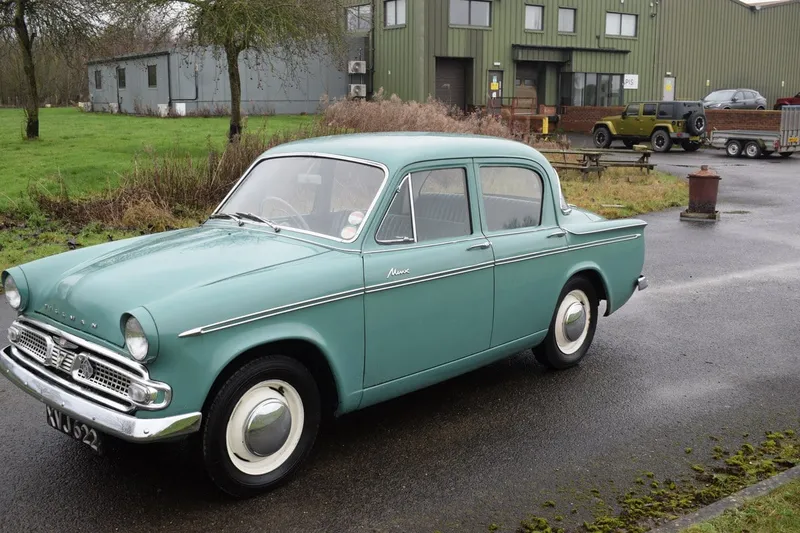
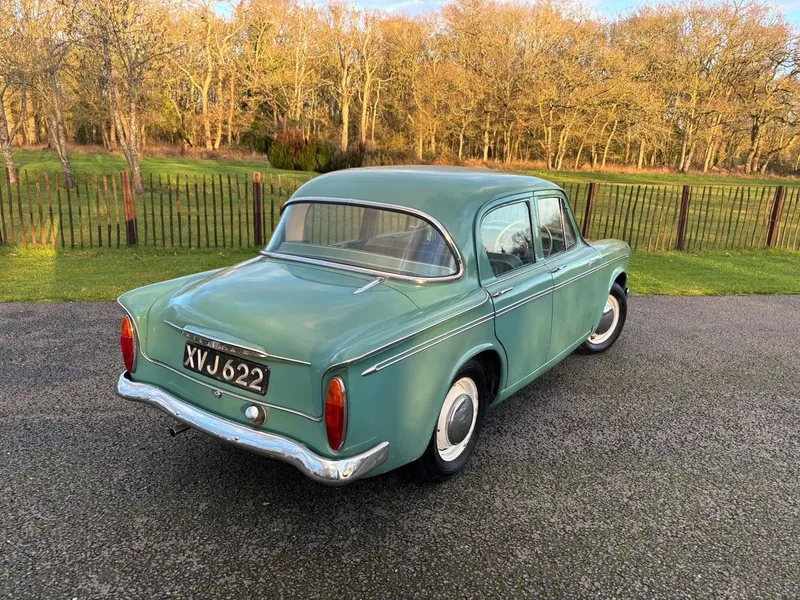
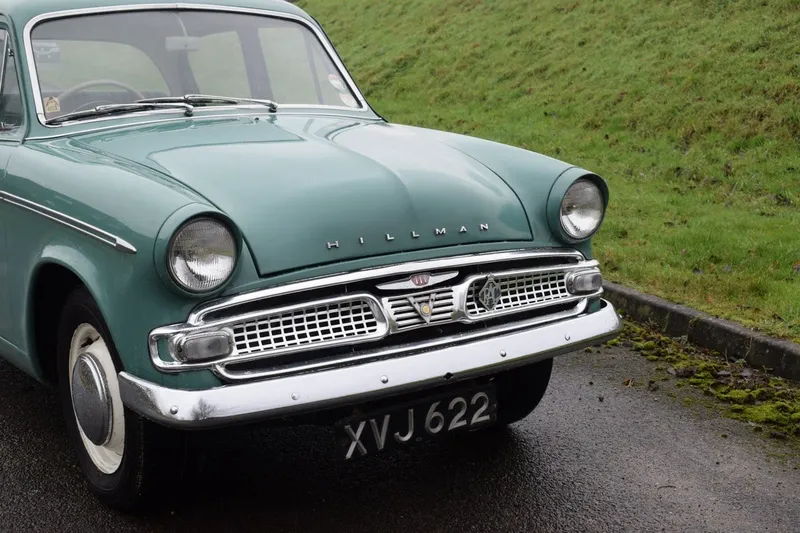
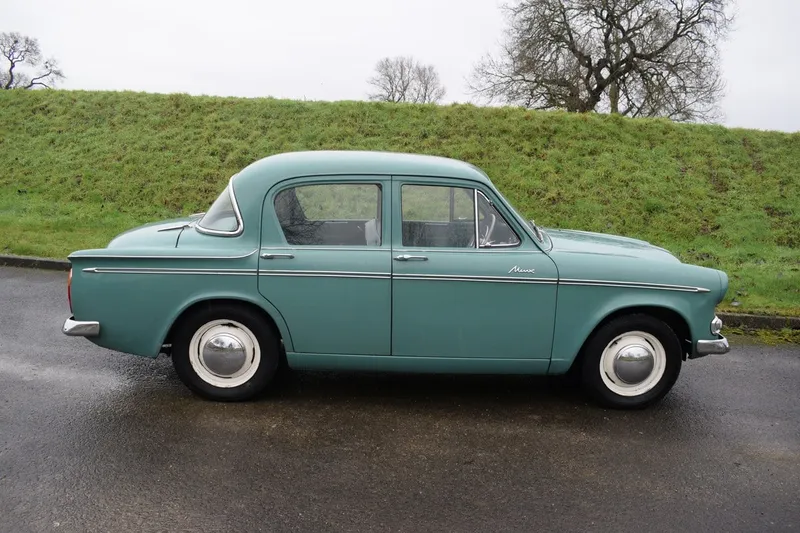
The Minx’s defining chapter came in 1956 with the Audax generation. This new Loewy-influenced monocoque body had American-style tailfins and chrome trim draped over a new 1.4‑litre overhead-valve four-cylinder. The Audax body ran through nine named series (I, II, III, IIIA, IIIB, IIIC, V, and VI), during which time the engine progressively expanded from 1.4 to 1.7 litres. Alongside this engine evolution, body styles spanned saloon, estate, convertible and the two-door Californian coupé.
The Audax floorpan also underpinned the Singer Gazelle, the Sunbeam Rapier and the Humber Sceptre, while licensed production extended to Isuzu in Japan, which built 57,729 Hillman Minxes between 1953 and 1964. The final New Minx (1967–1970) transferred the nameplate to the Arrow/Hunter platform and was effectively a reduced-specification Hillman Hunter, bringing the Minx story to a close in 1970.
The Hillman Minx's performance identity across its 38-year life is defined entirely by its engines, rather than any sporting ambition. The pre-war and post-war side-valve units are modest engines; the Mk IV's 1.3‑litre unit produced 37.5 bhp with a yawning 0-60 mph time of nearly 40 seconds. The Series III's 1.5‑litre engine produced 51 to 57 bhp and achieved a 0-60 mph time of 25.4 seconds, which was hardly seismic but made the car far more manageable on a daily basis.
Engine family / displacement | Power range | 0–60 mph | Top speed |
Side-valve inline-four 1.0-1.3‑litre (pre/post-war) | 30–38 bhp | 35-40 sec | 60–67 mph |
OHV inline-four 1.4-1.5‑litre (Audax Series I–IIIC) | 51–57 bhp | 22-26 sec | 75–80 mph |
OHV inline-four 1.5-1.6‑litre (Audax Series V–VI) | 49–60 bhp | 18-22 sec | 78–85 mph |
OHV inline-four 1.5-1.7‑litre (New Minx) | 54–61 bhp | 17-20 sec | 82–88 mph |
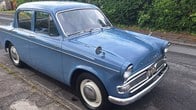
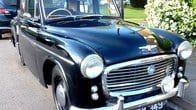
The Hillman Minx presented three visually distinct identities across its life, with the Audax generation being the most enduring and recognisable look. Pre-war cars bear the upright, black-painted chrome-laden hallmarks of 1930s British family motoring, right down to the running boards. Post-war slab-sided cars are clean and practical, with conservative upright bodywork typical of austerity-era British design. The Audax generation's arrival in 1956 was a visual shock by comparison, launching sweeping tailfins, two-tone paint options and chrome brightwork onto an unsuspecting public.
The Audax’s cabins matched this ambition, with a padded fascia, comprehensive instrumentation and a quality of interior finish that competed with BMC and Ford offerings. The driving position was upright and commanding with clear visibility, while the Minx was a genuine family car rather than a sporting imitation of one. Having said that, the convertible remains the most characterful and glamorous route into Minx ownership.
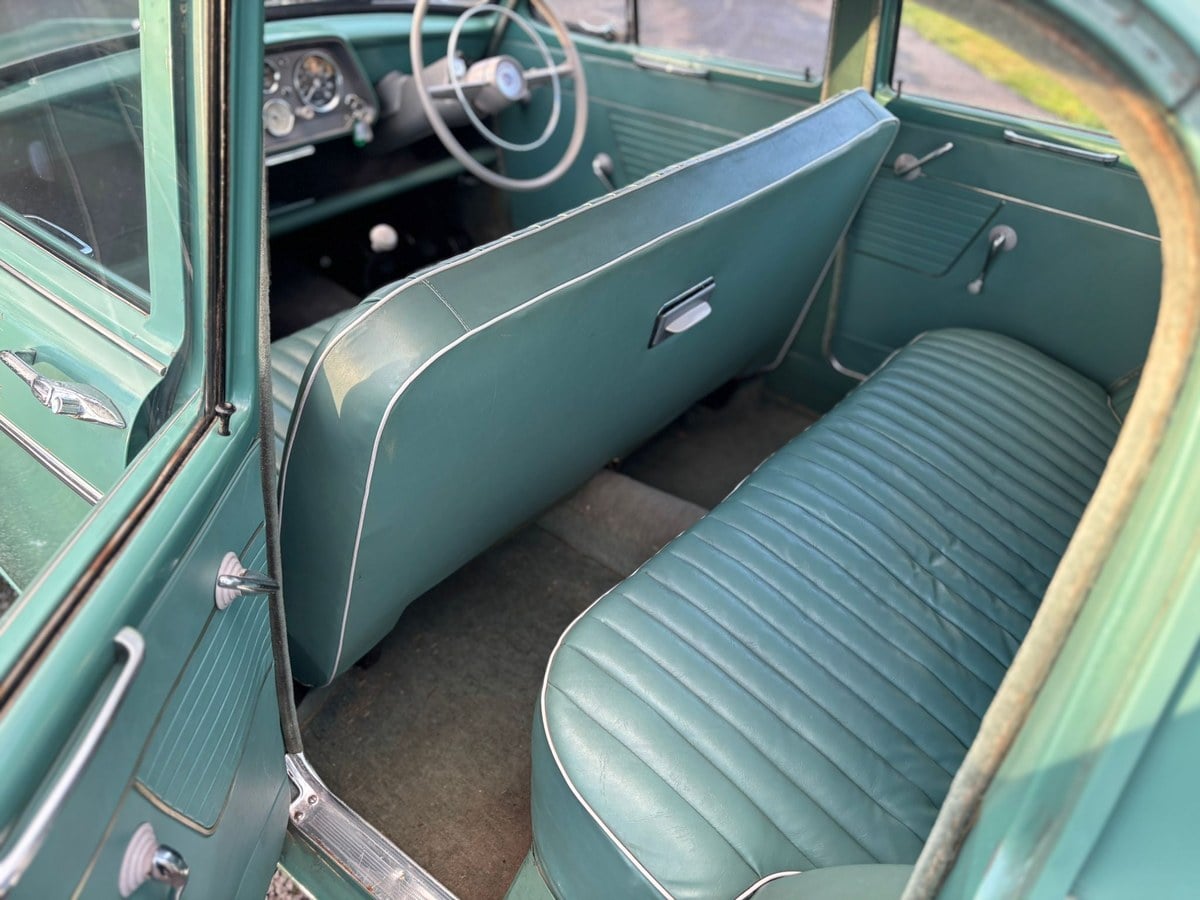
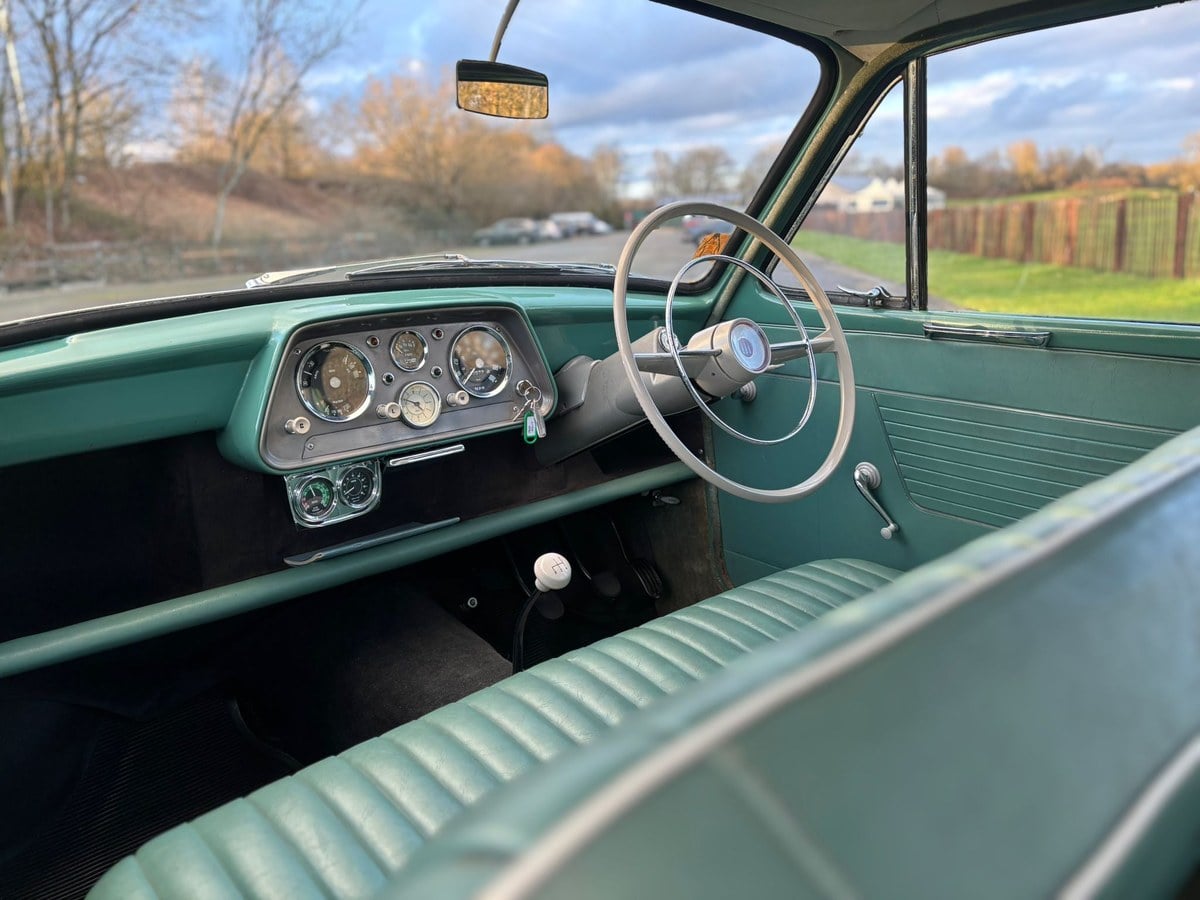
As mentioned above, the Hillman Minx spans four architecturally distinct generations:
Pre-war Minx (1932–1939). Side-valve 1.0-1.3‑litre; upright pre-war body includes the streamlined Aero Minx sub-variant from 1935.
Post-war Minx (1945–1956). Side-valve evolving to early OHV; slab-sided Mk III–Phase VIII body. (Full generation page →)
Audax Minx (1956–1967). OHV 1.4-1.6‑litre; Loewy-influenced monocoque with tailfins; Series I through VI; saloon, convertible, estate, and Californian coupé.
New Minx / Arrow (1967–1970). OHV 1.5-1.7‑litre; Hunter-derived platform; the final and most mechanically capable Minx, but effectively a reduced-specification Hillman Hunter.
No Hillman Minx variant was ever equipped with safety features, and even seatbelts were only optional on late-production Arrow-era cars. Drum brakes all round had no servo assistance, though a vacuum servo was introduced on later Series cars. The New Minx/Arrow cars heralded front disc brakes as standard.
Pros:
Four distinct generations with genuinely different character, pricing and visual appeal
Parts compatibility spans the Singer Gazelle, Sunbeam Rapier, and Humber Sceptre models
Well-supported by the Hillman Owners' Club and broader Rootes network
Audax convertible and Californian hardtop offer genuine visual rarity at affordable prices
Cons:
Absolutely no safety provision across any variants, with all-drum brakes on most generations
Farina- and Audax-era bodywork was vulnerable to significant rust in sills, inner wings and floor sections
New Minx generation has limited collector appeal and modest values
Side-valve pre-war and post-war engines are significantly slower than any modern traffic
Price trends
Most recent sale
£3,995
1960 Hillman Minx

Currently for sale
12
0 live auctions
12 adverts
Total sold
37
Highest sale price
£15,995
Average price
£5,561
Lowest price
£1,250
FAQs
They’re moderate by classic standards. Audax-era OHV engines are simple and well-documented, with parts support from the Hillman Owners' Club and Rootes-specialist suppliers who stock items shared across the Singer Gazelle, Sunbeam Rapier and Humber families. Fuel consumption of 28-32 mpg across the Audax range is decent, but the main cost across all generations tends to be bodywork. The steel monocoque corrodes in predictable locations, and repair costs can exceed market value on poorly assessed examples.
Good for Audax-era cars but narrower for pre-war and post-war examples. The Audax platform's parts base is broadened by its use across multiple Rootes models, and the Hillman Owners' Club maintains an active suppliers register. Pre-war side-valve mechanical components require specialist sourcing through pre-war Rootes registers.
Yes, but only at the end. The New Minx (1967–1970) was a reduced-specification version of the Hillman Hunter using the Arrow platform, with the Hunter's bodyshell, suspension, and 1.5-1.7-litre engine, but in a lower trim level. All earlier Minx generations (pre-war, post-war slab-sided, and Audax) are on separate platforms with no shared structural components with the Hunter.