Rover P6: Models and Specs
1963–1977, 2.0–3.5-litre four-cylinder and V8 petrol engines, front-engined, rear-wheel drive, four-door saloon.
Overview
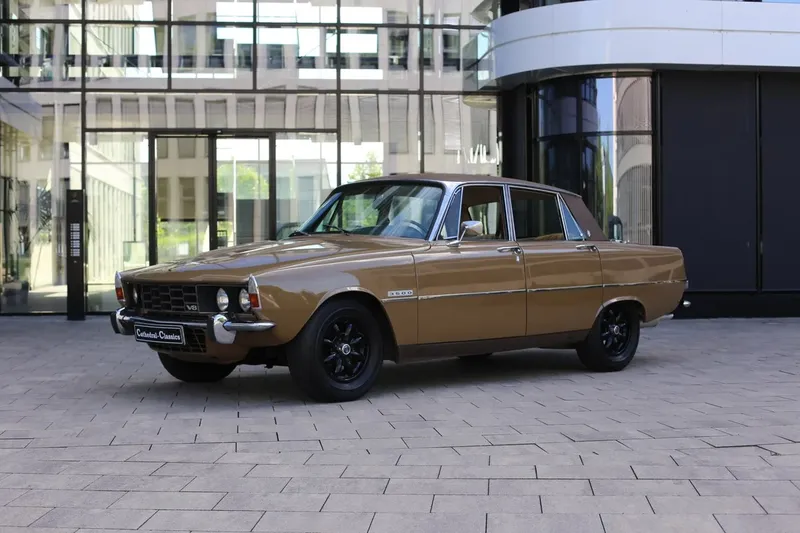
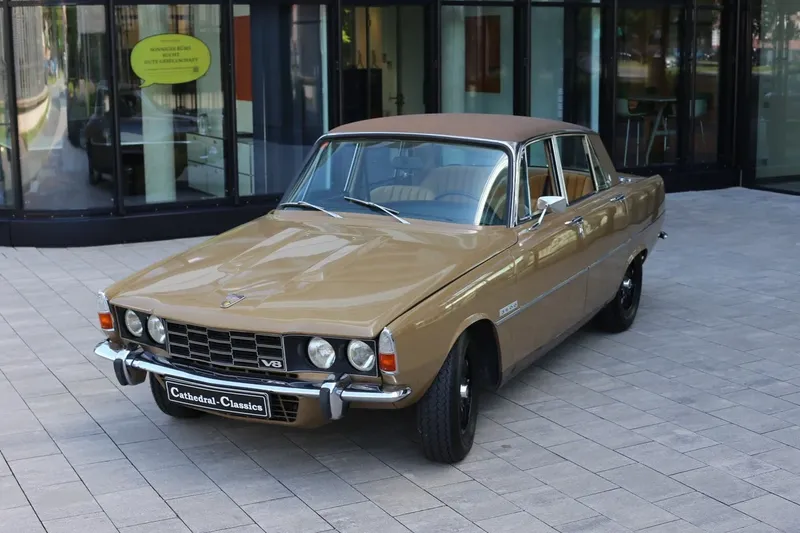
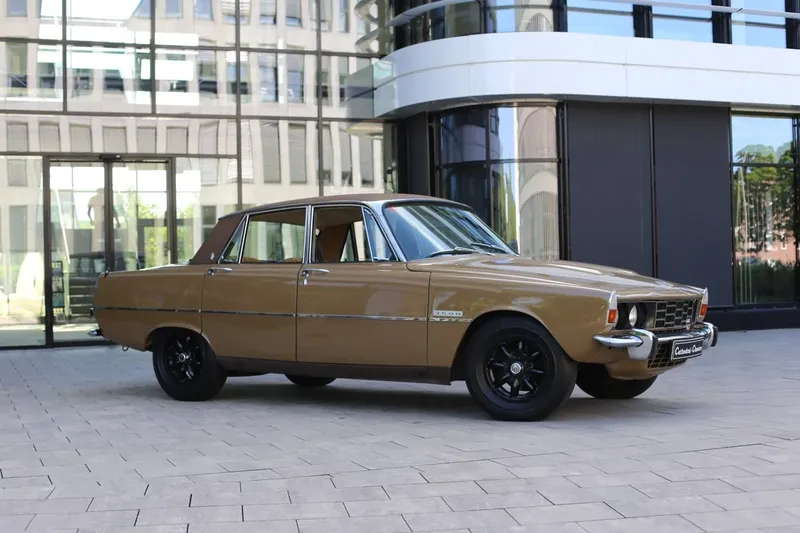
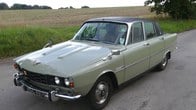
Beloved by police officers, Prime Ministers and pensioners alike, the Rover P6 was an executive saloon which graced Britain’s roads in the 1960s and 1970s. Sold as the Rover 2000, 2200 and 3500 according to which engine was under the bonnet, it replaced the older Rover P4, imbuing the company with a more modern and technically ambitious image. The P6 has always been defined by compact executive proportions and a balance of comfort, safety and refinement. It was more than just a traditional Rover saloon with newer styling. It was designed around a new structure, advanced suspension and - by the standards of the time - a forward-thinking approach to occupant protection. It’s perhaps no coincidence that some high-profile P6 occupants really needed protecting. One of Britain’s landmark post-war saloons, the Rover 2000 was the first European Car of the Year winner in 1964. The P6 range helped to establish Rover as a maker of technically sophisticated executive cars before the arrival of the SD1 and the reputational horrors of the BL era.
Price
- Starting price
- 850 €
- Average price
- 8 845 €
- Price range
- 850 € - 25 642 €
Specifications
- Production years
- 1963–1977
- Body styles
- Four-door saloon
- Layout / drive
- Front engine, rear-wheel drive
- Engine family
- 2.0/2.2-litre OHC; 3.5-litre V8
- Transmission types
- 4-speed manual; 3-speed auto
Rover P6 in Detail
The Rover P6 was introduced in 1963 as the Rover 2000, a clean-sheet saloon designed to move Rover beyond the dated P4 formula by harnessing the white heat of technology. It was aimed at a new type of buyer - someone who wanted more engineering sophistication and refinement than a family saloon, but without the size, cost or formality of a large luxury car. The model was produced at Solihull from 1963 to 1977 and was eventually succeeded by the Rover SD1, which was brilliant and terrible in equal measure.
One of the P6’s defining engineering ideas was its structural layout. Rather than using a conventional monocoque, this car adopted a strong base-unit structure with bolt-on outer panels. This allowed Rover to combine advanced packaging, controlled deformation and relatively simple/affordable panel replacement. The de Dion rear suspension, inboard rear brakes and all-round disc brakes constituted an unusually advanced specification for a British saloon of the era.
Rover’s modern overhead-cam four-cylinder engine was new for this car, while later 2200 models enlarged the same engine to achieve superior displacement. In 1968, Rover added what would go on to become the venerable 3.5-litre aluminium V8, derived from a Buick engine whose rights and tooling Rover had acquired from General Motors. This created the Rover 3500 and gave the P6 a broader range identity, from refined four-cylinder executive saloon to V8-powered continent crusher.
The P6 also built a reputation around safety and cabin design. Features such as soft-finish interior trim, child-safety door locks and a strong ventilation system contributed to the acquisition of an AA Gold Rosette for Safety in 1967. Combined with its European Car of the Year win, the P6 was forward-looking at a time when few rivals were even considering occupant safety.
The Rover P6’s performance evolved from four-cylinder executive-car pace to stronger V8 performance. The engine family began with Rover’s 2.0-litre overhead-cam four-cylinder, later expanded to 2.2 litres, while the 3.5-litre aluminium Rover V8 gave the model a separate (and desirable) performance identity.
Item | Model-wide range |
Engine family | Rover OHC four-cylinder: 1978cc–2204cc; Rover V8: 3528cc |
Power range | 90bhp–150bhp |
0–100 mph | 29.4 seconds for the Rover 3500S |
Top speed | 97mph–118mph, depending on engine and gearbox |
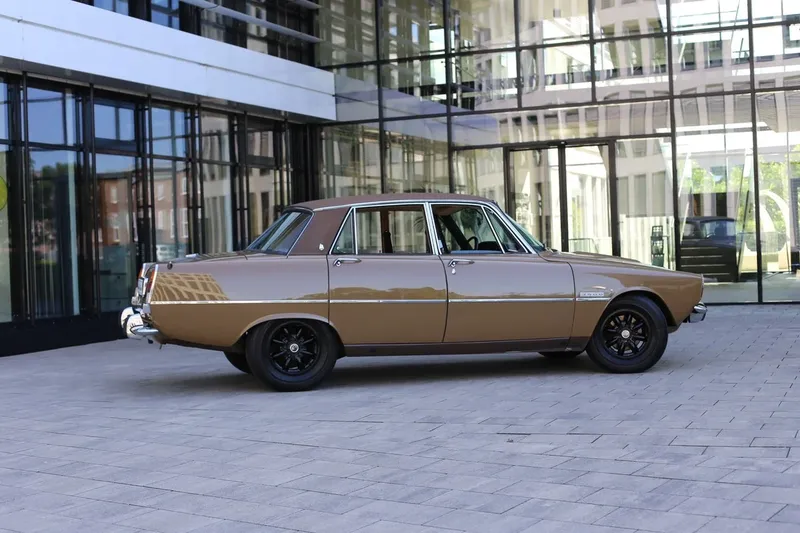
The Rover P6 is recognisable because it looks compact and formal. Its proportions are those of a mid-sized saloon: a low waistline, slim pillars and a clean three-box profile contribute to a cabin that feels generous without making the car visually heavy. There’s restrained surfacing, a neat glasshouse and the sense that function (rather than aesthetics) shaped much of the design.
The core layout remained front-engined and rear-wheel drive throughout the P6’s life, with the saloon body built around a practical passenger cell instead of an overtly sporting silhouette. Inside, the P6 followed a safety-conscious cabin philosophy, with attention paid to ventilation, visibility, switch placement and occupant protection, as outlined above.


The Rover P6 belongs to the pre-electronics safety era, but for its time, it was notably safety-conscious. Features like soft-finish interior trim, child-safe door locks and hazard-warning lights were advanced for the Sixties, and the all-round disc brakes (inboard at the rear) offered far superior stopping power than the feeble drums on some competitors. Other than Volvo, few manufacturers were even considering such attributes in family car design.
Pros
Landmark status as the first ever European Car of the Year winner.
De Dion rear suspension helps define the car’s advanced saloon character.
Remains a strong choice for buyers wanting a usable, comfortable family classic with healthy club and parts support.
Cons
Corrosion can be hidden behind superficially good-looking outer body panels.
Rot of a different kind set in at British Leyland over the P6’s production run, as build quality slowly declined.
The inboard rear brakes could be tricky to work on or replace.
Rover P6 for Sale
The Rover P6 offers advanced British executive-car character in a compact, usable saloon package. Browse Rover P6 cars for sale to compare the four-cylinder 2000/2200 models with V8-powered 3500 versions.
Tendances des prix
Vente la plus récente
7 750 £
1975 Rover P6
12 sept. 2023
Actuellement en vente
19
0 enchères en direct
19 annonces


Total vendu
56
Prix de vente le plus élevé
25 642 €
Prix moyen
8 845 €
Prix le plus bas
850 €
FAQs
Running costs are generally reasonable by classic executive-car standards, not least since the model retains strong enthusiast support and a good supply of mechanical parts, as summarised below. Costs still vary between four-cylinder and V8 cars, and condition matters more than specification when browsing cars for sale.
Parts support for the Rover P6 is one of the model’s strengths. The Rover P6 Club provides technical support and a dedicated ownership network, though some trim and body-specific items can be more difficult to track down than routine mechanical parts. Scrutinise any potential purchase’s condition closely.
We’d recommend the most structurally sound, well-maintained example rather than the rarest or most powerful version. A good four-cylinder car can make sense for regular use, while a V8 suits buyers who want the 3500’s lustier character.
The Rover P6 2000 introduced the model with Rover’s modern OHC four-cylinder engine, while the Rover P6 3500 added a Buick-sourced aluminium V8 for effortless performance. The core P6 identity was shared across the range in all engine variants and trims.