Rover SD1: Models and Specs
1976–1986 · 1994cc–3528cc inline-four/straight-six/V8/diesel · Front-engine, rear-wheel-drive · 5-door fastback hatchback
Overview
Before its products became polished (if rather anodyne) Honda variants, Rover wasn’t afraid to take the occasional risk. The Rover SD1 was British Leyland's flagship executive car and the most ambitious road car its Specialist Division ever produced. This stunning five-door fastback attempted to match European prestige saloons on design, performance and space, within a body that owed a clear debt to the Ferrari Daytona. The SD1 won the 1977 European Car of the Year award, becoming the first British car ever to do so. In the process, it demonstrated that British Leyland could conceive and engineer a genuinely competitive world-class executive car. It’s just a shame that the organisation around it was in institutional decline, with production quality ranging from acceptable to abysmal. The SD1 offered Rover's smooth all-alloy V8, an advanced five-door hatchback body that rivalled estate cars for practicality, and handling that contemporary road tests consistently praised. All this was wrapped in a silhouette that was more dramatic than almost anything else in the executive class. That gap between what the car could have been and what British Leyland's production standards actually made it (during its early years, in particular) defined the SD1's legacy more than any specification sheet or optimistic marketing brochure.
Price
- Starting price
- £2,750
- Average price
- £6,976
- Price range
- £2,750 - £57,965
Specifications
- Production years
- 1976–1986
- Body styles
- 5-door hatchback
- Layout/drive
- Front-engine, rear-wheel-drive
- Engine family
- 2.0/2.3/2.6/3.5-litre petrol; 2.4-litre TD
- Transmission types
- 3-speed auto; 5-speed manual
Rover SD1 in Detail
The SD1 began life in March 1970 as Rover project P10, with David Bache leading exterior design and Spen King heading engineering. By summer 1971 the project had transferred to BL's newly formed Specialist Division, which gave the car both its internal code name and its eventual production name. Launched publicly in July 1976 with the 3.5-litre V8 and a three-speed automatic gearbox, the SD1 immediately drew attention with its fastback five-door body, which combined the space of a large hatchback with a silhouette unlike anything else in the executive class. In 1977, the SD1 won the European Car of the Year title, beating the hugely accomplished Audi 100 and Ford Fiesta.
The engine range broadened at the end of 1977 with the addition of the 2.3-litre and 2.6-litre straight-sixes, developed from the outgoing Triumph six-cylinder unit and aimed squarely at the company car market. A 2.0-litre O-Series four-cylinder arrived later as part of the Series 2 facelift, and the Range Rover-sourced 2.4-litre VM Motori turbodiesel joined the range in September 1982.
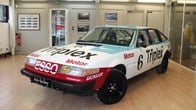
The defining SD1 performance statement came in December 1982, courtesy of the Vitesse. By combining a fuel-injected 190 bhp version of the 3.5-litre V8 with lowered suspension, larger front brake discs and aerodynamic bodywork, the SD1 became a genuine performance car. TWR took it into touring car racing, winning the 1983 British Touring Car Championship and subsequently contesting the European Touring Car Championship.
Production ended in June 1986 with 303,345 domestic units built, after which the SD1 was replaced by the Rover 800.
The SD1 was engineered to carry engines as different in character as a 99 bhp four-cylinder company car unit and a 200 bhp homologation V8. The all-alloy V8 underpins the model's performance reputation, but the six-cylinder cars were quick enough to attract praise from the contemporary press. Figures vary both by engine family and by specification within each family: the V8 existed in three forms across the production run, each with meaningfully different outputs and gearing. Even so, it retained a combination of effortless, low-revving torque.
Specification | Details |
Engine family | O-Series inline-four 2.0-litre; Triumph-derived straight-six 2.3–2.6-litre; Rover V8 3.5-litre; VM Motori 2.4-litre turbodiesel |
Power range | 99 bhp (2000 O-Series) to 200 bhp (Vitesse Twin Plenum) |
0–60 mph range | 7.1 sec (Vitesse) to 13.0 sec (O-Series) |
Top speed range | 104 mph (O-Series) to 135 mph (Vitesse) |
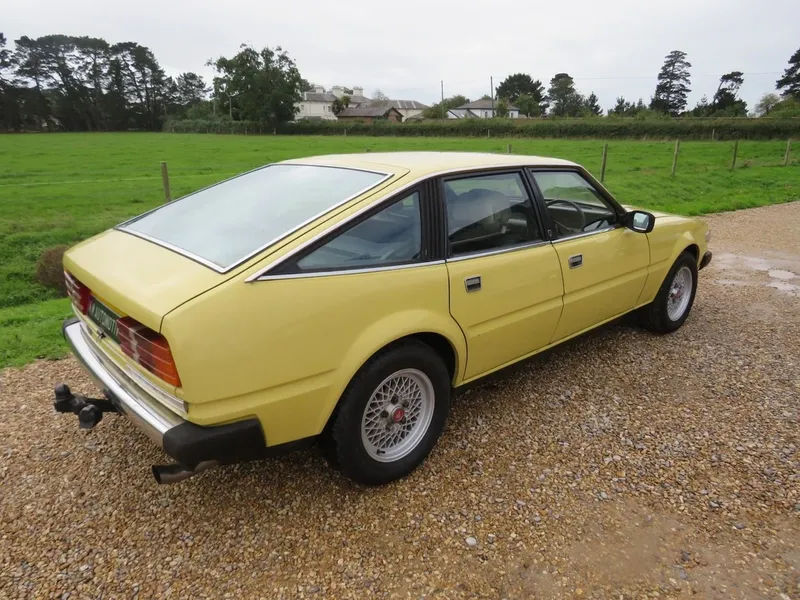
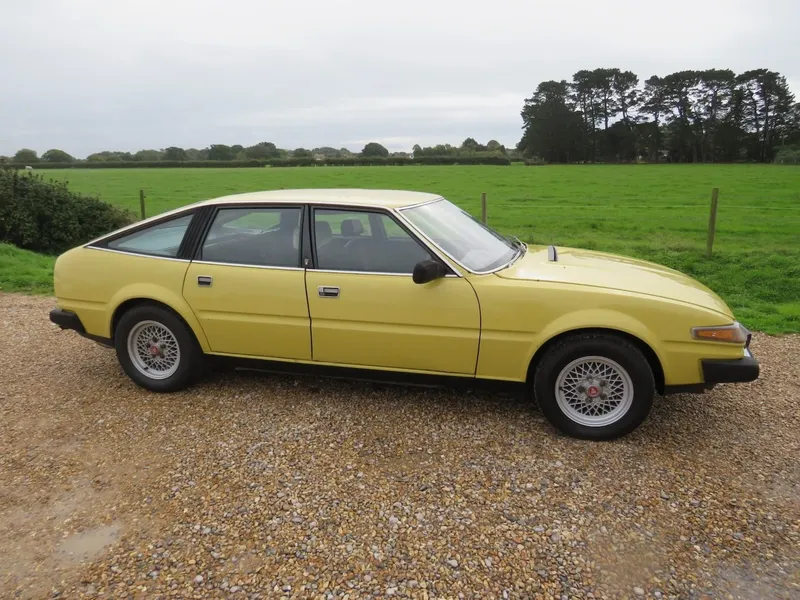
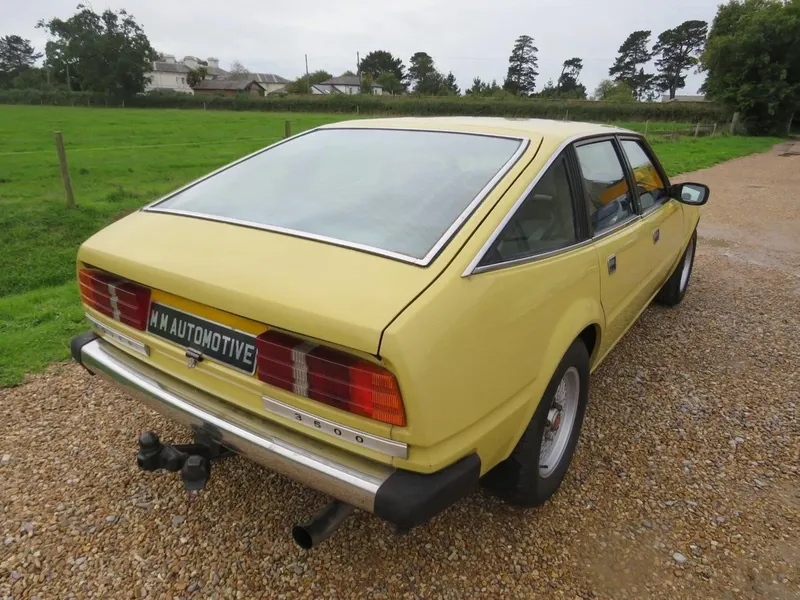
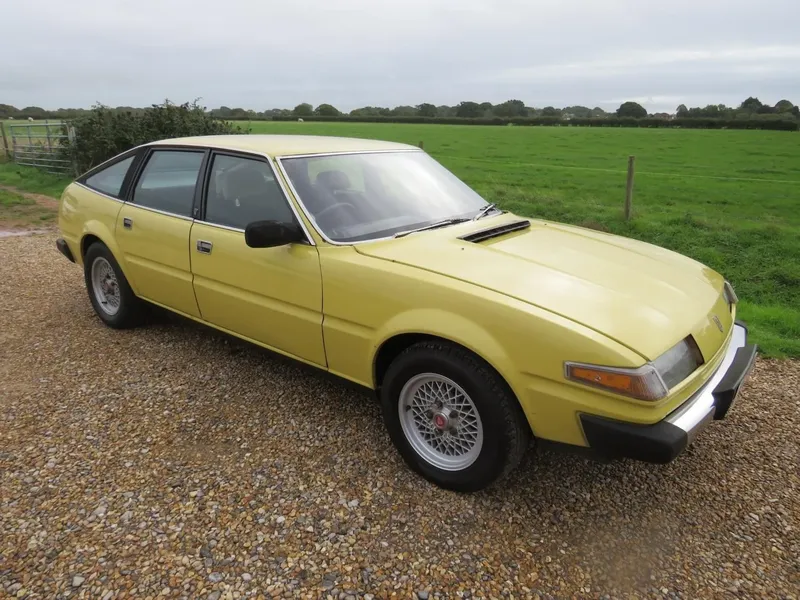
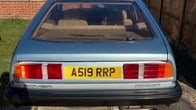
The Rover SD1 is instantly recognisable by its long, sweeping fastback roofline, giving a five-door family car the visual drama of a two-door GT. That silhouette was the direct result of David Bache's ambition to transpose the proportions of contemporary Italian supercars into a practical executive car. The front end carries that same Ferrari DNA: a long, flat bonnet, flush-integrated headlights and a wide grille arrangement that reads as a simplified Italian supercar face rather than a traditional British saloon. Given some of the design atrocities committed by BL in the 1970s, the SD1 resembles a work of art.
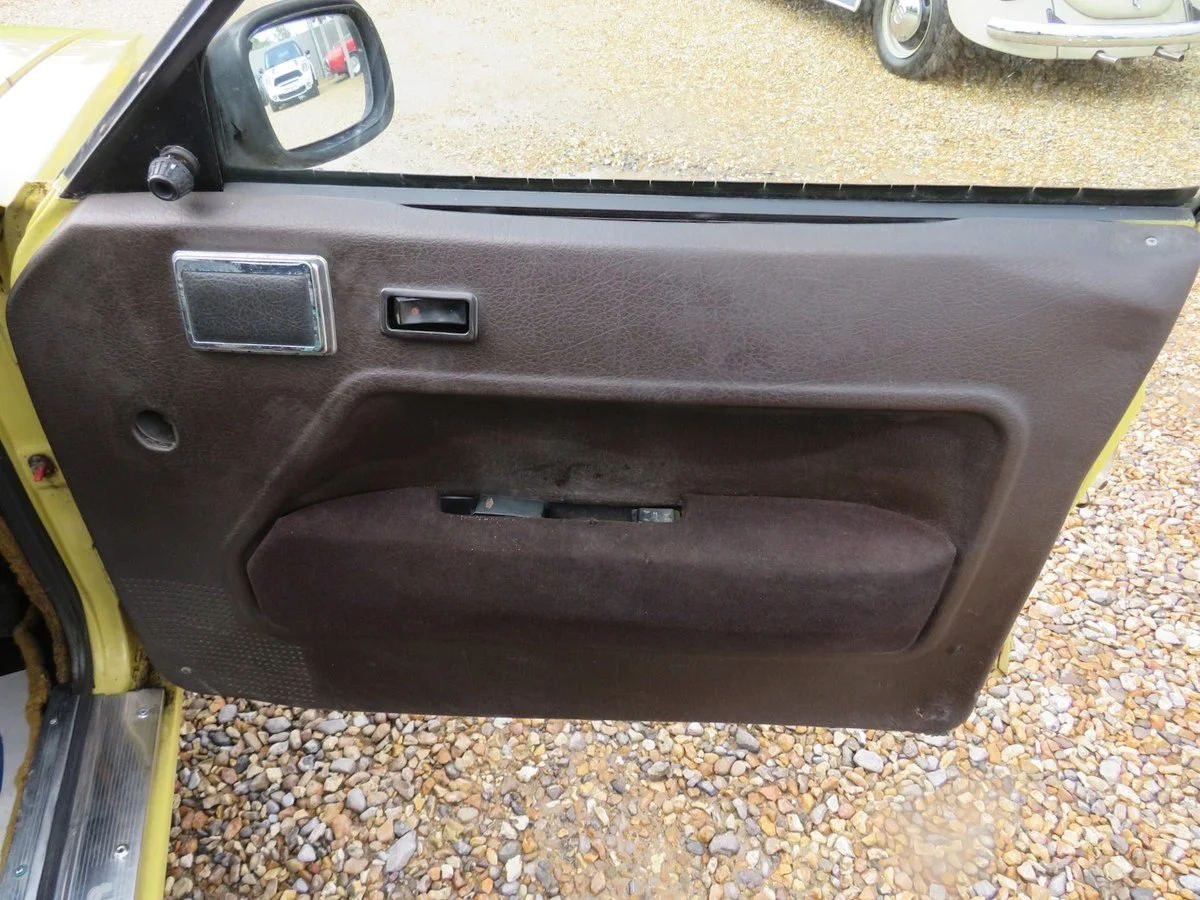
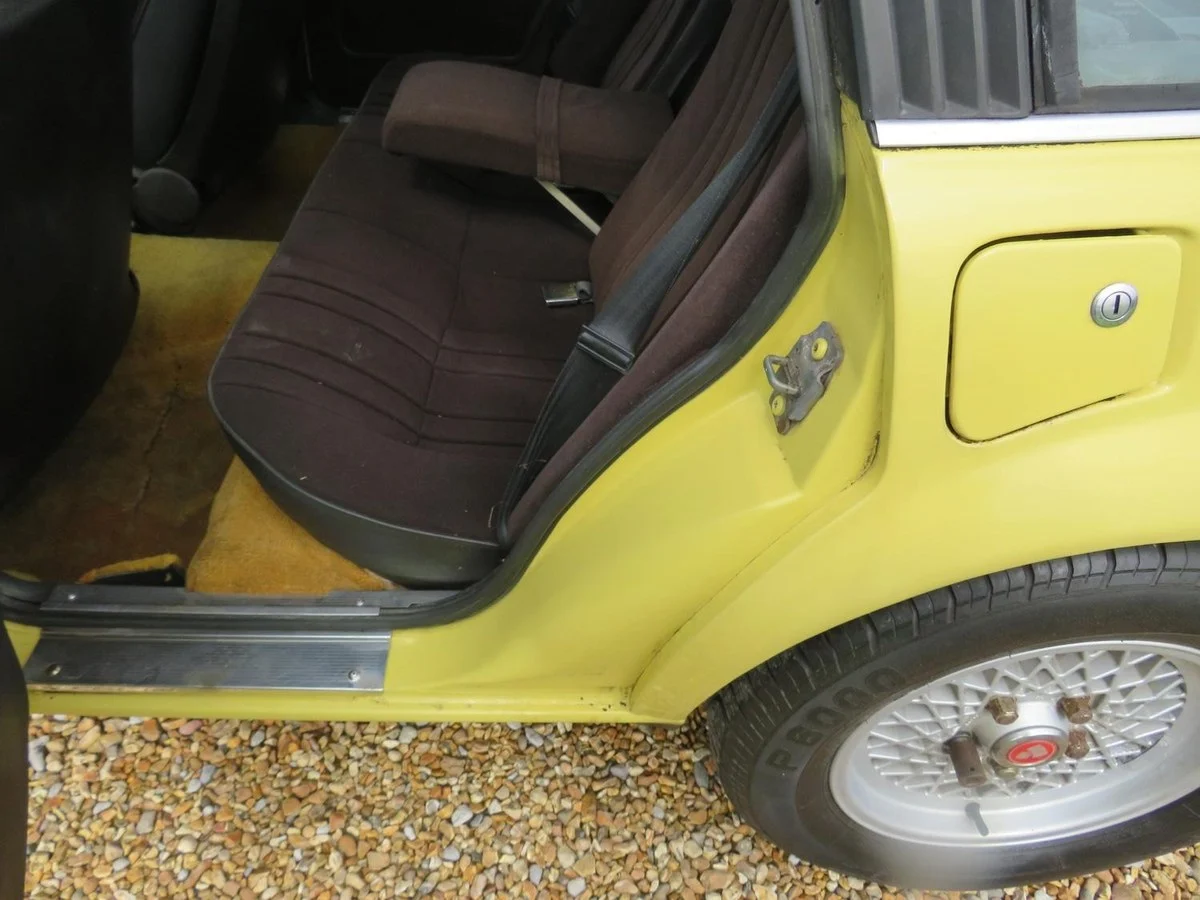
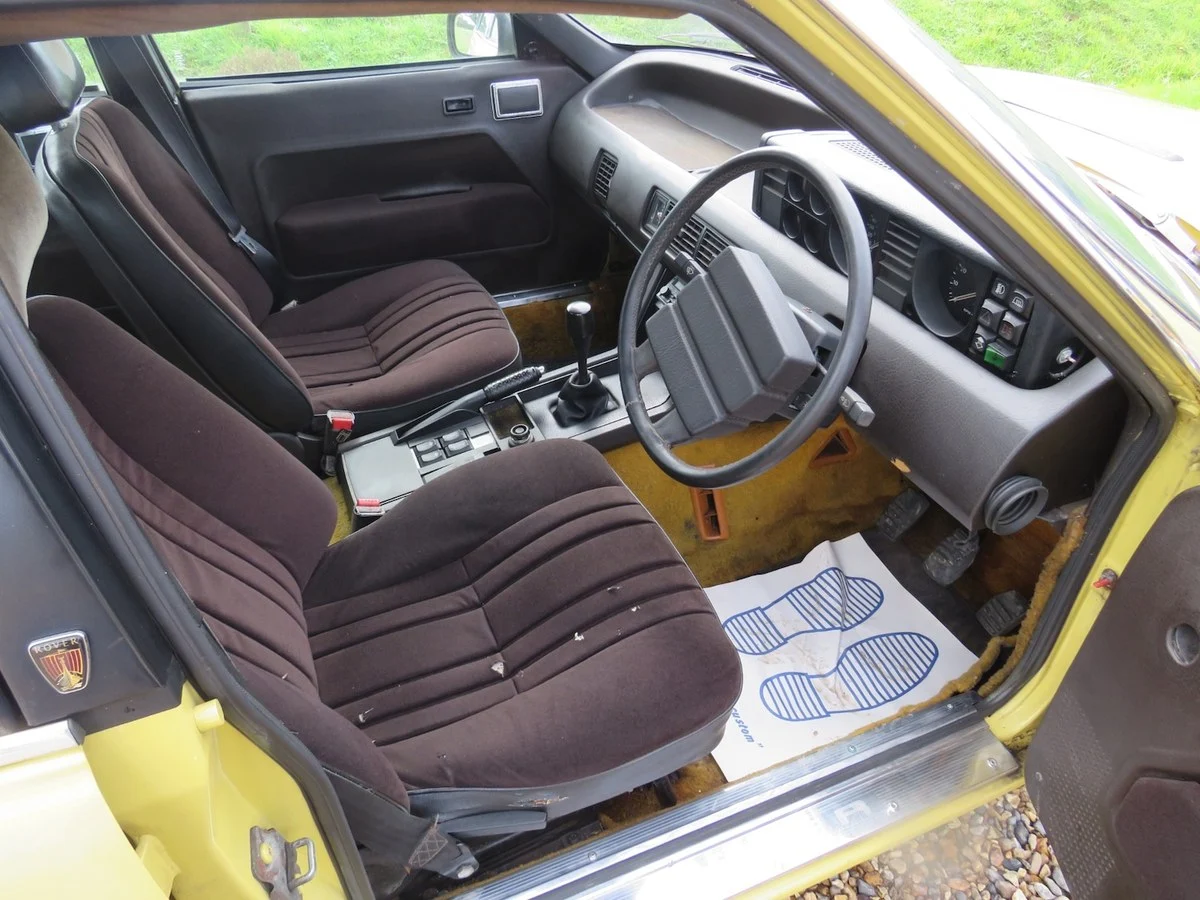
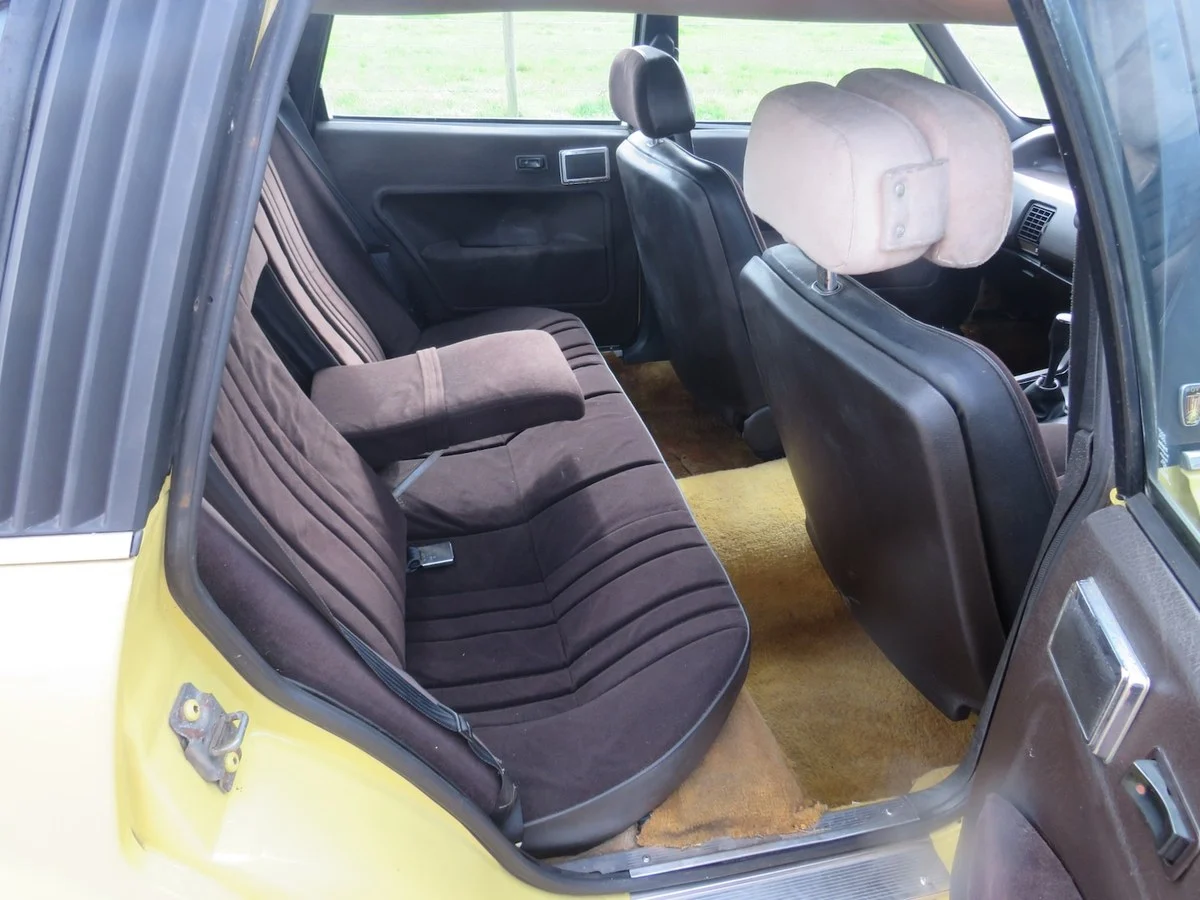
The body's proportions work because the SD1 is surprisingly large. This wide, high-roofed five-door hatchback uses its bulk to accommodate both the sweeping roofline and a usable rear cabin with good headroom. Unlike most fastback cars, the SD1 didn’t sacrifice practicality despite its sleek profile. Inside, Bache's team designed the fascia and interior architecture with user ergonomics as a priority. The result was a broad and clearly laid-out dashboard, a driver-oriented seating position and an interior that felt genuinely executive rather than simply large. The tension in the SD1's cabin identity was always between thoughtful design intent and variable quality, particularly on early models.
Generation | Years | Overview |
Series 1 | 1976–1982 | Launch cars built at Solihull and Castle Bromwich; V8 only at launch, six-cylinders from late 1977; the cars most associated with BL's build quality issues |
Series 2 | 1982–1986 | Facelifted February 1982 with revised interior, improved build quality and production transfer to Cowley; O-Series 2000 and diesel turbo added; Vitesse launched December 1982 |
Vitesse/Twin Plenum | 1982–1986 | Performance flagship with fuel-injected 190–200 bhp V8, full aero bodywork and TWR touring car heritage; 3,987 Vitesses built, 500 of which were Twin Plenum |
The Rover SD1’s safety philosophy was shaped by a stiff, unitary body structure and four-wheel disc brakes on V8 and Vitesse models compared to drum rear brakes on the four- and six-cylinder cars. Most survivors will already have inertia-reel seatbelts, but there’s little else beyond that lengthy bonnet to provide reassurance in the event of an impact.
Pros
A David Bache-designed fastback directly inspired by Ferrari's Daytona gave the SD1 one of the most arresting silhouettes ever applied to a British executive car.
The Vitesse's TWR touring car heritage, including ETCC victories and the 1986 DTM Championship, gives performance-oriented buyers one of the most credible racing pedigrees in the British classic saloon market.
The 500-unit Vitesse Twin Plenum, partly assembled at Lotus's Hethel plant, is a rare homologation special with a unique cross-manufacturer build story.
Cons
Early Series 1 build quality was so poor that Austin Rover publicly acknowledged its failure at the Series 2 launch. Any pre-1982 example must be approached with caution.
The model's heavy use as company car fleet transport means high-mileage, hard-used examples are common, while (relatively) low-mileage private-ownership histories are the exception rather than the rule.
High average mileages also hastened a premature end for many SD1s, such as ex-police cars, which means few examples remain on our roads.
Price trends
Most recent sale
£5,000
1984 Rover SD1
Currently for sale
6
0 live auctions
6 adverts



Total sold
27
Highest sale price
£57,965
Average price
£6,976
Lowest price
£2,750
FAQs
The SD1 benefits from strong specialist support, and the Rover V8's longevity in Land Rover models and other vehicles means mechanical expertise and parts supply are broadly available. The six-cylinder models offer better fuel economy than the V8 and represent lower running costs in standard use. Bodywork restoration is the primary cost driver: the SD1's all-steel body rots in predictable places, and good panels are increasingly hard to source.
Parts availability is good for the mechanical components of the V8, thanks to its continued use across Land Rover models and the active Rover SD1 owner community. Body panels for the SD1 are harder to source in new condition, and Vitesse-specific aerodynamic components are the most difficult items in the range. The Rover SD1 Clubs Association maintains a network of marque specialists that broadly keeps parts access accessible for diligent owners.
The Vitesse wasn’t so much a trim upgrade as a purpose-engineered performance variant. It received a fuel-injected 190 bhp version of the 3.5-litre V8, lowered and uprated suspension, larger front brake discs and aerodynamic bodywork. That package produced 135 mph and 0–60 mph in 7.1 seconds, and it formed the basis for TWR's BTCC- and ETCC-winning touring car programme. The Twin Plenum pushed output to 200 bhp for homologation purposes.
In a 1982 Car magazine interview, David Bache confirmed that the Ferrari 365 Daytona and 250 LM were direct inspirations for the SD1's exterior design, with the headlight and indicator arrangement in particular drawn from the Daytona. Rover's design team brought Italian supercars in for direct comparison during the early design process, which probably also helped to reduce strike days around that time.